
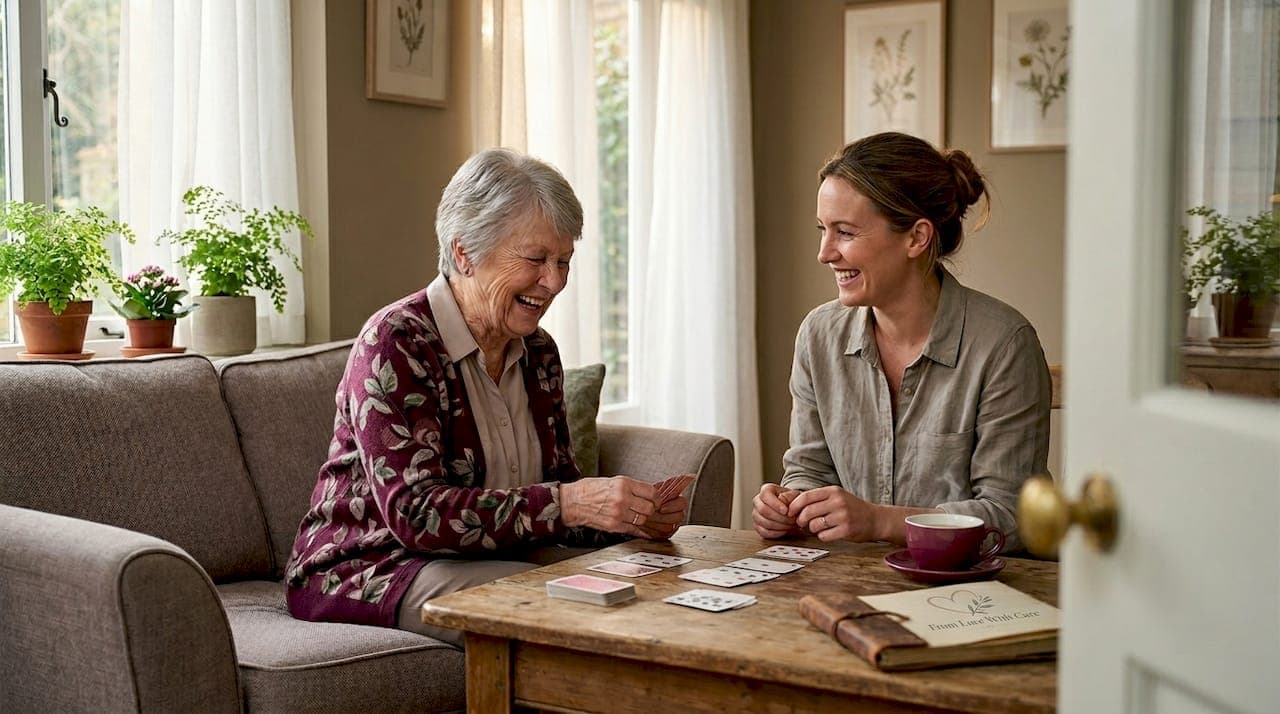
Loneliness is not a minor inconvenience for older people. It carries real health consequences, and the activities companions do with elderly individuals play a direct role in reducing those risks. In professional care, this role is formally known as companion caregiving, a service focused on social and emotional support rather than clinical tasks. Companion caregivers engage elderly clients in conversation and meaningful activities, from games and crafts to short walks and shared meals. If you are a family member or carer trying to find the right activities for your loved one, this guide covers everything you need to know.
Table of Contents
- Key takeaways
- 1. How to choose activities companions do with elderly individuals
- 2. Engaging indoor activities companions can lead at home
- 3. Outdoor and outing activities companions can organise for seniors
- 4. Technology-assisted activities to maintain social connection
- 5. Comparing activity types: benefits, suitability, and personalisation
- My honest view on what makes companion activities actually work
- How Fromlovewithcare supports families with companion-led activities
- FAQ
Key takeaways
| Point | Details |
|---|---|
| Match activities to the individual | Choose activities based on your loved one's physical ability, cognitive capacity, and personal interests. |
| Combine indoor and outdoor engagement | A mix of home-based and community activities provides better social and physical benefits than either alone. |
| Technology fills the gaps | Scheduled video calls and online classes maintain social connection when outings are not possible. |
| Routine matters as much as variety | Predictable activity anchors reduce anxiety and improve engagement in elderly individuals. |
| Professional companions add structure | Vetted companion carers bring consistency, safety awareness, and personalised activity planning. |
1. How to choose activities companions do with elderly individuals
Not every activity suits every person. The most effective companion caregiving starts with understanding the individual, not just filling time.
Physical and cognitive ability come first. An activity that frustrates or exhausts your loved one will do more harm than good. Companions should assess whether a senior can sit comfortably for extended periods, handle small objects, follow multi-step instructions, or manage short walks without fatigue. These observations shape every activity choice.
Personal history is a powerful guide. A former teacher may light up during word games or shared reading. Someone who spent decades gardening will respond warmly to even simple plant care indoors. Personalised social network mapping helps match individual interests to local and home-based resources, which significantly increases how often seniors actually engage with activities.
Consider these practical criteria when evaluating any activity:
- Does it match the senior's current stamina and mobility?
- Does it connect to a past interest, hobby, or life role?
- Is it accessible at home or in a nearby, familiar setting?
- Does it offer genuine social interaction, not just passive entertainment?
- Can it be adapted if the person has a difficult day?
Pro Tip: Keep a simple written note of which activities your loved one responded to positively and which caused frustration. Share this with any companion or carer so they can build on what works.
Consistency matters too. Scheduled social participation reduces isolation more effectively than occasional, unplanned visits. Building a loose weekly rhythm around activities gives older people something to look forward to and reduces the anxiety that can come with unpredictability.
2. Engaging indoor activities companions can lead at home
The home is where most companion visits happen, and it offers more opportunity than many families realise. The examples of meaningful activities seniors companions can provide indoors are genuinely wide-ranging.
Games and puzzles are among the most reliable options. Card games like Snap, Rummy, or simple Patience are accessible to a broad range of abilities. Jigsaw puzzles with larger pieces suit those with reduced dexterity. Word games, crosswords, and quiz rounds stimulate memory and language without requiring physical effort.
Creative arts and crafts give seniors a sense of accomplishment. Watercolour painting, collage-making with magazine cuttings, knitting, or decorating plant pots are all low-cost, adaptable, and satisfying. The finished product matters less than the process of making something together.
Shared reading and reminiscing are underestimated tools. A companion reading aloud from a favourite novel or a local newspaper creates natural conversation. Reminiscence activities, where seniors share memories prompted by old photographs or music, are particularly effective for those living with early-stage dementia.
Music is consistently powerful. Listening to familiar songs from a person's youth, singing together, or simply having music playing during a shared cup of tea can shift mood quickly. Many seniors who struggle with conversation will sing along to songs they have known for decades.
Other effective indoor options include:
- Light indoor gardening, such as tending to houseplants or growing herbs on a windowsill
- Simple cooking or baking tasks, where the companion does the heavy lifting but the senior participates in measuring, stirring, or decorating
- Watching a favourite film or television programme together and discussing it afterwards
- Letter or card writing to family members, which combines creativity with social connection
Pro Tip: Avoid activities that require too much explanation or setup time. If a companion spends ten minutes explaining the rules of a game, the senior may disengage before it even begins. Choose activities that can begin within two minutes.
Structured days built around interaction anchors produce better engagement and mental stimulation than unstructured visits. Even a simple shared task like sorting photographs or folding laundry together counts as meaningful engagement when it involves conversation and human presence.
3. Outdoor and outing activities companions can organise for seniors
Getting outside, even briefly, has measurable benefits for mood, physical health, and social connection. The examples of outings suitable for elderly companions to facilitate are more varied than many families expect.
Short walks remain one of the most accessible options. A 15-minute stroll around a familiar neighbourhood, a local park, or a garden centre gives a senior fresh air, gentle movement, and a change of scenery. Companions should monitor pace, watch for fatigue, and always have a clear plan for rest stops.
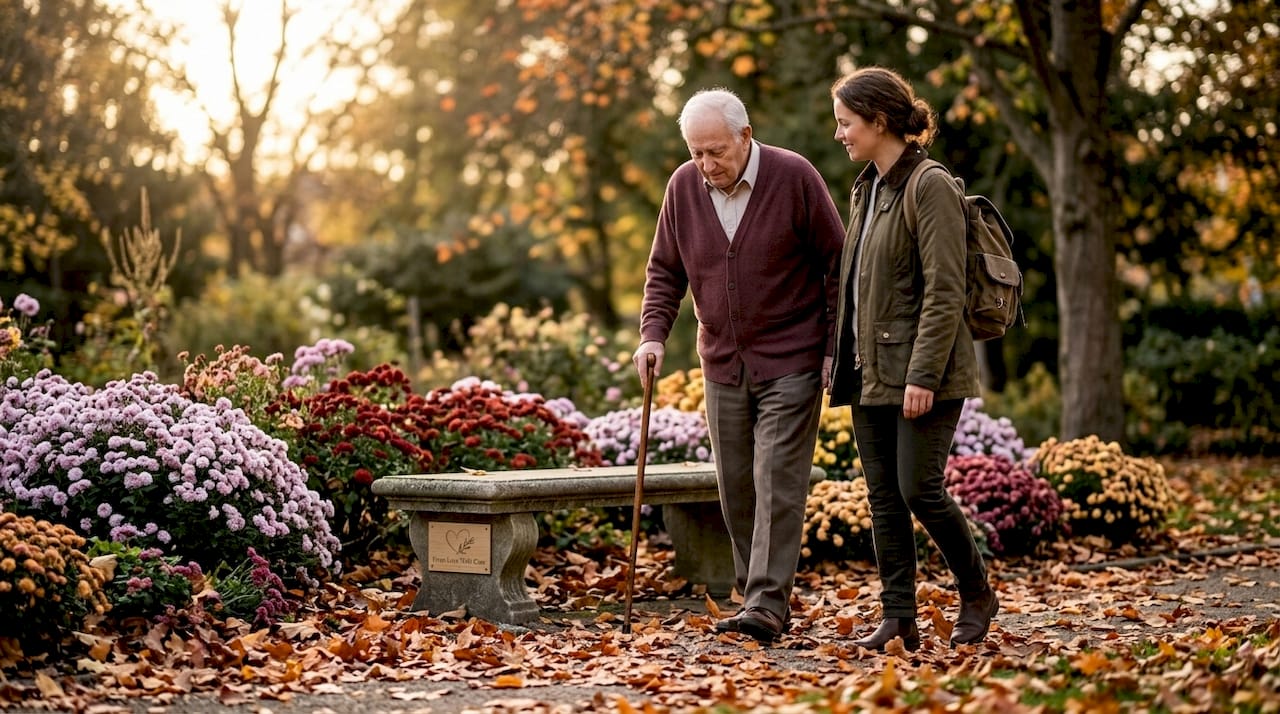
Day trips to accessible local venues open up real social opportunities. Libraries, botanical gardens, local museums with lift access, and community cafés are all suitable destinations. Planning outings for elderly individuals requires attention to mobility, medical needs, rest stops, and staff familiarity with the senior's requirements.
Group exercise classes designed for older adults combine physical activity with social interaction. Tai chi, chair yoga, and water aerobics are popular choices. Combined physical and social interventions show stronger improvements in loneliness than either alone, which makes group classes particularly valuable.
Here is a comparison of common outing types by suitability and benefit:
| Outing type | Best suited to | Primary benefit | Key consideration |
|---|---|---|---|
| Short local walk | Most mobility levels | Physical movement, fresh air | Pace and rest stops |
| Library or museum visit | Low to moderate mobility | Cognitive stimulation, social exposure | Lift access, seating availability |
| Group exercise class | Moderate mobility | Physical and social engagement | Class format and pace |
| Community café or lunch club | Most mobility levels | Social interaction, routine | Familiar environment preferred |
| Volunteering together | Good cognitive ability | Purpose, community connection | Task must be low-pressure |
Linking elderly individuals to community activities through social prescribing approaches has been shown to increase life satisfaction and reduce depression. Companions who know their local area well can become invaluable guides to these resources.
4. Technology-assisted activities to maintain social connection
Physical limitations make spontaneous socialising genuinely difficult for many older people. Technology, used thoughtfully, removes that barrier without replacing the human connection at the centre of good companionship.
Regular video calls with family and friends are the most direct solution. A companion can help set up and facilitate these calls, making them feel less intimidating for seniors who are not confident with devices. Scheduling them at the same time each week creates a social anchor that many older people come to rely on.
Online group activities have expanded considerably. Many libraries, arts organisations, and community groups now run online classes in everything from creative writing to chair exercise. A companion can sit alongside the senior during these sessions, offering encouragement and handling any technical difficulties.
Brain training and mindfulness apps offer gentle cognitive stimulation between visits. Apps with simple interfaces, large text, and clear audio work best for older users. Companions can introduce these tools during a visit and leave simple written instructions for use between sessions.
Telephone-based behavioural activation and mindfulness reduced loneliness significantly in a trial of over 1,000 older adults across 12 months. This finding is a reminder that the medium matters less than the consistency and quality of the social engagement itself.
Companions can also help seniors participate in:
- Email or message exchanges with grandchildren or old friends
- Virtual museum tours, followed by a related craft or conversation
- Online reminiscence groups or faith community meetings
- Simple social media use, such as viewing family photographs shared in a private group
5. Comparing activity types: benefits, suitability, and personalisation
Understanding the strengths of each activity category helps families and companions make better choices rather than defaulting to whatever is easiest.
| Activity category | Social benefit | Cognitive benefit | Physical benefit | Best for |
|---|---|---|---|---|
| Indoor games and crafts | Moderate | High | Low | Limited mobility, cognitive engagement |
| Shared reading and music | High | Moderate | Low | All abilities, including dementia |
| Outdoor walks and trips | High | Moderate | High | Moderate to good mobility |
| Group exercise classes | High | Low to moderate | High | Those seeking peer connection |
| Technology-assisted contact | High | Moderate | Low | Housebound or post-illness seniors |
The most effective companion caregiving does not rely on a single category. Combining social and physical engagement consistently produces better outcomes than either in isolation. A companion might spend one visit on an indoor craft, the next on a short walk to a café, and maintain phone contact in between.
Personalisation is not a luxury. It is what separates a genuinely helpful companion visit from one that feels like supervision. When a companion pays attention to a senior's responses, notices what sparks genuine interest, and adjusts accordingly, the relationship becomes something the older person genuinely values.
Feedback matters. If your loved one seems flat or disengaged after a particular activity, that is useful information. Share it with their companion so the approach can be adjusted. The goal is not to tick a box. It is to give your loved one something they look forward to.
My honest view on what makes companion activities actually work
I've spent a long time thinking about what separates companion visits that genuinely lift someone's spirits from those that simply pass the time. And I've come to believe the difference is almost never about the activity itself.
What actually works is predictability combined with genuine curiosity about the person. When a companion shows up at the same time each week and remembers that your mother prefers Radio 4 to pop music, or that your father still lights up when someone mentions cricket, that consistency becomes a form of care in itself.
I've also noticed that families sometimes focus too heavily on outings as the gold standard of social engagement. Outings are wonderful when they are feasible. But for many older people, a deeply engaged hour of conversation over a shared cup of tea is more nourishing than a trip to a garden centre where they felt rushed or anxious.
The emotional barriers are real too. Some seniors resist activities because they feel embarrassed about what they can no longer do. A good companion meets them where they are, not where they used to be. That takes patience, and it takes someone who genuinely cares about the person in front of them.
If there is one thing I would tell every family reading this, it is: do not underestimate the power of showing up consistently. The activity is the vehicle. The relationship is what heals.
— Ayomide
How Fromlovewithcare supports families with companion-led activities
Finding the right person to spend meaningful time with your loved one is not straightforward. Fromlovewithcare takes that responsibility seriously.

Every companion at Fromlovewithcare is thoroughly vetted and matched to the individual they support, with attention to personality, interests, and the types of social activities elderly companions can most effectively facilitate. Whether your loved one would benefit from regular home visits with shared activities, or needs support accessing community outings, the service is built around genuine human connection rather than task completion.
Fromlovewithcare offers elderly companionship services across the UK, tailored to each client's health needs and personal interests. If you are ready to take the next step, explore the full range of companionship and support services and arrange a visit today.
FAQ
What activities do companion carers typically do with elderly clients?
Companion carers engage elderly clients in games, crafts, reading, music, light gardening, and short walks, as well as facilitating video calls and community outings. The focus is on social interaction and mental stimulation rather than personal care tasks.
How often should a companion visit an elderly person?
Consistency matters more than frequency. Scheduled social participation is more effective at reducing isolation than occasional visits, so even one or two regular weekly visits can make a meaningful difference.
Can technology replace in-person companion visits for elderly people?
Technology supports but does not replace in-person contact. Telephone-based social interventions do reduce loneliness measurably, but they work best as a supplement to face-to-face companionship rather than a substitute.
How do companions plan safe outings for elderly individuals with mobility issues?
Safe outing planning requires matching the destination to the senior's physical ability, identifying rest stops, and preparing for medical needs in advance. Effective outing planning also involves ensuring staff or companions are familiar with the individual's specific requirements and fatigue patterns.
What makes a companion activity genuinely meaningful for a senior?
Activities are most meaningful when they connect to a person's past interests, offer real social interaction, and are delivered consistently by someone the senior trusts. Generic activities rarely achieve the same engagement as those tailored to the individual's history and preferences.