
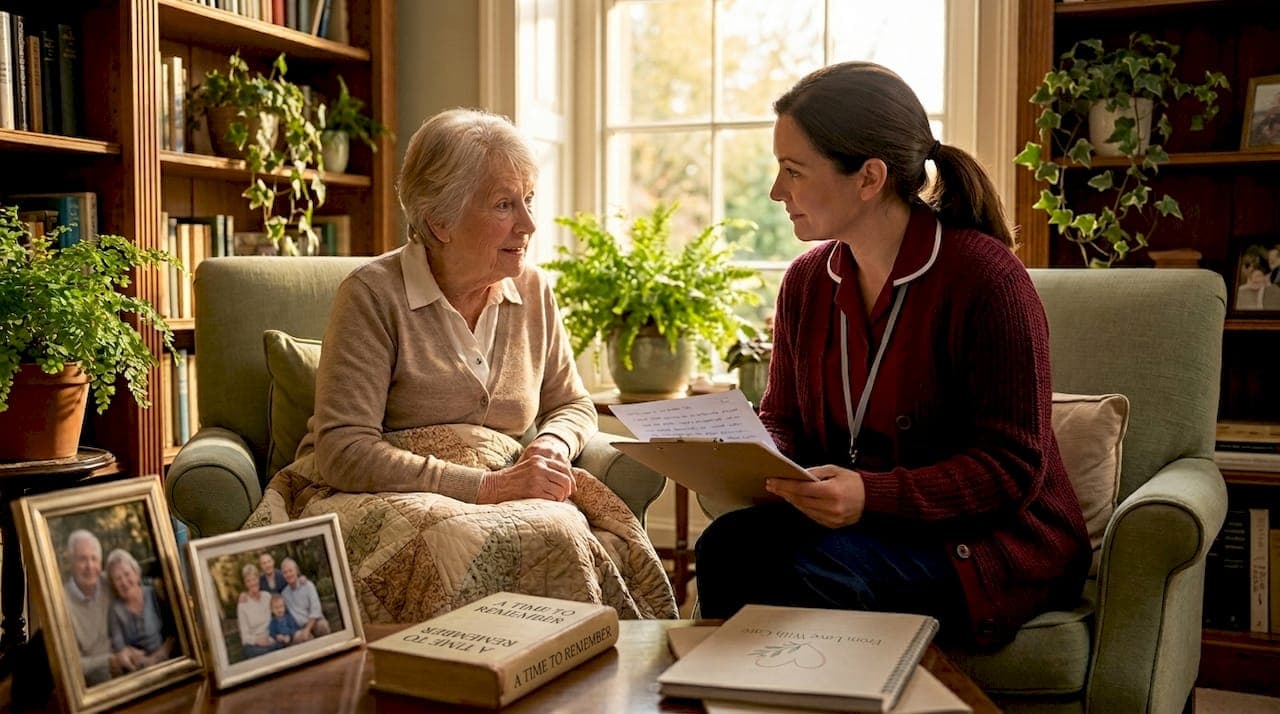
Most families assume they can tell when a loved one is lonely. They visit, they observe, and they make a judgement. But how elder companionship is assessed in a clinical and care context goes far beyond that. Companionship needs in older adults are shaped by emotional bonds, social networks, mental health, and the physical environment. Without a structured evaluation, even the most attentive family can miss what truly matters. This guide explains the frameworks professionals use, the tools that quantify loneliness, and how you can apply these insights to find the right support for your loved one.
Table of Contents
- Key takeaways
- How elder companionship is assessed: the CGA framework
- Measuring loneliness: validated tools and their significance
- Social networks and environment: what else shapes the assessment
- Translating assessment results into companionship choices
- Assessment models: from full CGA to family-led approaches
- My perspective: what families get wrong about assessment
- Finding the right companionship support
- FAQ
Key takeaways
| Point | Details |
|---|---|
| CGA is the gold standard | Comprehensive geriatric assessment evaluates social, psychological, cognitive, and functional needs together. |
| Loneliness can be measured | Validated tools like the UCLA 3-Item Loneliness Scale give loneliness a score, not just a feeling. |
| Psychosocial factors matter most | Depression, anxiety, and loneliness predict quality of life more accurately than physical limitations alone. |
| Two types of loneliness exist | Emotional and social loneliness require different companionship responses to be effective. |
| Assessment is never one-off | Companionship needs change after health events and must be reviewed regularly. |
How elder companionship is assessed: the CGA framework
The formal term professionals use is the Comprehensive Geriatric Assessment, or CGA. It is a multidimensional, multidisciplinary process that evaluates an older adult across functional, cognitive, medical, psychological, and social dimensions simultaneously. It is the most thorough method for identifying companionship requirements because it treats the person as a whole, not a collection of symptoms.
The social component of a CGA specifically examines social interaction networks and available support. This matters because an elderly person can have a packed weekly calendar and still feel profoundly alone. The CGA captures this distinction. When elder companionship evaluations are conducted properly, they do not simply ask "does this person see people?" They ask whether those interactions are meaningful and whether the person feels connected.
The CGA is most effective when performed by an interdisciplinary team that may include a geriatrician, a nurse, a social worker, and a psychologist. Each professional contributes a different lens. The social worker maps the person's relationships and living situation. The psychologist screens for depression and anxiety. The nurse assesses physical function that might limit social participation.
Here is what a CGA typically covers when assessing companionship-related needs:
- Functional ability: Can the person travel independently or attend social events?
- Cognitive status: Does cognitive decline affect the quality of their relationships or communication?
- Mental health: Is depression or anxiety reducing their motivation to connect with others?
- Social interaction network: Who does the person regularly see, and how meaningful are those contacts?
- Social support: Is help available if needed, and does the person feel supported?
- Environmental factors: Is the home accessible? Is the neighbourhood safe enough to encourage visits?
Pro Tip: If your elderly relative has a GP appointment coming up, ask specifically for a social and psychosocial review. Many families do not realise this can be requested as part of a standard care review, not just after a hospital stay.
CGA findings then guide tailored interventions. If the assessment reveals cognitive decline alongside social withdrawal, a one-to-one companion who visits regularly at home may be more appropriate than encouraging group activities. The assessment shapes the solution.
Measuring loneliness: validated tools and their significance
Asking someone "are you lonely?" rarely produces a useful answer. Many older adults minimise their feelings to avoid worrying family members. That is why measuring senior friendship and social wellbeing relies on validated screening tools rather than a single open question.
The most widely recommended approach starts with a direct screening question. The AAFP's age-friendly geriatric framework advises asking "How often are you lonely?" as an initial screen. If the answer suggests concern, the assessment progresses to a structured tool.
The UCLA 3-Item Loneliness Scale is one of the most trusted instruments for assessing elder social interactions. It covers three questions:
- How often do you feel that you lack companionship?
- How often do you feel left out?
- How often do you feel isolated from others?
Each question is scored from 1 (hardly ever) to 3 (often), giving a total between 3 and 9. A score of 6 or above indicates loneliness and should trigger a referral to community resources or companionship services. The simplicity of this tool is its strength. It takes under two minutes to complete but provides a measurable baseline that families and professionals can track over time.
What makes assessing elder social interactions so critical is the weight psychosocial factors carry. A 2026 multicentre cohort study found that clinical and functional factors explained only 6% of the variance in quality of life in older adults. When psychosocial factors such as loneliness, depression, and anxiety were added to the analysis, that figure rose to 26%. This is a striking gap. It tells us that how a person feels about their relationships matters far more to their daily wellbeing than whether they can walk unaided or manage their own medication.
This is why screening for depression and anxiety must accompany loneliness screening. The three conditions feed each other. Loneliness can trigger depression; depression reduces the motivation to seek connection; anxiety makes social situations feel threatening. Understanding how these overlap helps families and care teams identify whether a companion alone will be sufficient or whether mental health support is also needed.
Loneliness and social isolation are modifiable risk factors. That is important. They are not inevitable features of ageing. With the right companionship and support, they can be addressed.
Social networks and environment: what else shapes the assessment
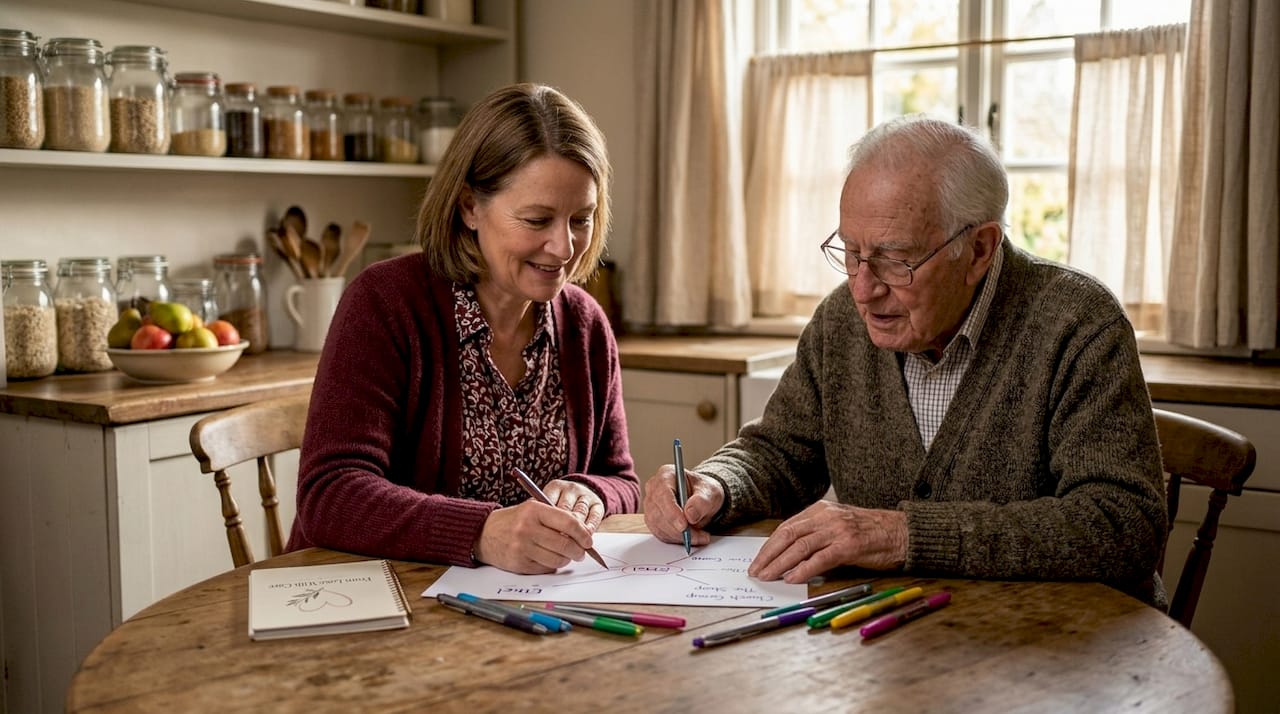
When assessing elder social interactions, professionals distinguish between two separate concepts that families often conflate. Social interaction refers to the frequency of contacts, how often the person talks to someone, meets a neighbour, or joins a group. Social support refers to the perceived availability of help and the feeling of being cared for. Both must be assessed to avoid a common pitfall: increasing the number of companion visits without reducing feelings of loneliness because the deeper need for perceived support was never addressed.
The socioenvironmental assessment conducted by nurses or social workers maps the older person's full social landscape. This includes who is in their life, how accessible those people are, and whether the home environment supports or hinders social participation.
Here is a comparison of what each component reveals:
| Assessment component | What it measures | Why it matters for companionship |
|---|---|---|
| Social interaction network | Frequency of contact with family, friends, neighbours | Identifies gaps in regular connection |
| Social support resources | Perceived availability of practical and emotional help | Reveals whether existing relationships feel supportive |
| Home safety and accessibility | Physical ability to receive visitors or leave the home | Shapes whether in-home or community companionship is more suitable |
| Caregiver availability | Who provides informal support and how often | Highlights risk of caregiver fatigue or gaps in coverage |
Environmental factors deserve more attention than they typically receive. A person living on an upper floor of a building with no lift is effectively cut off from spontaneous social contact. A home that feels unsafe to visit in the evening limits when companions can call. These realities directly influence which type of companionship arrangement will actually work, not just which one looks good on paper.
Translating assessment results into companionship choices
Assessment findings only have value when they lead to the right decisions. The criteria for elder companionship selection should flow directly from what the evaluation reveals, particularly the distinction between two forms of loneliness that detailed assessment distinguishes.
Emotional loneliness arises from the absence of close, intimate bonds. An older person who lost a spouse and has few deep friendships will experience this. What helps them is a consistent, warm, one-to-one companion who visits regularly and builds genuine rapport over time.
Social loneliness comes from a lack of social contact more broadly. It responds better to group activities, community programmes, and companions who introduce the person to new social environments. Mapping which type of loneliness is present before selecting a companionship option saves time, money, and the disappointment of interventions that do not connect.
The signs of good elder companionship are worth recognising. Look for increased engagement in conversation, improved mood, a willingness to make plans, and reduced expressions of feeling unwanted or forgotten. Families can evaluate this by tracking frequency of meaningful conversations and participation in group activities before and after a companion begins visits.
Companionship needs should also be reassessed after major health events. A hospital discharge, a bereavement, a fall, or a change in medication can all shift a person's social and emotional needs significantly. What worked three months ago may no longer fit.
Pro Tip: When a companion arrangement is not producing visible improvement in mood or engagement after four to six weeks, do not assume the service is failing. Revisit the original assessment first. The mismatch is often in the type of companionship, not the quality.
Assessment models: from full CGA to family-led approaches
How to evaluate senior relationships formally depends on the care setting and the complexity of the person's needs. Not every family has access to a full interdisciplinary team. Understanding the range of available approaches helps you seek the right level of assessment.
| Model | What it involves | Best suited for |
|---|---|---|
| Full CGA | Multidisciplinary team assessment across all geriatric domains | Complex or multiple health conditions |
| Age-friendly 4Ms framework | Focuses on What Matters, Medication, Mentation, Mobility | Primary care settings, regular GP reviews |
| UK Continuing Healthcare (CHC) | Rates 12 care domains on a 5-level scale | Adults with significant and complex care needs |
| Brief family-led screening | UCLA Loneliness Scale, mood observations, conversation frequency tracking | Initial identification before seeking professional review |
The UK Continuing Healthcare framework is worth knowing if your loved one has complex needs. It does not rely on simple scores. Instead, it looks at the patterns and interactions between care domains, including social and psychological wellbeing, to determine the nature and level of support required.
For most families starting this process, a practical first step is to use the UCLA 3-Item Loneliness Scale at home, note your observations about mood and social engagement, and bring those findings to your GP or care coordinator. This gives professionals a meaningful starting point rather than a blank page.
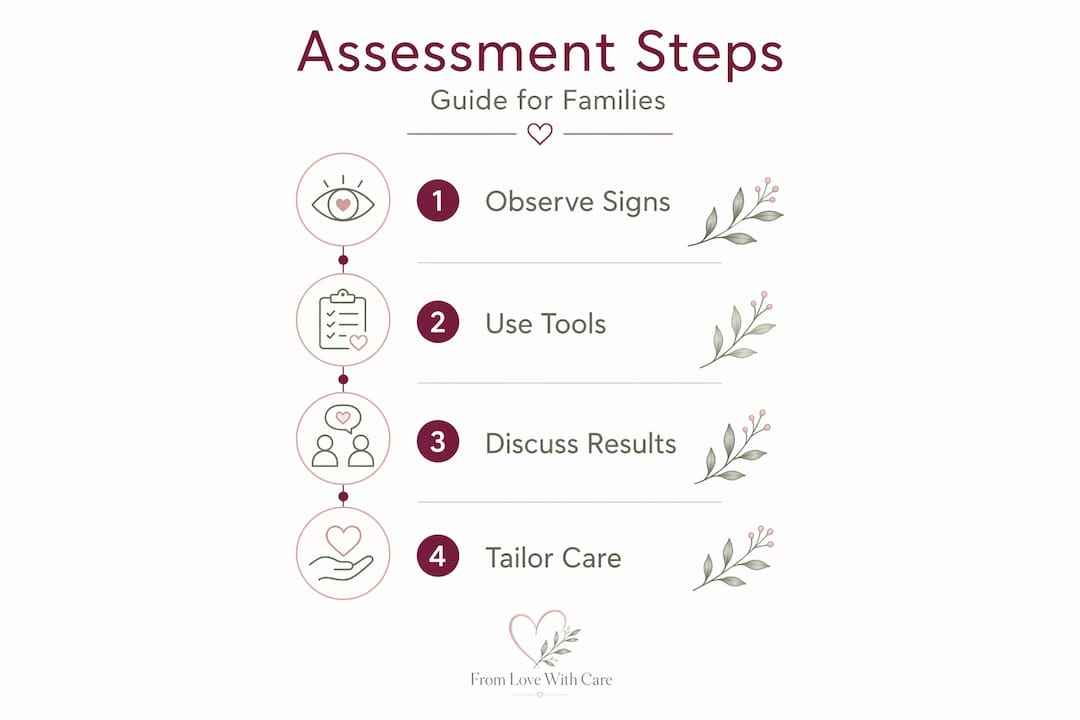
You can also explore the Fromlovewithcare blog for practical guidance on identifying loneliness signs and preparing for professional assessments.
My perspective: what families get wrong about assessment
I've spent time working alongside families navigating this process, and the same misunderstanding appears again and again. Families ask "does Mum seem happier with the new companion?" and treat that as the measure. It matters, but it is not sufficient.
What I've seen is that the most effective outcomes happen when families treat companionship assessment the way they would treat a medical investigation. You would not manage a chest complaint with a single observation and a gut feeling. You would seek a diagnosis, monitor symptoms, and adjust treatment. Loneliness deserves the same rigour.
The uncomfortable truth is that focusing on psychosocial distress rather than physical limitations often produces better quality-of-life outcomes. But families are often guided towards managing physical care first and emotional wellbeing second. That ordering can leave the most impactful needs unaddressed for months.
In my experience, the families who get this right are those who involve the older adult in the assessment conversation. Asking an elderly parent what they miss, who they wish they saw more often, and what kind of company feels comfortable gives richer information than any checklist. The validated tools confirm and quantify what a good conversation starts to reveal.
Advocate for a thorough review. Push for psychosocial screening alongside physical assessments. And treat companionship as a care component that needs to evolve, not a box ticked once and forgotten.
— Ayomide
Finding the right companionship support
Once you have a clearer picture of your loved one's emotional and social needs, the next step is finding a service that can respond to what the assessment actually reveals.
Fromlovewithcare offers tailored elderly companionship services that respond to the specific needs identified through assessment. Whether your loved one needs regular, warm one-to-one visits to address emotional loneliness, or more active social engagement, every companion is thoroughly vetted for safety and professionalism. The service goes beyond standard care by placing human connection at the centre. If your assessment has pointed to isolation, anxiety around social situations, or a lack of meaningful daily contact, explore the full range of services available to find the right fit.
FAQ
What does a comprehensive geriatric assessment include for companionship?
A comprehensive geriatric assessment evaluates functional ability, cognition, mental health, and social factors including the person's social network and perceived support. The social component directly informs companionship planning.
How is loneliness measured in older adults?
Loneliness is measured using tools such as the UCLA 3-Item Loneliness Scale, where a total score of 6 or above indicates significant loneliness. Professionals may also begin with a single screening question before applying the full tool.
What is the difference between emotional and social loneliness?
Emotional loneliness stems from a lack of close intimate bonds, while social loneliness reflects insufficient social contact overall. Each type responds to a different kind of companionship intervention.
How often should elder companionship needs be reassessed?
Companionship needs should be reviewed regularly and always following major health changes such as hospital discharge, bereavement, or a significant change in physical condition. A single assessment is never enough.
Can families assess companionship needs without a professional?
Families can use the UCLA 3-Item Loneliness Scale and track observable signs such as mood, conversation frequency, and social engagement as a starting point. These findings should then be shared with a GP or care professional for a fuller evaluation.