
Loneliness among older adults is not a minor inconvenience. It is a genuine health crisis, and if you are a senior who has felt its weight, you already understand what it costs. Starting a companionship service as a senior gives you a way to address that problem directly, turning your own experience of isolation into something that helps others. This guide walks you through everything you need, from the legal groundwork to daily service delivery, so you can build something meaningful, sustainable, and genuinely good for your community.
Table of Contents
- Key takeaways
- Starting a companionship service as a senior: what to do first
- How to launch your service step by step
- Delivering your service well
- Marketing and growing your service
- My honest perspective on starting this service
- How Fromlovewithcare can support your journey
- FAQ
Key takeaways
| Point | Details |
|---|---|
| Know your scope | Companionship services are non-medical, covering social visits, light errands, and friendly conversation. |
| Start small and test | A pilot phase with one or two clients reduces risk and builds confidence before you scale. |
| Register properly | Even a solo service needs basic business registration and appropriate insurance in the UK. |
| Price with purpose | Upfront onboarding fees help filter serious clients and cover your initial assessment time. |
| Trust drives growth | Word-of-mouth referrals from satisfied clients and families are your most powerful marketing tool. |
Starting a companionship service as a senior: what to do first
Before you take on a single client, you need a clear picture of what a companionship service actually involves and what it does not. This is non-medical support. You are not a carer in the clinical sense. Your role covers social visits, shared activities, light assistance with errands, and simply being present. That distinction matters legally and practically.
In the UK, non-medical companion roles carry simpler requirements than clinical health agencies, which need complex licensure. You will still need to register as a business, either as a sole trader or a limited company. Sole trader registration is straightforward through HMRC and suits most people starting out. A limited company offers more protection but comes with additional administrative responsibility.
Here is what to assess before you begin:
- Your personal readiness. Are you physically and emotionally prepared to show up consistently for vulnerable clients? Reliability is not optional in this work.
- Your target clients. Will you focus on seniors living alone, those recently bereaved, or people with mobility limitations? Defining this early shapes every decision that follows.
- Insurance. Public liability insurance is non-negotiable. Some providers also recommend personal accident cover.
- Transport. Many clients will need you to travel to them or accompany them on outings. Consider whether you have reliable transport.
- Basic tools. A mobile phone, a simple scheduling system, and a way to keep records are the minimum you need to operate professionally.
It is also worth noting that federal wage and hour rules apply to domestic service and companionship roles, requiring careful attention to timekeeping and pay practices if you ever bring on additional companions. Even as a solo operator, understanding these obligations from the start protects you later.
Pro Tip: Before registering, speak to your local Citizens Advice Bureau. They can clarify which registrations apply in your specific area and whether any local authority requirements affect your service.
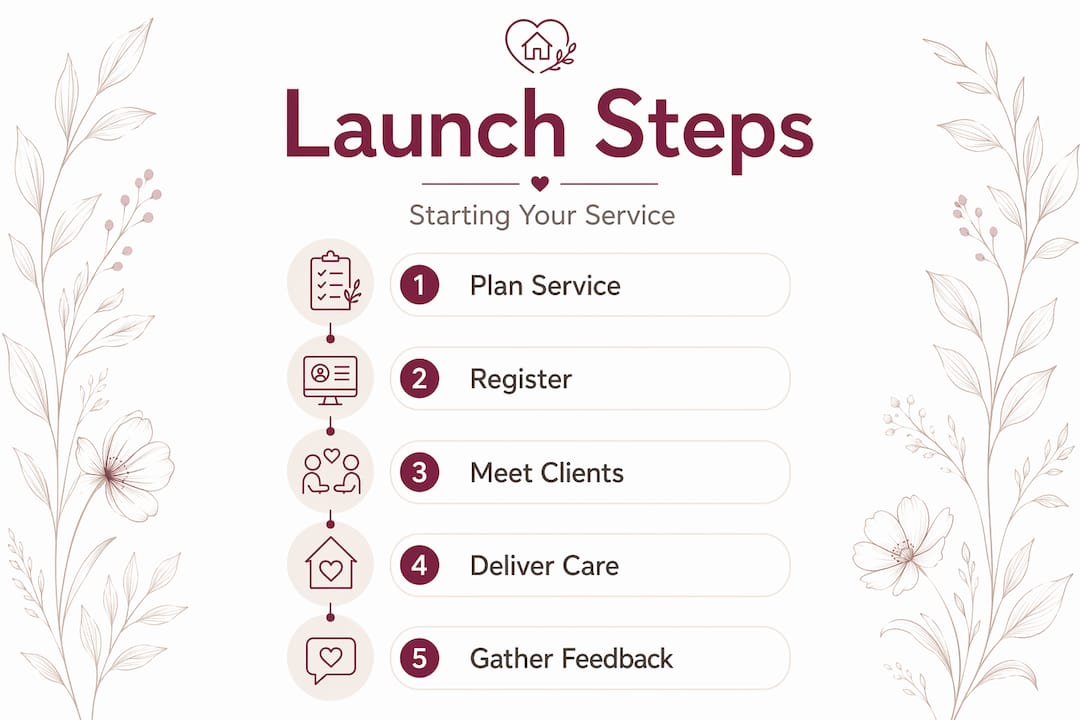
How to launch your service step by step
Once the groundwork is in place, the launch process becomes much more manageable. Work through these steps in order rather than trying to do everything at once.
-
Define your service offerings. Decide exactly what you will and will not provide. Examples include weekly social visits, accompanied shopping trips, shared meals, telephone check-ins, and light reading or games. Write this down clearly so clients and families know what to expect.
-
Set your pricing. Companion services typically charge between £13 and £50 per hour depending on location and service type. Research what others charge locally. Many services also charge an upfront onboarding fee of around £400 to £500 to cover the initial consultation, assessment, and matching process. This fee also filters out clients who are not genuinely committed.
-
Register your business. Complete your sole trader registration with HMRC or set up a limited company through Companies House. Open a dedicated bank account for the service.
-
Get insured. Contact a specialist insurance broker who works with care and support services. Explain your role clearly so the policy matches your actual activities.
-
Create simple marketing materials. A one-page leaflet describing your service, your experience, and your contact details is enough to start. Keep it warm and personal rather than corporate.
-
Connect with local networks. Visit your nearest GP surgery, community centre, library, and local Age UK branch. Introduce yourself and leave leaflets. These organisations regularly encounter seniors who need exactly what you offer.
-
Run a pilot phase. Take on one or two clients initially. Starting with free or reduced-rate sessions helps you assess client needs without high stakes and builds trust quickly.
Pro Tip: When you meet a potential client for the first time, bring a simple one-page agreement outlining what your service includes, the hours, the fee, and a cancellation policy. It protects both of you and signals professionalism from day one.
Solo companion services let you keep 100% of your hourly rate and avoid the complexity of payroll. For most seniors starting out, this owner-led model is the right choice. Growth can come later once you understand your clients and your capacity.
Delivering your service well
The quality of your relationships with clients is what will define your reputation. Good intentions are not enough on their own. You need clear systems and genuine attentiveness.
Understanding each client's needs starts before the first visit. Ask about their daily routine, their interests, any health considerations you should be aware of, and what they most want from your time together. Some clients want lively conversation. Others simply want a calm, trusted presence. Neither is wrong, but you need to know which you are dealing with.
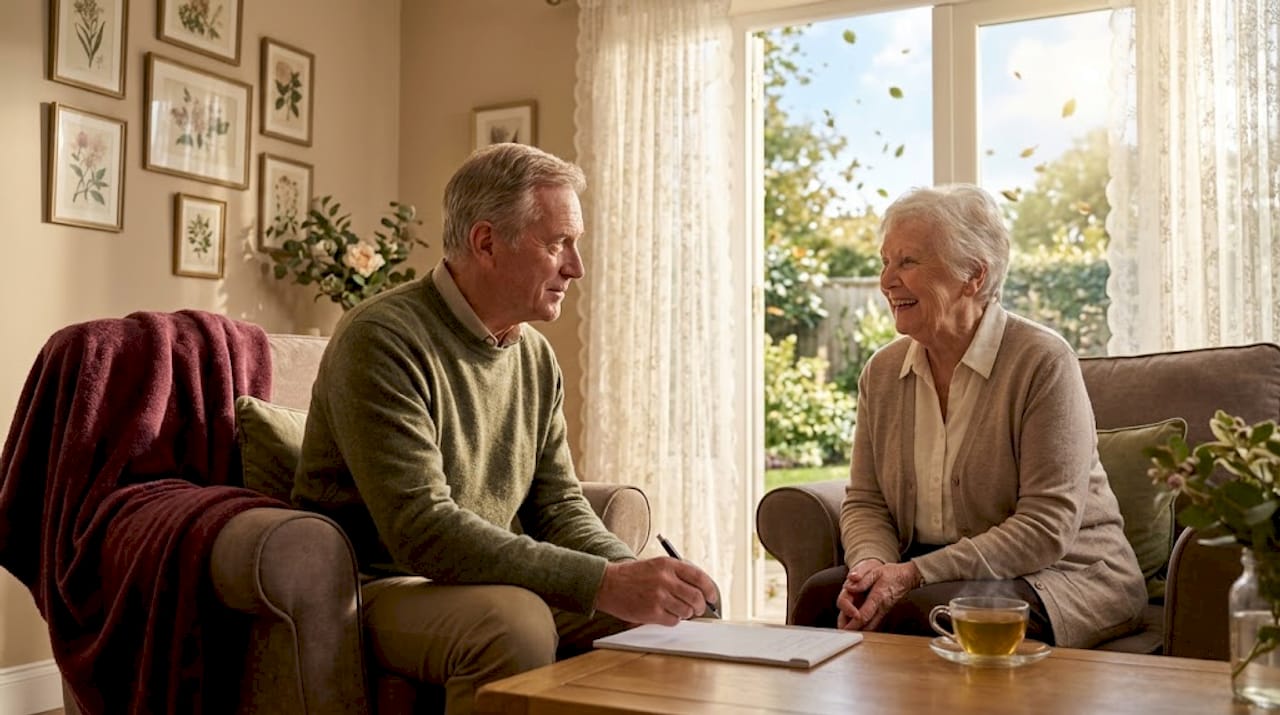
Setting boundaries matters as much as warmth. Be clear about what you can and cannot do. If a client asks you to manage their medication or handle significant financial tasks, that falls outside a companionship role. Redirecting those requests kindly but firmly protects both of you.
Here are the practices that separate good companions from excellent ones:
- Keep a simple visit log. Note the date, duration, activities, and any observations about the client's mood or wellbeing. This record is invaluable if a family member has questions or if a concern arises.
- Communicate with families. Where the client consents, brief updates to family members build enormous trust and often lead to referrals.
- Respect confidentiality. What clients share with you stays with you, unless there is a genuine safeguarding concern.
- Manage your schedule carefully. Missed or late visits cause real distress to clients who may have been looking forward to your company all week.
- Know your limits. If a client's needs grow beyond what you can safely support, signpost them to appropriate professional services rather than stretching beyond your role.
Volunteering programmes that serve two to four clients at around 20 hours per week offer a useful benchmark for what a manageable solo workload looks like. Trying to serve too many clients too quickly leads to burnout and inconsistent care.
Marketing and growing your service
Many seniors starting a senior companionship business assume they need a website, social media accounts, and a marketing budget before they can attract clients. They do not. The most effective marketing for a companionship service is personal, local, and relationship-driven.
Start with the people and organisations already in your community:
- Local GP surgeries and pharmacies. Ask if you can leave leaflets in their waiting areas. Many GPs actively look for non-clinical support to recommend to isolated patients.
- Community and faith groups. Churches, mosques, temples, and community halls are places where older adults gather and where word travels quickly.
- Local authority social services. Some councils maintain directories of local support services. Ask to be included.
- Online directories. Sites that list local care and support services can generate enquiries with minimal effort once your profile is set up.
Word of mouth is your most reliable growth engine. When a client's family sees genuine improvement in their loved one's mood and wellbeing, they tell people. Treat every client as if they are your only one, and your reputation will build itself.
The table below compares two common growth models for a senior companionship business:
| Model | Advantages | Considerations |
|---|---|---|
| Solo companion | Higher margins, full control, simple to operate | Limited to your own capacity and hours |
| Small agency | Greater reach, can serve more clients | Requires recruitment, payroll, and management |
AI companions are sometimes discussed as a supplement to human services, but they cannot replace the empathy and genuine connection that a real person provides. Your human presence is your competitive advantage. Lean into it.
As you grow, consider whether you want to remain a solo companion or build a small team. Owner-led models can generate over £50,000 annually at sufficient client volume, but growth typically requires bringing on additional companions and managing them well.
My honest perspective on starting this service
I have seen many people approach this with the best intentions and then hesitate for months because they are waiting to feel fully ready. Here is what I have learned: that feeling rarely comes before you start. It comes because you start.
What strikes me most about seniors who launch companionship services is how much they underestimate the value of their own life experience. You have navigated loss, change, and uncertainty in ways that younger companions simply have not. That lived understanding is not a soft quality. It is the core of what makes this work meaningful and effective.
I have also noticed that people worry too much about the business side and not enough about the relationship side. The administration matters, yes. But the moment a client says they have not laughed like that in months, you realise that no amount of paperwork preparation could have readied you for how much this work gives back.
My honest advice: start with one client. Do that well. Then decide what comes next. The loneliness support services that make the most lasting difference are almost always built one genuine relationship at a time, not through grand launches or polished branding.
Stay flexible. Your clients will teach you what they need if you are willing to listen. And take care of yourself too. You cannot give consistently from an empty place.
— Ayomide
How Fromlovewithcare can support your journey
If you are exploring how to start senior companionship or want to see what a professional service looks like in practice, Fromlovewithcare offers a trusted model worth understanding. The platform connects thoroughly vetted companions with seniors across the UK, focusing entirely on human connection rather than clinical care.
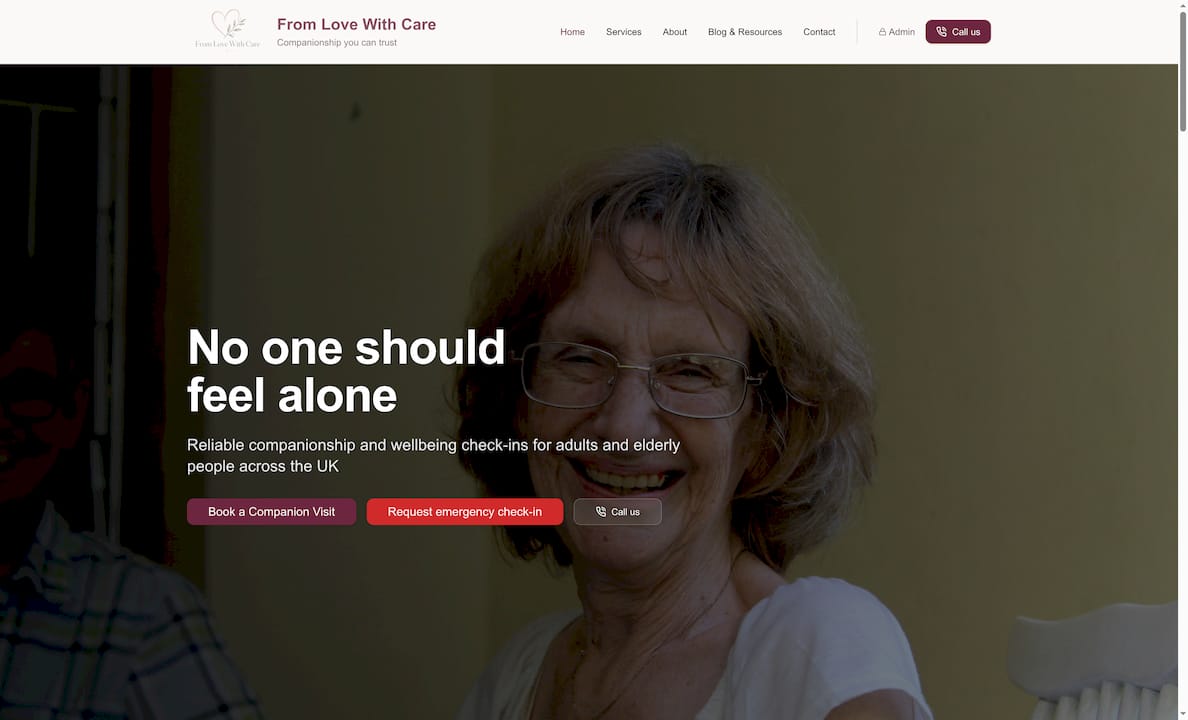
Whether you are building your own service or looking for professional support to complement your efforts, the elderly companionship services offered by Fromlovewithcare demonstrate what quality, consistent companionship looks like at scale. Their companion visits for elderly parents show how structured, reliable visits transform daily life for isolated seniors. Exploring their approach can give you a practical benchmark as you shape your own service. Visit Fromlovewithcare's full services to see how professional companionship is structured and delivered.
FAQ
What does a senior companionship service actually involve?
A senior companionship service provides non-medical social support, including friendly visits, accompanied outings, shared meals, and telephone check-ins. It does not include clinical care or medication management.
Do I need a licence to start a companionship service in the UK?
Non-medical companion services have simpler requirements than clinical agencies, but you will still need to register as a sole trader or limited company and hold appropriate public liability insurance.
How much should I charge for companionship visits?
Hourly rates for companion services typically range from £13 to £50 depending on location and service type. Many services also charge an initial onboarding fee to cover assessments and matching.
How many clients can one person realistically serve?
Senior companion programmes typically suggest serving two to four clients at around 20 hours per week as a sustainable solo workload.
Is it better to start as a sole trader or set up a limited company?
Most people starting a companionship service begin as sole traders because registration is straightforward and the administrative burden is lower. A limited company becomes worth considering once your income and client base grow significantly.