

One in four adults over 65 in the UK is socially isolated, yet the conversation around elder care still tends to focus almost entirely on physical health and medical needs. The role of companion in elder care is far broader and more consequential than most families realise. A good companion does not replace a nurse or a carer. They do something equally vital: they show up, they listen, and they make an older person feel that their life still holds warmth and meaning. This article explains what companions actually do, why it matters so profoundly, and how your family can make the most of this kind of support.
Table of Contents
- Key takeaways
- The role of companion in elder care: what it really means
- How companionship improves health and wellbeing
- Types of companionship: human, community, and technology
- Practical steps for families choosing a companion
- My perspective on what companion care really offers
- How Fromlovewithcare can support your family
- Common questions
Key takeaways
| Point | Details |
|---|---|
| Companions fill an emotional gap | They provide conversation, social engagement, and practical assistance that medical carers are not trained or resourced to offer. |
| Loneliness carries serious health risks | Social isolation in older adults is linked to higher rates of depression, dementia, and heart disease. |
| Compatibility matters enormously | A trial period and personality matching are critical to a successful long-term companion relationship. |
| Technology has limits | AI companion tools can supplement human contact but should never replace the warmth of genuine human connection. |
| Families benefit too | A trusted companion reduces family burnout by managing daily routines and keeping loved ones emotionally supported between visits. |
The role of companion in elder care: what it really means
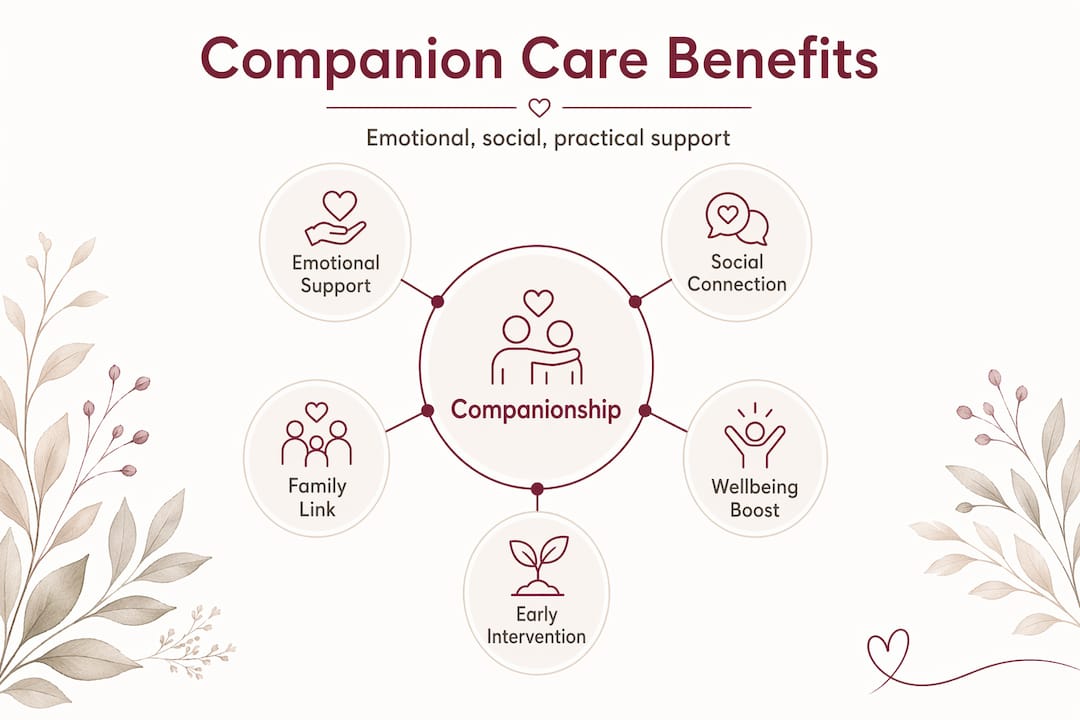
There is a common misunderstanding that companion care is a lesser form of support, something you arrange when "proper" care is not yet needed. That framing misses the point entirely. Companions provide emotional, social, and practical support in ways that clinical carers simply are not designed to deliver, and the impact on daily quality of life can be profound.
So what does a companion actually do? The support roles in elder care covered by a companion typically include:
- Sitting and talking over a cup of tea, sharing stories, and listening without rushing
- Accompanying seniors to appointments, shops, or social events
- Helping with light tasks such as reading post, making phone calls, or gentle reminders about meals and medication
- Playing cards, doing puzzles, or watching a favourite programme together
- Acting as a consistent, trusted presence that connects the older person to the wider world
What companions do not do is equally worth stating clearly. They do not administer medication, provide personal care such as bathing or dressing, or replace the role of a GP or district nurse. The role of a trusted companion for older adults sits in a distinct space: it is relational, not clinical.
One underappreciated aspect of this role is the way companions serve as a link between the older person and their family. Companions support families by managing logistical day-to-day tasks and maintaining a steady presence, which allows family members to focus on the emotional side of their relationship rather than the exhausting practicalities of caregiving.
Pro Tip: When speaking with a potential companion service, ask specifically how they communicate updates to families. A good service will keep you informed without making you feel like you need to micromanage.
How companionship improves health and wellbeing
The benefits of companionship in ageing are not soft or anecdotal. They are backed by a growing body of research, and the findings are striking.
"Companionship is an active, symbiotic relationship providing cognitive and social stimulation vital for delaying cognitive decline." — Companionship and cognitive health in older adults
Social engagement improves cognitive functions including working memory and reasoning in older adults. This is not simply about keeping the mind occupied. Regular, meaningful conversation and shared activity appear to create genuine neurological benefits, slowing the progression of age-related cognitive decline.
The physical health picture is equally compelling. The impact of social interactions in elder care extends to measurable reductions in the risk of depression, heart failure, and stroke. Chronic loneliness has been compared to smoking 15 cigarettes a day in terms of its effect on the body. That comparison is not rhetorical flourish. It reflects real data on inflammation, cardiovascular stress, and immune function.

| Health outcome | Effect of regular companionship |
|---|---|
| Depression | Significantly reduced rates among socially engaged older adults |
| Cognitive decline | Slower progression with consistent social stimulation |
| Sleep quality | Improved through reduced anxiety and emotional regulation |
| Physical activity | Increased when companions encourage gentle outings and movement |
| Heart health | Lower risk of heart failure and stroke linked to reduced isolation |
Improved mood is perhaps the most immediate and visible benefit families notice. An older person who has been withdrawn and quiet often becomes more talkative, more engaged with food, and more willing to leave the house once a trusted companion is in place. These are not small things. They are the difference between existing and living.
The importance of elderly companionship also extends to early intervention. Companions who visit regularly are often the first to notice subtle changes in behaviour, appetite, or mood that might signal a health concern. That early awareness can be the difference between a manageable situation and a crisis.
Types of companionship: human, community, and technology
Families today have more options than ever when it comes to companionship for seniors, and understanding the differences helps you choose wisely.
In-home companion caregivers remain the gold standard for most older adults living independently. A companion visits the home on a regular schedule, building a genuine relationship over time. This model works particularly well for people who value their independence but are beginning to experience the quiet weight of isolation. Services like those offered through Fromlovewithcare's home visit programme are built around exactly this kind of consistent, trusted presence.
Companion-style senior living is another model worth understanding. Shared living arrangements offer lower costs and built-in social engagement, which can ease the transition into supported living for those who find private accommodation isolating. The social contact is organic rather than scheduled, which suits some personalities very well.
AI-powered companions are the newest addition to this space, and they deserve honest assessment. Companion robots and apps using affective computing can interpret emotional cues with high accuracy and provide a form of responsive engagement around the clock. For someone who lives alone and experiences long stretches without human contact, this can offer genuine comfort.
However, AI companions must be deployed carefully, with clear consent processes, strong data privacy safeguards, and defined protocols for when a human should step in. They are considered high-risk tools in terms of emotional data handling, and families should ask hard questions before introducing them. The consensus among care professionals is that AI should complement human connection, not replace it.
Pro Tip: If you are considering a technology-based companion tool, look for products that store data locally rather than in the cloud, and check whether the provider has a clear escalation process for flagging concerns to a human carer.
The single most important factor across all models is personality compatibility. A companion who shares a sense of humour, similar interests, or a compatible communication style will have a far deeper positive impact than one who is simply available. Companions for elderly independence work best when the relationship feels natural rather than transactional.
Practical steps for families choosing a companion
Knowing that companionship matters is one thing. Finding the right companion and making it work in practice is another. Here is a clear process to guide you.
-
Recognise the signs. Watch for withdrawal from conversations, skipped meals, reduced interest in hobbies, or comments about feeling lonely or forgotten. These are not just mood fluctuations. They are signals that social support is needed.
-
Define what support looks like. Before approaching any service, write down what a typical week looks like for your loved one. What do they enjoy? What tasks feel burdensome? What time of day are they most alert and social? This shapes the brief you give to a companion service.
-
Ask about the matching process. A reputable service will take time to understand your loved one's personality, interests, and communication style before making an introduction. Personality match is critical for long-term success, and any service that skips this step is cutting corners.
-
Build in a trial period. The first few visits are as much about chemistry as they are about care. Give the relationship time to develop, but also trust your instincts and your loved one's feedback if something feels off.
-
Set clear expectations from the start. Be specific about what the companion will and will not do. Ambiguity leads to frustration on both sides. A written agreement, even an informal one, helps everyone stay aligned.
-
Stay involved. A companion supplements your presence; they do not replace it. Regular check-ins with both the companion and your loved one help you monitor how the relationship is developing and catch any concerns early. Ongoing communication between all parties is what separates good companion care from great companion care.
My perspective on what companion care really offers
I have spoken with many families who describe the same moment: the point at which they realised their parent or grandparent was not just physically declining, but quietly disappearing. Not from illness, but from loneliness. The light going out behind the eyes.
What I have come to believe is that most families underestimate how much of elder care is emotional rather than physical, and how poorly the traditional care system is designed to address that. Nurses and carers are stretched thin. They do not have time to sit and talk about the garden, or ask about a grandchild's school play, or simply be present without an agenda. That is not a criticism. It is a structural reality.
The role of companion in elder care fills a gap that no amount of medication or medical intervention can address. I have seen older adults who were assessed as cognitively declining become noticeably sharper and more engaged within weeks of having a regular companion. Not because the companion did anything clinical, but because someone was paying attention to them as a full human being.
My honest view is that families often wait too long. They introduce a companion when things have already deteriorated, rather than as a preventive measure that supports wellbeing from the outset. If your loved one is still active and independent, that is the best time to start. The relationship builds gradually, trust develops naturally, and the companion becomes a genuine part of their life rather than a sign that something has gone wrong.
The balance between technology and human warmth is real, and it will only become more pressing. But no app or robot has yet replicated the feeling of being genuinely known by another person. That remains the heart of what good companion care offers.
— Ayomide
How Fromlovewithcare can support your family
If this article has helped you see the value of companion care more clearly, the next step is finding the right support for your loved one.

Fromlovewithcare was built specifically to address loneliness among older adults in the UK. Every companion is thoroughly vetted, carefully matched to each client, and trained to provide the kind of warm, consistent presence that genuinely changes lives. Whether your loved one needs regular companionship visits at home, support with day-to-day social connection, or a welfare check service for peace of mind, Fromlovewithcare offers a trusted solution. Families consistently report that their loved ones become more engaged, more talkative, and more like themselves again after just a few visits. If you are ready to take that step, arrange a visit and see the difference for yourself.
Common questions
What does a companion do in elder care?
A companion provides emotional support, conversation, and light practical assistance such as reminders and errands. They are distinct from medical carers and focus on social connection and quality of life.
How does companionship benefit an older person's health?
Regular social interaction is linked to reduced rates of depression, slower cognitive decline, better sleep, and lower risk of heart disease. The benefits are both emotional and measurably physical.
When should I consider a companion for my elderly parent?
Signs such as withdrawal, skipped meals, reduced interest in hobbies, or expressed loneliness are clear indicators. Introducing a companion early, before significant decline, tends to produce the best outcomes.
Are AI companions a good option for elderly people?
AI companions can offer useful supplementary contact, particularly overnight or between human visits. However, they carry privacy considerations and should complement rather than replace genuine human connection.
How do I find a trustworthy companion service in the UK?
Look for services that vet their companions thoroughly, take time to match personalities, and maintain clear communication with families. Fromlovewithcare's companion care services are designed with all of these principles at their core.