
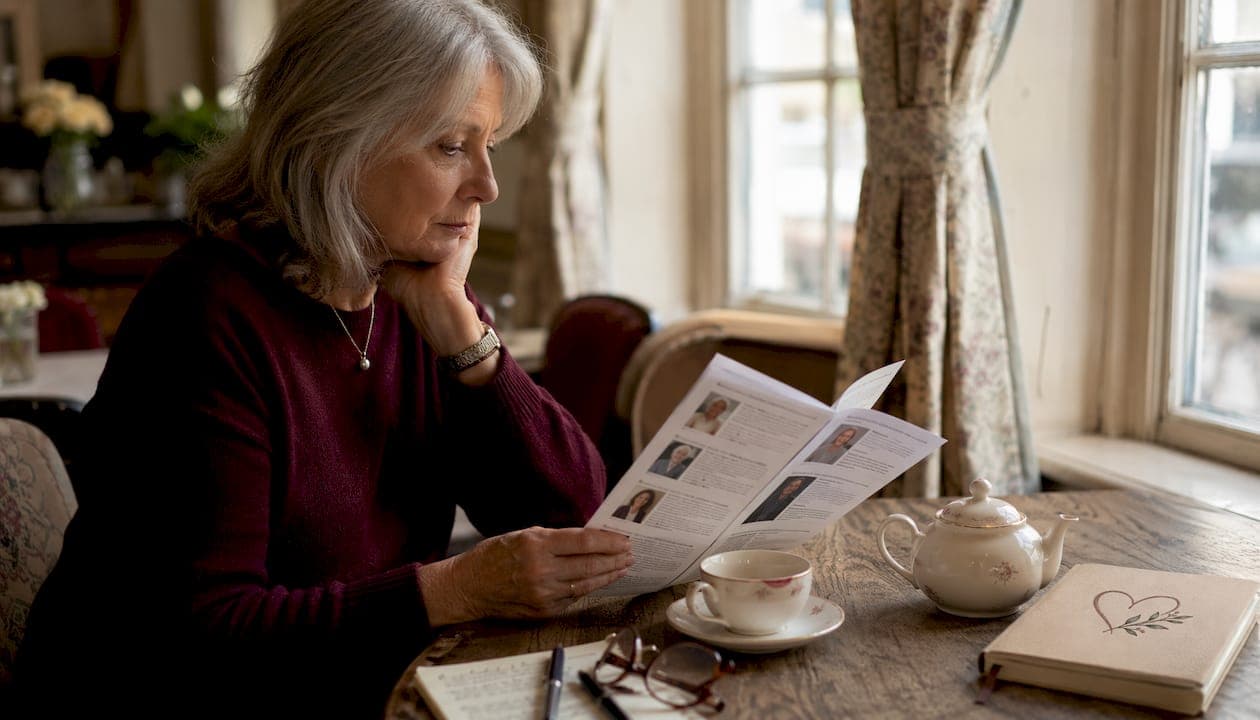
The best alternatives to bestlife.org.uk for UK companionship support
Families and individuals looking for comparable companionship and support services in the UK have several strong options. The main categories worth knowing are:
- Private companionship care: Visiting or live-in companions providing one-to-one emotional support, particularly suited to adults with memory loss or those who live alone. Private companionship care ranges from occasional social visits to full overnight presence.
- Group befriending: Programmes run by organisations such as Befriending Networks bring small groups together regularly with trained volunteers, building community links and social confidence.
- Homeshare schemes: An older person offers a spare room in exchange for roughly ten hours of companionship and help per week, with reputable schemes vetting and matching both parties for safety.
- Volunteer befriending programmes: Charities and organisations including Age UK, Independent Age, and Royal Voluntary Service run befriending schemes offering phone calls, home visits, and social events at no cost.
- Fromlovewithcare: A vetted private companionship service focused solely on emotional support and social connection for lonely or memory-affected adults across the UK.
Each of these serves a different level of need, budget, and geography. The right fit depends on how much support is needed and how often.
What types of companionship services are available in the UK?
Private companionship care covers a wide spectrum. At one end, a companion visits for a few hours each week, sharing a cup of tea, accompanying someone to appointments, or helping with shopping. At the other end, a live-in companion provides constant presence and overnight reassurance, which is particularly valuable for someone in the earlier stages of dementia or recently bereaved. The NHS guidance on loneliness recognises that even a weekly phone call provides measurable mental health benefits, underlining how modest, consistent contact can protect cognitive health.
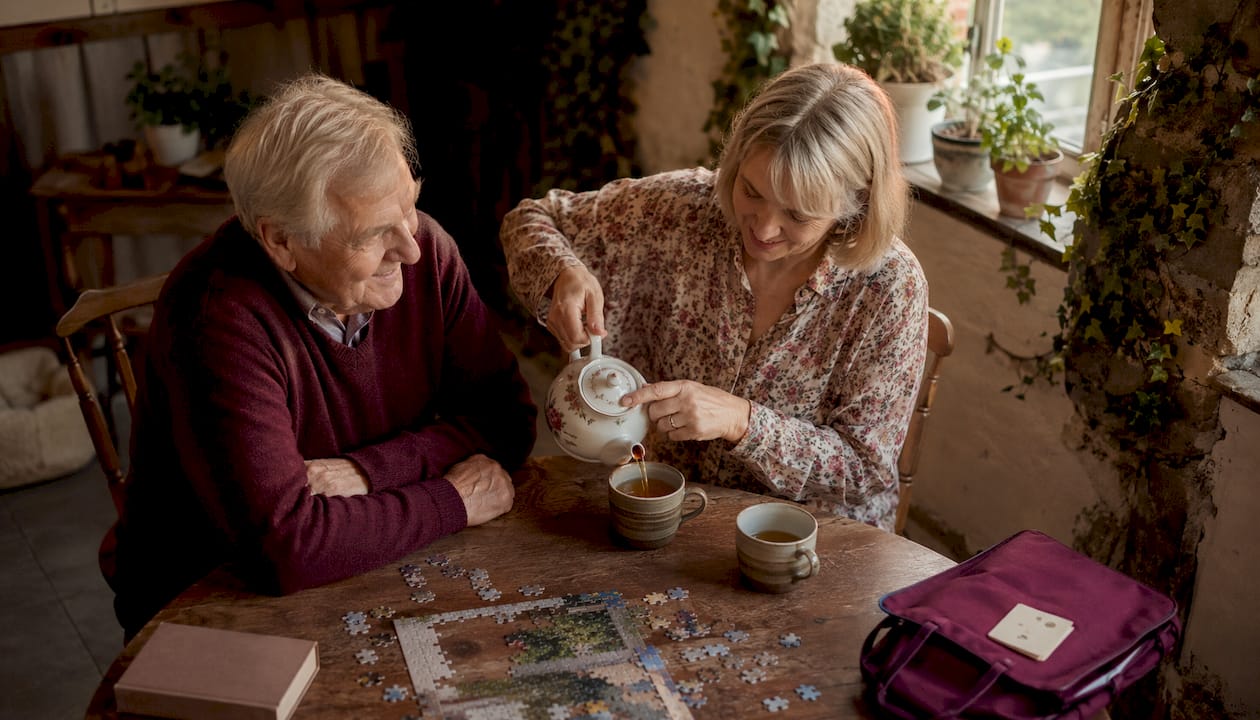
Group befriending offers something one-to-one services cannot replicate: the comfort of shared experience. Participants build friendships with peers who understand similar life stages, and the group setting lowers the anxiety that some people feel about accepting help. Since 2020, hybrid group befriending combining in-person and telephone contact has grown among Befriending Networks members, widening access for people in rural areas.
Homeshare is a distinctive model. An older person with a spare room hosts a carefully matched sharer, who provides around ten hours of help and company per week in exchange for affordable accommodation. There is no hourly care rate; instead, a modest scheme fee covers the matching and ongoing oversight. It suits someone who is broadly independent but lonely, and it sits outside CQC regulation, so it does not replace hands-on personal care.
Volunteer befriending through charities is free or very low cost, making it a genuine first step for families on tight budgets. The hours are limited and the support is social rather than practical, but it complements paid care well. You can find volunteering opportunities through Age UK, Independent Age, and Royal Voluntary Service, among others.
The health case for social connection: NHS guidance identifies regular social contact as a recognised preventive health measure for cognitive decline in older adults. Consistent companionship, even in small doses, supports both mental and physical wellbeing.
How do you choose the right companionship service?
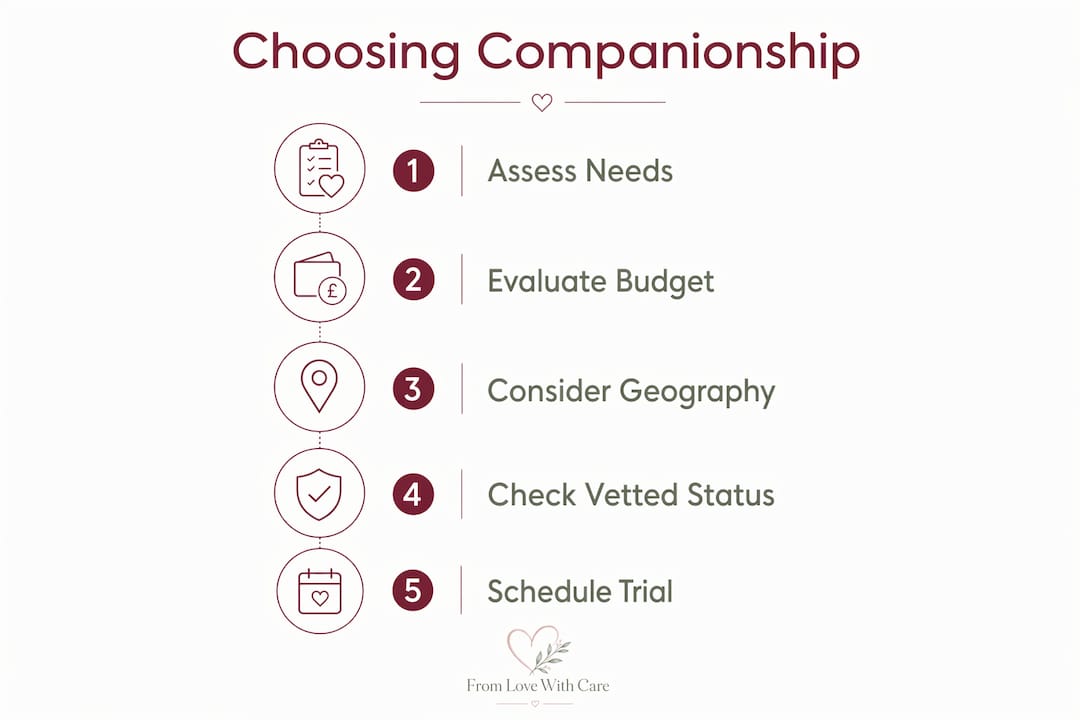
The starting point is an honest assessment of what the person actually needs, not just what feels manageable to arrange.
- Level of support: Pure companionship (conversation, shared activities, outings) differs from personal care (washing, dressing, medication reminders). If personal care is involved now or likely soon, choose a CQC-registered provider from the outset. Switching later is disruptive.
- Frequency and consistency: Someone with memory loss benefits most from the same face each visit. Ask any provider how they handle cover when a regular companion is unavailable.
- Geography: Group befriending and volunteer schemes vary considerably by area. Urban areas typically have more options; rural families may find private visiting care or telephone befriending more practical. Explore companionship options for older adults to compare what is available locally.
- Cost and funding: Visiting companionship in England typically costs £26–£38 per hour, while live-in companionship usually costs several hundred to over a thousand pounds per week. A free Care Act needs assessment from your local adult social services is the first step towards council funding. Attendance Allowance is not means-tested and can go directly towards companionship visits.
- Eligibility: Volunteer befriending schemes often have waiting lists and may prioritise the most isolated individuals. Homeshare requires a spare room and a broadly independent lifestyle.
Pro Tip: When a loved one is reluctant to accept help with meals, using non-returnable containers removes the practical and mental barrier of washing up and returning them, making it easier to say yes to support.
For families navigating bereavement alongside loneliness, supporting a grieving friend offers useful guidance on the emotional dimensions of social isolation.
What do families say about companionship services?
Families who have used vetted private companionship services consistently report the same shift: a loved one who had gone days without speaking to anyone becomes noticeably brighter, more talkative, and more engaged with daily life. The change is often visible within a few visits. For adults with memory loss, a familiar, trusted companion provides a sense of continuity that reduces anxiety and confusion. Families also describe relief at knowing someone caring and professional is present, particularly when they live at a distance. Reading safe in-home companionship guidance before arranging visits helps set realistic expectations and ask the right questions.
Fromlovewithcare: a trusted UK alternative worth considering
If you are weighing up the options discussed here, Fromlovewithcare offers something distinct among private companionship services. Its focus is entirely on emotional support and social connection, not personal care tasks, which means every visit is built around the person rather than a checklist.
Every companion is thoroughly vetted, with safety and professionalism built into the process from the start. Clients report genuine improvements in their loved ones' daily wellbeing, from brighter moods to greater confidence in accepting help. For adults living with loneliness or early memory loss, that consistency of trusted, warm contact makes a real difference to quality of life. Explore Fromlovewithcare's elderly companionship services or view the full range of support services to find the right fit.
Key takeaways
Choosing the right companionship service comes down to matching the type of support, regulatory status, and cost to the individual's actual needs and circumstances.
| Point | Details |
|---|---|
| Match service to need | Pure companionship suits social isolation; personal care needs require a CQC-registered provider. |
| Cost range | Visiting care costs £26–£38 per hour; live-in care runs £900–£1,400 per week nationally. |
| Funding routes | A Care Act needs assessment and Attendance Allowance can both reduce out-of-pocket costs. |
| Group befriending value | Group settings build social confidence and peer connection that one-to-one services alone cannot provide. |
| Fromlovewithcare | Offers vetted, emotionally focused companionship visits with documented wellbeing improvements for clients across the UK. |