

Safe in-home companionship is defined as non-medical, professional support that provides elderly people with social interaction, emotional presence, and safety oversight within their own home. It is the recognised industry term for what care professionals call "companion care," and it sits in a distinct category from personal care and medical home health services. Social isolation increases dementia risk by 26% and is linked to heart disease and stroke. That single statistic explains why families across the UK are turning to services like Fromlovewithcare to fill the gap between occasional family visits and full clinical care.
What is safe in-home companionship?
Safe in-home companionship covers social engagement, emotional support, light practical help, and safety monitoring, without crossing into clinical or personal care. The key word is "safe." A reputable companion service employs people who have passed background checks, received formal training, and are covered by insurance. Key safety indicators include those three criteria: training, background checks, and insurance. Families who hire privately, without agency oversight, lose those protections entirely.
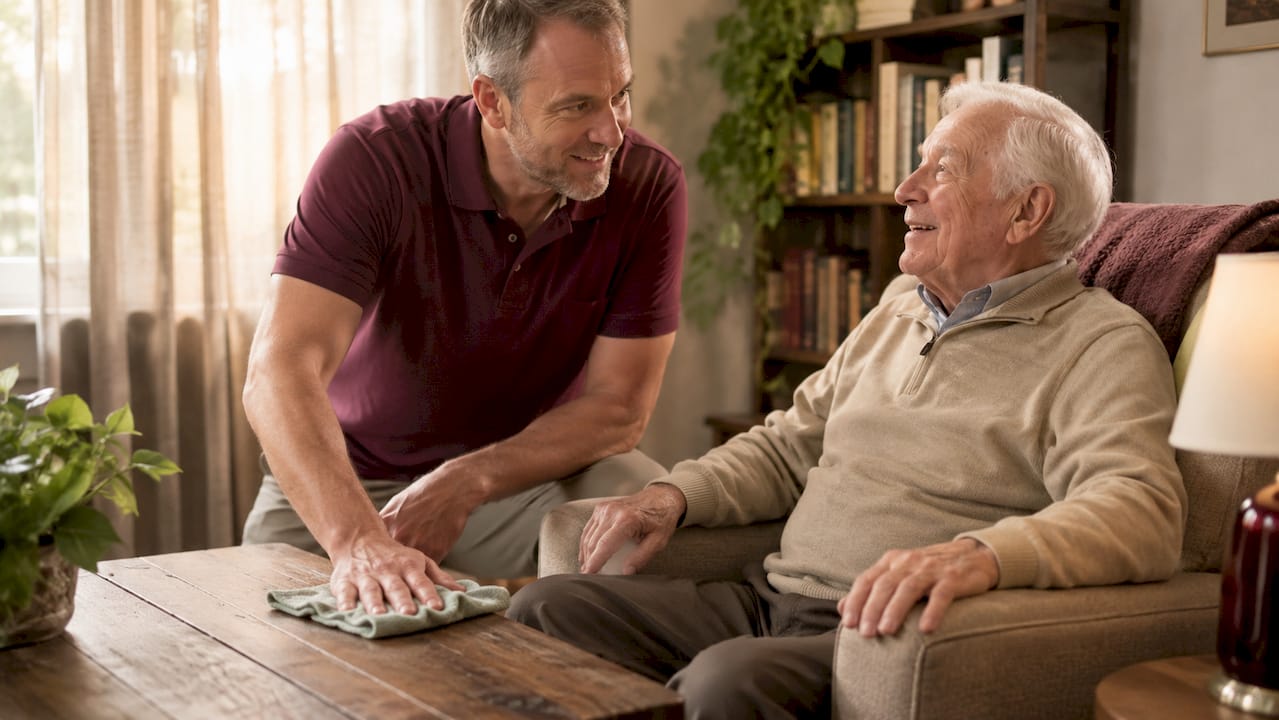
Companion care is a unique support category, founded on a trusted daily relationship that builds mental and emotional stability over time. It is not a substitute for a GP, a district nurse, or a care assistant. It is something different and, for many older adults, something more immediately felt: a friendly face, a shared cup of tea, and someone who notices when things are not quite right.
What companions do
- Conversation and companionship. Talking, listening, playing cards, reading aloud, or simply sitting together.
- Shared activities. Walking in the garden, attending a local group, watching a film, or pursuing a hobby.
- Emotional support. Providing consistent presence and empathy, particularly for people who live alone.
- Medication reminders. Prompting a person to take their medication at the correct time, without administering it.
- Light housekeeping. Tidying, clutter removal, and washing up. Light housekeeping excludes deep cleaning to prevent misunderstandings later.
- Meal preparation. Making simple, nutritious meals and sitting with the person while they eat.
- Errands and shopping. Accompanying someone to the shops or collecting groceries on their behalf.
- Safety monitoring. Checking for trip hazards, poor lighting, and changes in mood or mobility.
What companions do not do
Companions do not provide wound care, injections, catheter management, or any skilled nursing task. They do not assist with bathing, dressing, or toileting. Those tasks belong to trained care assistants or registered nurses. Mixing up these roles creates risk for the older person and legal exposure for the family.
Pro Tip: Ask any agency to send you their written scope of service before the first visit. A reputable provider will have a clear document that lists exactly what their companions will and will not do.
What does the evidence say about companion care?
The health case for companion care is strong and growing. Over 33% of adults aged 45 and over report loneliness, contributing to measurable physical health risks. Loneliness is not a mood. It is a clinical risk factor.
Social isolation is linked to dementia, heart disease, and stroke. The Alzheimer's Association identifies a preventive window where early social engagement builds cognitive reserve, reducing the long-term risk of dementia. Waiting until cognitive decline is visible means missing that window entirely. Regular companionship, started early, is a form of prevention, not just comfort.
"Companion care is distinct from medical care but critical for mental and emotional stability. It is the daily relationship, not the clinical intervention, that makes the difference."
Falls are another concrete risk. Approximately 36 million falls occur annually among seniors in the US. The UK picture is comparable in scale. A companion who visits regularly spots clutter on the stairs, a loose rug, or a poorly lit hallway before an accident happens. Regular companion visits allow early identification of risks including changes in mood and mobility that family members, visiting less frequently, may miss entirely.
The benefits of in-home companionship extend beyond the older person. Families report reduced anxiety and more meaningful visits when a trusted companion is already providing consistent daily support.
How does companion care compare with other home care types?
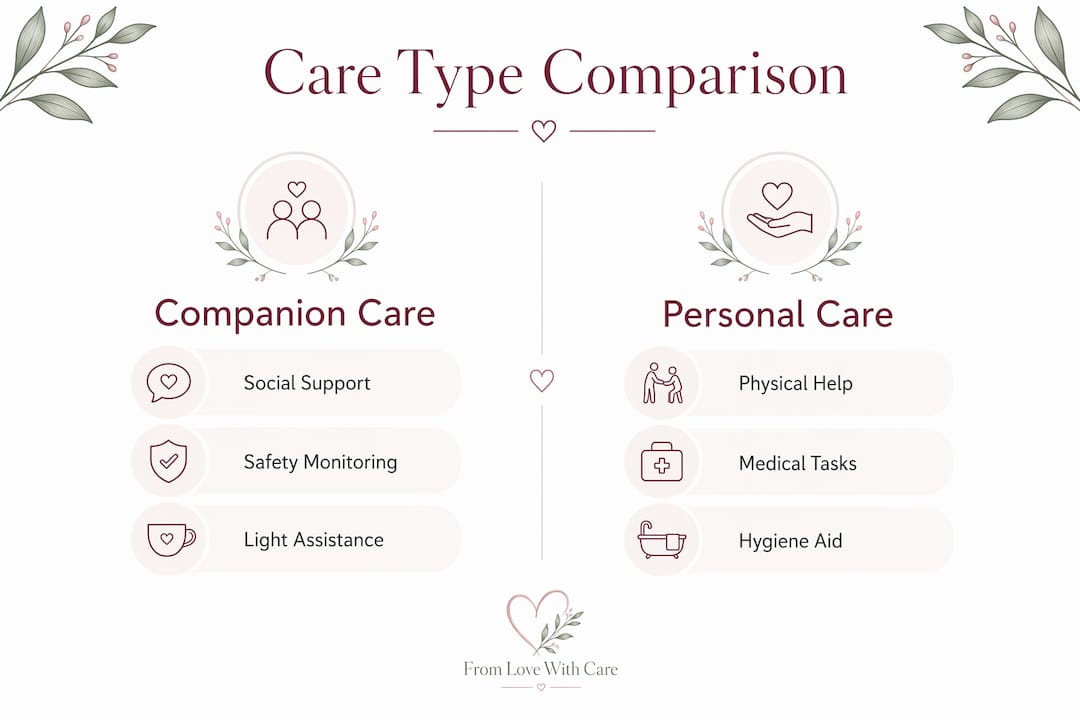
Families often confuse companion care with personal care or homemaker services. The differences matter because choosing the wrong level of support either leaves needs unmet or creates unnecessary cost.
| Care type | Core focus | Typical tasks | Clinical tasks |
|---|---|---|---|
| Companion care | Social and emotional support | Conversation, light housekeeping, errands, safety monitoring | None |
| Personal care | Physical assistance | Bathing, dressing, toileting, transfers | None, but hands-on |
| Homemaker services | Household management | Cleaning, laundry, cooking | None |
| Medical home health | Clinical treatment | Nursing, wound care, physiotherapy | Yes |
Companion caregivers do not perform skilled nursing tasks but provide supervision, reminders, and light assistance to support dignity and independence. Personal care, by contrast, involves direct physical contact and requires a trained care assistant. Medical home health requires a registered nurse or therapist and is prescribed by a clinician.
The right choice depends on what your loved one actually needs today, not what they may need in six months. Many older adults need companion care long before they need personal care. Starting companion care early builds a trusted relationship that makes later transitions far less disruptive.
How to choose a safe in-home companion service
Choosing a companion service is not simply a matter of finding someone kind. Safety, professionalism, and continuity all require active verification.
-
Check agency credentials. Confirm the agency conducts DBS (Disclosure and Barring Service) checks on all companions. Ask whether companions are employed by the agency or self-employed, as employed companions carry greater accountability.
-
Clarify the scope of care. Ask for a written list of tasks the companion will and will not perform. Ambiguity here causes friction later and, in the worst cases, puts your loved one at risk.
-
Ask about contingency plans. Families should inquire about agency contingency plans to avoid disruptions when a companion is absent. A quality agency has a named backup process, not a vague promise.
-
Assess companion compatibility. Shared interests, a calm manner, and patience matter as much as professional credentials. Ask whether you can meet the companion before the first visit.
-
Monitor early warning signs. Ask the companion to report changes in mood, appetite, mobility, or home conditions. Companions also provide medication reminders and flag safety concerns that families can then act on.
-
Consider the impact on family caregivers. Professional companionship alleviates family caregiver stress by offloading routine check-ins. Families report improved relationships and more focused visits as a result. The caregiver time freed by regular companion visits is not a luxury. It prevents burnout.
Pro Tip: During the first month, ask the companion to keep a brief written note after each visit covering mood, appetite, and any concerns. This creates a simple record that helps you spot patterns early.
Questions to ask in-home caregivers before committing to a service include: How are companions matched to clients? What happens if my loved one and the companion do not get on? How quickly can you respond if I raise a concern?
Key takeaways
Safe in-home companionship is the most overlooked preventive tool in elderly care, combining social engagement, safety monitoring, and emotional support without any clinical component.
| Point | Details |
|---|---|
| Clear definition | Companion care is non-medical support covering social engagement, emotional presence, and safety oversight. |
| Health evidence | Social isolation raises dementia risk by 26%; early companionship builds cognitive reserve and reduces falls. |
| Scope boundaries | Companions do not bathe, dress, or administer medication; those tasks require personal care or nursing staff. |
| Choosing safely | Verify DBS checks, written scope of service, and agency contingency plans before any companion begins. |
| Family benefit | Regular companion visits reduce caregiver burnout and improve the quality of family time with elderly relatives. |
Why I think families underestimate companion care
Families tend to think of companion care as a nice extra, something to arrange once everything else is in place. That is the wrong way round. In my experience, companion care is most powerful when it starts early, before a crisis forces the conversation.
The older adults who benefit most are not those with advanced needs. They are the ones who are still independent but quietly going days without a meaningful conversation. That silence is where the risk builds. In-home companionship fills a vital social and emotional role, providing steady presence that counters loneliness before it becomes a health emergency.
Families also underestimate how much companion care supports them. Companion care amplifies family love by managing routine tasks and engagement, reducing caregiver guilt and stress. When a trusted companion is already visiting three times a week, your own visits become lighter and more joyful. You stop arriving to check whether the fridge is stocked and start arriving simply to be present.
The misconception I hear most often is that arranging a companion feels like giving up. It is the opposite. It is one of the most deliberate, loving decisions a family can make.
— Ayomide
How Fromlovewithcare supports safe companionship in the UK
Fromlovewithcare specialises in professional, vetted companionship for elderly adults across the UK, with a focus on human connection rather than clinical tasks.

Every companion at Fromlovewithcare passes thorough background checks and is matched carefully to each client based on personality, interests, and routine. Services range from regular home visits and shared activities to loneliness support for those who have gone days without meaningful conversation. Families can also arrange welfare checks for adults living alone as a complement to regular companionship visits. To explore the full range of options, visit the Fromlovewithcare services page and arrange a visit for your loved one today.
FAQ
What does safe in-home companionship include?
Safe in-home companionship includes social interaction, emotional support, light housekeeping, meal preparation, errands, and safety monitoring. It excludes all clinical tasks such as wound care, medication administration, and personal care like bathing or dressing.
How is companion care different from personal care?
Companion care focuses on social and emotional support without physical hands-on assistance. Personal care involves direct physical help with bathing, dressing, and toileting, and requires a trained care assistant.
How do I know if a companion service is safe?
A safe companion service employs people who have passed DBS checks, received formal training, and are covered by insurance. Ask for written confirmation of all three before any companion begins visiting.
Can companion care reduce the risk of dementia?
The Alzheimer's Association identifies an early window where social engagement builds cognitive reserve, reducing long-term dementia risk. Starting companion care before cognitive decline appears makes the greatest difference.
What questions should I ask before choosing a companion?
Ask about DBS checks, the written scope of service, how companions are matched to clients, and what the agency's contingency plan is when a companion is absent. These four questions separate quality providers from the rest.