
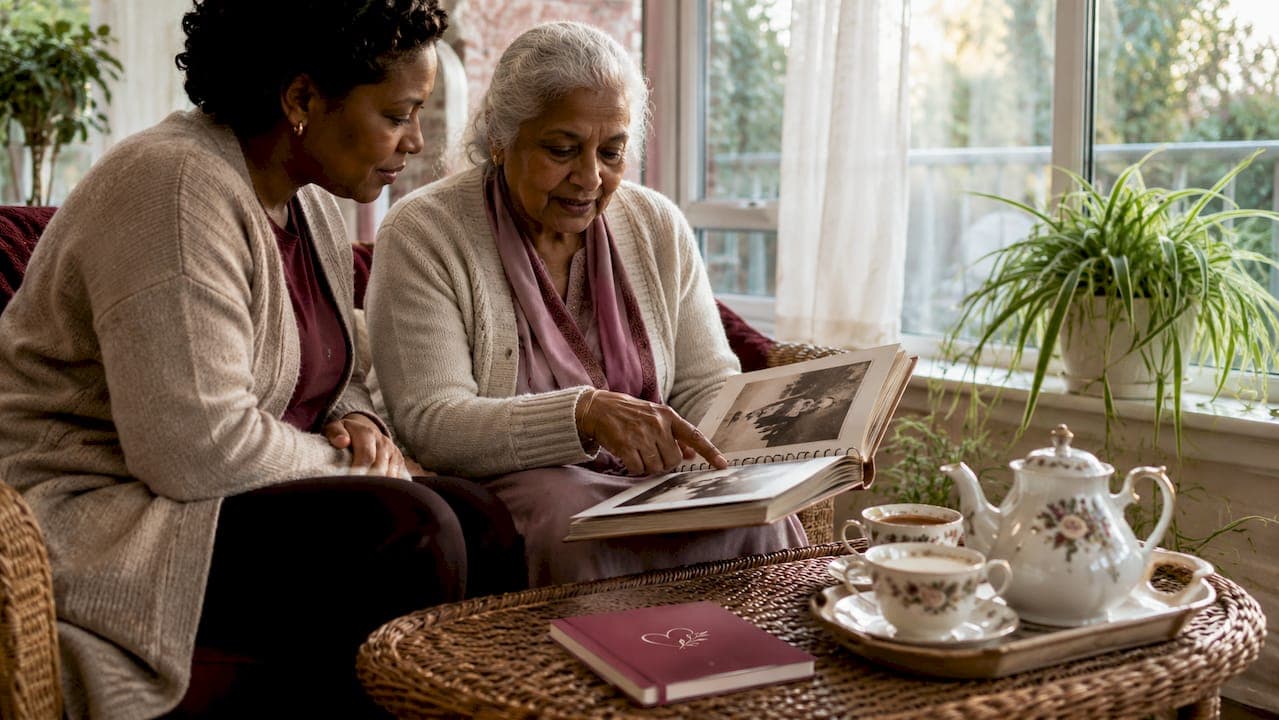
Building trust with an elderly companion is defined as the ongoing process of establishing emotional safety, mutual respect, and consistent communication between a senior and their carer or companion. Without this foundation, even the most well-intentioned support can feel intrusive or unwelcome. The Alzheimer's Society and the NHS both recognise that trust is not built through grand gestures but through small, repeated acts of reliability. For family members and caregivers, understanding how to gain elderly trust is the single most important skill in supporting a loved one's wellbeing and dignity.
How does building trust with an elderly companion actually work?
Trust in elderly companionship is built through consistency, not intensity. A senior who sees the same face at the same time each week, who hears a calm voice and feels unhurried attention, begins to associate that presence with safety. This is the core mechanism behind effective companionship for elderly individuals, and it applies whether the companion is a family member, a professional carer, or a volunteer.
The process mirrors what the NHS describes in post-diagnostic dementia support: structured, predictable sessions of three to ten clinician-led meetings, followed by open-ended ongoing support. This model works because it removes the anxiety of the unknown. Seniors, particularly those living with cognitive decline, respond to predictability in the same way anyone responds to a reliable friend. They relax, open up, and begin to share.
Improving relationships with elderly individuals also requires an honest acknowledgement that trust can take weeks or months to form. Rushing the process, or expecting warmth before it has been earned, is one of the most common mistakes caregivers make. Patience is not a soft skill here. It is the primary method.
What communication techniques build trust with seniors?
Good communication across dementia progression is largely non-verbal. The Alzheimer's Society is clear that calm tone, open body language, and facial expressions carry more weight than the words themselves. For caregivers, this means your posture, eye contact, and the pace of your speech are all active trust-building tools.
Practical communication techniques that support rapport with seniors include:
- Speak slowly and clearly, without raising your voice. Volume is not the same as clarity.
- Use open, relaxed body language. Sit at the same level as the person rather than standing over them.
- Make gentle eye contact to signal attention and presence without staring.
- Allow processing time. Older adults, especially those with cognitive changes, may need longer to respond. Silence is not failure.
- Avoid elderspeak, which is the habit of using overly simplified or infantilising language. It undermines dignity and erodes trust quickly.
- Use visual prompts and cue cards where appropriate, particularly for those with language difficulties or sensory impairments.
One area that surprises many caregivers is how to handle false beliefs. The Alzheimer's Society notes that people living with dementia are more distressed by correction than by the false belief itself. If a belief is not causing harm, reassurance is more effective than correction. This preserves emotional safety, which is the bedrock of trust.
Pro Tip: When a senior says something factually incorrect, try responding to the emotion behind the statement rather than the content. "That sounds worrying, tell me more" builds far more trust than "No, that's not right."
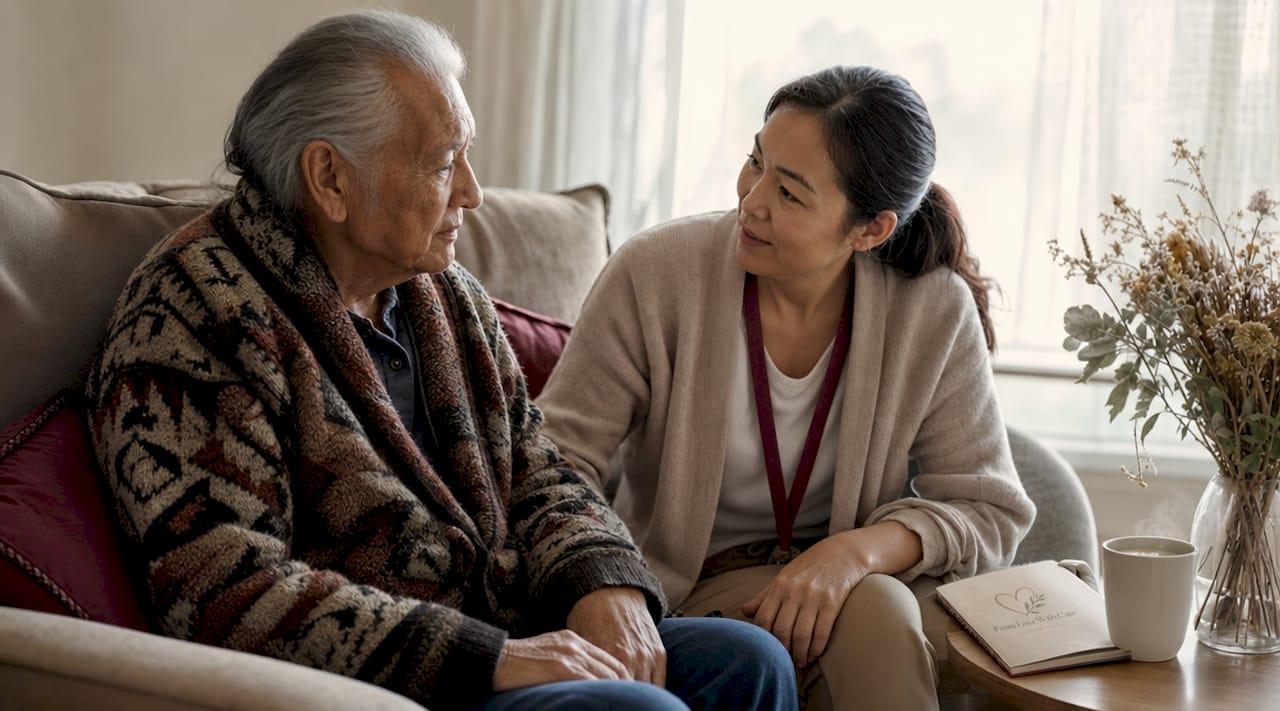
Communication accessibility also matters more than most caregivers realise. The Alzheimer's Society's partnership with the British Deaf Association highlights that aligning communication to a person's preferred format, whether visual, tactile, or signed, is not optional. It is the difference between connection and isolation.
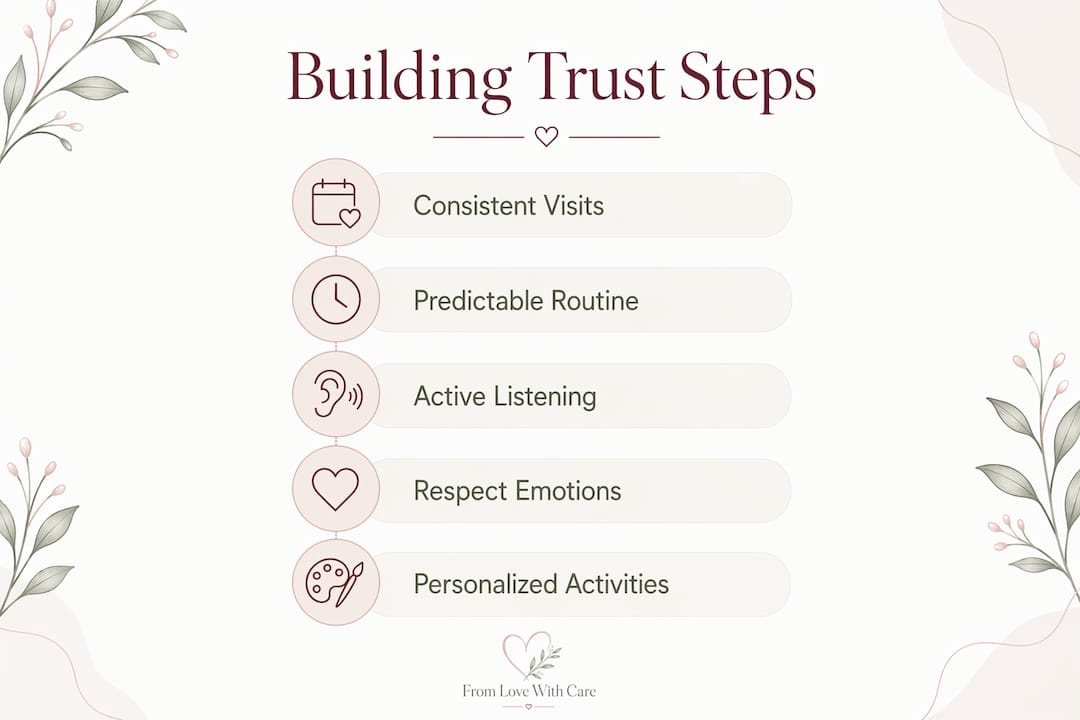
What trust-building exercises work best for elderly companionship?
Structured activities are among the most reliable trust-building exercises available to caregivers. They give both parties a shared focus, which reduces the pressure of direct social interaction and allows rapport to develop naturally. Social interaction supports behaviours linked to wellbeing and stress reduction, making regular engagement both emotionally and cognitively beneficial.
The following sequence works well for caregivers beginning a new companionship relationship:
- Start with short, predictable visits of 30 to 45 minutes. Brevity signals respect for the senior's energy levels and reduces overwhelm.
- Choose a familiar, low-pressure activity for the first few sessions. Sharing a cup of tea, looking through a photograph album, or listening to music together are all low-stakes ways to build comfort.
- Introduce gentle reminiscence conversations. Asking about a person's past, their work, their family, or their hometown, invites them to be the expert. This shifts the power dynamic in a healthy direction.
- Progress to collaborative activities such as simple baking, gardening tasks, or light craft projects. These create shared memories and a sense of accomplishment.
- Introduce group activities gradually once one-to-one trust is established. Group settings can reinforce social confidence and reduce isolation over time.
- Extend visit duration only when the senior signals readiness. Watch for signs of engagement: sustained eye contact, laughter, asking questions, or reluctance to end the visit.
Memory games and word association activities are particularly effective for seniors living with early-stage dementia. They provide gentle cognitive stimulation without the pressure of performance, and they give the companion a natural reason to offer encouragement and praise.
Pro Tip: Tailor every activity to the individual's history and preferences. A former teacher may respond well to word games; a retired gardener may light up when handling soil or seeds. Understanding elderly needs means looking at who they were, not just who they are now.
The NHS post-diagnostic model reinforces this approach. Ongoing carer support with no time limit is built into their framework precisely because trust in elderly care is not a milestone you reach. It is a relationship you maintain.
What tools help caregivers create a trusting environment?
The physical and social environment shapes trust as much as any conversation. Caregivers who support seniors' wellbeing consistently report that predictable routines and familiar surroundings reduce anxiety and make genuine connection easier.
The table below compares the most practical tools and methods available to caregivers building a trusting companionship environment:
| Tool or method | Purpose | Best used when |
|---|---|---|
| Visual aids and cue cards | Support communication for those with language difficulties | Dementia or hearing impairment is present |
| Consistent visit schedule | Reduces anxiety through predictability | Starting a new companionship relationship |
| Language mats | Provide visual vocabulary support during conversation | Verbal communication is limited |
| Reminiscence prompts | Encourage personal storytelling and dignity | Building initial rapport with a new companion |
| Peer support for caregivers | Prevents burnout and maintains empathy | Ongoing, long-term companionship roles |
| Environmental cues | Familiar objects and spaces reduce disorientation | Home visits with seniors living with dementia |
The NHS Memory Assessment and Management Service notes that family involvement and interpreters are built into their appointments, which reflects a broader truth: trust is not built in isolation. Caregivers who feel supported themselves are far better placed to offer consistent, warm companionship. Seeking peer support or professional guidance is not a sign of weakness. It is a professional standard.
What are the biggest challenges in building trust with elderly companions?
Even with the best intentions, caregivers encounter real barriers when creating rapport with seniors. Recognising these challenges early prevents small setbacks from becoming lasting damage to the relationship.
The most common obstacles include:
- Dementia-related anxiety and misperceptions. A senior may not recognise a companion from one visit to the next, which can feel deeply discouraging. Consistent non-verbal cues, such as a familiar scent, a preferred mug, or a habitual greeting, help re-establish safety quickly.
- Communication breakdowns. Misunderstandings happen, particularly when cognitive decline affects language processing. Repairing trust after a difficult interaction requires calm acknowledgement, not explanation or justification.
- Social isolation compounding distrust. Seniors who have gone long periods without meaningful contact may be guarded or withdrawn. The connection between isolation and poor wellbeing is well documented, and caregivers should expect a longer warm-up period with those who have been most isolated.
- Caregiver fatigue undermining consistency. Trust requires showing up reliably. When caregivers are exhausted or emotionally depleted, their tone and body language shift in ways seniors notice immediately.
"The quality of the relationship between a person with dementia and their carer is one of the most significant factors in their wellbeing." — Alzheimer's Society
Addressing caregiver wellbeing is not separate from supporting the elderly person. It is part of the same commitment. Caregivers who access community support, specialist services, or structured peer groups are better equipped to maintain the consistency that trust demands.
Key takeaways
Building trust with an elderly companion requires consistent communication, predictable routines, and emotional safety maintained through every interaction, not just the first.
| Point | Details |
|---|---|
| Non-verbal communication is primary | Tone, body language, and facial expressions build trust more reliably than words alone. |
| Predictable sessions reduce anxiety | Short, structured visits before extending duration mirrors NHS post-diagnostic best practice. |
| Avoid correcting false beliefs | Reassurance preserves emotional safety; correction causes more distress than the belief itself. |
| Tailor activities to the individual | Shared hobbies and reminiscence exercises build rapport by honouring who the person has been. |
| Caregiver wellbeing sustains trust | Consistent, warm presence requires caregivers to seek support for themselves as well. |
What I have learned about trust that most guides miss
By Ayomide
Most articles on supporting elderly companionship focus on what to do. Very few address what to stop doing. In my experience, the single most damaging habit caregivers bring into a new relationship is the need to fill silence. Silence with an elderly person, particularly one living with dementia, is not awkward. It is often the most trusting moment in the room. When you sit quietly and do not rush to fill the space, you are communicating something words cannot: "I am here, and I am not in a hurry."
I have also seen caregivers underestimate how much seniors read emotional states. A companion who arrives stressed, distracted, or performing cheerfulness will not be trusted, regardless of how kind their words are. Seniors, especially those with cognitive decline, have often lost the social filter that stops most people from noticing these things. They feel the incongruence directly.
The other pitfall I see repeatedly is treating trust as a phase to get through rather than a practice to maintain. Families sometimes breathe a sigh of relief when their loved one seems comfortable with a companion, and then reduce the consistency that created that comfort. Trust in elderly care is not a destination. It is a daily choice made through small, reliable actions.
The emotional reward of getting this right is genuinely profound. When an elderly person who was withdrawn and guarded begins to laugh, share stories, and look forward to visits, that transformation is not small. It is the difference between existing and living.
— Ayomide
How Fromlovewithcare supports trust through companionship
Fromlovewithcare was built around a simple truth: meaningful human connection is not a luxury for elderly people in the UK. It is a necessity. Every companion placed through Fromlovewithcare is thoroughly vetted and trained to build genuine rapport, not just provide a service. Visits are designed to be consistent, warm, and tailored to the individual, whether that means sharing a pot of tea, accompanying someone on a walk, or simply sitting together.
If you are a family member or carer looking for trusted home visits that prioritise emotional connection, Fromlovewithcare offers a range of companionship and loneliness support services designed specifically for elderly individuals across the UK. Arrange a visit today and take the first step towards lasting trust for your loved one.
FAQ
What is the most effective way to gain an elderly person's trust?
Consistency is the most effective method. Showing up at the same time, using a calm tone, and following familiar routines signals reliability, which is the foundation of trust in elderly companionship.
How long does it take to build trust with an elderly companion?
Trust typically develops over several weeks of regular, predictable contact. For seniors living with dementia, the process may take longer, and trust may need to be re-established at each visit through familiar cues and reassuring behaviour.
How should caregivers handle false beliefs when building rapport with seniors?
The Alzheimer's Society advises that reassurance is more effective than correction. If a false belief is not causing harm, responding to the emotion rather than the content preserves emotional safety and protects the trust relationship.
What trust-building exercises work for seniors with dementia?
Gentle reminiscence conversations, simple collaborative activities such as baking or gardening, and memory games are all effective. These exercises reduce performance pressure and give both parties a shared, positive focus.
Why does caregiver wellbeing matter for building trust with elderly companions?
Seniors are highly attuned to emotional states. A caregiver who is fatigued or emotionally depleted will communicate that through tone and body language, which undermines the consistency and warmth that trust requires. Accessing peer support or specialist services protects both the caregiver and the relationship.