

Loneliness in older adults is defined by a painful gap between the social connection a person has and the connection they need. Recognising the signs your elderly parent needs companionship is not always straightforward. Loneliness rarely announces itself directly. Instead, it surfaces through shifts in mood, changes in daily habits, and a quiet withdrawal from the people and activities that once brought joy. Spotting these signals early gives you the chance to act before emotional isolation deepens into something more serious.
1. Noticeable withdrawal from social activities
Withdrawal from social activities is one of the clearest indicators of isolation in elderly parents. Your parent may stop attending a weekly club, decline invitations from friends, or no longer initiate phone calls they once looked forward to. These changes tend to develop gradually over weeks or months, which makes them easy to miss unless you are watching for patterns.
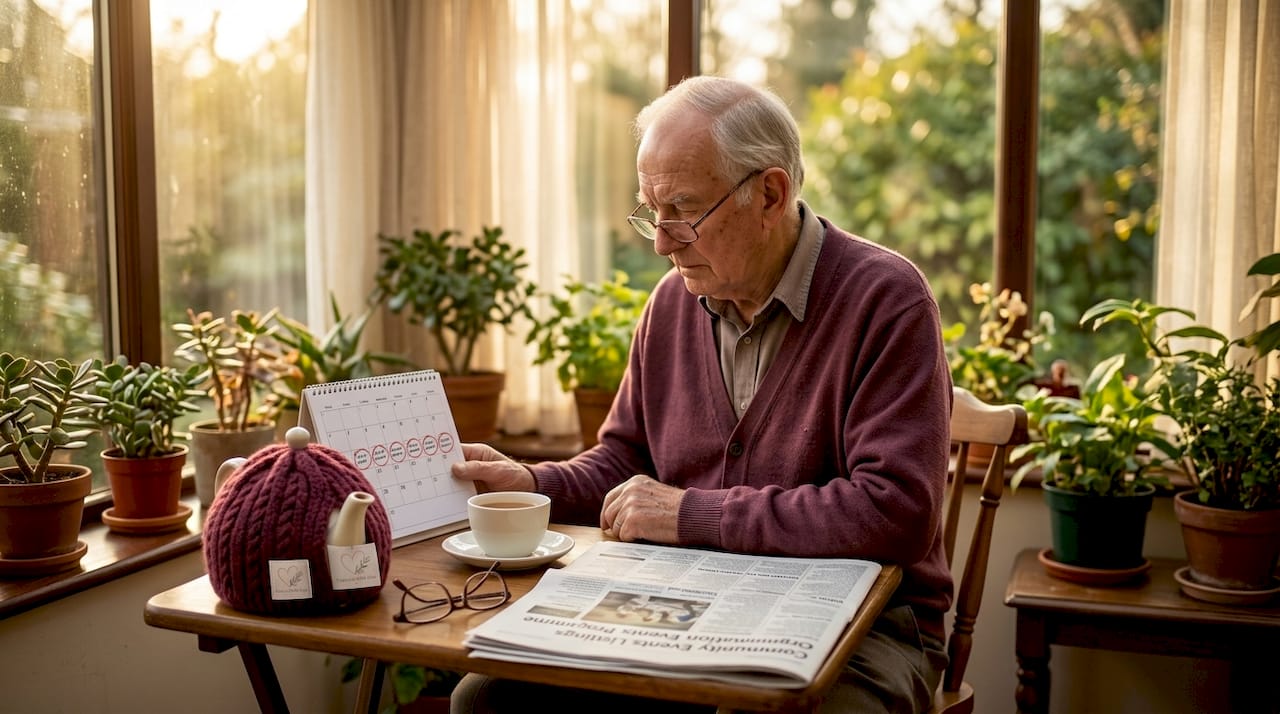
The key is to observe clusters of behaviour rather than a single incident. One cancelled lunch means little. A pattern of cancelled lunches, shorter phone calls, and less interest in familiar hobbies is a meaningful signal.
2. Persistent low mood or unexplained irritability
Persistent sadness, tearfulness, or a short temper that feels out of character are warning signs of senior depression and loneliness that often appear together. Your parent may not describe themselves as sad. They may simply seem flat, disengaged, or unusually snappy during your visits. This shift in emotional tone is the body's way of signalling unmet social need.
Irritability in particular is frequently overlooked because it can seem like a personality change rather than a symptom. When it appears alongside other signs on this list, treat it seriously.
3. Changes in sleep patterns
Disrupted sleep, whether sleeping far more than usual or struggling to sleep at night, is a physiological sign that loneliness is taking a toll. Research confirms that loneliness causes metabolic and sleep dysregulation, placing measurable strain on the cardiovascular and cerebrovascular systems. This means poor sleep linked to loneliness is not simply tiredness. It is a physical health risk.
If your parent mentions lying awake at night or napping through most of the day, ask gently about how they are spending their time and who they have spoken to recently.
4. Reduced appetite or weight loss
A parent who has lost interest in cooking, is skipping meals, or has lost weight without a clear medical reason may be experiencing the emotional effects of eating alone. Sharing food is a deeply social act, and when mealtimes become solitary, appetite often suffers. This is one of the more physical companionship needs for seniors that families tend to attribute to ageing rather than loneliness.
Weight loss always warrants a conversation with a GP. At the same time, consider whether your parent has anyone to share meals with on a regular basis.
5. Neglect of personal hygiene or home environment
When a parent who previously took pride in their appearance stops washing regularly, wears the same clothes for days, or allows their home to become untidy, this is a significant warning sign. Neglect of personal care is listed among the core elderly loneliness signs because self-care is closely tied to social motivation. When there is no one to see or no reason to go out, the effort of maintaining routines can feel pointless.
This sign warrants both a compassionate conversation and, if the change is sudden, a medical check to rule out depression or infection.
Pro Tip: When you visit, look beyond the surface. A fridge with little food, unwashed dishes, or unopened post are quiet signals that daily life has become harder to manage alone.
6. Expressing feelings of boredom or emptiness
Many older adults will never use the word "lonely." Research shows that older adults rarely name loneliness directly, but they will often describe feeling bored, purposeless, or as though the days are too long. These expressions carry the same emotional weight. Prompts such as "What did you do yesterday?" or "Who have you spoken to this week?" tend to reveal far more than asking "Are you lonely?"
Listen for phrases like "I just sit here," "There's nothing to do," or "I don't see the point." These are not complaints to brush aside. They are direct expressions of unmet emotional need.
7. Memory difficulties or increased confusion
Memory changes and confusion in an elderly parent can have many causes, including dementia, urinary tract infections, or medication side effects. Loneliness is also a contributing factor. Loneliness overlaps with cognitive decline and can mimic or worsen early dementia symptoms. This overlap makes it critical to seek a clinical assessment rather than assuming any single cause.
What matters here is that addressing loneliness and seeking medical evaluation are not competing priorities. Both must happen at the same time.
Pro Tip: If your parent's hearing or vision has declined, this may be making social interaction harder and more exhausting. Updating sensory aids such as hearing aids or glasses can reduce the effort involved in conversation and meaningfully improve companionship outcomes.
8. Reduced engagement with hobbies or interests
A parent who once painted, gardened, read avidly, or followed a favourite sport but has quietly stopped is showing a significant sign of emotional withdrawal. The importance of socialisation for elderly adults is closely tied to having activities that carry personal meaning and, ideally, a social dimension. When hobbies disappear, it often signals that motivation and purpose have dimmed.
Ask about specific activities rather than general wellbeing. "Have you been in the garden lately?" opens a more honest conversation than "Are you keeping busy?"
9. Increased reliance on television or screens for company
Television is not inherently a problem, but when it becomes the primary source of company throughout the day, it signals a gap in human connection. A parent who has the television on from morning to night, who narrates programmes to you as though sharing news, or who seems more engaged with on-screen personalities than real relationships is communicating a need for genuine human interaction.
This is one of the subtler indicators of isolation in elderly adults that families often normalise. Passive screen time does not meet the emotional needs of ageing parents in the way that real conversation does.
10. Telling you they miss people or valued connections
When your parent mentions a deceased spouse repeatedly, talks about friends they no longer see, or expresses that they miss how life used to feel, they are communicating a longing for connection. This is not simply grief or nostalgia. It is a direct expression of unmet companionship needs for seniors that deserves a thoughtful, practical response.
Meaningful connection reduces loneliness more effectively than simply increasing the number of social interactions. Quality and emotional resonance matter far more than frequency alone.
11. How to tell loneliness apart from depression or illness
Loneliness and clinical depression share many symptoms, but they respond differently to social contact. A parent whose mood lifts noticeably during a visit, a phone call, or a shared activity is more likely experiencing loneliness than a clinical depressive episode. Depression tends to persist regardless of social input.
The table below outlines the key differences to help you navigate this distinction:
| Feature | Loneliness | Clinical depression or illness |
|---|---|---|
| Response to social contact | Mood often improves with company | Mood remains low despite interaction |
| Duration | Linked to periods of reduced contact | Persistent across weeks regardless of context |
| Physical symptoms | Sleep and appetite changes | Sleep, appetite, fatigue, and physical pain |
| Cognitive changes | Mild confusion or forgetfulness | Significant memory loss or disorientation |
| Appropriate response | Companionship and social support | Medical assessment and clinical treatment |
Loneliness can mimic medical conditions and must be treated as both an emotional issue and a trigger for clinical evaluation. If you are unsure, consult a GP. The two responses are not mutually exclusive.
Pro Tip: When speaking with your parent's GP, describe specific behavioural changes with timelines rather than general concerns. "She stopped calling her sister three weeks ago and has lost half a stone" is far more useful than "She seems a bit down."
Key takeaways
Recognising signs your elderly parent needs companionship requires watching for clusters of emotional, behavioural, and physical changes over time, not isolated incidents.
| Point | Details |
|---|---|
| Watch for clusters, not single signs | Patterns across mood, sleep, appetite, and withdrawal are more reliable than any one behaviour. |
| Loneliness rarely names itself | Use open-ended prompts like "What did you do yesterday?" to surface unmet emotional needs. |
| Physical symptoms are real | Sleep disruption and weight loss linked to loneliness carry genuine cardiovascular and metabolic risks. |
| Distinguish loneliness from depression | Loneliness typically responds to social contact; persistent low mood warrants clinical assessment. |
| Meaningful contact matters most | Small, consistent social routines provide more emotional benefit than occasional larger visits. |
What I have learned about spotting loneliness in elderly parents
Working closely with families navigating this issue, the pattern I see most often is not dramatic. It is quiet. A parent who used to call every Sunday stops calling. A father who loved his allotment stops mentioning it. These small absences are easy to explain away, and that is precisely why they are so often missed.
The most common mistake adult children make is waiting for their parent to say "I am lonely." Most never will. Older adults rarely express loneliness directly, and many feel shame or a reluctance to burden their children. Your job is not to wait for the words. It is to notice the silence where conversation used to be.
What I have found genuinely helpful is the idea of small, predictable contact rather than large, infrequent visits. A ten-minute call at the same time each week builds more emotional security than a monthly afternoon visit. Routine signals to an older person that they are remembered and expected. That alone carries significant weight.
If you are balancing your own work, family, and wellbeing alongside caring for a parent, that tension is real and it deserves acknowledgement. You do not have to do this alone, and seeking professional companionship support is not an admission of failure. It is one of the most loving things you can arrange.
— Ayomide
How Fromlovewithcare supports lonely elderly parents
If you have recognised several of these signs in your parent, the next step is finding consistent, trustworthy support that goes beyond what family visits alone can provide.

Fromlovewithcare offers elderly companionship services across the UK, matching thoroughly vetted companions to the specific emotional and social needs of each senior. Whether your parent would benefit from a shared cup of tea, a gentle walk, or simply having someone to talk to each week, these visits are designed around genuine human connection rather than task-based care. Families consistently report that regular companion visits bring visible improvements in their loved one's mood, appetite, and daily engagement. Explore the full range of companionship services and find the right level of support for your parent today.
FAQ
What are the most common signs an elderly parent needs companionship?
The most common signs include withdrawal from social activities, persistent low mood or irritability, neglect of personal hygiene, changes in sleep or appetite, and expressions of boredom or emptiness. These signs tend to appear in clusters rather than in isolation.
How do I start a conversation with my parent about loneliness?
Use open-ended, non-confrontational questions such as "What have you been up to this week?" or "Who have you spoken to lately?" rather than asking directly if they feel lonely, as older adults rarely use that word to describe their experience.
Can loneliness cause physical health problems in older adults?
Yes. Loneliness is associated with cardiovascular and metabolic health risks including sleep disruption and increased strain on the heart and brain. It is a measurable physical health issue, not simply an emotional one.
How is loneliness different from depression in elderly people?
Loneliness typically improves when social contact increases, whereas clinical depression persists regardless of company. If your parent's mood lifts noticeably during visits but drops again when alone, loneliness is the more likely cause. Persistent low mood lasting several weeks warrants a GP assessment.
How often should a companion visit to make a real difference?
Companionship support can be tailored from a few visits per week to daily engagement depending on need. Consistent, regular contact matters more than the length of any single visit, as routine and predictability are central to emotional wellbeing in older adults.