
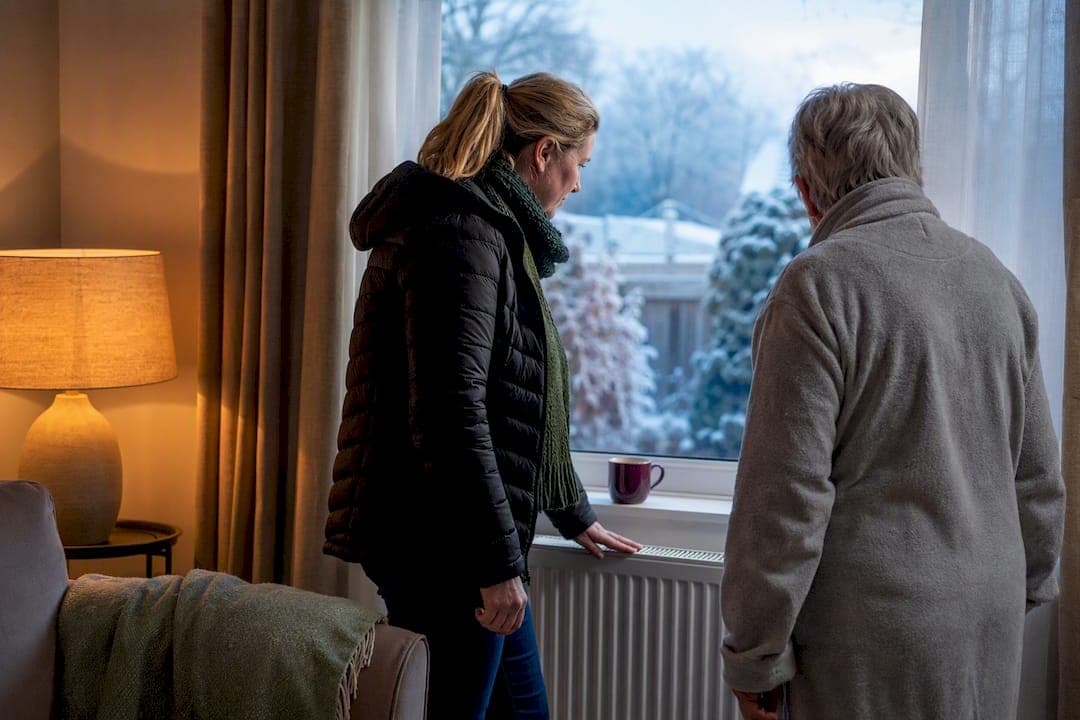
The safest way to arrange cold weather welfare checks in the UK is to book a companion with an enhanced DBS check, transparent hourly pricing, and a short trial visit before you commit to a schedule. If money is tight, ask your local council for a care needs assessment first, as this can unlock direct payments towards the cost. Do those three things and everything else falls into place.
TL;DR:
- Verify that the companion has an up-to-date enhanced DBS check issued within the last twelve months before booking a winter visit.
- Expect private care costs between £15 and £32 per hour, with higher rates for urgent, evening, or severe weather visits.
- Ensure the companion carries insurance, has valid references, and is employed or managed properly to avoid legal or safety issues.
- Conduct a trial visit to assess compatibility and observe the companion's ability to address safety checks like heating, lighting, and walkways.
- Prepare the home with accessible heating controls, warm clothing, and safety essentials, and establish a clear escalation plan for severe weather or emergencies.
Table of Contents
- How do you book cold weather welfare checks in the UK?
- What DBS checks should you verify before hiring a companion?
- What does a cold weather welfare check actually involve?
- What do cold weather welfare checks cost in the UK?
- Preparing the home and your relative before a winter visit
- Why continuity and vetting matter more than families expect
- Ready to book a DBS-checked companion this winter?
- Sources
How do you book cold weather welfare checks in the UK?
Winter is when isolated relatives are most at risk. Cold homes, icy paths, and shorter daylight hours all make regular check-ins more urgent between November and March, so the first decision is frequency. A relative with a chest condition or mobility problems might need daily visits during a cold spell; someone who is simply isolated might manage well with two or three visits a week, topped up with an emergency visit if temperatures drop sharply.
You have three routes to arrange this. A vetted companionship service, like Fromlovewithcare, handles recruitment, DBS checks, and payroll for you, which removes most of the admin burden. Going through your local council after a care needs assessment can bring funded or part-funded support, though waiting times vary by area. Private hiring is usually the cheapest option, but it makes you the employer, with all the paperwork that brings.
Once you have chosen a route, work through this checklist:
- Decide how often visits are needed, and whether you want a standing arrangement for emergency check-ins during severe weather warnings.
- Ask to see proof of an enhanced DBS certificate, right to work documents, and at least two references.
- Check whether the provider carries insurance and ask how they handle continuity if your usual companion is unavailable.
- Book a trial visit so your relative and the companion can meet before any regular schedule begins.
- Agree the practical details in writing: arrival window, visit length, what tasks are and are not covered, and who gets contacted if something is wrong.
Pro Tip: Ask any provider what happens if your regular companion is off sick during a cold snap. A good service will name a backup who already knows your relative's routine, rather than sending someone new with no context.
What DBS checks should you verify before hiring a companion?
An enhanced DBS check is the minimum standard for anyone visiting a vulnerable adult alone in their home, and in Scotland the equivalent is a PVG scheme record. Government guidance is clear that this needs verifying properly, not taken on trust. Ask to see the certificate itself and check the issue date; a check from several years ago tells you far less than one from the past twelve months.
Beyond the DBS certificate, a few other documents are worth requesting:
- Proof of right to work in the UK.
- Two contactable references, ideally from previous care or companionship work.
- Evidence of any first-aid or basic training claimed, rather than just a verbal mention.
- Confirmation of who employs the companion and who carries public liability insurance.
One detail families frequently miss: a certificate number or online status page is not the same as physically checking a document. DBS guidance recommends verifying the certificate in person, including the issue date, rather than relying on a screenshot or a claim made over the phone.
CQC registration matters mainly for agencies delivering regulated personal care, such as help with washing or medication administration. Companionship visits, which are non-medical by nature, generally sit outside CQC's remit, but a provider that also offers regulated care alongside companionship should still be registered for that side of the business.
Employment status matters more than most families expect. If you hire privately, you become the employer, responsible for PAYE, National Insurance, and holiday pay. An agency or platform that manages payroll removes that burden, usually for a higher hourly rate. Treat any reluctance to show documentation, vague or unverifiable references, or the absence of a written visit plan as a reason to look elsewhere.
What does a cold weather welfare check actually involve?
A winter welfare visit is a non-medical check focused on safety, warmth, and company; it is not personal or clinical care. Most visits cover the same core ground, whatever the provider.
- Checking the heating is working and set to a sensible temperature, and making or arranging a hot drink.
- Confirming warm clothing and blankets are accessible, not just stored away in a cold spare room.
- Checking there is enough food in, and offering a gentle reminder about medication timing.
- Clearing walkways of trip hazards, testing that smoke and carbon monoxide alarms are working, and confirming a phone is within easy reach.
Pro Tip: Ask your companion to leave a short note after every visit, even a couple of lines. A pattern of "seemed a bit breathless today" across three visits is far more useful to a GP than one worried phone call after the fact.
Reporting matters as much as the visit itself. A good companion flags signs of hypothermia, confusion, repeated falls, or a home that is noticeably colder than it should be. In a genuine emergency, such as a fall in freezing temperatures, the priority is warmth and calling for medical help immediately, followed by contacting family. This is companionship with a safety layer, not a substitute for medical care.
What do cold weather welfare checks cost in the UK?
Private visiting care in the UK typically runs from £15 to £32 per hour, depending on your area and the provider. Expect the higher end of that range, or above it, for short-notice bookings, evening and weekend visits, and genuine emergencies during severe weather.
Funding does not always have to come entirely from your own pocket. Councils can help after a care needs assessment, and if your relative qualifies, a financial assessment may lead to direct payments they can put towards a companion of their choosing. Attendance Allowance is worth checking separately: it is not paid to councils, but an eligible person receives it directly and can use it towards companionship visits if they choose.
A few practical habits keep costs predictable:
- Book regular scheduled visits rather than constant ad hoc calls, which tend to cost more per hour.
- Ask about block bookings if you know winter will mean several visits a week.
- Agree fixed duties upfront so a visit does not quietly run over and trigger extra charges.
Preparing the home and your relative before a winter visit
A few minutes of preparation makes each visit far more useful. Work through this short list before the first booking, and revisit it whenever the weather turns properly cold.
- Make sure heating controls are easy to reach and understand, ideally with instructions written down somewhere visible.
- Clear walkways inside and out, and keep warm clothing and blankets somewhere accessible rather than in a back cupboard.
- Leave a kettle, tea, and a couple of mugs within easy reach, alongside an emergency contact list by the phone.
- Organise medications with clear instructions, and note any recent health changes or mobility issues the companion should know about.
- Write down an escalation plan for severe weather, agree it with the provider, and book a daytime trial visit to check the arrangement actually works in practice.
A few small fixes take barely any time: grit or salt near the front step, a quick test of the smoke alarm, and a spare phone charger left by the armchair or bedside.
Why continuity and vetting matter more than families expect
Loneliness during winter is not simply an emotional problem. Isolated adults visited by the same person regularly tend to fare better than those who see a rotating cast of strangers, and that is the principle Fromlovewithcare builds its service around: compassionate, consistent companionship rather than transactional care visits. A shared cup of tea or a trip to the shops does more for someone's week than most families realise, and it works precisely because it is the same familiar face turning up.
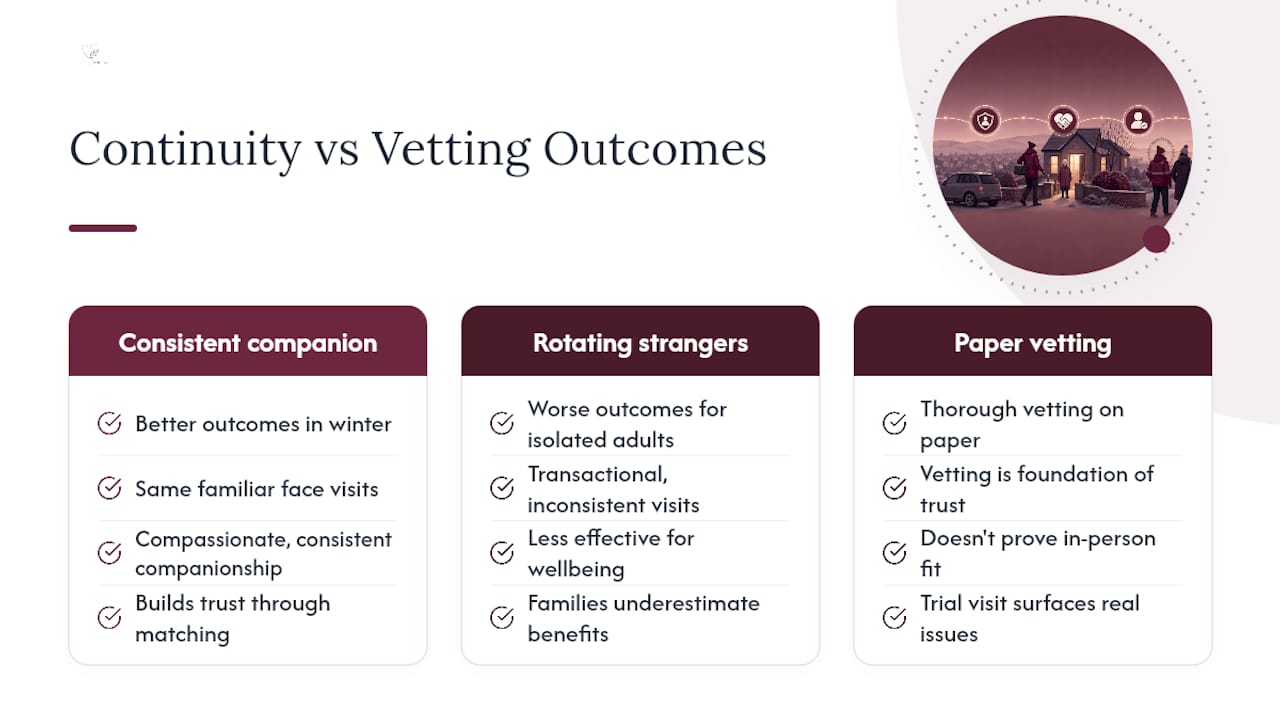
Every companion is thoroughly vetted before being matched with a family, which is not a box-ticking exercise so much as the foundation of trust the whole relationship depends on.
What tends to get underestimated is how quickly a trial visit surfaces problems that a phone call never would. Vetting on paper tells you someone is safe. A trial visit tells you whether they are actually right for your relative, and that distinction is where most families go wrong when they book on price alone.
— Ayomide
Ready to book a DBS-checked companion this winter?
Fromlovewithcare gives you something a one-off private booking rarely can: the same familiar companion visiting week after week, fully DBS-checked, without you having to manage payroll, references, or contracts yourself. Booking starts with a short conversation about your relative's needs, followed by DBS verification, transparent hourly pricing agreed upfront, and a trial visit before any regular schedule locks in.
There is no long tie-in and no pressure to commit beyond what suits your family. You choose the frequency, from a single weekly check-in to daily visits during a cold snap, and you can adjust as the weather changes. Every visit includes a warmth and wellbeing check as standard, alongside the company your relative actually looks forward to. Explore our elderly companionship services or browse the full range of companionship and welfare-check options to arrange a consultation and get your relative's winter visits booked in before the next cold spell arrives.