

Approximately 2 million older individuals in England live alone, and over 1 million experience social isolation lasting more than a month, highlighting the importance of expressing social preferences to a companion clearly as one of the most effective ways to protect both wellbeing and connection. When you share what you enjoy, what you need, and how you like to spend time together, you give the relationship a genuine foundation. Silence rarely serves anyone well. Expressing social preferences to a companion clearly is one of the most effective ways to protect both wellbeing and connection. When you share what you enjoy, what you need, and how you like to spend time together, you give the relationship a genuine foundation. Silence rarely serves anyone well.
How to express your social preferences to a companion
Clear, kind communication is the starting point for any supportive companionship. UK social care law under the Care Act 2014 and Human Rights Act 1998 protects every individual's right to express their views and preferences, regardless of communication ability. You are entitled to speak up.
Practical steps to get started:
- Use "I" statements. Say "I enjoy quieter outings" rather than "you always choose noisy places." This reduces blame and keeps the conversation constructive.
- Choose the right moment. Raise preferences during a calm, unhurried time, not mid-activity or when either person feels stressed.
- Be specific. "I'd love to visit the park on Tuesdays" is far clearer than "I'd like to get out more."
- Be assertive, not apologetic. Sharing your needs is not selfish. Framing requests as mutual benefits builds trust rather than tension.
- Ask about their preferences too. Reciprocity strengthens the relationship. A companion who feels heard is more likely to listen in return.
- Welcome a welcoming environment. Feeling respected and feeling unhurried makes open expression far easier.
- Review preferences over time. Needs shift with health and circumstance. What suits you today may not suit you in six months.
Fromlovewithcare builds every companionship arrangement around exactly this principle: the person at the centre, their preferences respected from the very first visit.
Practical techniques for communicating social likes effectively
Good communication with a companion takes a little preparation, especially if speaking up feels unfamiliar or uncomfortable.

Writing down your needs before a conversation reduces anxiety and keeps the discussion focused. It also helps you notice which preferences matter most. Once you have clarity yourself, sharing it becomes much simpler.
Pro Tip: Jot down two or three social preferences before your next visit, including one thing you'd like to do more of and one you'd prefer to avoid. Rehearsing a sentence or two aloud beforehand can make the actual conversation feel far less daunting.
Adapting to your companion's communication style matters too. Some people respond warmly to direct requests; others need a gentler, more gradual approach. Professional boundaries in care relationships exist to protect both parties, and setting expectations early keeps things clear and comfortable for everyone.
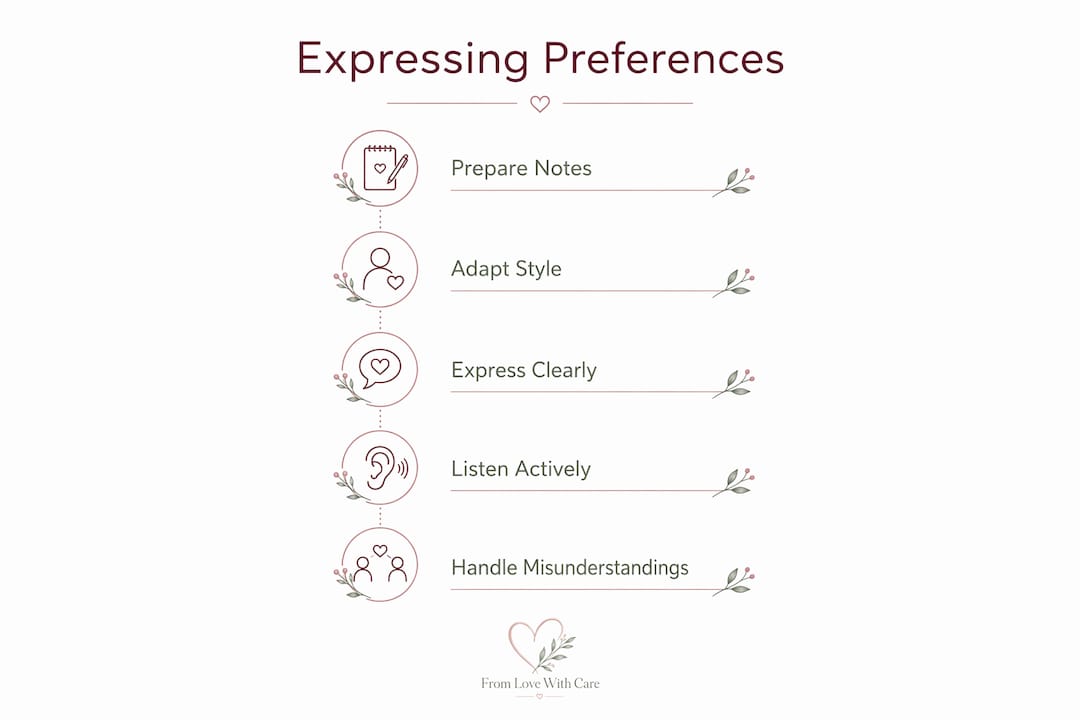
When misunderstandings arise, approach them with curiosity rather than frustration. Active listening, genuine empathy, and a willingness to negotiate go a long way. NICE guidance is clear that care providers must regularly seek feedback and adapt to individual preferences. The same principle applies in any companionship relationship: ongoing dialogue is what keeps it working well. Useful resources on thoughtful digital communication can also support self-expression for those who find face-to-face conversations harder.
Fromlovewithcare: companionship built around you
Fromlovewithcare offers something genuinely different from standard care: companionship that centres entirely on human connection, warmth, and your social wellbeing. Every companion is thoroughly vetted, and every arrangement begins with a conversation about what matters to you, from the activities you enjoy to the pace you prefer.
Whether you want a familiar face for a weekly walk, a cup of tea and a chat, or support getting out into your community, Fromlovewithcare matches you with a companion who fits. There are no rigid task lists, just time spent in a way that feels right for you. Find out more about elderly companionship services or browse the full range of compassionate support options to arrange a visit.
Key takeaways
Expressing social preferences clearly and kindly to a companion is the single most effective way to build a relationship that genuinely supports your wellbeing.
| Point | Details |
|---|---|
| Use "I" statements | Focus on your feelings and needs, not the companion's behaviour, to reduce conflict. |
| Prepare in advance | Writing down preferences before a conversation reduces anxiety and keeps discussion focused. |
| Review preferences regularly | Needs change with health and circumstance; ongoing dialogue keeps companionship relevant. |
| Know your legal rights | The Care Act 2014 and Human Rights Act 1998 protect your right to express views and preferences. |
| Fromlovewithcare | Arranges vetted, person-centred companionship built around your social preferences from the first visit. |