

Communicating care needs to a companion is the process of clearly expressing your preferences, boundaries, and requirements so that support feels respectful, personal, and safe. Whether you are arranging companionship for an elderly relative or for yourself, getting this communication right from the start makes a real difference. The UK Care Certificate Standard 6 trains care workers to document communication preferences in person-centred records, which means the responsibility for sharing those preferences rests with you. Clear, honest dialogue builds trust, protects dignity, and ensures your companion can adapt their support as your needs evolve.
What does communicating care needs to a companion involve?
Communicating care needs to a companion means more than listing tasks. It means sharing your routines, your boundaries, your preferred way of speaking, and the kind of emotional support you value. Poor communication can lead to misunderstandings, safety risks, and feelings of exclusion. Getting it right from the outset protects both you and your companion.
The UK Care Certificate, updated for 2026, requires companions and care workers to use plain English, practise active listening, and allow sufficient processing time during conversations. These are not just professional courtesies. They are standards that you can reasonably expect from any vetted companion. Knowing this gives you confidence to ask for the communication style that suits you best.
Active listening is the foundation of any good care relationship. Active listening involves full attention, eye contact, acknowledgement of what is said, and clarifying questions. It builds trust far more reliably than task completion alone.

How to prepare before discussing your care requirements
Preparation makes the first conversation with a companion far less daunting. Before you meet, take time to write down your daily routines, your preferences, and anything you would prefer a companion not to do. This list becomes the starting point for every discussion.
Several practical tools help structure this preparation:
- Communication passport: A short document, sometimes with photos or symbols, that summarises how you communicate, what you like, and how you show distress or discomfort.
- Easy-read profile: A simplified version of your care preferences using plain language and visuals, particularly useful for individuals with learning disabilities or dementia.
- Preference checklist: A written list covering visit timing, activities, dietary needs, cultural or religious considerations, and privacy boundaries.
- Language and tone notes: A brief note on whether you prefer formal or informal conversation, your first language, and any words or phrases that feel uncomfortable.
Communication passports and easy-read profiles help companions understand non-verbal cues and set clear baseline behaviours. They are especially valuable when the care recipient cannot always speak for themselves.
| Tool | Best used for | Key benefit |
|---|---|---|
| Communication passport | Complex needs, dementia, sensory impairment | Captures non-verbal cues and distress signals |
| Easy-read profile | Learning disabilities, low literacy | Simplifies preferences using visuals |
| Preference checklist | All care recipients | Covers routines, activities, and boundaries |
| Written boundary list | All care recipients | Prevents misunderstandings from the start |
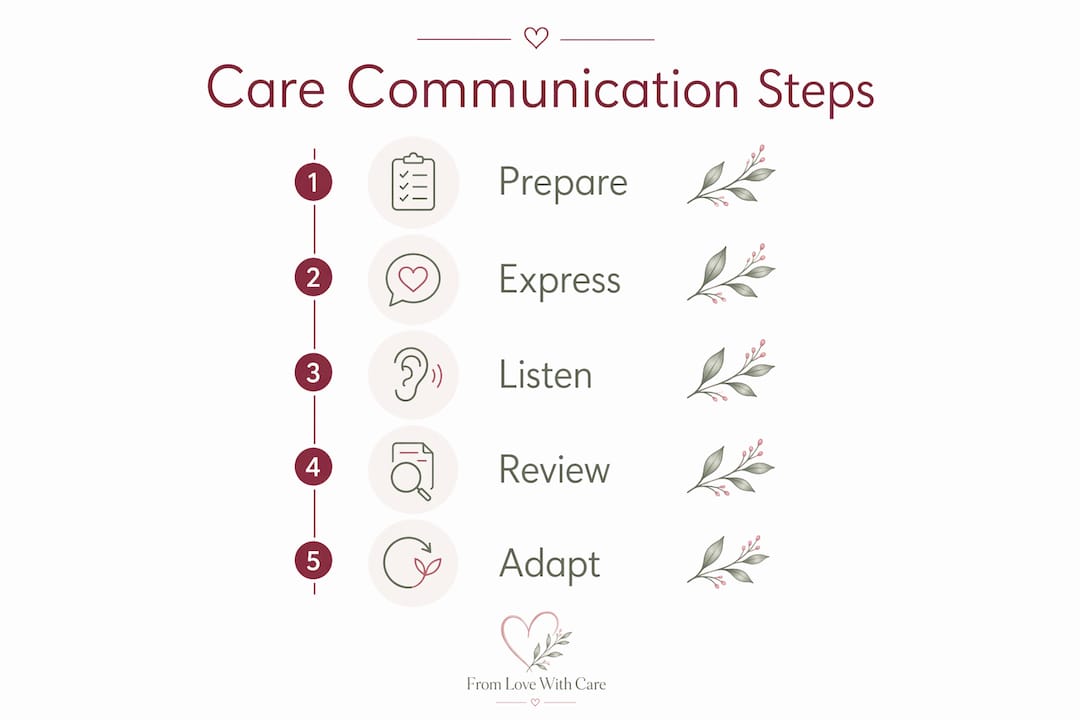
Pro Tip: Share your communication tools with your companion before the first visit, not during it. This gives them time to read, reflect, and arrive prepared.
How to clearly express your care needs and boundaries
The first conversation sets the tone for the entire relationship. Approach it as a dialogue, not a briefing. Your companion needs to understand not just what you need, but why certain things matter to you.
Follow these steps for a productive initial care discussion:
- Start with your priorities. Name the two or three things that matter most to you. This might be punctuality, a particular activity, or simply being listened to without interruption.
- Describe your daily routine. Walk your companion through a typical day, including when you wake, eat, rest, and any activities you enjoy or depend on.
- State your boundaries clearly. Explicit written boundaries such as "public venues only" or "no photography" protect your peace of mind and your companion's professionalism. Say them plainly and without apology.
- Explain your emotional needs. Tell your companion whether you prefer quiet company, lively conversation, or a mix of both. Mention if you find certain topics distressing.
- Describe physical assistance needs. Be specific about what help you need with mobility, meals, or errands. Vague requests lead to guesswork.
- Invite questions. Ask your companion to repeat back what they have understood. This confirms clarity and shows you welcome a two-way exchange.
- Agree on visit frequency and duration. A 30–60 minute initial consultation is standard practice for setting expectations on visits and communication style.
Plain, respectful language works best throughout. Avoid technical care jargon unless your companion uses it first. The goal is mutual understanding, not a formal assessment.
Pro Tip: Never assume your companion knows what you mean by "a bit of help" or "just company." Spell out exactly what each phrase means for you. Assumptions are where most care relationships go wrong.
You can also read more about what a companion visit involves to help you frame your expectations before that first conversation.
How to maintain ongoing communication as your needs change
Care needs rarely stay the same. A companion relationship that works well in january may need adjusting by march. Communication in care is dynamic. Effective services treat it as an ongoing feedback loop, not a one-off setup.
Regular check-ins are the simplest way to keep communication current. A brief conversation at the end of each visit, or a monthly review, gives both parties a chance to raise concerns before they become problems. When giving feedback, be specific and kind. "I felt a bit rushed during our walk last Tuesday" is more useful than "things haven't felt right lately."
Documenting changes matters as much as discussing them. Update your preference checklist or communication passport whenever your routine, health, or emotional needs shift. Thorough documentation within care plans evidences person-centred support and protects both the care recipient and the companion.
Watch for these signs that your companion may need updated guidance:
- They repeat activities you have said you dislike.
- They arrive at times that no longer suit your routine.
- You feel they are completing tasks but missing your emotional cues.
- Conversations feel one-sided or rushed.
- You notice they are unsure how to respond when you are distressed.
These signals are not failures. They are prompts for an honest, constructive conversation. Addressing them early keeps the relationship strong.
Communicating with companions who support complex needs
When the care recipient has dementia, a learning disability, or a sensory impairment, sharing care preferences requires a different approach. The person may not be able to speak for themselves, or their communication may change day to day. In these cases, family members or advocates often take the lead in sharing care needs.
Visual aids, gestures, and communication passports become essential rather than optional. A well-prepared passport includes photos of familiar people and places, descriptions of baseline behaviour, and clear guidance on what a companion should do if the person appears distressed. Communication passports with visual aids are critical for companions supporting individuals with dementia or other complex needs.
Key steps for communicating complex needs effectively:
- Involve a speech and language therapist or advocate to help create communication tools.
- Describe non-verbal cues clearly. For example, "she pulls at her sleeve when she is anxious" or "he goes quiet when he is in pain."
- Specify which communication approaches work best, such as short sentences, one question at a time, or touch-based reassurance.
- Ensure the companion has read and understood the communication passport before their first visit.
| Communication challenge | Recommended tool | What to include |
|---|---|---|
| Dementia | Communication passport | Baseline behaviours, distress signals, familiar names |
| Learning disability | Easy-read profile | Simple language, symbols, daily routine |
| Sensory impairment | Written preference guide | Preferred contact method, environmental needs |
| Non-verbal communication | Behaviour description sheet | Specific gestures, facial expressions, and their meanings |
Pro Tip: Ask the companion to keep brief notes after each visit about how the person communicated that day. Over time, these notes reveal patterns that help everyone provide better support.
Introducing a new companion to someone with complex needs takes patience and preparation. The more clearly you communicate those needs upfront, the faster trust develops.
Key takeaways
Clear, documented communication is the single most effective way to ensure a companion provides support that is safe, respectful, and genuinely person-centred.
| Point | Details |
|---|---|
| Prepare before the first visit | Write down routines, preferences, and boundaries before meeting your companion. |
| Use communication tools | Passports and easy-read profiles reduce misunderstandings for all care recipients. |
| State boundaries explicitly | Written boundaries such as "no photography" protect both parties and build trust. |
| Treat communication as ongoing | Regular check-ins and updated preference records keep care relevant as needs change. |
| Adapt for complex needs | Visual aids and behaviour descriptions are essential when verbal communication is limited. |
Why communication is the heart of good companionship care
I have seen many care relationships start well and quietly deteriorate, not because of poor intentions, but because nobody revisited the original conversation. The companion carried on doing what they had always done. The care recipient assumed things would change on their own. Neither spoke up. That pattern is far more common than most people realise.
What I have come to believe, after years of working in and around care settings, is that empathy in communication is not a soft skill. It is a clinical imperative. Research links active listening and open body language to measurable improvements in emotional well-being for care recipients. That is not anecdotal. It is evidence that how we speak to one another in care relationships has real, physical consequences.
The most effective companions I have encountered treat every visit as a chance to check in, not just to complete tasks. They notice when something feels different. They ask. They adjust. That kind of attentiveness does not happen by accident. It happens because someone took the time, at the very beginning, to communicate clearly and honestly about what was needed.
My advice is this: do not wait until something goes wrong to have the difficult conversation. Start with honesty, revisit it regularly, and treat your companion as a partner in your care, not just a visitor. The relationship will be richer for it, and the support will be far more effective.
— Ayomide
How Fromlovewithcare supports your communication needs
Fromlovewithcare builds every companionship arrangement around clear, personalised communication from the very first contact. Each companion is thoroughly vetted and matched to the individual's preferences, routines, and support requirements before a single visit takes place.
The onboarding process includes a detailed discussion of care preferences, boundaries, and communication styles, so nothing is left to assumption. Regular reviews mean that as your needs change, your companion's approach changes with them. If you are ready to arrange companionship that genuinely listens, explore our companionship services or find out more about how it all works to take the next step with confidence.
FAQ
What is the best way to start discussing care requirements with a companion?
Begin with a written list of your routines, preferences, and boundaries before the first meeting. A 30–60 minute initial consultation is standard practice for setting clear expectations on visits and communication style.
How do I express care needs if my relative cannot speak for themselves?
Use a communication passport or easy-read profile that describes their baseline behaviour, non-verbal cues, and distress signals. A speech and language therapist or advocate can help create these documents.
How often should I review my care needs with a companion?
A brief check-in at the end of each visit and a more thorough monthly review keeps communication current. Care needs evolve, and regular feedback prevents small issues from becoming larger problems.
What boundaries should I communicate to a companion?
State any restrictions clearly and in writing, such as "public venues only," "no photography," or specific privacy preferences. Explicit written boundaries protect both parties and form the foundation of a professional care relationship.
Does Fromlovewithcare help with communicating care preferences?
Fromlovewithcare includes a personalised onboarding process that captures your communication preferences, routines, and boundaries before matching you with a vetted companion. Regular reviews keep the arrangement aligned with your evolving needs.