
The fastest routes to grocery shopping help are your local Age UK branch, supermarket delivery or telephone ordering, and paid companionship services, each suiting different needs and budgets. If mobility is the barrier, ShopMobility can help you get to the shops safely. Call Age UK or search Gov first; costs, safety steps, and a trusted companionship option follow below.
TL;DR:
- Volunteer shopping buddies provide affordable social contact but often do not help unpack or assist with heavy or frozen items.
- Supermarket delivery and telephone ordering are suitable for those who prefer remote assistance, but availability of delivery slots may be limited during peak times.
- Vetted companions offer regular, trustworthy support that includes planning, unpacking, and companionship, beneficial for those needing consistency and familiarity.
- Costs vary widely by region and service type, with Age UK charges around £4 per shop and delivery fees differing by store, so verifying local rates is essential.
- Starting with local councils and Age UK can reveal free or low-cost options, while pairing delivery with a regular companion visit improves reliability.
Table of Contents
- What are the main grocery shopping help options for seniors?
- How do you find and arrange local grocery shopping help?
- How do you keep grocery shopping help safe and secure?
- Can you order groceries by phone or online without struggling?
- What does grocery shopping help cost, and who qualifies?
- How can a vetted companion help with grocery shopping?
- Where can you find official help and phone numbers?
- What should you prioritise first when arranging help?
- A vetted companion for weekly grocery shopping and company
- Sources
What are the main grocery shopping help options for seniors?
Choosing the right option depends on what's actually stopping you or your loved one from shopping comfortably: is it mobility, technology, loneliness, or simply time? Here's how the main routes compare.
- Volunteer or charity shopping buddies — Age UK and similar groups offer low-cost help and welcome social contact, though many volunteers deliver only and won't help unpack.
- Supermarket home delivery and telephone ordering — ideal if travel is difficult or the internet feels daunting, though slot availability can be tight around peak times.
- Paid companionship with shopping support — regular, vetted help that combines practical assistance with genuine conversation; From Love With Care works this way, covered in more detail further down.
- ShopMobility and escorted shopping trips — mobility scooters and wheelchairs make in-person shopping possible again, though most schemes only operate within specific town centres.
Each has a different rhythm. Volunteer schemes suit someone who wants company once a week and doesn't mind planning around availability. Delivery suits someone confident giving instructions over the phone or online. Paid companionship suits someone who wants consistency and a familiar face. ShopMobility suits someone who still wants to browse the aisles themselves.
How do you find and arrange local grocery shopping help?
Getting help set up usually takes one phone call and a bit of paperwork, not weeks of searching. Here's a simple order to work through it.
- Start with gov.uk's find your local council tool to reach adult social care and see if your area runs a community transport or shopping scheme.
- Search for your nearest Age UK branch and ask specifically about their shopping service or an Easy Shop telephone ordering option.
- Contact voluntary groups such as the Royal Voluntary Service or Scope, and ask whether they run local shopping or escort schemes.
- Check with local community transport providers if getting to the shop, rather than the shop itself, is the real obstacle.
When you call any of these, ask direct questions: what's the fee, is the volunteer or driver DBS-checked, exactly what's included (shopping only, or unpacking too), how is payment handled, and is there a waiting list. Reading's local advice service recommends preparing your shopping needs in advance, including a staples list and clear dietary notes, so the first call moves quickly.
Pro Tip: Have the address, preferred delivery window, dietary requirements, and payment method written down before you dial. Most services ask for the same five or six details, so having them ready cuts the call from twenty minutes to five.
How do you keep grocery shopping help safe and secure?
Handing your shopping (and your bank card) to someone else needs a few safeguards, but none of them are complicated once you know what to ask for.
- Agree a simple password or verification phrase, and ask that the shopper calls you from the store or a customer service desk before paying.
- Favour card or contactless payment over cash wherever possible, and keep the receipt alongside a bank alert as a paper trail.
- Write down substitution preferences and allergies clearly, rather than leaving them to memory or a rushed phone call.
- Time deliveries so someone is actually home to receive and put things away, particularly frozen or heavy items.
- Ask any volunteer scheme or companion service directly whether staff hold a DBS check and what insurance covers the visit.
A store-verified phone payment, or paying at the customer desk rather than handing over cash at the door, removes most of the risk volunteers and families worry about. It's a small habit that closes the two most common failure points: unclear payment and unclear substitutions.
Can you order groceries by phone or online without struggling?
You don't need to be comfortable with a smartphone to get a weekly shop delivered. Several supermarkets still run telephone ordering lines built for exactly this.
- Telephone ordering is offered by some supermarkets for customers who can't or don't want to use the internet; contacts for Sainsbury's and Morrisons are listed by local councils, though availability varies by area, so check with your nearest store first.
- Saving favourites in an online account, or repeating your last order, turns a fifteen-minute weekly shop into a two-minute one. Age UK's beginner's guide to online shopping walks through setting this up step by step.
- Ask stores about priority delivery slots, quiet shopping hours, assisted shopping, or the sunflower lanyard scheme for hidden disabilities; Scope's shopping advice covers what's available and how to request it.
- Carers placing orders on someone else's behalf should set clear account permissions and write delivery instructions in plain language, so there's no confusion at the door.
What does grocery shopping help cost, and who qualifies?
Costs vary more by branch than by scheme type, so it's worth checking your specific local service rather than assuming a national rate.
| Service type | Typical cost | Notes |
|---|---|---|
| Age UK shopping service (per shop) | Around £4 | Fee varies significantly by branch; some branches run a monthly charge instead |
| Age UK Easy Shop (telephone ordering) | Fixed service fee plus delivery charge | Fixed service fee plus delivery charge |
| Supermarket home delivery | Delivery fee set by store | Many stores offer priority or vulnerable customer registration, which can waive or reduce fees |
| Volunteer shopping schemes | Usually shopping costs reimbursed, sometimes a small running charge | Ask about means-tested reductions when registering |
Fee structures differ from branch to branch, as Age UK Barnet's shopping service shows with its own monthly model. Always ask directly whether a concession or reduced rate applies before assuming the full fee is fixed.
How can a vetted companion help with grocery shopping?
A companion visit turns the weekly shop into something more than a transaction. Companions accompany clients on escorted shopping trips, place online or telephone orders together, help unpack bags once home, and stay for a proper conversation over tea afterwards. They don't provide medical or personal care. Their role is company and practical support, nothing more, nothing less.

Companions are carefully vetted before being matched with a client, which matters when someone is trusting a relative stranger with a shopping list and, sometimes, a debit card. In practice, this looks like a weekly escorted trip to the supermarket, a sit-down list-planning session the day before, or timing a home visit to land right as a delivery arrives so heavy bags don't sit unattended on the doorstep.
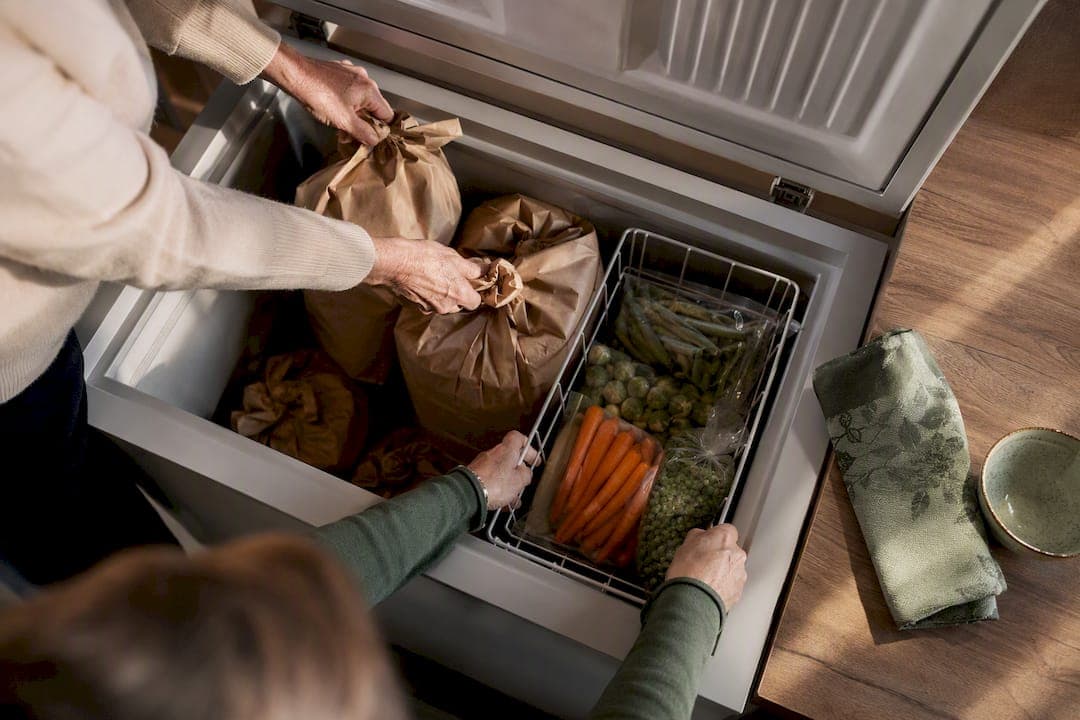
That last point matters more than it sounds; aligning a delivery slot with a companion visit following the post-delivery support and wellbeing check workflows means there's someone there to carry frozen goods straight into the freezer, rather than leaving them on a step for an hour. Aligning a delivery slot with a companion visit means there's someone there to carry frozen goods straight into the freezer, rather than leaving them on a step for an hour. For families wanting a regular, familiar face rather than a rotating volunteer roster, the senior home visits service explains how these visits are structured, and the full range of services covers what else companions support beyond shopping.
Where can you find official help and phone numbers?
Start with Age UK's local shopping pages to find your branch's fees and services, and gov.uk's council finder to reach adult social care. For mobility support, ShopMobility UK lists local centres and equipment loan fees. Sunderland Council's telephone ordering guide gives example supermarket numbers, and Scope's shopping advice covers assisted shopping requests.
What should you prioritise first when arranging help?
Most advice on this topic jumps straight to apps and delivery slots, which is backwards for a lot of older adults. The research is clear that low-cost, human routes, Age UK branches, volunteer schemes, community transport, solve the practical problem and the loneliness problem at the same time, while delivery only solves the first.
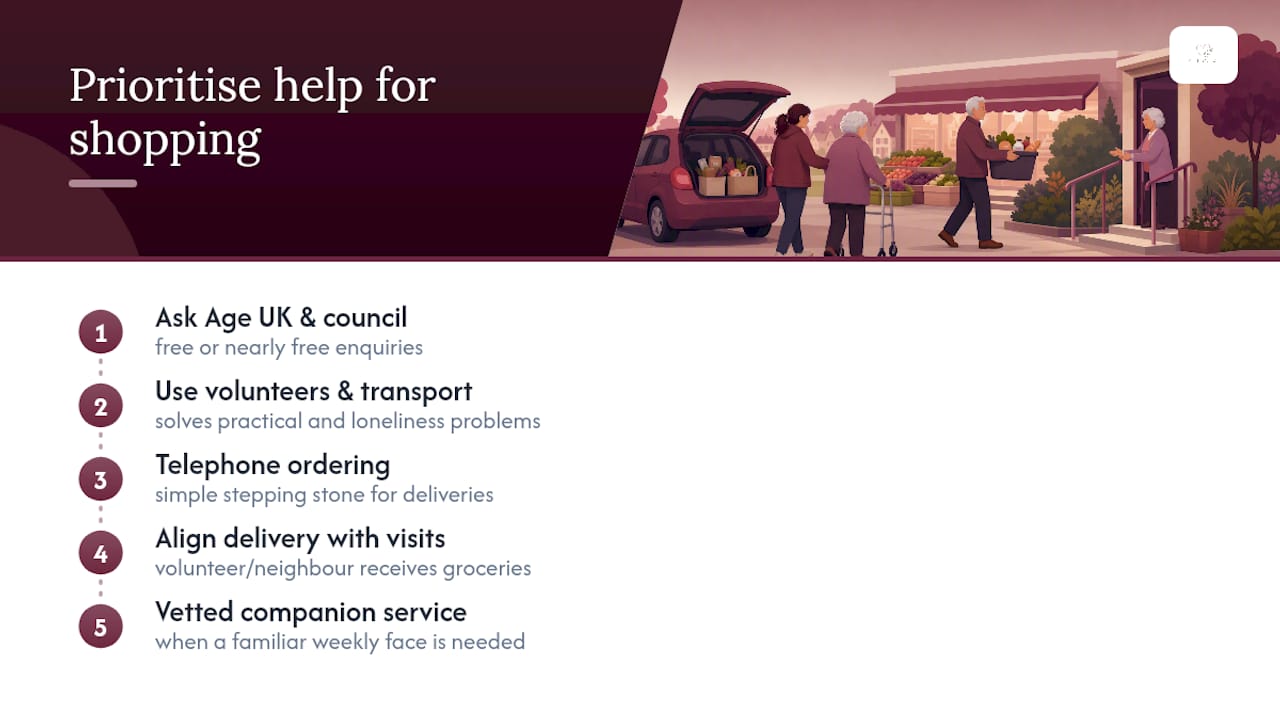
Where conventional advice falls short is in treating "getting the shopping done" as the whole task. It isn't. A bag of groceries left on a doorstep because nobody was home to receive it is a failed outcome even if the order arrived on time. That's why aligning delivery with a visit, whether a volunteer, a neighbour, or a paid companion, deserves more attention than it usually gets.
My honest read: start with Age UK and your council, because they're free or nearly free to enquire about and often reveal options families didn't know existed. Use telephone ordering as a stepping stone for the practical gap. But if what someone actually needs is a familiar face every week, not just a full fridge, a vetted companion service closes a gap that volunteer rotas and delivery vans were never built to fill.
— Ayomide
A vetted companion for weekly grocery shopping and company
Volunteer schemes and supermarket delivery solve the logistics of getting food into the house. From Love With Care solves the other half of the problem: the same trusted face turning up each week, not a different volunteer every time or a driver who never leaves the van.

That consistency matters for families who've tried rota-based volunteer schemes and found the unpredictability harder than the shopping itself. A companion can escort a weekly trip, help plan the list the day before, place a telephone or online order together, and stay to unpack the bags and have a cup of tea, all with someone who already knows the client's preferences and dietary notes. Companions are checked for safety and trustworthiness, so families aren't left wondering who's arriving at the door.
If this sounds like the missing piece for a parent or relative who's stopped shopping regularly, or simply stopped looking forward to it, explore how the companionship service works and arrange a first visit.
Sources
- Age UK Waltham Forest | Shopping Service
- Ways to place a supermarket order by telephone
- Do you need help with shopping? | Reading directory
- ShopMobility UK
- Gov