

Older adults and their carers in the UK can access grocery shopping assistance through three main routes: supermarket telephone and assisted online ordering, local council and charity shopping services, and booked companionship visits with a vetted companion. Here are three steps you can take right now.
- Call your supermarket's customer services line and ask about telephone ordering or assisted delivery. Sainsbury's and Morrisons both offer telephone-based ordering for elderly or vulnerable customers, though availability and any charges vary by branch and should be confirmed locally.
- Contact your local council or Age UK branch via Gov to ask about shopping delivery schemes or volunteer shoppers in your area.
- Book a DBS-checked companion who can escort you to the shops or shop on your behalf, handle unpacking and check receipts with you.
Before anyone shops for you, ask one simple question: are they DBS-checked, insured and willing to provide a written receipt? Those three things protect you from the very first visit.
Pro Tip: Keep a short, laminated shopping list on your fridge that a companion or volunteer can photograph before each visit. It saves time, reduces errors and means you never have to repeat your preferences.
Key takeaways
Grocery shopping assistance in the UK is available through multiple routes, and the fastest way to get help is to contact your supermarket's telephone ordering service, your local Age UK branch, or a DBS-checked companionship service today.
| Point | Details |
|---|---|
| Three fastest routes | Supermarket telephone ordering, local Age UK or volunteer scheme, or a booked DBS-checked companion. |
| Safety checklist | Always confirm DBS check, photo ID, written terms, receipt policy and substitution agreement before the first visit. |
| Funding to check | Pension Credit and council social-care eligibility can reduce or cover costs; check GOV.UK even if you are unsure. |
| Practical shopping tip | A clear, typed list with quantities, brand preferences and acceptable substitutes makes every visit faster and more accurate. |
| Fromlovewithcare | Offers DBS-checked companionship shopping visits across the UK, combining practical help with genuine human connection. |
Authoritative UK resources for local contacts
These organisations provide reliable, up-to-date information and can help you find local services quickly.
- Gov: Use this to locate your local authority's adult social care team and ask about shopping delivery schemes or referral pathways.
- Age UK local services: Age UK branches vary by area but many offer volunteer shoppers, telephone befriending and signposting to local shopping help.
- ShopMobility UK: Find your nearest scheme for scooter or wheelchair hire to help with in-store mobility.
- Scope's shopping guidance: Practical advice on quiet hours, Sunflower Lanyard and arranging volunteer or delivery support for people with disabilities.
- Trussell Trust food bank finder: If food costs are an immediate crisis, use this to locate your nearest food bank.
- Independent Age guidance: Covers options including ShopMobility, volunteer shoppers and supermarket quiet hours in plain, accessible language.
Check your local council's website directly for borough-specific shopping services, as many schemes are not listed on national directories and can only be found through the council's own adult social care pages.
Why companionship makes grocery support more than just a delivery
There is a tendency, when arranging shopping help, to focus entirely on the practical outcome: food arrives, task is done. What this view misses is that the shopping trip itself is often one of the few regular social interactions an older person has in a week.
A volunteer or companion who accompanies someone to the supermarket is not just carrying bags. They are providing a reason to get dressed, a conversation on the way there, and a familiar face at the door. The national review of interventions found that one-to-one shopping support improved not only dietary intake but social engagement. Those two outcomes are connected: people who feel less isolated tend to eat better, and people who eat better tend to feel more capable of staying independent.
The practical safeguards matter enormously: DBS checks, written agreements and receipts are non-negotiable. But they are the floor, not the ceiling. The ceiling is a service where the person doing the shopping genuinely cares about the person they are shopping for. That combination of safety and warmth is what carers should be looking for, and it is what separates a good companionship service from a logistics operation.
For carers who want to read further, the Fromlovewithcare blog covers ageing in place, companionship planning and practical shopping strategies in more depth.
Table of Contents
- What types of grocery shopping assistance are available in the UK?
- How to arrange grocery shopping help in the UK
- What safety checks should you make before letting someone shop for you?
- Typical costs, eligibility and funding routes in the UK
- Practical tips to make grocery shopping easier and less tiring
- How does telephone and assisted ordering work?
- How Fromlovewithcare's companionship shopping visits work
- How long does it take to set up a regular shopping arrangement?
- Trusted, DBS-checked shopping companions are a call away
- Sources
What types of grocery shopping assistance are available in the UK?
Not every form of help suits every person, so it helps to know what each option actually involves before you make contact.
Escorted supermarket visits are exactly what they sound like: a companion or volunteer accompanies you to the shop, helps you navigate the aisles, carries heavy items and waits while you choose. This option suits people who want to stay involved in their own shopping but need physical support or reassurance. A national review of interventions found that escorted supermarket trips and one-to-one support can improve nutrition and reduce isolation among older people.
Volunteer shoppers are organised through local charities, faith groups or council-funded schemes. A volunteer collects your list, does the shopping and delivers to your door. Reliability and frequency vary by area, so always confirm availability locally before depending on this route.
Council shopping services operate in many boroughs. Some councils take a telephone list, collect from a local supermarket and deliver on an agreed day, sometimes for a small fee. Local council pages commonly list community connectors, ShopMobility and assisted shopping services as routes to greater independence.
Supermarket home delivery is widely available across the UK. You or a family member places an order online, and it arrives at your door. Some supermarkets offer priority slots for older or disabled customers.
Telephone and assisted online ordering goes a step further: a member of staff or a local service takes your list over the phone and places the order on your behalf. Many major UK supermarkets provide this, though availability and any charges should be confirmed with the local branch.
Subscription box and meal kit schemes deliver pre-portioned ingredients or ready meals on a regular schedule. These suit people who struggle with planning rather than the physical act of shopping.
How to arrange grocery shopping help in the UK
A clear sequence makes the process much less daunting, whether you are arranging help for yourself or for a relative.
-
Decide what kind of help you actually need. Do you want company during the trip, or would you prefer someone to shop entirely on your behalf? Note any mobility needs (wheelchair access, limited walking distance), communication preferences (telephone rather than online) and dietary requirements. This shapes which route is right.
-
Contact your local council first. Use GOV.UK's find-your-council tool and search your borough's adult social care or community support pages. Many councils run their own shopping delivery services or can refer you to a local scheme. Some, like Epsom and Ewell Borough Council, take telephone lists and arrange delivery for a set fee.
-
Call your nearest Age UK branch. Age UK local services vary by area but often include volunteer shoppers, befriending schemes and signposting to other local help. A phone call takes five minutes and frequently opens several doors at once.
-
Ask your supermarket directly. Call the customer services number for your nearest branch and ask whether they offer telephone ordering, assisted shopping or priority delivery slots for older or vulnerable customers. Sainsbury's and Morrisons are among those with telephone-based options, but branch-level availability differs.
-
Prepare before your first contact. Have your address, any relevant medical or mobility notes, a payment method and a rough shopping list ready. If you are arranging a recurring service, confirm the day, time, payment process and what happens if an item is unavailable.
-
Confirm the arrangement in writing. Whether it is a council service, a volunteer scheme or a paid companion, ask for written confirmation of the terms: what is included, what it costs and how to cancel or reschedule.
What safety checks should you make before letting someone shop for you?
Trust is built on specifics, not goodwill. Before anyone shops for you, whether they are a volunteer, a council worker or a paid companion, run through this checklist.
- DBS check: Ask whether the person has a current Disclosure and Barring Service (DBS) certificate. Reputable agencies and council services will confirm this without hesitation. Paid companions from a vetted service should be DBS-checked as standard.
- Proof of identity: Ask to see ID on the first visit. A legitimate helper will expect this and will not be offended.
- References or employer verification: If you are arranging help through an agency, ask whether staff are employed directly and whether the agency holds employer liability insurance. If using a volunteer scheme, ask which organisation they are affiliated with.
- Written terms of service: Ask for a simple written agreement covering what the helper will do, how payment works, and what happens if something goes wrong.
- Receipt for every shop: Request an itemised receipt after every visit. This protects both you and the helper and makes it easy to check that the correct amount was spent.
- Substitution policy: Agree in advance what should happen if an item is unavailable. Should they choose the nearest equivalent, leave it out, or call you first?
Pro Tip: Pay by bank transfer or card where possible, rather than handing over cash. If cash is the only option, count it together before the helper leaves and note the amount on the receipt.
Scope's guidance includes practical measures such as Sunflower Lanyard support and advice for arranging volunteers or delivery services for people with mobility or communication needs, and is worth reading before your first contact with any service.
Typical costs, eligibility and funding routes in the UK
Costs vary considerably depending on which route you choose, and several funding options exist that many people do not know to check.
Volunteer and charity schemes are often free or ask only for a small donation. They are usually the lowest-cost route, though availability is not guaranteed everywhere.
Council shopping services typically charge a delivery or service fee. The exact amount varies by borough; some councils offer the service free to people who meet social-care eligibility criteria, while others charge a flat fee per delivery. Contact your local council's adult social care team to ask about eligibility and any means-tested reductions.
Paid companionship visits are charged by the hour. Rates vary by provider and location. A DBS-checked companion who escorts you to the shops or shops on your behalf will typically cost more than a volunteer scheme but offers a consistent, vetted person and a written booking agreement.
Supermarket delivery fees are usually a flat charge per order, with some supermarkets offering subscription passes that reduce the per-delivery cost for regular shoppers.
Funding routes to check:
- Pension Credit and other cost-of-living support for people over State Pension age on a low income can help with everyday living costs, including food. Check eligibility on GOV.UK even if you think you may not qualify; many people are entitled but have not claimed.
- Council social-care eligibility: A needs assessment from your local authority may result in a care package that includes shopping support, either directly or through a commissioned service.
- GP or social services referral: A GP or social worker can refer you to local services, which sometimes unlocks access to schemes that are not publicly advertised.
- Charitable grants: Some local and national charities offer small grants or vouchers to help with food costs. Age UK and local community foundations are good starting points.
Checking Pension Credit eligibility takes around 15 minutes on GOV.UK and is one of the most commonly overlooked sources of support for older people in the UK.
Practical tips to make grocery shopping easier and less tiring
Small changes to how you approach shopping can make a real difference, whether you are going in person or giving a list to a companion.

Use a shopping framework to reduce decision fatigue
The 3-3-3 rule (or variations such as 3-3-2-2-1) turns a weekly shop into a predictable routine. The idea is to plan around a small number of protein sources, vegetables and staples rather than starting from scratch each week. For older adults, this reduces the mental load of shopping and makes it easier for a companion or volunteer to follow a consistent list. A companionship planning guide for housebound seniors covers this framework in more detail, including checklist templates companions can use.
Write a list that anyone can follow
A good shopping list includes quantities, brand preferences, acceptable substitutes and any allergy notes. Write it clearly or type it in a large font. If you use the same list most weeks, keep a master copy and simply update it before each visit.
Make in-store visits more manageable
- Quiet hours: Many supermarkets offer quieter shopping periods, usually early morning on weekdays. Ask your local branch when these are, as they are not always advertised prominently. Independent Age guidance notes that some supermarkets offer telephone ordering specifically for customers who cannot shop during busy periods.
- Sunflower Lanyard: Wearing a Sunflower Lanyard signals to shop staff that you may need extra time or assistance. Most major supermarkets recognise it.
- ShopMobility: ShopMobility UK lends scooters and powered wheelchairs to help people move around shops. Availability and any charges vary by location, so contact your nearest scheme before visiting.
- Heavy items: Ask a companion or shop assistant to carry heavy items such as bottles and tins. Most supermarkets will also pack heavy items at the bottom of bags if you ask.
Pro Tip: Ask the customer services desk at your local supermarket about priority checkout access. Many stores offer this quietly and staff are usually glad to help when asked directly.
How does telephone and assisted ordering work?
Telephone ordering removes the need to go online or visit a shop at all. Here is what a typical process looks like.
-
Call the supermarket's customer services line and ask whether they offer telephone ordering or assisted ordering for elderly or vulnerable customers. Confirm whether there is a charge and whether a delivery slot is available in your area.
-
Give your list to the member of staff. They will take your order item by item, confirm availability and note any substitution preferences. Have your account or loyalty card number ready, along with your payment details.
-
Agree a delivery window. Delivery is usually arranged for a set time slot, often the same day or next day depending on the branch. Ask where the delivery will be left if you cannot answer the door.
-
Confirm how substitutes are handled. Ask whether the store will call you if an item is unavailable, or whether they will substitute automatically. Knowing this in advance avoids surprises.
-
Check the receipt on delivery. Compare it against your original list and raise any discrepancies with the store promptly.
Some local council services operate a similar model: you telephone a local coordinator, give your list, and they arrange collection and delivery from a nearby supermarket. Local authority shopping schemes sometimes charge a small fee for this service, and referral may be required.
Priority delivery slots for older or disabled customers are available from several major supermarkets, though registration is usually required. Ask your supermarket's customer services team how to register.
How Fromlovewithcare's companionship shopping visits work
Fromlovewithcare offers a direct, personal alternative to council waiting lists and impersonal delivery services. Every companion is DBS-checked and trained to provide non-medical companionship, which includes escorted shopping trips and shopping-on-your-behalf visits.
A typical companionship shopping visit includes:
- Escorted trip or shopping on your behalf: The companion either accompanies you to the supermarket or goes alone with your list, depending on your preference and mobility.
- Carrying and unpacking: Heavy bags are carried to your door and unpacked with you, so nothing is left on the doorstep.
- Receipt checking: The companion goes through the receipt with you, confirms what was spent and returns any change with a clear record.
- Conversation and company: The visit is not just transactional. A companion stays for a cup of tea, checks in on how you are feeling and provides the kind of human contact that a delivery driver cannot.
Companions do not provide medical care, personal care or nursing support. Their role is practical help combined with genuine companionship.
Safety credentials are central to how Fromlovewithcare operates. Every companion holds a current DBS certificate, has been through a thorough vetting process and works under a written booking agreement. You know exactly who is coming, when and what they will do.
To arrange a first visit, visit the Fromlovewithcare services page or read about how the booking process works before making contact. For readers who want broader wellbeing support alongside shopping help, welfare check visits for adults living alone are also available.
How long does it take to set up a regular shopping arrangement?
Most people can have some form of help in place within a few days to two weeks, depending on which route they choose.
-
Day one: make contact. Call your local council, Age UK branch or a companionship service. Most can give you an initial answer about availability within 24 hours.
-
Days two to five: eligibility and quote. Council services may require a brief needs assessment before confirming a place. Paid companionship services typically provide a quote and confirm a companion within a few days.
-
First visit within one to two weeks. A trial visit lets you meet the companion or volunteer, confirm the shopping list format and agree on timings. This is also the moment to check ID, confirm DBS status and sign any written agreement.
-
Recurring bookings from week two or three. Once the trial visit goes well, a regular schedule can be set. Weekly or fortnightly visits are the most common arrangement.
What speeds up the process: having a clear list ready, being flexible about timing for the first visit, and having a payment method confirmed in advance. What slows it down: waiting for a council assessment or a volunteer coordinator to match you with an available helper.
If a companion is unavailable on a given week, ask in advance how cover is arranged. A reputable service will have a clear policy for absences and will notify you with enough notice to make alternative arrangements.
Trusted, DBS-checked shopping companions are a call away
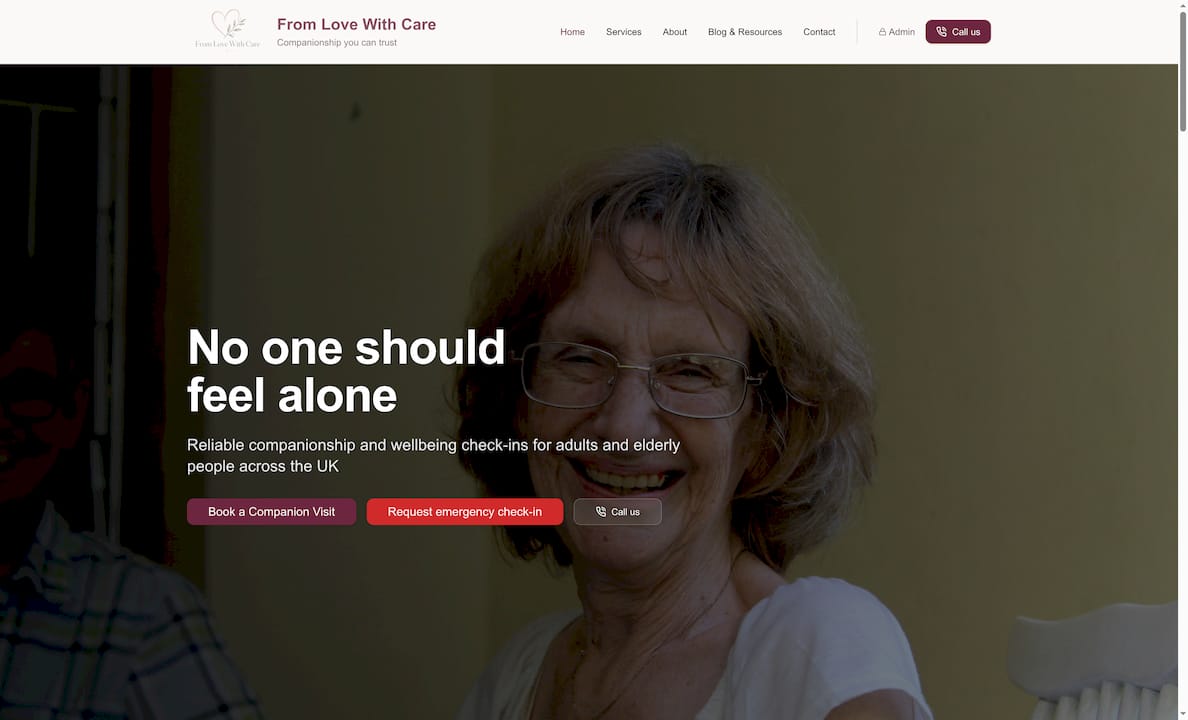
Fromlovewithcare offers something that a supermarket delivery slot cannot: a real person who knows your preferences, checks the receipt with you and stays for a cup of tea. Every companion is DBS-checked, thoroughly vetted and works under a written booking agreement, so you know exactly who is coming and what they will do. There are no medical or personal care duties involved; the focus is entirely on practical help and genuine human connection.
Arranging a first visit is straightforward. Visit the Fromlovewithcare services page to see what a companionship shopping visit includes and to make an enquiry. If you would like to understand the booking process before committing, how our companionship works explains each step clearly. For families arranging support from a distance, emergency welfare checks are also available for urgent situations.
Sources
- Shopping and errands – Support with daily living activities
- Help with meals and shopping | Kingston council
- Getting help at home (Independent Age guidance PDF)
- Help doing your shopping | Scope