
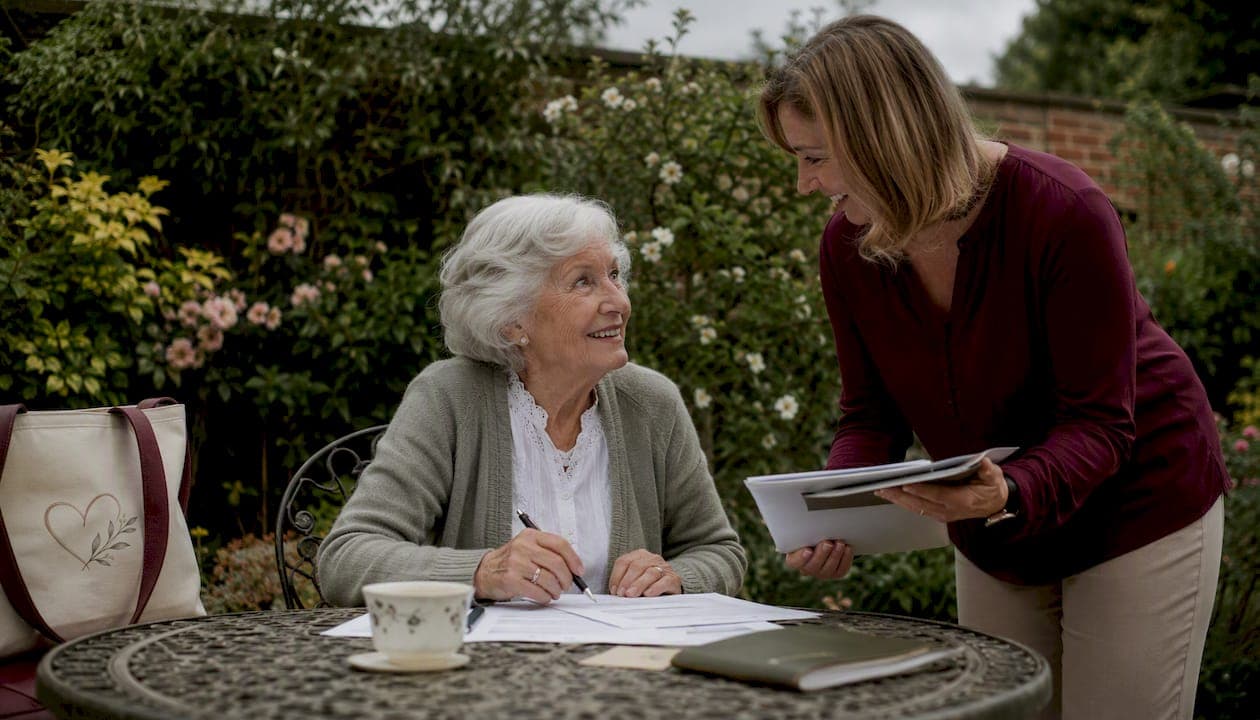
Ageing in place support is the coordinated set of practical, social, and low-level care measures that help a person remain safely and independently in their own home as they grow older. It is not a single service. It is a combination of arrangements, tailored to the individual, that together make staying at home realistic and sustainable.
The main categories of support include:
- Informal care from family members, friends, or neighbours
- Paid home care (domiciliary care) for personal care, medication, and domestic tasks
- Companionship services such as regular social visits and welfare check-ins
- Telecare and technology including personal alarms, fall detectors, and smart home aids
- Home adaptations from grab rails to full wet-room conversions
- Community services such as meals delivery, day centres, and accessible transport
In the UK, the starting points for arranging support are a GP referral, a social services care needs assessment from your local authority, or an NHS reablement service following a hospital discharge. Fromlovewithcare offers companionship visits as one practical element within a wider plan, providing regular social contact and welfare check-ins for people at risk of isolation.
Table of Contents
- What does ageing in place really mean, and why do people choose it?
- How to plan ahead: assessments, goals, and a simple care plan
- What types of support are available for ageing in place?
- How can you make a home safer and more accessible?
- What does ageing in place support cost, and how is it funded in the UK?
- When might ageing in place no longer be safe?
- What are the first practical steps to arrange support in the UK?
- Why does companionship matter? The research evidence
- Key takeaways
- The part of ageing in place that care plans rarely mention
- How Fromlovewithcare supports ageing in place
- Useful UK sources and further reading
What does ageing in place really mean, and why do people choose it?
Ageing in place means remaining in your own home and staying connected to your community as you grow older, rather than moving into a care home or residential facility. The World Health Organisation and the NHS both frame it around three goals: safety, independence, and comfort. For most people, those goals are deeply personal.
Research with adults aged 80 and above found that home is not simply a building. It carries identity, memory, and a sense of control that residential settings rarely replicate. The phrase "it's where I belong" appeared repeatedly in qualitative interviews, pointing to something that practical care planning often underestimates: the emotional weight of place.
The practical benefits are real too. Staying at home typically preserves daily routines, maintains existing social networks, and, depending on care needs, can cost less than full-time residential care. Autonomy matters enormously to wellbeing, and familiar surroundings can reduce anxiety, particularly for people living with early-stage dementia.
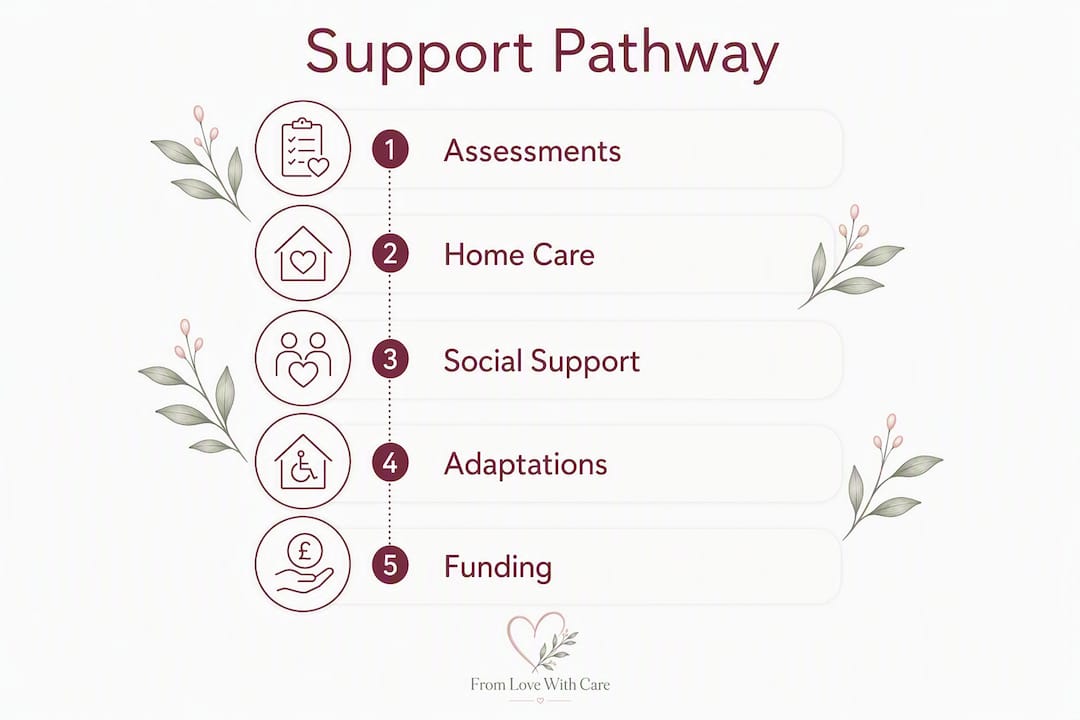
That said, ageing in place is not always straightforward. Access to adaptations and support is unequal, and without early planning, the option can become available only to those with financial resources or strong family networks. One common misconception is that moving to sheltered or retirement housing automatically provides medical care. It usually does not. According to the Social Care Institute for Excellence, sheltered housing typically offers communal facilities and an emergency alarm system, but not 24-hour personal care. Families who assume otherwise can find themselves unprepared when clinical needs increase.
Pro Tip: When weighing up whether to stay at home or move to supported housing, separate the emotional question from the practical one. Ask: "What specific support does this person need today, and what might they need in two years?" Then check what each option actually provides, in writing, before making any decisions.
How to plan ahead: assessments, goals, and a simple care plan
Good planning starts well before a crisis. The earlier you begin, the more options you have and the less reactive the process feels.
Step-by-step planning checklist
- Request a GP review. Ask the GP to assess current health, medication management, and any risks such as falls or cognitive changes. This is the natural first step and often triggers referrals to other services.
- Apply for a social services care needs assessment. Contact your local authority's adult social care team. This free assessment determines what support the person is eligible for and whether the local authority will contribute to costs.
- Request an occupational therapist (OT) home assessment. An OT will assess the home environment, identify risks, and recommend adaptations. Referrals come via the GP or local authority.
- Explore NHS reablement. If the person has recently left hospital or experienced a sudden decline, NHS reablement provides short-term intensive support (typically up to six weeks) to rebuild independence. It is free at the point of use.
- Make small, immediate adaptations. Act on the OT's recommendations for low-cost changes such as grab rails and better lighting before moving on to larger works.
- Set a review date. Build a 3–6 month review into the plan from the start. Needs change, and a plan that is not reviewed becomes outdated quickly.
Questions worth asking at every assessment
- What tasks can the person manage independently, and where do they need help?
- Are there any immediate safety risks at home (falls, medication errors, poor nutrition)?
- How much social contact does the person have each week?
- Are legal arrangements in place, such as Lasting Power of Attorney?
- What does the person themselves want? Their goals should lead the plan.
Integrated case management, where a named coordinator brings together health, social care, and third-sector services, shows the strongest evidence for reducing hospital admissions and keeping people well at home. If the local authority offers a care coordinator or key worker, ask for one.
A simple timeline to aim for: complete assessments within the first month, implement immediate adaptations by month three, and schedule a full plan review at month six and again at twelve months.
What types of support are available for ageing in place?
Support for ageing in place falls into several broad categories. Most people need a combination rather than a single service, and the right mix shifts as needs change.
Informal care
Family members, friends, and neighbours provide the majority of care for older people in the UK. Informal care can cover shopping, cooking, transport, medication reminders, and emotional support. Its limits are real: carers can experience burnout, and gaps in availability can leave a person unsupported at critical moments. A good plan acknowledges what informal carers can realistically sustain and fills the gaps with paid or community services.
Domiciliary (home) care
Paid home care workers visit the home to provide personal care (washing, dressing, continence support), medication administration, and domestic tasks. Personal care is regulated and delivered by trained care workers. Non-personal support, such as companionship, shopping assistance, and light domestic help, sits in a different category and does not require the same regulatory framework. Understanding this distinction matters when comparing providers and costs.
Companionship and social support
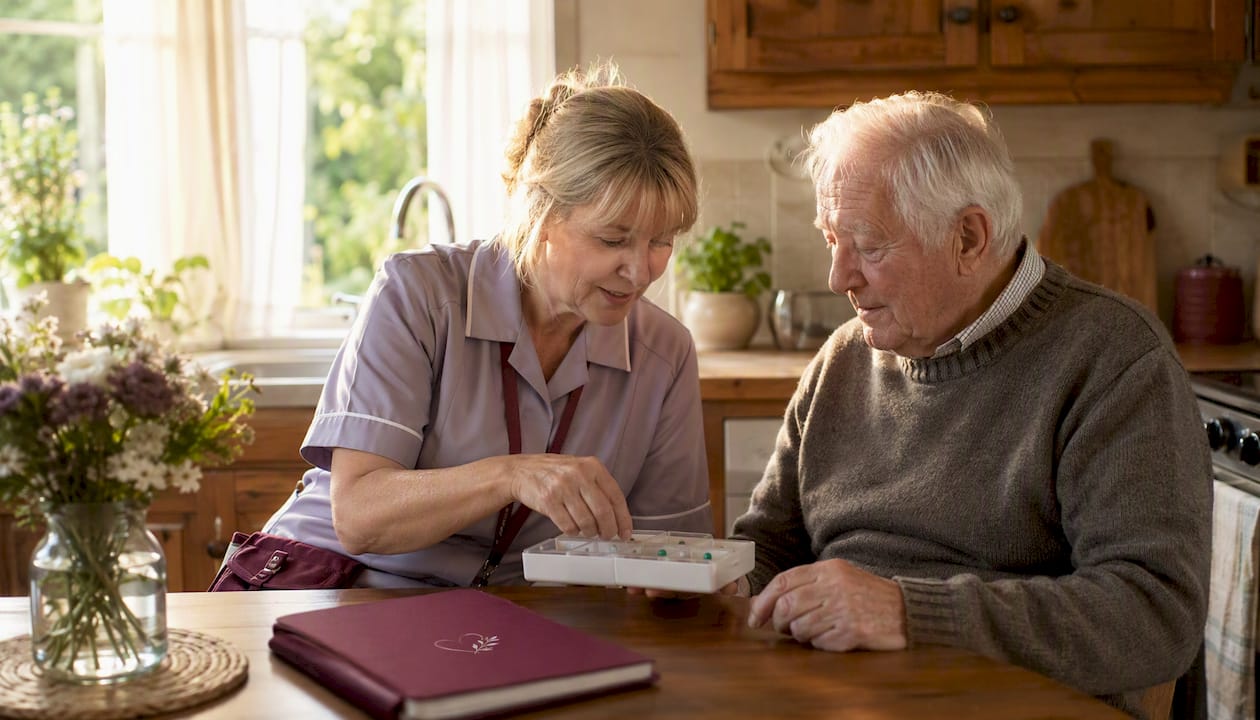
Regular social visits, shared activities, and welfare check-ins address the risk of isolation. Companionship options for older adults range from volunteer befriending schemes to professional services such as Fromlovewithcare, which provides DBS-checked companions for regular visits, shared outings, and welfare observations. This type of support is low-intensity but high-value, particularly as a preventative measure.
Telecare and technology
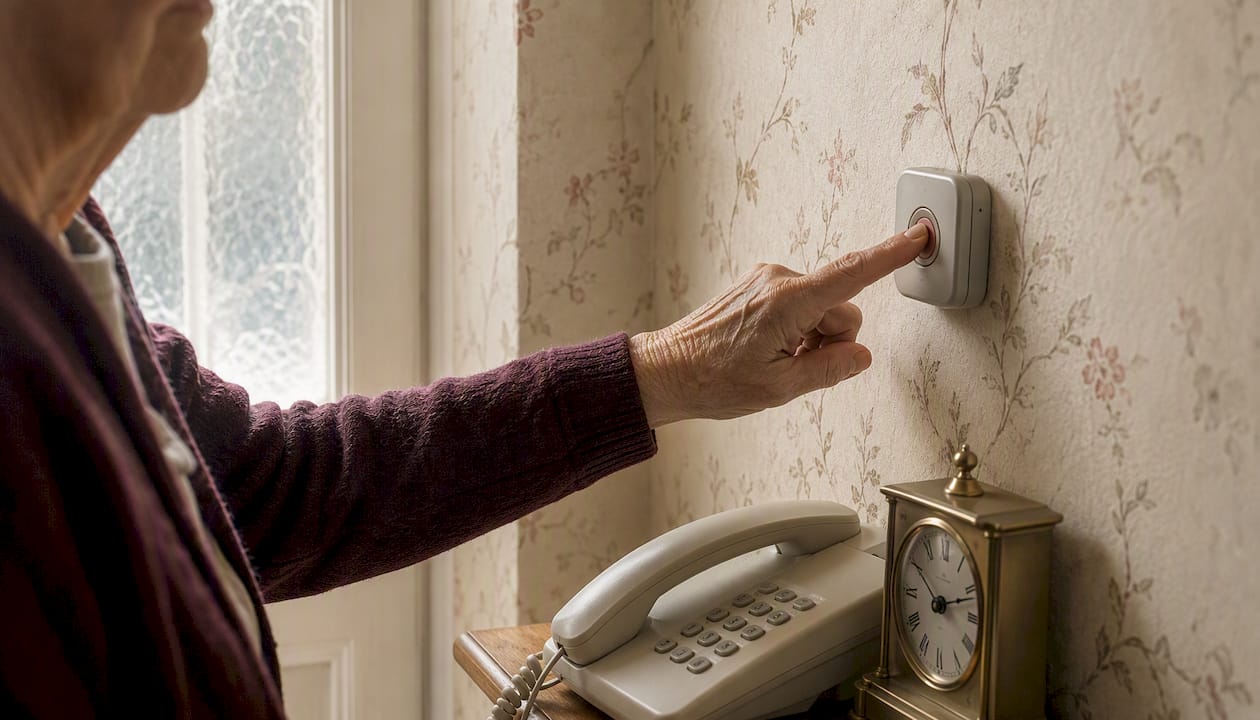
Personal alarms, fall detectors, GPS trackers, medication dispensers, and smart home devices can extend independence significantly. Privacy is a genuine consideration: any monitoring technology should be discussed openly with the person using it, and consent should be documented. Telecare works best as a supplement to human contact, not a replacement for it.
Community services
Meals on Wheels, day centres, community transport, and social clubs provide structure, nutrition, and connection. Availability varies considerably by local authority area. Age UK's local branches are a reliable starting point for finding what exists in a specific area.
Housing with support
Sheltered and extra care housing offers a middle ground between living at home and moving into a care home. Extra care housing provides the highest level of on-site support, often with access to registered care agencies. Sheltered housing typically offers an alarm system and a scheme manager, but not personal care. Families should check the actual care provision in writing rather than assuming the level of support from the name alone.
How can you make a home safer and more accessible?
Home adaptations are one of the most direct ways to extend independence. They range from small, inexpensive changes to significant structural works, and an occupational therapist assessment is the right starting point for all of them.
Low-cost adaptations (typically under £500)
- Grab rails in the bathroom, by the toilet, and on stairs
- Non-slip flooring or mats in the bathroom and kitchen
- Improved lighting throughout, particularly on stairs and in hallways
- Lever-style door handles to replace round knobs
- Raised toilet seats and bath boards
- Key safes for emergency access
Medium-cost adaptations (typically £500–£5,000)
- Walk-in shower to replace a bath
- Stairlift installation
- Ramp access at the front or rear entrance
- Widened doorways for wheelchair or walking frame access
- Mobility aids and assistive equipment such as transfer boards, raised seating, and adjustable beds
High-cost adaptations (typically £5,000 and above)
- Full wet-room conversion
- Through-floor lift installation
- Ground-floor bedroom and bathroom extension
- Major structural alterations for wheelchair access
The Disabled Facilities Grant (DFG) is the primary UK funding route for adaptations. Local authorities administer it, and the maximum grant is £30,000 in England (amounts differ in Wales, Scotland, and Northern Ireland). An OT assessment is usually required to support the application. The process can take several months, so applying early is advisable.
When commissioning any adaptation work, ask contractors for public liability insurance, references from previous adaptation projects, and a written timeline. Check whether the work needs to meet Part M of the Building Regulations, which covers accessibility standards for dwellings.
Pro Tip: Ask the OT to prioritise adaptations by risk level, not cost. A £40 grab rail that prevents a fall is more urgent than a £3,000 stairlift that improves convenience.
What does ageing in place support cost, and how is it funded in the UK?
Costs vary considerably depending on the level of support needed and the local authority area. Approximate funding is available through the Disabled Facilities Grant and local authority contributions, while costs for services like domiciliary care, companionship visits, and telecare can be met through various funding routes including self-funding and benefits.
Main UK funding routes
NHS reablement is free and available for up to six weeks following a hospital discharge or sudden decline. It focuses on rebuilding daily living skills and reducing the need for ongoing paid care.
Local authority social care funding follows a needs and financial assessment. If the local authority agrees to fund support, it may pay all or part of the cost depending on the person's assets and income. The financial threshold for local authority funding in England is a capital limit of £23,250 (as of the current assessment framework), though this is subject to change and varies by nation.
Attendance Allowance is a non-means-tested benefit for people aged 66 and over who need help with personal care or supervision due to a physical or mental disability. It is paid at two rates and does not depend on savings or income. Apply via GOV.UK.
The Disabled Facilities Grant covers adaptations up to £30,000 in England. Apply through your local authority's housing department, supported by an OT assessment.
Charitable and third-sector support is available through organisations such as Age UK, Turn2Us, and local community foundations. These can fund equipment, befriending services, and one-off practical help.
Recommended funding steps
- Use a benefits calculator (such as the one on the Age UK or Citizens Advice website) to check entitlements.
- Contact the local authority adult social care team to request a care needs assessment and financial assessment.
- Apply for Attendance Allowance if the person is aged 66 or over and needs help with daily living.
- Apply for the Disabled Facilities Grant if adaptations are needed.
- Contact Age UK or Citizens Advice for help navigating applications.
When might ageing in place no longer be safe?
Staying at home is the right choice for many people, but needs change. Recognising the warning signs early allows for a timely review rather than a crisis response.
Red flags that warrant an urgent reassessment
- Recurrent falls, particularly if the person has fallen more than once in three months or has been unable to get up unaided
- Unmanaged medication, including missed doses, confusion about what to take, or stockpiling
- Rapid or unexplained weight loss, which can signal poor nutrition, depression, or an undiagnosed condition
- Frequent unexplained infections, particularly urinary tract infections, which can indicate poor hydration or hygiene
- Cognitive decline affecting safety, such as leaving the gas on, getting lost in familiar surroundings, or being unable to recognise hazards
- Significant decline in personal care or hygiene, which may indicate the person can no longer manage independently
What to do if you spot these signs
Contact the GP as the first step for any health-related concern. For urgent situations outside GP hours, call NHS 111. If there is an immediate risk to safety, contact the local authority adult social care team and request an urgent assessment. Most local authorities have a duty team available outside normal office hours.
Schedule more frequent welfare check-ins during any period of concern. A welfare check service can provide regular, structured observations between formal care visits, giving families reassurance and an early warning system for changes.
Review the care plan at least every six months, and immediately after any hospital admission, fall, or significant health change.
What are the first practical steps to arrange support in the UK?
The process can feel complicated, but breaking it into a short sequence makes it manageable.
First week
- Contact the local authority adult social care team — to request a care needs assessment. You can find your local authority's contact details on GOV.UK.
First month
- Complete a benefits check using the Age UK or Citizens Advice benefits calculator to identify unclaimed entitlements such as Attendance Allowance or Pension Credit.
- Arrange a home safety walk-through with a family member or the OT, noting any immediate hazards and low-cost fixes.
- Look into companionship options if the person is at risk of isolation. Regular social contact is a practical and evidence-backed part of any ageing-in-place plan. Supporting an ageing parent's independence often starts with addressing loneliness before clinical needs become acute.
A template for starting the conversation
When speaking with a relative or a professional assessor, try framing the conversation around goals rather than deficits:
"We want [name] to stay at home safely and comfortably for as long as possible. Can you help us understand what support is available, what the assessment process involves, and what the first steps should be?"
This framing keeps the person's wishes central and opens the conversation constructively, rather than focusing on what they can no longer do.
Why does companionship matter? The research evidence
The case for companionship as a component of ageing-in-place support is well-evidenced and often underappreciated in care planning conversations.
Research published in BMC Geriatrics found that social participation and community connection contribute to wellbeing in ways that are as important as physical home adaptations for successful ageing in place. The emotional attachment people feel to their homes is closely tied to their sense of identity and autonomy, and that attachment is sustained by social contact, not just by physical safety measures.
"Preventative and low-level services, including companionship, assisted shopping, light home repairs, and social activities, can slow decline and delay the need for higher-intensity services. Timely interventions improve outcomes." UK Government policy review on future ageing supportive services
The benefits of regular social interaction for seniors extend beyond mood. Structured social contact supports daily routine, provides informal welfare observation, and can prompt early help-seeking when something changes. A companion who visits regularly is often the first person to notice a decline in appetite, a change in mood, or a new safety risk.
The evidence also supports early investment. Low-level preventative services are cost-effective at a system level, delaying or reducing the need for residential or high-intensity care. Waiting until a crisis to introduce social support means missing the window when it is most effective.
Practically, companionship works best as part of a mixed plan. It complements domiciliary care, telecare, and community services rather than replacing any of them. For someone who is physically well but increasingly isolated, a regular companion visit can be the single most impactful intervention available. Early companionship support has a documented role in preventing the kind of gradual decline that eventually triggers a care crisis.
Key takeaways
Ageing in place support works best when it combines social, practical, and clinical elements from the earliest possible stage, not as a crisis response.
| Point | Details |
|---|---|
| Start with assessments | Request a GP review, local authority care needs assessment, and OT home visit before making any decisions. |
| Funding routes exist | Attendance Allowance, the Disabled Facilities Grant, and local authority contributions can reduce out-of-pocket costs significantly. |
| Companionship is preventative | Regular social contact slows decline and provides informal welfare observation, making it a practical first step. |
| Review plans regularly | Schedule a formal review every six months and immediately after any hospital admission or significant health change. |
| Fromlovewithcare offers companionship visits | DBS-checked companions provide regular social visits, welfare check-ins, and practical support as part of a wider ageing-in-place plan. |
The part of ageing in place that care plans rarely mention
There is a tendency in care planning to treat ageing in place as a logistics problem. Tick the boxes: grab rails fitted, medication managed, carer arranged. The plan looks complete on paper. What it often misses is the quieter, harder question of whether the person is actually living well, or simply surviving safely.
The research is clear that emotional attachment to home and social connection are not soft extras. They are structural components of independence. A person who is physically safe but profoundly lonely is not ageing in place successfully. They are ageing in isolation, which carries its own serious health consequences.
The practical implication is that any plan which addresses physical safety without addressing social contact is incomplete. Companionship is not a luxury add-on for families who can afford it. It is a preventative intervention with real evidence behind it, and it belongs in the plan from the beginning, not as an afterthought when everything else has been arranged.
The other thing worth saying plainly: no single service does everything. Companionship services, including those provided by Fromlovewithcare, are not a substitute for clinical care, personal care, or medical assessment. They are one layer of a plan that needs several. The families who navigate this best are the ones who understand what each service does and does not do, and who build a plan that covers all the layers.
How Fromlovewithcare supports ageing in place
For families arranging support for a relative at home, the social layer of the plan is often the hardest to find and the easiest to overlook. Fromlovewithcare fills that gap with something straightforward: a real person, thoroughly vetted, who visits regularly and genuinely cares.
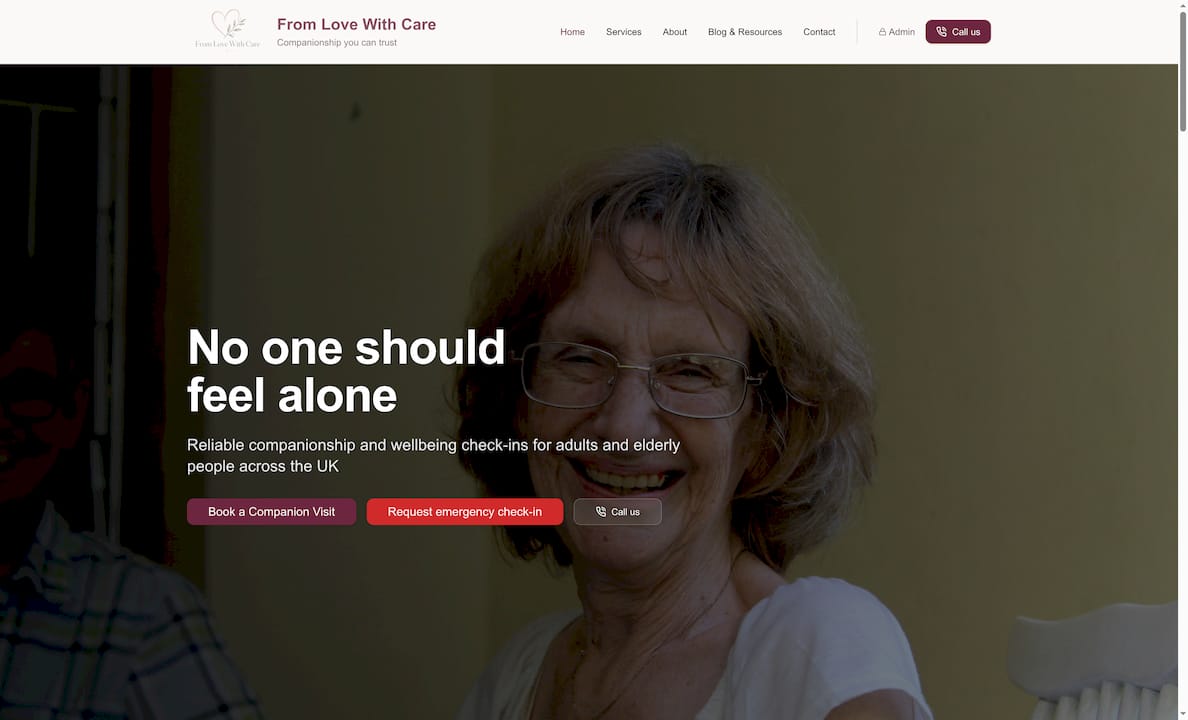
Every Fromlovewithcare companion is DBS-checked and trained to provide non-medical support, including regular social visits, shared activities, grocery shopping assistance, support at appointments, and welfare check-ins. For families who worry about a relative going days without meaningful contact, companion visits provide both connection and reassurance. For more urgent situations, welfare checks for adults living alone offer a structured, professional response.
This is not a replacement for clinical or personal care. It is the social and preventative layer that makes the rest of the plan work better. To find out how companion visits fit into your relative's ageing-in-place plan, visit the Fromlovewithcare services page and arrange a visit.
Useful UK sources and further reading
- NHS: social care and support guide — explains care needs assessments, NHS reablement, and how to access local authority support.
- GOV.UK: Disabled Facilities Grant — official guidance on eligibility, application, and grant amounts for home adaptations.
- GOV.UK: Attendance Allowance — eligibility criteria and how to apply for this non-means-tested benefit.
- Citizens Advice — free, independent guidance on benefits, care funding, and legal rights.
- Social Care Institute for Excellence: housing with support — explains the differences between sheltered, retirement, and extra care housing.
- GOV.UK: find your local council — to contact adult social care for a care needs assessment.
- Fromlovewithcare: senior home visits — information on companionship visits as a practical component of an ageing-in-place plan.