
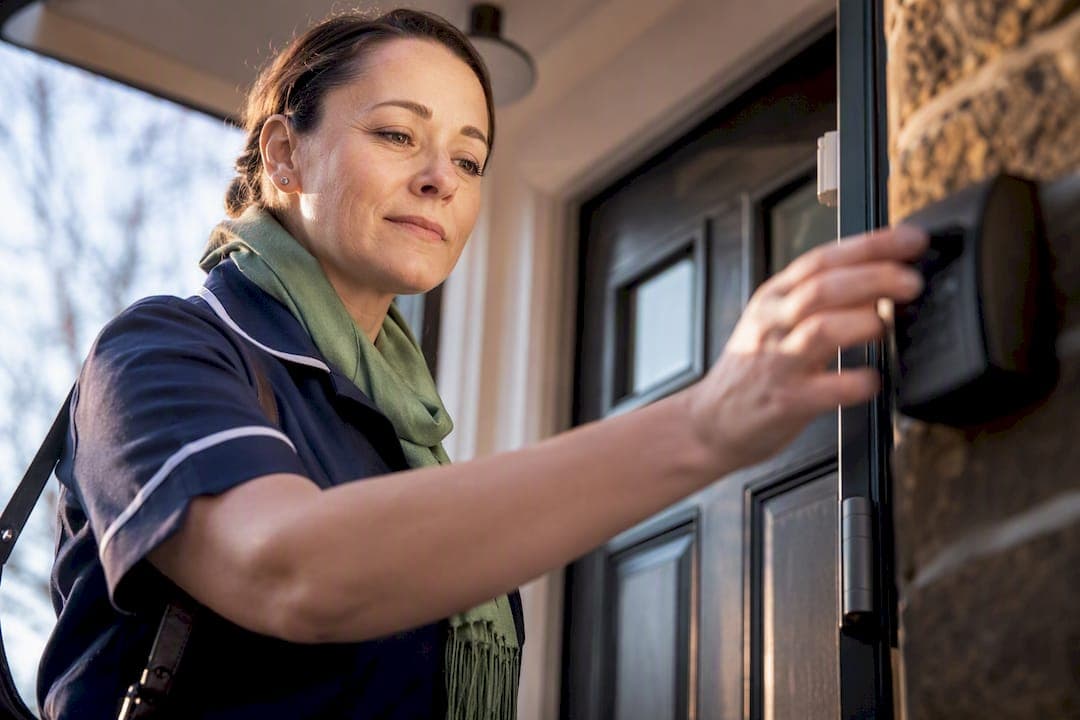
For most families arranging carer access, the Supra C500 Pro covers standard brick or concrete walls, the Burton Keyguard Digital XL suits homes needing larger capacity or electronic logging, and the ark Tamo is the safest choice on rendered walls. All three carry Police Preferred or LPS1175 certification, which matters far more than price. The comparison below explains why, and what installation gets wrong.
TL;DR:
- Only certified police-preferred key safes with LPS1175 or higher attack ratings provide reliable security, especially when mounted into solid brick or concrete walls.
- The ark Tamo offers the highest attack standard rating (A10), making it suitable for high-risk properties or families seeking the strongest protection.
- Positioning the safe in a visible, well-lit area at waist to chest height on a solid wall improves security and ease of access for carers.
- Proper installation includes testing resistance against pulling, ensuring no gaps or water ingress, and confirming the wall material before mounting.
- Key safe policies must include detailed record-keeping, code management, staff training, and reviewing access arrangements to uphold both security and dignity principles.
Table of Contents
- Choosing a key safe carers UK families can trust
- What actually makes a key safe suitable for carer access?
- Where and how to fit a key safe so it stays secure
- What care agencies must get right on key-safe policy
- Where to buy, what it costs, and funding routes worth checking
- A care-centred view on key safes and companionship
- Security and dignity aren't opposites
- A gentler alternative to fitting a key safe
- Sources
Choosing a key safe carers UK families can trust
Certification is the filter that matters most here, not colour or brand recognition. A Secured by Design "Police Preferred" key safe has been attack-tested under LPS1175 by the Loss Prevention Certification Board, and that testing is the difference between a box that merely looks secure and one that has actually resisted forced entry in a lab. Cheaper, untested units from general hardware retailers rarely mention any rating at all, which usually means there isn't one.
Suppliers and locksmiths across the UK consistently name the same short list of police-preferred models worth considering:
- Supra C500 Pro: a widely recommended push-button unit for standard brick or concrete properties, with practical, no-fuss usability for carers arriving under time pressure.
- ark Tamo: rated to the higher A10 attack standard on some models, with render-friendly fixing options for properties that don't have exposed brick.
- Burton Keyguard Digital XL: LPCB-tested to LPS1175 Issue 8 A5, with a larger internal capacity and electronic code management suited to community-care settings using the Burton Keyguard Digital XL specifically.
- Defender Pro-TEC: a police-preferred mechanical option that balances tested security against a lower price, provided the wall substrate is suitable.
Pro Tip: Even a top-rated safe fails its own certification if it's screwed into soft render rather than solid masonry. Check the wall before you fall in love with a model.
If your wall isn't solid brick or concrete, don't assume any police-preferred box will work as advertised. Ask your supplier which models come with tested render-fit kits before you buy.
What actually makes a key safe suitable for carer access?
Police Preferred status and LPS1175 certification aren't marketing badges. They mean an independent lab has tried to force the unit open and it held. An A5 rating withstands a defined level of tool attack; A10 is tougher again, which is why the ark Tamo's higher rating gets specified for higher-risk properties or where a family simply wants the strongest option available.
Beyond the rating, a few practical questions decide whether a safe genuinely works for your situation:
- Substrate: is your wall solid brick or concrete, or rendered? This determines which models and fixing kits you can legitimately use.
- Code entry: can a carer arriving in the rain, wearing gloves, at 7am, operate the buttons quickly? Bulky dials are often harder than push-button pads.
- Capacity: one key, or a bunch including a back door and a garage? Larger units like the Keyguard Digital XL or a dedicated Large Key Safe avoid cramming keys in.
- Weatherproofing: check the IP rating if the safe sits somewhere exposed to driving rain.
- Code reset: some units need a locksmith to reset; others let a family member do it in minutes.
Codes need a paper trail. Write down who holds the code, when it was last changed, and why, even if it's just a note on the fridge calendar to start with. If several carers or family members share access, agree a simple rule: the code changes whenever someone stops needing it, not just when something goes wrong. Check your home insurance policy too. Some insurers ask for a specific certification standard before they'll cover a break-in where a key safe was used, so it's worth a quick call rather than an assumption.
Where and how to fit a key safe so it stays secure
Solid brick or concrete is the only substrate that lets a certified key safe deliver its rated protection. Crime prevention guidance from local authorities is consistent on this point: a high-rating safe mounted into weak render or a hollow surface offers little real resistance, whatever the box says on the packaging.
Position matters almost as much as substrate. A visible, well-lit spot near the door is usually safer than a hidden, shadowy corner, since a concealed location can let an intruder work unobserved. Mount it at a height carers with mobility limitations can reach without stooping or stretching, typically around waist to chest height.
Before any installer leaves, work through this checklist:
- Confirm the wall is solid brick or concrete, not render, unless you're using a specifically tested render-fit kit.
- Set the code together and test it by opening and closing the unit several times.
- Ask the installer to demonstrate resistance to a firm pull, so you can see the anchoring for yourself.
- Check for any gaps or exposed screw heads that could let water in.
Pro Tip: Ask your installer to show you the fixing before they pack up. A quick tug test now saves a locked-out carer later.
What care agencies must get right on key-safe policy
Regulation 12 of the Health and Social Care Act sets the standard: access arrangements must respect a person's dignity while keeping them safe, and that principle should shape how every agency handles key safes, not just the wording of a policy document.
Codes count as personal data under UK GDPR, so they need the same discipline as any other sensitive record. Domiciliary care policy templates typically require:
- A written access arrangement naming exactly who holds the code.
- A record of which staff are authorised, updated whenever someone joins or leaves.
- A sign-in and sign-out log for each visit, so there's a clear trail if something goes wrong.
- An escalation procedure for lost codes or suspected exposure, with a defined timeframe for changing the code.
Staff training should cover this from day one. A carer who doesn't know the code-sharing rule is a bigger risk than a poorly rated safe.
Where to buy, what it costs, and funding routes worth checking
Expect to pay a moderate price for the safe itself depending on certification and capacity, plus a separate charge if you need a professional installer for anchoring into masonry. Non-certified boxes from general retailers can undercut that price, but you lose the tested protection that makes the purchase worthwhile in the first place.
VAT relief is worth checking before you pay. Age UK Trading notes that suppliers can apply VAT relief when the purchase is for someone with a qualifying disability, so ask at checkout rather than after.
- Contact your local council's technology-enabled-care team; some areas offer discounted or funded installs for eligible residents.
- Ask your local Age UK branch whether it runs a key safe scheme.
- Request an itemised invoice separating the unit cost from installation, useful for insurance and VAT records alike.
A care-centred view on key safes and companionship
A key safe only works well when it sits inside a clear plan, not as a lone gadget bolted to a wall. Vetted companions, consistent visit logging, and a code that gets reviewed whenever staff change all reduce risk far more than the box alone ever could. The workflow that works best is simple: consent from the person being cared for, a code issued only to those who need it, each visit logged, and the code reviewed the moment anyone leaves the arrangement.
Security and dignity aren't opposites
A key safe can feel like a loss of privacy to the person relying on it, even when it's plainly there for their protection. The best approach involves them in the decision: agree the location together, document who holds the code, and revisit the arrangement as needs change. Dignity and security tend to sit more comfortably together when the person at the centre of it all had a say.
— Ayomide
A gentler alternative to fitting a key safe
Not every family wants a permanent box on the wall, and that's a reasonable position, not a compromise. Fromlovewithcare offers a different route: DBS-checked companions who visit regularly, build a genuine relationship with the person they're supporting, and can be called on for emergency welfare checks without a stranger needing a code to get through the door.
This isn't clinical or personal care. Companions can offer conversation, shared tea time, help with the shopping, company during appointments, and other social support that can make daily life feel less isolating. For some families, that human presence reduces the need for a key safe altogether; for others, it works alongside one, with the companion as a familiar, trusted face rather than an unknown carer using a code. If you'd like help thinking through an access plan that fits your situation, take a look at our companionship services and get in touch to talk it through.
Sources
- Thurrock Council — key safes guidance
- The Key Safe Company — what is a police preferred key safe?
- LocksmithLocal — key safe installation
- Verivius — sample domiciliary care key and access policy
- Burton Security — Keyguard Digital XL
Check your local council's website too. Many run technology-enabled-care schemes with funded or discounted key safes for eligible residents.