
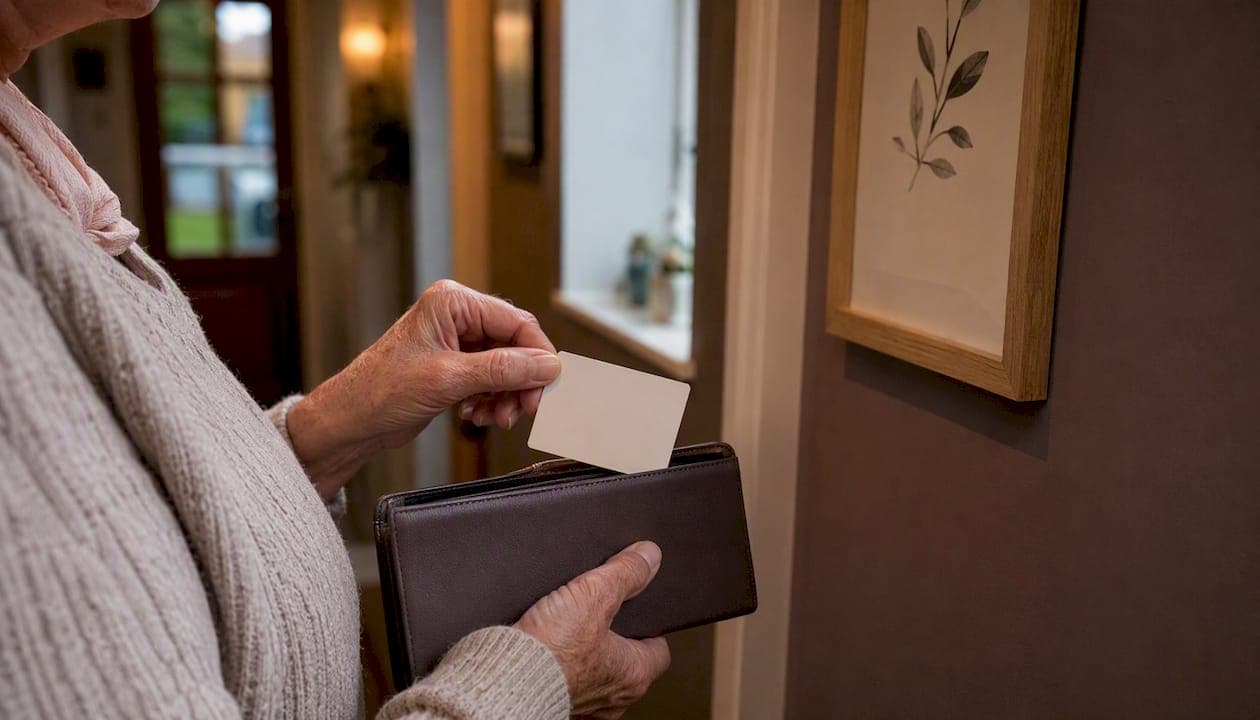
Create a one-page emergency contact plan that lists who to call, where medications are kept, and the exact steps to follow if a check-in is missed. That single document prevents the most common failures in a crisis: delayed responses, missed medications, and responders arriving without the information they need.
Start here — three things to capture right now:
- Who to call first (name, relationship, mobile number, and whether they hold a spare key)
- Current medications: drug name, dose, frequency, and where they are stored
- How to access the home (key location, alarm code, or keysafe number)
Once those three items are written down, you have the core of a working plan. The sections below show you how to build the full document, register for local schemes, set up a check-in system, and keep everything current.
Key takeaways
A complete emergency contact plan for an elderly person must include who to call, where medications are kept, and a tested missed-check escalation pathway — without those three elements, no plan is ready to use.
| Point | Details |
|---|---|
| Start with three core items | Record the first contact, medication location, and home access details before anything else. |
| Register for local schemes | Apply for your area's Carers Emergency Card and the Priority Service Register for all utility providers. |
| Use the Green Bag approach | Keep all current prescriptions in one labelled bag near the door for hospital admissions. |
| Review every six months | Update the plan after any medication, contact, or health change and notify all nominated contacts. |
| Fromlovewithcare welfare checks | Scheduled and emergency companion visits can operate within your escalation pathway when family contacts are unavailable. |
Table of Contents
- How to build an emergency contact plan for elderly relatives: step by step
- How do Carers Emergency Card schemes work in the UK?
- What should you include in an emergency contact plan?
- How to set up a check-in system and a missed-check response
- How do you nominate and manage emergency contacts properly?
- What to do in an emergency: immediate actions by scenario
- What goes in an emergency pack or hospital bag?
- Where should you keep the plan and who should have a copy?
- How often should you review and update the plan?
- Expert tips and common mistakes when creating emergency plans
- Why simple, tested plans are the ones that actually work
- Welfare checks and rapid response from Fromlovewithcare
- Sources
How to build an emergency contact plan for elderly relatives: step by step
A complete senior emergency contact plan takes a moderate amount of time to draft initially. Work through these steps in order and you will have a printable document ready to share.
-
Gather source documents first. Collect the person's NHS summary care record, repeat prescription list, any Lasting Power of Attorney (LPA) paperwork, and their GP registration letter. These give you accurate names, doses, and legal authority details before you write a single field.
-
Sit down with the person being cared for. Carers UK advises that involving the person in the planning process prevents assumptions and reduces disputes during a real crisis. Ask them who they trust, what their daily routine looks like, and whether they have preferences about who enters their home.
-
Choose and brief two nominated contacts. One primary, one backup. Tell them explicitly what you are asking them to do before you write their name on the plan.
-
Complete each field in the plan (see the full checklist in the next section). Work through identity details, medical information, legal documents, and access information in one sitting so nothing is skipped.
-
Print at least two copies. One goes in a clearly labelled spot at home (fridge door or noticeboard). The second goes to the primary nominated contact.
-
Save a digital copy in a password-protected cloud folder (Google Drive or OneDrive work well) with a filename such as "Emergency Plan — [Name] — Updated [Month Year]". Share folder access with nominated contacts only.
-
Register for your local Carers Emergency Card scheme and the Priority Service Register for utilities. Both are quick to sign up for and provide a safety net if you are suddenly unavailable.
-
Test the plan. Run through the missed-check escalation once with your nominated contacts so everyone knows what to expect.
Pro Tip: Draft the plan with the person being cared for present, then send a copy to each nominated contact before you finalise it. Ask each contact to confirm they understand their role in writing — a quick text or email reply is sufficient. Plans drafted in isolation are the most common reason contacts are caught off guard during a real emergency.
How do Carers Emergency Card schemes work in the UK?
A Carers Emergency Card is a small card, similar in size to a bank card, that a carer carries in their wallet. If the carer is taken ill, involved in an accident, or otherwise suddenly unavailable, whoever finds the card can call the 24-hour helpline number printed on it. The helpline operator then activates the pre-registered contingency plan, arranging care for the vulnerable person until a longer-term solution is in place.
Many local authorities and carers centres across the UK operate these schemes, and most are free to register for. The scheme works because the contingency plan is lodged with the local service in advance. When the helpline is called, operators already know who the cared-for person is, what their needs are, and who the nominated backup contacts are.
How to check whether your area has a scheme:
- Search "[your council name] Carers Emergency Card" or "[your council name] carer contingency plan"
- Contact your local carers centre (find yours via the Carers UK directory)
- Ask your GP surgery or social worker, as many refer carers directly to local schemes
Some areas use the branded name "MyBackUp" for their contingency planning tool. Others have council-run schemes with different names but the same function. The key question to ask is: "Does this scheme activate a plan if I am suddenly unable to care?"
Pro Tip: When you register, ask the scheme coordinator exactly what triggers an activation and what happens in the first two hours. Some schemes arrange emergency home care; others contact nominated contacts only. Knowing the limits of the scheme helps you fill the gaps with your own plan.
What should you include in an emergency contact plan?
An effective plan covers identity, medical details, daily routines, and legal documents so that anyone stepping in can provide continuity of care from the first hour. Use the fields below as your master checklist.
Identity and household details
| Field | What to record |
|---|---|
| Full name and preferred name | Legal name plus the name the person uses day to day |
| Date of birth | As on NHS records |
| Home address | Including postcode and any access notes (e.g. ground floor flat, rear entrance) |
| NHS number | Found on any NHS letter or the NHS App |
| Home telephone and mobile | Both numbers if applicable |
| Language and communication needs | First language, hearing aid use, speech difficulties |
Primary carer and nominated emergency contacts
| Field | What to record |
|---|---|
| Primary carer name | Your full name and relationship |
| Primary carer mobile | The number to call first |
| Nominated contact 1 | Name, relationship, mobile, whether they hold a key |
| Nominated contact 2 | Name, relationship, mobile, role in the plan |
| Out-of-hours council number | Your local emergency duty team number |
GP, pharmacy and clinical contacts
| Field | What to record |
|---|---|
| GP name and surgery | Full address and telephone number |
| Pharmacy name | Address, telephone, and whether they deliver |
| Community nurse or district nurse | Name and contact number if applicable |
| Specialist consultant | Name, hospital, and condition managed |
Medication list
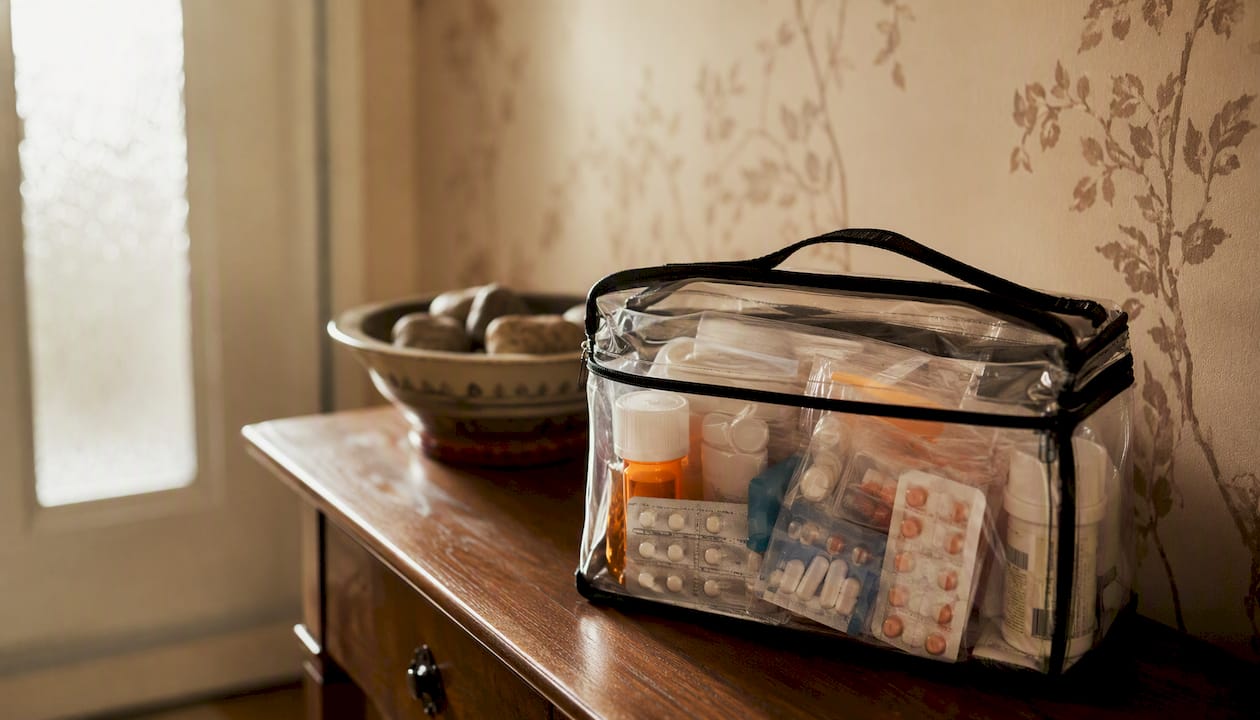
Record every prescribed medication, including inhalers, patches, eye drops, and insulin. Note whether any require refrigeration. Keeping current prescriptions together in a labelled bag reduces time lost searching for medications during a hospital admission — this is the basis of the NHS "Green Bag" approach described later.
Allergies and adverse reactions
| Allergy or reaction | Severity | Notes |
|---|---|---|
| [e.g. Penicillin] | [e.g. Anaphylaxis] | [e.g. Carries EpiPen, location: handbag] |
Mobility, equipment and continence
| Field | What to record |
|---|---|
| Mobility aids | Walking frame, wheelchair, stairlift — model and location |
| Powered equipment | Electric wheelchair, hoist — charging location and backup plan |
| Continence needs | Products used, routine, and where supplies are kept |
| Glasses and hearing aids | Whether worn, spare location |
Daily routine and meals
Note any dietary restrictions, food allergies, or preferences that affect meal preparation.
Legal documents and financial contacts
Collating will locations, Power of Attorney details, and insurance information reduces decision-making delays during emergencies. Record the following:
- Lasting Power of Attorney: type (property and financial affairs / health and welfare), attorney names, and where the original document is stored
- Advance statement or advance decision (living will): location of document
- Will: solicitor name and document location
- Insurance: provider names and policy numbers for home, health, and life cover
Utility and telecare registrations
Pro Tip: The NHS "Green Bag" approach means keeping all current prescriptions and a printed medication list in one clearly labelled bag near the front door. When an ambulance is called, the crew can take the bag directly. It removes the frantic search for blister packs at the worst possible moment.
How to set up a check-in system and a missed-check response
A check-in system only works if everyone knows what happens when a check is missed. Define the escalation pathway before you need it.
Choose your check-in method:
- Daily phone call: Simple and personal. Set a fixed time (e.g. 9:00 AM) and agree that no answer triggers the next step within 30 minutes.
- Scheduled text or app message: Works well for people who are mobile and independent but benefit from a touchpoint. Apps such as Snug or similar welfare-check services can automate this.
- Telecare pendant alarm: Provides passive monitoring but depends on the person pressing the button. Telecare devices may not function without electricity or internet, so always organise a human backup for power outages.
- Scheduled companion visit: A regular visit from a trusted person provides both a welfare check and human contact.
Missed-check escalation pathway:
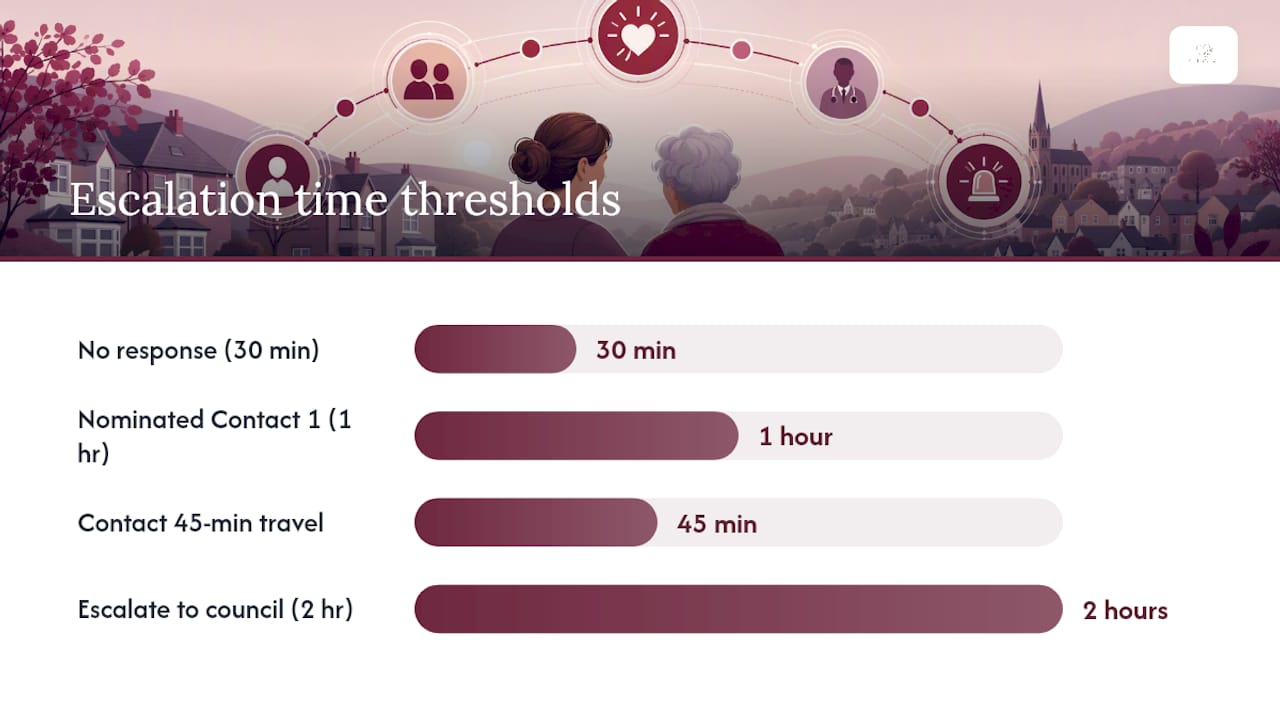
- No response to the first call or message within 30 minutes: call the mobile number, then the landline.
- Still no response: contact Nominated Contact 1 and ask them to attempt contact or visit.
- Nominated Contact 1 cannot reach the person within one hour: Nominated Contact 2 attempts contact or visits.
- No contact after two hours: call the local council emergency duty team (out-of-hours number recorded in the plan) and request a welfare check.
- Immediate concern for safety at any point: call 999.
Record the expected response time for each named contact in the plan itself. A contact who lives 45 minutes away cannot realistically respond in 20 minutes.
Pro Tip: Run a test of the escalation pathway within two weeks of completing the plan. Call each contact in sequence, explain you are testing the system, and note how long each step takes. Adjust the time windows in the plan to reflect reality, not optimism.
Welfare check services for adults living alone can provide a scheduled daily touchpoint that sits within this escalation structure, particularly useful when family contacts live far away.
How do you nominate and manage emergency contacts properly?
Naming someone in an emergency plan without their knowledge is one of the most common mistakes carers make. Active consent protects everyone.
Getting consent right:
- Speak to each nominated contact before finalising the plan. Explain what you are asking them to do, how often they may be called upon, and what the plan does and does not require of them.
- Get written confirmation where possible. A brief email or signed note stating "I agree to be named as [role] in [person's] emergency plan" is sufficient.
- Ask the person being cared for whether they are comfortable with each named contact having access to their home and personal information.
Role definitions to use in the plan:
- Temporary household carer: can enter the home, prepare meals, administer medication as directed, and stay overnight if needed
- Keyholder and medication manager: holds a spare key, can collect and administer medications, but does not provide personal care
- Primary contact for professionals: receives calls from the GP, hospital, or social services and can make decisions if an LPA is in place
- Coordinator only: contacts other people on the list but does not provide direct care
Being specific about roles prevents a nominated contact from being asked to do something they are not prepared or qualified for.
Privacy and data protection:
The plan contains sensitive personal and medical data. Under UK GDPR, sharing it should be proportionate and purposeful. Record in the plan itself who may access it and in what circumstances. Avoid including bank account details or passwords. For any version shared digitally, use a password-protected file and share the password separately.
Pro Tip: Review your nominated contacts list every six months. People move, change jobs, or develop health problems of their own. A contact who was available two years ago may no longer be the right person for the role.
Carers UK guidance recommends discussing the plan with the cared-for person and all potential emergency contacts to ensure roles are acceptable and understood by everyone involved.
What to do in an emergency: immediate actions by scenario
Keep this section visible. In a real crisis, the plan should tell you what to do in under 30 seconds.
For any immediate danger to life:
- Call 999 immediately. State that the person is elderly, vulnerable, and has support needs. Give the address and any access information (keysafe code, flat number).
- Stay on the line unless you need to perform first aid.
- Unlock the front door or provide the keysafe code to the operator so responders can enter.
- Call Nominated Contact 1 as soon as emergency services are on their way.
For urgent health concerns that are not immediately life-threatening:
- Call NHS 111 (free, 24 hours). For urgent health advice that is not immediately life-threatening, NHS 111 provides telephone assessment and triage.
- Have the medication list and allergy information ready before the call connects.
- Follow the operator's advice. If they recommend attending A&E, take the Green Bag.
Specific scenarios:
- Fall at home: Do not move the person unless they are in immediate danger. Call 999 if they cannot get up, are in pain, or have hit their head. Call NHS 111 if they are on the floor but conscious and comfortable while you wait.
- Suspected stroke or heart attack: Call 999 immediately. Note the time symptoms started — this is clinically important for treatment decisions.
- Fire or gas emergency: Call 999. Do not re-enter the building. Meet emergency services at the entrance and give them the person's mobility and medical details from memory or from a copy of the plan kept outside the property.
- Carer suddenly unavailable: Nominated Contact 1 activates the plan. If no contact is reachable, call the local council emergency duty team. If the Carers Emergency Card is registered, call the 24-hour helpline on the card.
What goes in an emergency pack or hospital bag?
Prepare this bag before it is needed. Keep it near the front door or in a designated spot noted in the plan.
Essential contents:
- Medications in the Green Bag (labelled with the person's name and date of birth)
- Printed copy of the emergency plan (one page if possible)
- Printed medication list with doses and frequencies
- Nightwear (two changes)
- Toiletry basics: toothbrush, toothpaste, soap, deodorant
- Glasses and a spare pair if available
- Hearing aids and charger or spare batteries
- Phone charger
- Continence products (a two-day supply)
- A small amount of cash
- NHS number card or a note with the NHS number written clearly
- Contact list (names and numbers of the two nominated contacts and the GP)
Two-bag approach: Keep one bag packed for the person being cared for and a second smaller bag for the carer to take if accompanying them. The carer's bag should hold a copy of the plan, the medication list, and their own phone charger.
Store both bags in the same location and note that location in the plan. Review and repack them every six months when you review the plan itself.
Where should you keep the plan and who should have a copy?
The plan is only useful if the right people can find it quickly. Accessibility and security pull in opposite directions here, so be deliberate about both.
Physical storage:
- Fridge door or a noticeboard in the hallway: the most common location for emergency plans in the UK, and one that ambulance crews and responders are trained to check
- A labelled A4 folder kept in the same spot as the emergency bag
- A copy pinned inside a kitchen cupboard door as a secondary location
Keep a spare key in a keysafe mounted outside the property. Record the keysafe code in the plan and share it only with nominated contacts and emergency services as appropriate.
Digital storage:
- A password-protected folder in Google Drive or OneDrive, with a clear filename including the person's name and the date last updated
- Share access with nominated contacts only, and record who has access in the plan itself
- Keep an offline printed copy as the primary version — digital access fails during power cuts and network outages
Privacy considerations:
Limit what appears on any version shared beyond the immediate household. A version shared with a neighbour, for example, might include only the emergency contact numbers and the keysafe code, not the full medication list. Local council guidance typically describes where to store plans and how to contact emergency duty teams out of hours.
Pro Tip: Label the physical folder clearly: "EMERGENCY PLAN — open in an emergency." Responders arriving at an unfamiliar property should not have to search for it. A bright-coloured folder on the fridge or hallway table takes seconds to spot.
How often should you review and update the plan?
Emergency plans should be reviewed at least every six months and immediately after any change to medication, health, or support arrangements. A plan that was accurate in January may be dangerously out of date by July if a new medication was added or a nominated contact moved away.
Review checklist:
- Has any medication changed (new prescription, dose change, or discontinued drug)?
- Have any nominated contacts changed their availability, address, or phone number?
- Has the person's mobility, communication, or daily routine changed?
- Are all legal documents (LPA, advance statement) still current and correctly stored?
- Are all utility PSR registrations still active?
- Is the emergency bag still packed and up to date?
After each review:
- Update the document and change the "last reviewed" date at the top of the plan.
- Print fresh copies and replace the old ones in all physical locations.
- Update the digital version and notify all nominated contacts that the plan has changed.
- Ask each contact to confirm they have read the updated version.
Keep a brief log of reviews: date, who carried out the review, and what changed. A simple note at the bottom of the plan itself is sufficient.
Expert tips and common mistakes when creating emergency plans
The most common planning mistake is drafting the plan alone. Carers UK guidance is clear: a short planning meeting with the cared-for person and nominated contacts to confirm responsibilities produces a far stronger document than one written at the kitchen table without consultation.
"Using local formal schemes such as MyBackUp or local carers' contingency templates creates a stronger handover for statutory responders than informal notes alone." Carers UK
Expert tips:
- Use your local council's own template if one exists. Templates designed for your area include the correct out-of-hours numbers and are formatted for local responders.
- Keep the plan to one or two pages. A 12-page document will not be read under pressure.
- Register for the Priority Service Register with every utility provider. It takes 10 minutes per provider and secures priority support during outages.
- Involve the person being cared for at every stage. Their preferences about who enters their home and who makes decisions on their behalf are legally and ethically significant.
Common mistakes to avoid:
- Storing the plan only on a phone or laptop with no printed backup
- Naming contacts without briefing them on their role
- Omitting the out-of-hours council emergency duty team number
- Failing to update the medication list after a GP appointment
- Assuming telecare covers all scenarios without a human backup plan
Pro Tip: Caregiver support services in the UK can help you identify local resources, including carers centres that offer free template reviews and one-to-one planning support.
Why simple, tested plans are the ones that actually work
There is a temptation, when you care deeply about someone, to make the plan exhaustive. Every scenario covered, every contact listed, every contingency mapped. The result is often a document so detailed that nobody reads it in a crisis.
The plans that work are the ones that fit on one page and have been tested at least once. When a companion from Fromlovewithcare arrives for a welfare check and cannot reach the family, the difference between a good outcome and a frightening one is almost always whether a clear escalation pathway exists and whether the nominated contacts already know their role. A plan that has been rehearsed, even informally, removes the paralysis that comes with uncertainty.
Start with the three BLUF items at the top of this guide. Build the full document over the following week. Then test it. The testing step is the one most carers skip, and it is the step that matters most.
Welfare checks and rapid response from Fromlovewithcare
When a plan is in place but no one is available to carry it out, that is where Fromlovewithcare steps in. Scheduled companion welfare checks provide a regular, human touchpoint that sits naturally within the escalation pathway you have built. Every companion is DBS-checked and trained to notice changes in wellbeing, follow the agreed check-in protocol, and escalate to nominated contacts or emergency services when needed.
Fromlovewithcare also offers emergency welfare visits for situations where a rapid response is needed and family contacts cannot attend. These are not medical or regulated personal care visits. Companions provide welfare checks, emotional support, and practical help such as grocery assistance or accompanying someone to an appointment. For medical emergencies, 999 and NHS 111 remain the correct first calls.
To arrange a scheduled welfare check or an emergency visit, visit our services page or explore how our companionship works before booking.
Sources
The sources below are the authoritative UK starting points for completing your plan and registering for local services.
- Creating a contingency plan | Carers UK
- Advice for disabled persons and carers | Prepare
- Emergency Planning for Carers – Be Prepared | Carers Leeds
- Emergency support - Planning for a crisis or emergency | Stockport council
- NHS (Green Bag and hospital admission advice referenced)
Search "[your council name] carer contingency plan" or "[your council name] Carers Emergency Card" to find your local scheme. Most councils host their own version of the resources listed above, with region-specific contact numbers and downloadable forms.
This article is general information, not a substitute for advice from a qualified doctor. Consult a qualified healthcare professional about your own circumstances before acting on anything here.