
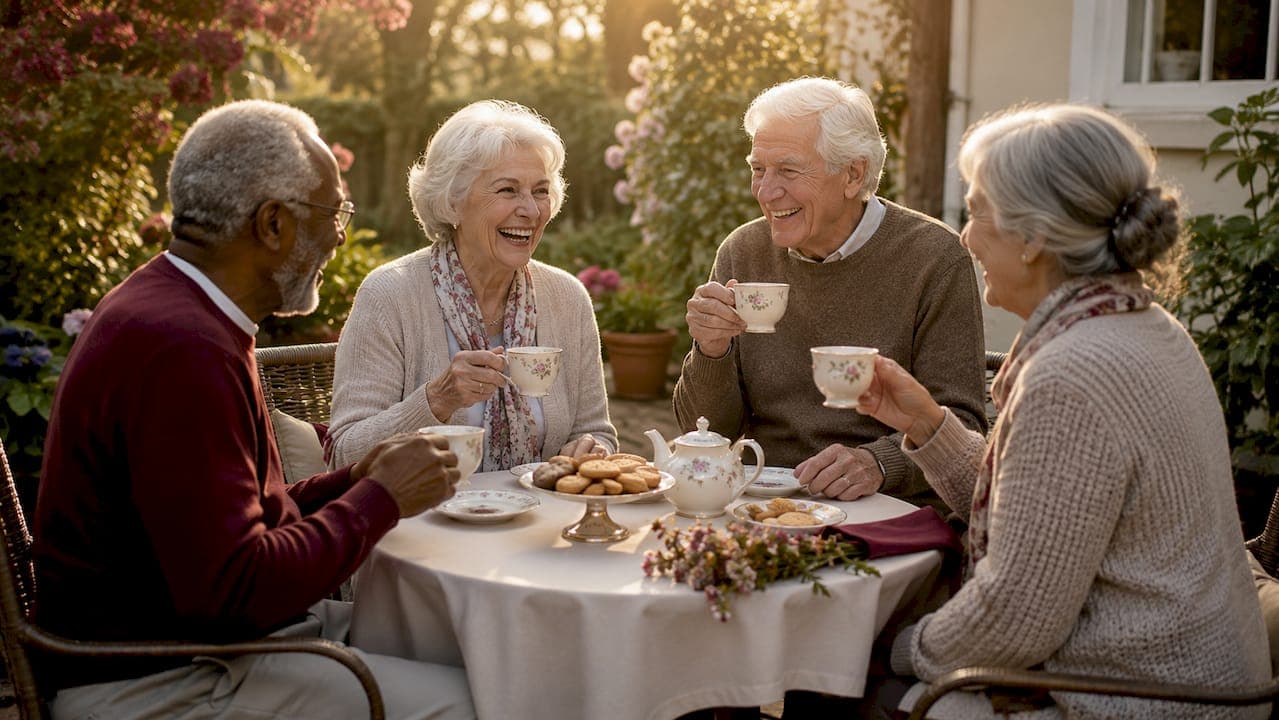
Regular social interaction is defined as consistent, recurring contact with other people that meets a person's need for connection and belonging. For seniors, the benefits of regular social interaction are not merely emotional. Research links consistent social engagement to slower cognitive decline, reduced cardiovascular risk, and measurably better mental wellbeing. Loneliness costs the NHS between £813.35 and £885.49 per frequently lonely person each year. That figure alone signals how serious the consequences of isolation are, and how much is at stake for older adults and the families who care for them.
1. How regular social interaction reduces loneliness-related health risks
Loneliness is not simply an emotional state. It is a measurable health risk with consequences that rival those of well-known physical conditions.
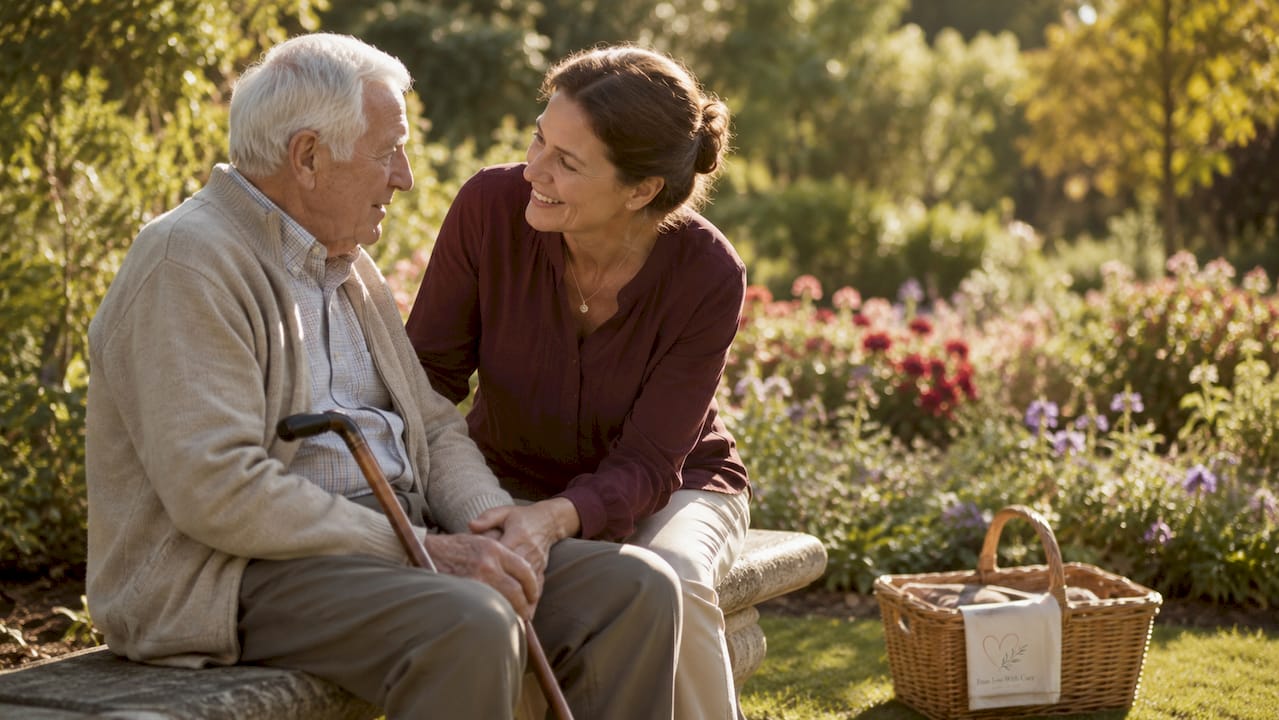
The cardiovascular risks linked to social isolation are striking. A study involving nearly 5.3 million people found that social isolation raises cardiovascular disease risk by 17%, stroke risk by 23%, and Alzheimer's disease risk by 72%. These are not marginal figures. They place social isolation alongside smoking and physical inactivity as a genuine threat to long-term health.
Seniors who maintain regular social contact reduce their exposure to these risks in several practical ways:
- Reduced stress hormones. Positive social contact lowers cortisol levels, which in turn reduces strain on the heart and blood vessels.
- Improved sleep quality. Connected older adults report better sleep, which supports immune function and cardiovascular recovery.
- Greater motivation to seek medical care. Socially engaged seniors are more likely to attend GP appointments and follow treatment plans.
- Lower rates of functional decline. Social isolation correlates with reduced physical activity and increased future disability risk in older adults.
The pattern is consistent across studies. Social connection acts as a buffer against the physical deterioration that isolation accelerates.
2. Cognitive benefits of consistent face-to-face social engagement
Face-to-face social interaction stabilises and slows decline in orientation and executive cognitive functions among seniors. This finding comes from longitudinal ELSA data tracked over nine years. It is one of the most compelling arguments for treating social engagement as a health priority rather than a lifestyle preference.
The type of social contact matters as much as the frequency. Recurring, face-to-face commitments are more effective than occasional large social events in sustaining cognitive health. A weekly lunch club or a regular walk with a friend does more for brain health than an annual family gathering. Routine creates the neural stimulation that episodic contact simply cannot replicate.
"Stable, recurring face-to-face social engagement best preserves cognitive function. Episodic social events may be less beneficial for long-term brain health in older adults."
Digital tools such as video calls and messaging apps play a supporting role. Research confirms that digital and face-to-face contact work best as complements rather than substitutes. Video calls can maintain ties when distance or mobility prevents in-person visits, but they should not replace physical presence where that is possible.
Pro Tip: Schedule at least one recurring, in-person social commitment each week for your elderly relative. Consistency matters more than variety when it comes to protecting cognitive function.
3. Mental health advantages: reducing depression and improving emotional wellbeing
The mental health case for social engagement is backed by hard data. Older adults who are socially isolated or digitally excluded are 1.6 times more likely to experience depression than their socially connected peers. That is a substantial increase in risk from a single, addressable factor.
The emotional cost of loneliness is also measurable. Mean mental wellbeing scores drop from 56.3 among those who never feel lonely to 36.5 among those who feel lonely often. That 20-point gap represents a profound difference in day-to-day quality of life. It is the difference between feeling capable and feeling defeated.
Rebuilding social confidence after a period of isolation takes time and patience. These steps help seniors re-engage at a manageable pace:
- Start small. A brief conversation with a neighbour or a short phone call is a genuine first step, not a compromise.
- Join a shared-interest group. Volunteering, book clubs, or gardening groups reduce the pressure of purely social settings by giving people a task to focus on.
- Use digital tools as a bridge. Video calls can help rebuild confidence before in-person contact feels comfortable again.
- Seek low-pressure activities. Volunteering and group activities are among the most effective interventions for rebuilding social confidence in seniors.
- Accept support. Companionship services offer a structured, safe way to re-establish regular human contact without the anxiety of unfamiliar social settings.
Pro Tip: If your elderly parent resists social activities, start with one-to-one visits rather than group settings. Familiarity and trust reduce anxiety and make regular contact far more sustainable.
4. Physical health improvements linked to social activity in elderly people
Social connection does not just protect the mind. It slows the body's ageing process in ways that are now measurable at a biological level. A University College London study published in Nature Communications found that weaker social ties are linked to biological ageing approximately 2.6 years older than chronological age. That means an isolated 70-year-old may have the physiological profile of a 72 or 73-year-old. The gap widens with prolonged isolation.
Social activities that combine human connection with physical movement offer the greatest benefit. The table below compares common activities by their combined social and physical health value.
| Activity | Social benefit | Physical benefit |
|---|---|---|
| Weekly walking group | High: regular peer contact | Moderate: cardiovascular and joint health |
| Shared tea or coffee visit | High: emotional connection | Low: minimal physical exertion |
| Dance or exercise class | Moderate: group setting | High: balance, strength, coordination |
| Volunteering outdoors | Moderate: purposeful contact | Moderate: light physical activity |
| Gardening club | Moderate: shared interest | Moderate: mobility and dexterity |
The physical benefits of social engagement also include reduced stress responses, which lower inflammation and support immune function. Seniors who stay socially connected tend to maintain better physical functioning well into later life. The relationship between connection and physical health is not incidental. It is biological.
5. The importance of a consistent social routine for long-term wellbeing
A consistent social routine provides structure, purpose, and predictability. These three elements are particularly valuable for seniors whose daily lives may have contracted after retirement, bereavement, or reduced mobility. Without routine, even well-intentioned social contact becomes sporadic and loses much of its protective effect.
The benefits of a consistent social routine for seniors extend beyond the moments of contact themselves. Anticipating a regular visit or activity gives older adults something to prepare for and look forward to. That sense of anticipation is itself a form of mental engagement. It reduces the psychological weight of empty days and keeps the mind active between social encounters.
Families play a significant role in establishing these routines. A weekly visit, a regular phone call at the same time each day, or a standing arrangement with a trusted companion all create the kind of reliable structure that supports long-term wellbeing. For seniors who show signs of needing companionship, a structured routine is often the most effective starting point.
6. The role of companionship services in supporting social engagement
Companionship services fill a specific and important gap. They provide consistent, reliable human contact for seniors who lack regular social connection through family, friends, or community networks. The benefits of companionship services for isolated adults are well documented, ranging from reduced depression to improved physical functioning.
What distinguishes effective companionship from casual contact is regularity and trust. A senior who sees the same companion each week builds a genuine relationship. That relationship carries emotional weight. It reduces the sense of invisibility that many isolated older adults describe. It also creates accountability. When someone is expected, the senior prepares, engages, and participates rather than withdrawing.
For families who cannot always be present, a vetted companion offers reassurance as well as connection. Knowing that a trusted person visits regularly reduces the anxiety that comes with distance or demanding work schedules. The practical guide to finding companionship in later life outlines how families can identify the right level of support for their relative's needs.
Key takeaways
Regular social interaction is one of the most effective and accessible interventions for protecting seniors' mental, physical, and cognitive health.
| Point | Details |
|---|---|
| Loneliness carries real health costs | Social isolation raises cardiovascular risk by 17% and stroke risk by 23% in older adults. |
| Face-to-face contact protects the brain | Recurring in-person interaction slows cognitive decline more effectively than occasional events. |
| Mental wellbeing scores drop sharply | Loneliness reduces mean wellbeing scores from 56.3 to 36.5, a measurable and serious decline. |
| Isolation accelerates biological ageing | Weaker social ties are linked to biological ageing 2.6 years beyond chronological age. |
| Routine matters more than volume | Consistent, weekly social commitments deliver greater long-term benefit than sporadic large gatherings. |
Why I believe we underestimate the power of a regular visit
I have spent years observing how social isolation affects older adults, and the pattern is always the same. The decline is quiet. It happens between the visits that do not come, the phone calls that are not made, and the weeks that pass without a single meaningful conversation. By the time families notice, the withdrawal is already deep.
What strikes me most is the gap between how seniors feel and what is happening to their bodies. Many older adults feel mentally younger than their years, even as biological ageing accelerates due to isolation. That disconnect is dangerous. It means the physical cost of loneliness is often invisible until it becomes a crisis.
The conventional wisdom says "keep busy" and "stay connected." That is true but incomplete. The research is clear that it is the regularity of contact that matters, not the quantity. One reliable weekly visit does more than three spontaneous ones that never quite happen. Digital tools help, but they work best when they support in-person contact rather than replace it.
My honest view is this: if you have an elderly parent or relative who lives alone, the single most useful thing you can do is establish one recurring, in-person commitment and protect it. Not a vague intention to visit more. A specific day, a specific time, a specific activity. That structure is what changes lives.
— Ayomide
How Fromlovewithcare supports seniors' social wellbeing
Loneliness among older adults is a serious and growing concern across the UK. Fromlovewithcare exists to address it directly, through compassionate, one-to-one companionship that fits naturally into a senior's life.
Every companion on the Fromlovewithcare platform is thoroughly vetted, so families can trust that their relative is in safe, caring hands. Visits are built around what the senior enjoys, whether that is a shared cup of tea, a gentle walk, or help with everyday errands. The focus is always on genuine human connection, not task completion. To find out how a regular companion visit could support your loved one, explore the full range of companionship and support services or learn more about loneliness support available across the UK.
FAQ
How does social interaction benefit seniors' mental health?
Regular social contact reduces depression risk significantly. Isolated older adults are 1.6 times more likely to experience depression than those with consistent social connections.
What type of social activity is best for cognitive health in seniors?
Recurring, face-to-face activities such as weekly clubs or regular visits are most effective. Longitudinal research shows these preserve orientation and executive function better than occasional large events.
How much does loneliness cost the NHS?
Loneliness costs the NHS between £813.35 and £885.49 per frequently lonely older adult each year. That figure reflects increased GP visits, hospital admissions, and mental health support.
Can digital contact replace in-person socialising for elderly people?
Digital tools support social ties but do not replace in-person contact. Research confirms that face-to-face interaction delivers cognitive and emotional benefits that video calls alone cannot replicate.
What are the signs that an elderly person needs more social support?
Withdrawal from activities, increased confusion, low mood, and going days without speaking to anyone are common indicators. These signs suggest a senior may benefit from structured companionship or social engagement support.