
Professional companionship is defined as scheduled, purposeful social and emotional support provided by a vetted companion to an elderly person, distinct from medical care and separate from family obligation. Why professional companionship supplements family visits is one of the most pressing questions facing UK families today, as loneliness carries health risks equivalent to smoking 15 cigarettes daily. Family visits are irreplaceable, but they are rarely consistent enough to address the daily reality of isolation. Professional companionship fills that gap with reliable, genuine human connection that transforms both elder wellbeing and the quality of family time itself.
Why professional companionship supplements family visits
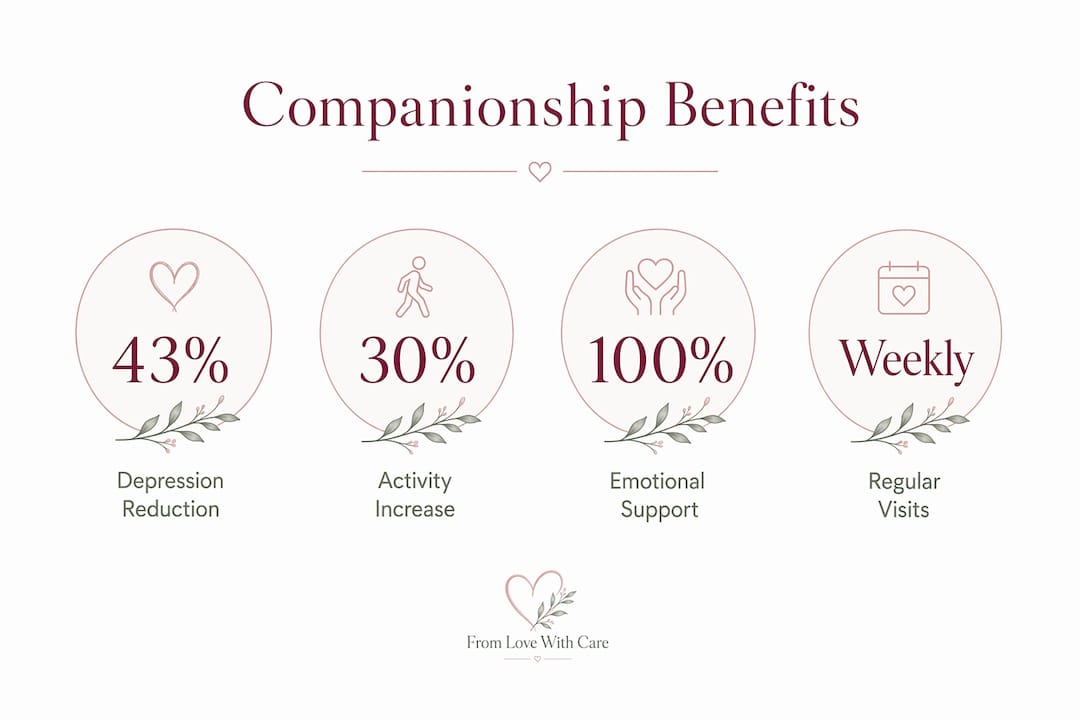
Professional companions reduce the risk of depression in chronically isolated seniors by up to 43% and increase daily activity by 30%. Those figures represent a meaningful shift in quality of life, not a marginal improvement. Family visits, however loving, rarely occur with the frequency needed to produce that level of change.
The core benefit is consistency. A companion who arrives every Tuesday and Thursday becomes a reliable presence in an elder's week. That predictability alone reduces anxiety and improves mood in ways that occasional family visits, however warm, cannot replicate.
Professional companionship also provides something family members often struggle to offer: neutral, patient attention. There are no unresolved tensions, no competing responsibilities, and no sense of obligation on either side. The interaction is simply about the person being visited.
- Reduced depression risk by up to 43% through consistent social engagement
- Increased daily activity by 30%, supporting physical and cognitive health
- Emotional monitoring that identifies early changes in mood or behaviour
- Consistent social interaction that fills the gaps between family visits
- Caregiver respite that reduces family burnout and emotional exhaustion
Pro Tip: When speaking to a companion service, ask specifically how companions document their observations after each visit. A written summary shared with the family is a sign of a professional, trustworthy service.
How does professional companionship differ from family visits?
Gerontology draws a clear distinction between social isolation and loneliness. Social isolation is objective: a person has few social contacts. Loneliness is subjective: a person feels disconnected regardless of how many people are around. This distinction matters enormously for families.
An elder can receive regular family visits and still feel profoundly lonely. Family visits motivated by obligation often exacerbate loneliness through perceived emotional distance. Everyone in the room can sense when a visit is being endured rather than enjoyed. That dynamic, however unintentional, leaves the elder feeling more alone than before.
"The loneliest older people are not those who live alone. They are those whose adult children visit out of obligation, and everyone in the room can feel it."
Professional companions bring something structurally different. They arrive without the weight of family history, unresolved conflict, or divided attention. Their role is simply to be present and engaged. That freedom produces a quality of interaction that genuinely addresses the subjective feeling of loneliness, not just the objective fact of social contact.
The practical result is that family visits become more meaningful when companions handle the routine social support. Families can step out of the caregiver role and back into the role of loving relative. That shift reduces emotional exhaustion on both sides and improves the quality of every interaction.

What practical strategies optimise companion and family visit schedules?
Integrating professional companionship with family visits requires a small amount of planning and a clear understanding of your relative's week. The goal is to cover the days when isolation is felt most acutely, not simply the days that are convenient.
- Identify the loneliest days. Ask your relative directly, or observe patterns. Monday mornings after a weekend of family contact are often the hardest. Schedule companion visits to cover those gaps.
- Set one clear goal per visit. Effective companionship visits work best when they have a purpose: a short walk, a shared hobby, a conversation over tea. Purposeful visits produce better outcomes than open-ended ones.
- Commit to at least three weeks before evaluating. Routine takes time to establish. Neurologically, consistent short visits of 20 minutes with full attention stabilise mood and cognition more effectively than infrequent longer visits with distraction.
- Delegate routine tasks to companions. Light tasks such as accompanying your relative to the shops or helping with correspondence free family visits for purely emotional connection.
- Reserve family visits for quality interaction. When companions handle the day-to-day social support, family time becomes a genuine occasion rather than a welfare check.
This structure also prevents caregiver burnout. When families carry the entire social and emotional support load, exhaustion sets in quickly. Sharing that responsibility with a professional companion is not a withdrawal of love. It is a recognition that sustainable care requires more than one person.
Pro Tip: Keep a simple shared note or app entry after each companion visit. Even a few words about your relative's mood or what they discussed helps the whole family stay connected and informed without duplicating effort.
A companionship plan for housebound seniors can provide a structured starting point if you are unsure how to begin scheduling visits around your family's existing commitments.
How do professional companions detect early health changes?
Professional companions provide a layer of objective observation that family members rarely offer, not because families do not care, but because emotional closeness makes it harder to see gradual change. A companion who visits twice a week with a clear, attentive eye notices things that accumulate slowly and invisibly for those who love the person.
| What Companions Observe | Why It Matters |
|---|---|
| Changes in appetite or weight | Early indicator of depression, illness, or medication side effects |
| Reduced mobility or new hesitation | May signal a fall risk or developing joint condition |
| Shifts in mood or withdrawal | Can indicate early cognitive decline or emotional distress |
| Changes in home cleanliness | Often reflects declining capacity for self-care |
| Altered sleep patterns or fatigue | Linked to infection, pain, or mental health changes |
Professional companions provide objective reporting of subtle early changes that family members may attribute incorrectly to normal ageing. That distinction is clinically significant. Early detection of a nutritional decline or a mood shift can prevent a serious health crisis that would otherwise require expensive medical intervention.
Companions used as early intervention preserve daily habits around nutrition, hygiene, and activity that, once lost, are difficult to restore. The cost of prevention is always lower than the cost of crisis care, financially and emotionally.
Pro Tip: Ask your companion service whether their companions complete a brief written report after each visit. Sharing these reports with your relative's GP creates a useful longitudinal record that supports better clinical decisions.
For families who want to understand how this assessment process works in practice, how elder companionship is assessed offers a clear guide to what good evaluation looks like.
Key takeaways
Professional companionship supplements family visits by providing consistent, emotionally genuine engagement that reduces depression risk, improves daily activity, and enables earlier detection of health changes that families might otherwise miss.
| Point | Details |
|---|---|
| Consistency reduces depression | Regular companion visits lower depression risk by up to 43% in isolated seniors. |
| Loneliness differs from isolation | Subjective loneliness persists even with family visits; companions address the feeling directly. |
| Quality over quantity in visits | Short, fully attentive visits stabilise mood and cognition better than infrequent longer ones. |
| Early observation prevents crises | Companions detect subtle health changes before they escalate into serious medical events. |
| Family roles improve with support | Companions free families from caregiver duties, allowing visits to become genuinely loving. |
What i have learned watching families rediscover their relatives
I have spoken with many families who initially felt guilty about arranging professional companionship. The fear is always the same: that bringing in a companion signals failure, or worse, that it will replace the family's role. What I have consistently seen is the opposite.
When a companion takes on the steady, reliable presence in an elder's week, something shifts. The family member who used to arrive exhausted and anxious, running through a mental checklist of welfare concerns, begins to arrive differently. They sit down. They listen. They laugh. The visit stops being a duty and becomes something both people actually look forward to.
The elders I have seen benefit most from this arrangement are not those with the most visitors. They are those whose visitors are genuinely present when they arrive. Meaningful engagement delivered reliably matters more than frequency. A companion who arrives twice a week with full attention does more for an elder's sense of worth than five distracted drop-ins.
The families who embrace this model do not love their relatives less. They love them more wisely. They recognise that one person, however devoted, cannot be everything to someone who needs daily human connection. Accepting help is not a concession. It is the most honest act of care.
— Ayomide
How Fromlovewithcare supports families and their loved ones
Fromlovewithcare was built around a simple truth: human connection is not a luxury in elder care. It is the foundation of everything else.

Every companion at Fromlovewithcare is thoroughly vetted and trained to provide genuine, consistent friendship to elderly adults across the UK. Whether your relative needs company over a cup of tea, support on a trip to the shops, or simply someone to talk to on a quiet afternoon, Fromlovewithcare matches them with a companion who fits their personality and routine. Families report significant improvements in their loved ones' mood, confidence, and daily engagement after just a few weeks. Explore elderly companionship services to find the right level of support, or browse the full range of care and support options available to your family today.
FAQ
What is professional companionship for elderly people?
Professional companionship is scheduled, purposeful social and emotional support provided by a vetted companion. It differs from medical care by focusing entirely on human connection, conversation, and shared activity.
Can professional companions replace family visits?
Professional companions do not replace family visits. They complement them by providing consistent daily or weekly contact that families cannot always sustain, freeing family time for deeper emotional connection.
How often should a professional companion visit?
Effective companionship works best with regular, scheduled visits on the days an elder feels most isolated. Most families begin with two visits per week and adjust based on their relative's response after three weeks.
Does professional companionship improve mental health?
Yes. Consistent companionship reduces depression risk by up to 43% and increases daily activity by 30% in chronically isolated seniors, according to 2026 research from Abiding Healthcare.
How do i know if my relative needs a professional companion?
Signs include going several days without meaningful conversation, withdrawal from activities they previously enjoyed, or a noticeable decline in mood between family visits. A companionship assessment can help clarify the right level of support.