

A companionship plan for a housebound senior is a structured, person-centred programme that combines consistent human contact, tailored social activities, and appropriate digital connection to reduce loneliness and support quality of life at home. The industry term for this approach within UK adult social care is a social support plan, though "companionship plan" is the phrase most families use when searching for practical help. UK local authorities are required to design support that includes meaningful social connections for housebound seniors, which means families have both a right and a framework to draw on. Understanding what goes into such a plan, and how to build one, is the most direct route to improving your loved one's daily life.
What does a companionship plan for a housebound senior include?
A well-structured companionship plan rests on three pillars: predictable human contact, low-energy social activities, and backup digital connectivity. Multi-layered plans that blend all three are more effective at addressing both the subjective feeling of loneliness and the objective reality of social isolation. A single approach, such as weekly phone calls alone, rarely produces lasting improvement.
The core tools and components families typically need are summarised below.

| Component | Purpose | Examples |
|---|---|---|
| Scheduled visits | Predictable human presence | Weekly companion visits, family drop-ins |
| Low-energy activities | Stimulation without physical strain | Shared tea, reminiscence, reading aloud |
| Digital connection | Backup contact between visits | Video calls via tablet, phone check-ins |
| Communication aids | Support for sensory impairment | Hearing loops, amplified handsets |
| Documentation | Access to care services | Mobility records, wellbeing notes |
Human interaction routines work best when they are predictable. A senior who knows a visitor arrives every Tuesday at 2pm experiences less anticipatory anxiety than one who receives random, unscheduled contact. Structured low-energy activities, such as sharing a pot of tea, looking through a photograph album, or listening to a favourite radio programme, provide social stimulation without demanding physical effort. You can find a wide range of suitable companion activities that work well in home settings.
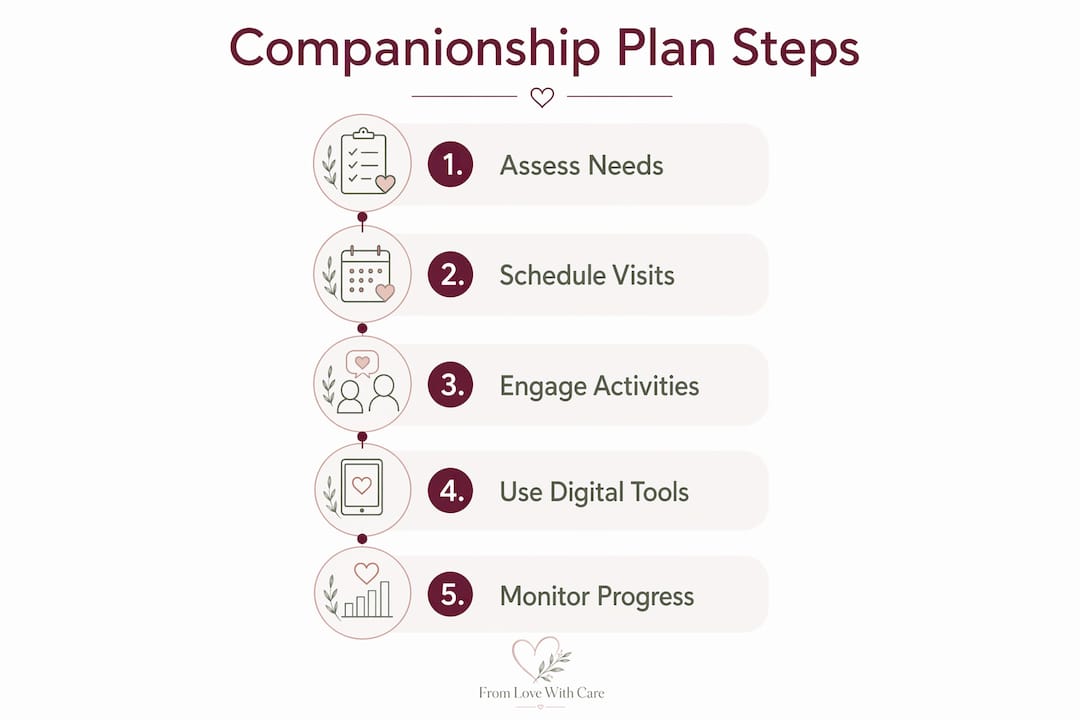
Digital tools extend the plan between visits, but NICE guidance is clear that dignity, consent, digital access, and data use must all be considered before introducing any technology into a care setting. A tablet set up with a large-text interface and a single-button video call function is far more usable than a standard smartphone handed to someone unfamiliar with touchscreens.
Pro Tip: Set up a free video calling app such as WhatsApp or FaceTime on a dedicated tablet, then label the screen with a printed card showing exactly which button to press. This removes the technical barrier for seniors who are not confident with devices.
Hearing loss is a frequently overlooked barrier to social connection. Group Auditory Rehabilitation combined with hearing device uptake significantly improves loneliness and social participation in older adults, which means addressing hearing impairment is not a separate issue. It is part of the companionship plan itself.
How do you assess a housebound senior's companionship needs?
Assessment begins with four areas: mobility and physical health, cognitive function, sensory impairment, and personal preferences. Each area shapes which types of social interaction are realistic and enjoyable. A senior with moderate dementia may find one-to-one visits from a familiar face far more settling than group video calls, while someone with good cognitive function but limited mobility may thrive with a structured book club via phone.
The steps below give families a practical starting point.
- Document mobility barriers. Note whether your loved one can move between rooms independently, when they last left the home, and what prevents them from doing so. Clear documentation of mobility barriers and impact on wellbeing helps families access care services, particularly given that local authority definitions of "housebound" vary considerably.
- Record sensory and cognitive status. Note any diagnosed hearing loss, vision impairment, or memory conditions. These directly affect which activities and communication formats will work.
- Gather personal preferences. Ask your loved one directly what they enjoy, what they find tiring, and who they feel comfortable with. Involving the senior in this conversation is not optional. It is the foundation of a plan that will actually be used.
- Identify existing social contacts. Map out current contact: family visits, neighbour check-ins, GP appointments. Gaps in this map show where the plan needs to focus.
- Speak to social care providers. Contact your local authority's adult social care team to ask about eligibility for funded companionship support. Bring your documentation to the conversation.
The true number of housebound older adults in the UK may be closer to 1 million, yet no consistent national definition exists. This inconsistency means some seniors who genuinely need support are turned away because they do not meet a particular local threshold. Families who arrive at assessments with written records of their loved one's situation are far better placed to make a successful case. A guide on how elder companionship is assessed can help you prepare for that conversation.
Pro Tip: Keep a simple weekly log for two to four weeks before any care assessment. Record how many times your loved one spoke to another person, their mood, and any activities they completed. This evidence carries real weight with social care assessors.
What practical steps implement an effective plan at home?
Implementation is where many well-intentioned plans stall. The steps below move from planning to action in a sequence that minimises disruption for the senior and reduces pressure on the family.
- Set a contact schedule. Decide on a minimum of three meaningful interactions per week: one in-person visit, one phone or video call, and one activity-based session. Write the schedule down and share it with everyone involved.
- Choose activities that match energy levels. Face-to-face group-based interventions with social components improve quality of life for older adults, but for housebound seniors, the activity must fit within the home. Shared meals, gentle reminiscence, reading together, or listening to music are all evidence-supported options.
- Introduce technology gradually. Start with a single device and a single function. A video call with one familiar family member is a better introduction than a group call with five people. Confidence builds with repetition.
- Confirm consent and data safety. Before using any app or platform, confirm that your loved one understands what it does and agrees to use it. Digital companionship requires upfront planning for user ability and meaningful consent to maintain dignity and independence.
- Review the plan monthly. Ask your loved one what they have enjoyed and what has felt like an obligation. Adjust accordingly. A plan that felt right in January may need updating in March if health or mood has changed.
- Build in a backup. If a planned visit falls through, have a phone call as a substitute. Consistency matters more than the specific format of contact.
A common pitfall is building a plan around the family's availability rather than the senior's preferences. If your loved one is most alert and sociable in the morning, scheduling all visits for the evening because it suits the carer's work pattern will reduce the plan's effectiveness. The benefits of regular companionship are well documented, but they depend on timing and quality of interaction, not just frequency.
Pro Tip: Treat the first month as a trial. Tell your loved one that you are trying things out together and that nothing is fixed. This framing reduces resistance and makes it easier to adjust without anyone feeling that the plan has "failed."
What challenges arise when organising housebound elderly support?
Families encounter a predictable set of obstacles when putting a companionship plan into practice. Knowing these in advance means you can prepare rather than react.
- Inconsistent local authority definitions. Because no national standard defines "housebound," eligibility for funded support varies by area. Families in one borough may receive funded companion visits while those in a neighbouring area receive nothing for the same level of need. Detailed written documentation is the most reliable way to strengthen an application.
- Physical and cognitive limitations. A senior with advanced arthritis may find it painful to hold a phone for more than a few minutes. Someone with moderate dementia may not retain the memory of a visit by the following day. Activities and contact formats must be chosen with these realities in mind, not around them.
- Hearing loss as a hidden barrier. Conversation frequency alone does not reduce loneliness when hearing loss makes conversation difficult. Addressing hearing loss with rehabilitation and communication environment adjustments produces larger improvements in loneliness than increasing social contact without addressing the underlying impairment.
- Digital access and consent. Not every housebound senior has a reliable internet connection, a suitable device, or the confidence to use one. Introducing technology without addressing these gaps creates frustration rather than connection.
- Emotional resistance and privacy concerns. Some seniors resist accepting help because it feels like an admission of vulnerability. Engagement strategies that avoid stigmatising language and use community outreach increase participation in social connection programmes. Frame companionship as something enjoyable, not as a care intervention.
- Carer fatigue. Families who take on all companionship responsibilities themselves often burn out within months. Building in professional or volunteer support from the outset protects both the senior and the family.
Key takeaways
A companionship plan for a housebound senior works best when it combines predictable human contact, personally meaningful activities, and carefully introduced digital tools, all reviewed regularly against the senior's changing needs.
| Point | Details |
|---|---|
| Start with assessment | Document mobility, sensory needs, and preferences before choosing any activity or tool. |
| Use a multi-layered approach | Combine visits, low-energy activities, and digital backup rather than relying on one method. |
| Address hearing loss directly | Auditory rehabilitation improves companionship outcomes more than increasing contact frequency alone. |
| Confirm consent for technology | Introduce digital tools gradually, with clear consent and data safety checks in place. |
| Review and adjust monthly | A plan that suited your loved one in January may need updating by spring as health and mood change. |
What I have learned about building companionship plans that actually work
Having spent time working alongside families navigating the UK adult social care system, the pattern I see most often is this: families build a plan around logistics and then wonder why their loved one still seems withdrawn. The schedule is full. The tablet is set up. The visits are happening. But the connection is not there.
The reason, almost always, is that the plan was built around what was convenient rather than what was meaningful. A senior who spent forty years as a keen gardener does not want to watch television with a companion. She wants to talk about plants, look at seed catalogues, or tend a windowsill pot. That specificity is what separates a plan that reduces loneliness from one that simply fills time.
I also think the field consistently underestimates hearing loss. Families tell me their loved one "manages fine" in conversation, not realising that the senior has learned to nod and smile rather than admit they cannot follow what is being said. That is not connection. It is performance. Getting a proper hearing assessment and, where needed, a hearing aid or loop system, can transform the quality of every subsequent interaction.
The other thing worth saying plainly: you do not have to do this alone. The families who sustain good companionship plans over years are the ones who bring in professional support early, treat it as a partnership, and give themselves permission to step back occasionally. That is not a failure of love. It is what makes the love sustainable.
— Ayomide
How Fromlovewithcare supports families with companionship care
If you are putting together a care plan for a housebound elderly relative and need trusted, person-centred support, Fromlovewithcare is built for exactly this situation.
Fromlovewithcare provides elderly companionship services across the UK, with every companion thoroughly vetted and matched to the individual's personality, interests, and communication needs. The focus is entirely on human connection: shared tea, conversation, gentle outings when possible, and the kind of consistent presence that makes a measurable difference to wellbeing. Families consistently report that their loved ones are more settled, more talkative, and more themselves after regular visits. If you would like to explore what a tailored plan could look like for your family, visit the senior home visits page to arrange an initial conversation.
FAQ
What is a companionship plan for a housebound senior?
A companionship plan for a housebound senior is a structured programme of regular human contact, social activities, and digital connection designed to reduce loneliness and support wellbeing at home. UK adult social care guidance requires these plans to be person-centred and to support meaningful connections with family and community.
How often should a housebound senior receive companionship contact?
A minimum of three meaningful interactions per week is a practical starting point, combining at least one in-person visit, one phone or video call, and one activity-based session. The frequency should be reviewed monthly and adjusted based on the senior's mood, health, and expressed preferences.
Can digital tools replace in-person visits for housebound seniors?
Digital tools are a valuable backup between visits but do not replace face-to-face contact. Evidence shows that in-person social activities improve quality of life more reliably than remote contact alone, particularly for older adults with cardiovascular or mobility conditions.
How does hearing loss affect a companionship plan?
Hearing loss reduces the quality of social interaction even when contact frequency is high. Integrating auditory rehabilitation and hearing devices into the plan produces greater reductions in loneliness than conversation alone, making a hearing assessment a worthwhile early step.
How do families access funded companionship support in the UK?
Families should contact their local authority's adult social care team and request a needs assessment. Bringing written documentation of mobility barriers, time since the senior last left the home, and the impact on wellbeing significantly strengthens the case for funded support.