

Accepting companionship help without shame is defined as recognising emotional support as a healthy human need, not a sign of personal weakness or failure. Loneliness is far more common than most people realise. 6% of UK adults report feeling lonely often or always, and a further 23% feel lonely some of the time. That means roughly one in three people around you knows this feeling well. Shame is the barrier that keeps loneliness hidden and untreated. Removing that barrier starts with understanding where shame comes from and why it has no place in the act of seeking companionship.
Why do people feel shame when accepting companionship help?
Shame in the context of loneliness is the belief that needing connection reveals something broken or deficient about you. It is not a rational conclusion. It is a learned response, shaped by cultural messages that prize self-sufficiency and treat dependence as failure. The result is a painful cycle: the lonelier you feel, the more ashamed you become, and the more you conceal it.
Several patterns drive this cycle:
- Internalised stigma. Many people absorb the idea that loneliness is a personal defect rather than a situational experience. This belief is false, but it feels very real.
- Concealment as a coping strategy. Hiding loneliness feels protective in the short term. Over time, concealment deepens isolation and makes reaching out feel even harder.
- Fear of judgement. People worry that admitting loneliness will cause others to see them as pathetic, burdensome, or socially incompetent.
- Comparison with others. Social media and cultural narratives suggest everyone else is surrounded by warm, active friendships. This comparison is almost always inaccurate.
Researcher Brené Brown's work on shame offers a clear and well-evidenced framework for understanding this. Her central finding is that shame cannot survive being spoken aloud. Naming and disclosing loneliness to a non-judgemental listener dismantles shame faster than almost any other approach.
"Shame requires secrecy and silence to survive. The moment you name what you are feeling to someone safe, its power begins to shrink. Disclosure is not weakness. It is the most direct route out of isolation."
This insight matters because it reframes the act of seeking companionship assistance. Reaching out is not an admission of failure. It is the precise action that breaks the shame cycle at its root.
How can reframing loneliness reduce shame and open the door to companionship?
Reframing loneliness means shifting how you explain it to yourself. The most effective shift is moving from an internal explanation ("I am lonely because something is wrong with me") to a situational one ("I am lonely because of circumstances in my life right now"). This is called reattribution, and it has a measurable effect. Situational reattribution reduces both shame and the duration of loneliness by breaking the concealment cycle that keeps people stuck.
Loneliness is also deeply tied to life stage. 32.2% of UK adults in their last year of life report lacking companionship or feeling isolated. Bereavement, retirement, illness, and relocation all create conditions for loneliness that have nothing to do with personal worth. Recognising this makes it far easier to seek support without embarrassment.
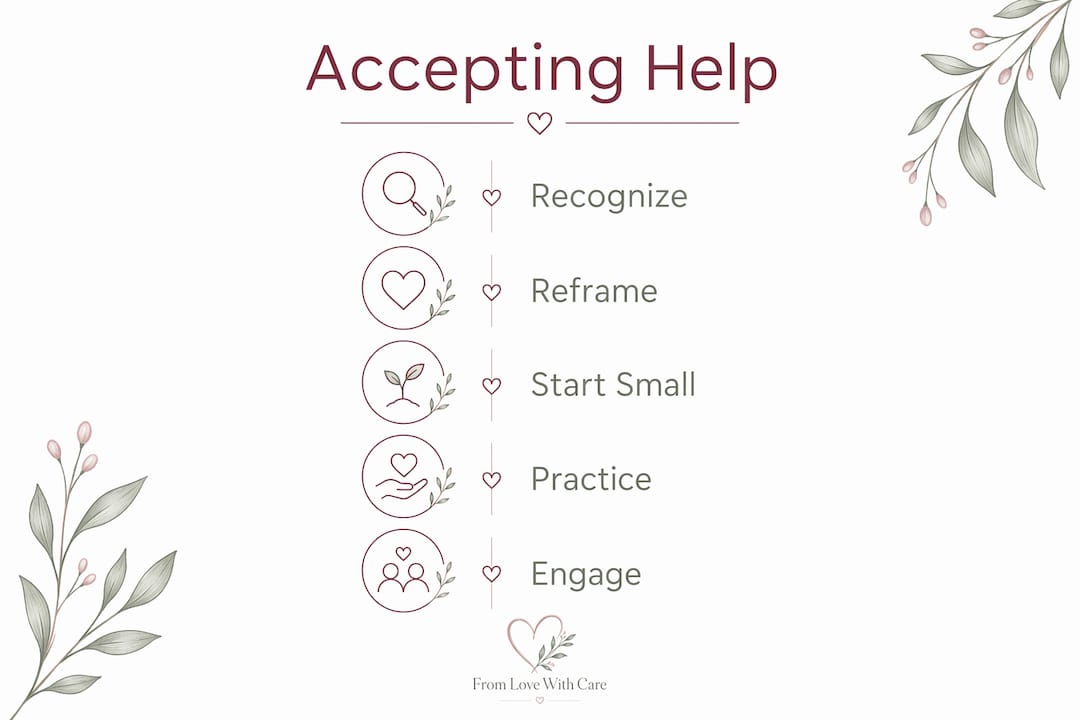
UK public health initiatives have demonstrated that stigma reduction is possible at a community level. Projects funded through the Know Your Neighbourhood Fund show that small, recurring social interactions in manageable groups reduce stigma and improve wellbeing over months. The key word is "recurring." A single interaction rarely shifts deep-seated shame. Repeated, low-pressure contact does.
Here are four reframing steps that work in practice:
- Name the feeling. Say "I feel lonely" rather than "I am a lonely person." The first describes a state. The second defines an identity.
- Identify the situation. Write down the circumstances that contributed to your loneliness. Moving house, losing a partner, or changing jobs are causes, not character flaws.
- Acknowledge universality. Remind yourself that 6 in 7 UK adults report satisfaction with their social relationships, but the minority who struggle are still millions of real people.
- Disclose to one safe person. This does not need to be a close friend. A professional companion, a GP, or a support line all count.
Pro Tip: Write one sentence describing your loneliness as a situational fact, not a personal verdict. "I have been isolated since moving to a new city" is far more accurate and far less shaming than "I have no friends because I am difficult."
Practical steps to accept companionship help gracefully
Building comfort with companionship support is a gradual process. The goal is not to overhaul your social life overnight. It is to take small, repeatable steps that build what practitioners call "social muscle."

Start with low-pressure interactions
The lowest-pressure starting point is often a stranger or a professional. Disclosing loneliness to a paid companion or a support worker offers a safe, non-judgemental space to begin. There is no history, no expectation, and no risk of damaging an existing relationship. Fromlovewithcare companions are thoroughly vetted and trained specifically to offer this kind of warm, professional presence. You can read more about the benefits of companionship services for isolated adults to understand what this kind of support can offer.
Use practice conversations to build confidence
The British Heart Foundation recommends practice conversations at home as a genuine technique for reducing social anxiety. This means rehearsing what you might say before a visit or a phone call. Start with neutral topics: the weather, a television programme, a recent walk. The content matters less than the act of practising. Each small exchange builds confidence for the next one.
Engage with manageable social activities
The comparison below shows how different types of social engagement vary in pressure and accessibility:
| Type of engagement | Pressure level | Good for |
|---|---|---|
| One-to-one companion visit | Low | First steps, housebound adults |
| Small community group | Low to medium | Building trust over weeks |
| Structured activity class | Medium | Those with a specific interest |
| Large social event | High | Later stages, once confidence grows |
Starting at the low end of this table is not a compromise. It is the evidence-based approach. Loneliness stigma reduces through repeated, manageable exposures rather than large social overhauls.
- Choose one activity or interaction per week to begin with.
- Accept that progress is not linear. Some weeks will feel easier than others.
- Treat each interaction as practice, not a performance.
Pro Tip: If a companion visit feels too formal at first, ask for a shared activity such as a walk to the shops or a cup of tea. Parallel activity reduces the pressure of direct conversation and makes connection feel more natural.
Common obstacles when embracing companionship assistance
Even with the right mindset, obstacles arise. Knowing what to expect makes them easier to manage.
- Fear of judgement. This is the most common barrier. The antidote is starting with a professional or a stranger, where the social stakes are genuinely low. A Fromlovewithcare companion is there specifically to offer support, not to evaluate you.
- Breaking the secrecy cycle. Many people have kept their loneliness private for so long that disclosure feels dangerous. Start small. Tell one person, in one sentence. The relief that follows is almost always greater than the fear that preceded it.
- Managing anxiety around social interaction. Mindfulness and manageable social activities are both effective tools here. Mindfulness helps you acknowledge feelings without being overwhelmed by them. Social activities, even brief ones, ease the path to connection.
- Dealing with setbacks. A cancelled visit, an awkward conversation, or a week of low motivation does not mean the process has failed. It means the process is human.
"Admitting loneliness is an act of self-care, not weakness. The compassion you would freely offer a friend who was struggling is exactly the compassion you deserve to offer yourself."
The most important thing to understand is that accepting help gracefully is not a single decision. It is a repeated, ongoing choice. Each time you choose connection over concealment, you weaken shame's hold a little further.
Key takeaways
Accepting companionship help without shame requires reattributing loneliness from a personal failing to a situational experience, then taking small, repeated steps toward connection.
| Point | Details |
|---|---|
| Shame thrives on silence | Naming loneliness to one safe person is the most direct way to reduce its power. |
| Loneliness is situational | Life events such as bereavement or relocation cause loneliness; they do not reflect personal worth. |
| Start with low pressure | Professional companions and small groups offer the safest first steps for building social confidence. |
| Progress is non-linear | Setbacks are normal; repeated, manageable interactions build trust and reduce stigma over months. |
| Self-compassion is essential | Treating your own loneliness with the same kindness you would offer a friend accelerates recovery. |
Shame's grip loosens when you stop fighting it alone
I have spoken with many people who waited years before accepting any form of companionship support. The reason was almost never a lack of desire for connection. It was shame, quiet and persistent, telling them that needing help meant they had failed at something fundamental.
What I have come to believe, firmly, is that the opposite is true. Seeking companionship is one of the most self-aware things a person can do. It requires honesty about your own needs, courage to act on them, and a willingness to be seen. Those are not signs of weakness. They are signs of clarity.
The people I have seen make the most meaningful progress are not those who waited until they felt ready. They are those who took one small step while still feeling afraid. A phone call. A visit. A cup of tea with someone new. Shame does not disappear before you act. It diminishes because you acted.
Be patient with yourself. The path to finding comfort in companionship is rarely straight, and that is entirely normal.
— Ayomide
Companionship support that meets you where you are
Fromlovewithcare was built around a simple belief: no one should go days without a meaningful conversation. The service connects adults and older people across the UK with thoroughly vetted companions who offer genuine human presence, whether that means a shared walk, a cup of tea, or help with a weekly errand.
There is no pressure to commit to more than you are ready for. Fromlovewithcare's companionship services are designed to feel approachable from the very first visit. If you are not sure where to begin, the how it works page explains the process clearly and simply. For those specifically affected by isolation, the loneliness support services page offers further guidance on what compassionate, professional companionship looks like in practice.
FAQ
What is the difference between loneliness and social isolation?
Loneliness is the subjective feeling of lacking connection, while social isolation is the objective state of having few social contacts. A person can feel lonely in a crowd, or feel content with limited social contact.
Is it normal to feel ashamed about needing companionship?
Yes, and it is also very common. Shame around loneliness stems from cultural messages that prize self-sufficiency. Recognising this as a learned response, rather than a truth, is the first step to overcoming it.
How do I start accepting companionship help if I feel anxious?
Begin with a single, low-pressure interaction such as a one-to-one companion visit or a brief phone call. Practice conversations at home before the visit can also reduce anxiety significantly.
Can professional companionship really reduce loneliness?
Yes. Regular, vetted companionship visits provide consistent human contact, which research links to improved wellbeing. Fromlovewithcare clients consistently report meaningful improvements in their daily mood and sense of connection.
How long does it take to feel comfortable accepting help?
There is no fixed timeline. Stigma and discomfort reduce gradually through repeated, manageable social interactions over weeks and months, not through a single conversation or decision.