

Companionship in later life is defined as the regular, meaningful social contact that protects older adults from the serious health consequences of isolation. ONS 2026 data confirms that loneliness varies significantly by age and personal circumstances, making finding companionship in later life one of the most pressing wellbeing challenges for older adults in the UK. The good news is that practical routes exist. Social prescribing, community programmes, and trusted companionship services like those offered by Fromlovewithcare give older adults real, supported ways to build lasting connections. This guide sets out exactly how to take those first steps.
What does finding companionship in later life actually involve?
Finding companionship in later life means more than attending the occasional social event. It requires consistent, repeated contact with people who genuinely care about your wellbeing. That distinction matters enormously. A single afternoon at a community centre feels pleasant, but it rarely builds the trust and familiarity that reduce loneliness over time.
The term most commonly used in health and social care settings is social connectedness, which covers both the quantity and quality of a person's relationships. Social prescribing is the NHS-backed approach that links this concept directly to practical support. A GP or link worker refers an older adult to non-medical community activities, from gardening clubs to befriending schemes, that address the root cause of poor wellbeing. Social prescribing prioritises community engagement over clinical treatment, which is precisely why it works so well for loneliness.
Companionship for seniors also includes practical support. Sharing a cup of tea, accompanying someone to a GP appointment, or helping with a weekly shop are all forms of meaningful connection. These interactions are not trivial. They are the building blocks of trust.

What resources and first steps support building friendships over 60?
Before seeking out social activities, it helps to assess your own readiness honestly. Some older adults feel anxious about meeting new people after years of reduced social contact. That feeling is normal and does not mean companionship is out of reach.
The table below summarises the main types of community resources available in the UK and what each one offers.
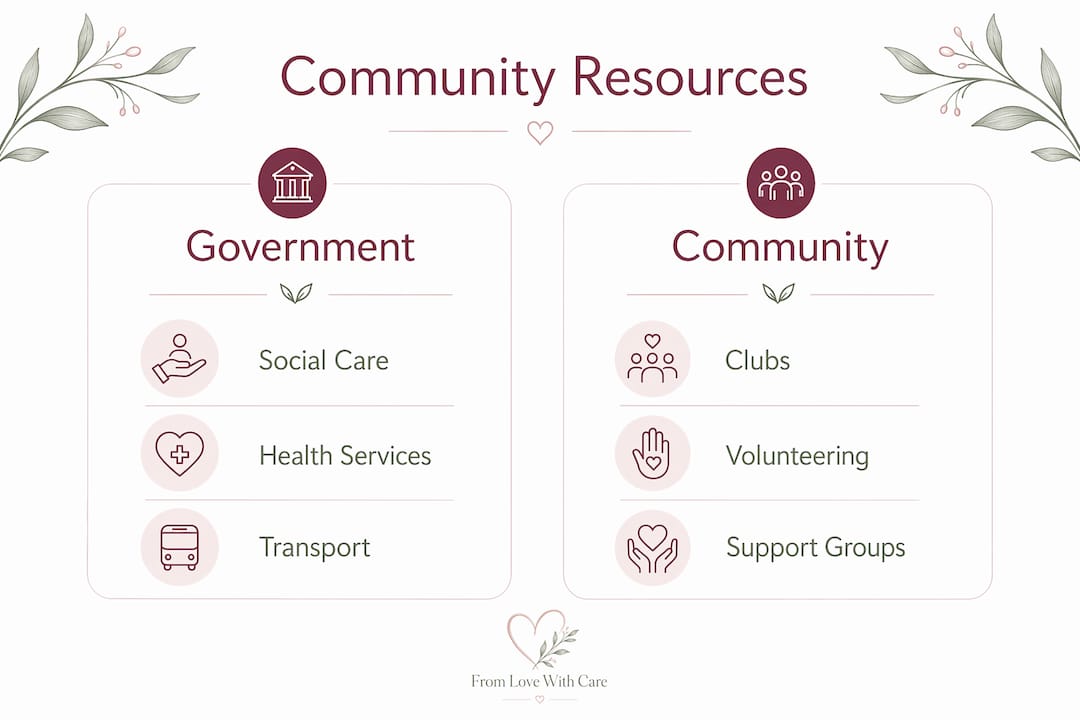
| Resource type | What it provides | How to access it |
|---|---|---|
| Social prescribing schemes | Referral to community activities via a link worker | Ask your GP or call your local NHS primary care network |
| Local befriending services | Regular one-to-one visits or phone calls | Age UK, Royal Voluntary Service, local councils |
| Community and hobby groups | Shared interest activities, e.g. walking, arts, gardening | Libraries, community centres, local council websites |
| Faith and neighbourhood groups | Informal social contact within familiar settings | Local places of worship, neighbourhood associations |
| Professional companionship services | Vetted companions for home visits and outings | Providers such as Fromlovewithcare |
Practical considerations matter too. Transport is one of the most common barriers. Many local councils offer community transport schemes, and some companionship services will accompany older adults to and from activities. Health conditions may limit certain options, but most community groups actively welcome people with mobility needs.
- Speak to your GP if loneliness is affecting your mood or sleep. Naming it directly increases the likelihood of a social prescribing referral.
- Contact Age UK or your local council to find groups within easy reach.
- Start with one activity per week. Consistency matters more than variety.
Pro Tip: If transport is a barrier, ask your GP's receptionist specifically about link workers. Link workers are trained to find solutions to practical obstacles, not just suggest activities.
How can older adults build connections through community activities and social prescribing?
Social prescribing is the most structured route into community life for older adults in the UK. A link worker, usually based at a GP surgery, meets with you to understand your interests and circumstances. They then connect you with local activities suited to your needs. Hospital-based social prescribing has shown measurable wellbeing gains, even when loneliness itself was not the stated reason for referral.
The steps below give a clear path from first contact to sustained engagement.
- Speak to your GP or practice nurse. Mention loneliness, low mood, or reduced social contact directly. This triggers the referral process.
- Meet your link worker. This is a free, informal conversation. There is no pressure to commit to anything immediately.
- Choose one activity to try. A local walking group, a craft class, or a befriending visit are all common starting points.
- Attend at least three times before deciding. First visits are often awkward. Familiarity builds after repeated contact.
- Tell your link worker what is and is not working. They can adjust your referral to better suit your preferences.
- Consider adding a second activity after two months. Variety widens your social network gradually.
Technology can support social contact, but it cannot replace it. A meta-analysis of seven randomised controlled trials involving 580 participants found that technology-based interventions alone do not reliably reduce loneliness. That finding is significant. Video calls and social media apps are useful supplements, but they work best alongside regular in-person contact.
Passive digital use such as scrolling social media without genuine interaction can actually worsen feelings of isolation for some older adults. The evidence points clearly toward facilitated, face-to-face contact as the primary measure.
Pro Tip: If mobility limits your ability to attend groups in person, ask your link worker about home-based befriending. Many schemes send trained volunteers directly to your door.
What companionship models build lasting support?
The most effective companionship models share one feature: repeat contact with the same person over time. The Wisconsin Senior Companion Program illustrates this clearly. Older volunteers commit 20 hours per week to visiting a small group of clients, often serving the same individuals for years. That consistency is what turns a friendly visit into a genuine friendship.
The table below compares the main companionship service types and their key benefits.
| Service type | Primary benefit | Best suited to |
|---|---|---|
| Volunteer befriending schemes | Low cost, community-rooted | Those with mild to moderate loneliness |
| Professional companionship services | Vetted, reliable, structured | Those needing consistent, trusted support |
| Peer support groups | Shared experience, mutual understanding | Those managing grief, illness, or life transitions |
| Senior companion programmes | Long-term relationship building | Those seeking ongoing, familiar contact |
Companionship roles work best when they combine practical assistance with emotional presence. A companion who helps with grocery shopping is also someone who listens, notices changes in mood, and provides a reliable point of human contact. Research published in nursing journals confirms that regular companionship improves emotional and physical wellbeing for older adults. The effect is not marginal. Clients and families consistently report meaningful improvements in daily life.
Sustained weekly visits matter far more than one-off social events. A single coffee morning is pleasant. A companion who arrives every Tuesday and knows your name, your preferences, and your history is something far more powerful.
Pro Tip: When choosing a companionship service, ask specifically how companions are matched to clients and how continuity is maintained if a companion is unavailable. Consistency is the single most important factor in building trust.
What challenges arise when seeking companionship, and how do you address them?
Seeking social connection after a long period of isolation takes courage. Many older adults face real and understandable barriers.
- Anxiety about meeting new people. This is the most common obstacle. Starting with a one-to-one befriending visit rather than a group setting reduces the pressure considerably.
- Mobility and transport difficulties. Home-based companionship services and community transport schemes address this directly. Do not assume a physical limitation rules out social contact.
- Technology anxiety. Video calls and apps are not compulsory. In-person and telephone-based options remain widely available and equally effective.
- Fear of rejection or not fitting in. Most community groups and befriending services are specifically designed to welcome people who feel isolated. The other members have often felt exactly the same way.
- Grief and bereavement. Losing a spouse or close friend can make new connections feel disloyal or premature. Peer support groups for bereavement offer a space where this feeling is understood and respected.
"Loneliness is not a personal failing. It is a health concern that deserves the same attention and care as any physical condition. Naming it to a GP or link worker is the single most effective first step."
If loneliness persists despite trying community activities, a formal social prescribing referral is the appropriate next step. Naming loneliness explicitly to a healthcare professional increases the likelihood of being connected to the right support. You do not need to manage this alone.
Key takeaways
Consistent, repeated human contact is the most effective way to reduce loneliness and build meaningful companionship in later life.
| Point | Details |
|---|---|
| Repeat contact builds trust | One-off events rarely reduce loneliness; weekly, familiar contact does. |
| Social prescribing is accessible | Ask your GP about link workers to access free, tailored community referrals. |
| Technology supports but does not replace | Digital tools work best alongside in-person contact, not instead of it. |
| Name loneliness directly | Telling a GP or link worker about loneliness increases the chance of the right referral. |
| Professional services offer consistency | Vetted companionship services provide reliable, structured contact for those who need it most. |
What I have learned about companionship and why persistence matters
The most common mistake I see older adults make is giving up after one uncomfortable first visit. That first visit is almost always awkward. It does not mean the group is wrong for you. It means you are human.
Social prescribing has changed the way I think about loneliness. For years, the instinct was to treat isolation as a medical problem requiring a medical solution. What the evidence actually shows is that community connection, not a prescription, is what most people need. The NHS's investment in link workers reflects that shift, and it is long overdue.
What strikes me most about programmes like the Wisconsin Senior Companion Program is the simplicity of the model. No app, no algorithm, no clinical intervention. Just one person showing up for another person, week after week. That reliability is what builds something real.
My honest view is that digital tools are being oversold as a solution to loneliness among older adults. A video call is better than silence, but it is not a substitute for someone sitting across the table from you. The JMIR meta-analysis backs this up. Face-to-face contact, facilitated and consistent, remains the gold standard.
Be patient with yourself. Building new friendships over 60 takes time, and that is entirely normal. The people who benefit most from companionship services and community groups are those who keep showing up, even when it feels difficult at first.
— Ayomide
How Fromlovewithcare supports older adults seeking connection
Fromlovewithcare was built specifically for older adults who go days without meaningful human contact. The service focuses entirely on companionship, not clinical care, which means every visit is designed around genuine connection. Companions are thoroughly vetted and matched carefully to each client.
Whether you are looking for regular home visits, support with everyday outings, or simply someone to share a cup of tea with, Fromlovewithcare offers trusted companionship services tailored to your needs. For those experiencing persistent isolation, the dedicated loneliness support services provide structured, professional companionship that makes a measurable difference to daily life. Arrange a visit and take the first step toward consistent, caring connection.
FAQ
What is social prescribing and how does it help with loneliness?
Social prescribing connects older adults to community activities and support through a GP or link worker referral. It addresses loneliness by building regular social contact rather than relying on clinical treatment alone.
How do I meet new people as a senior if I have mobility difficulties?
Home-based befriending services and professional companionship providers visit you directly, removing the need for transport. Many local councils also offer community transport schemes for those who can travel with support.
Is finding love later in life realistic through community activities?
Meaningful relationships of all kinds, including romantic ones, do develop through repeated social contact in community settings. Shared interest groups, volunteer programmes, and social clubs all create the conditions for genuine connection to grow.
How often should I meet a companion to reduce loneliness effectively?
Weekly contact with the same person is the most effective pattern, based on evidence from structured volunteer programmes. Consistency and familiarity matter far more than the frequency of one-off social events.
Can a companionship service replace community activities?
Professional companionship services and community activities work best together, not as alternatives. A vetted companion provides reliable, trusted contact at home, while community groups build a wider social network over time.