
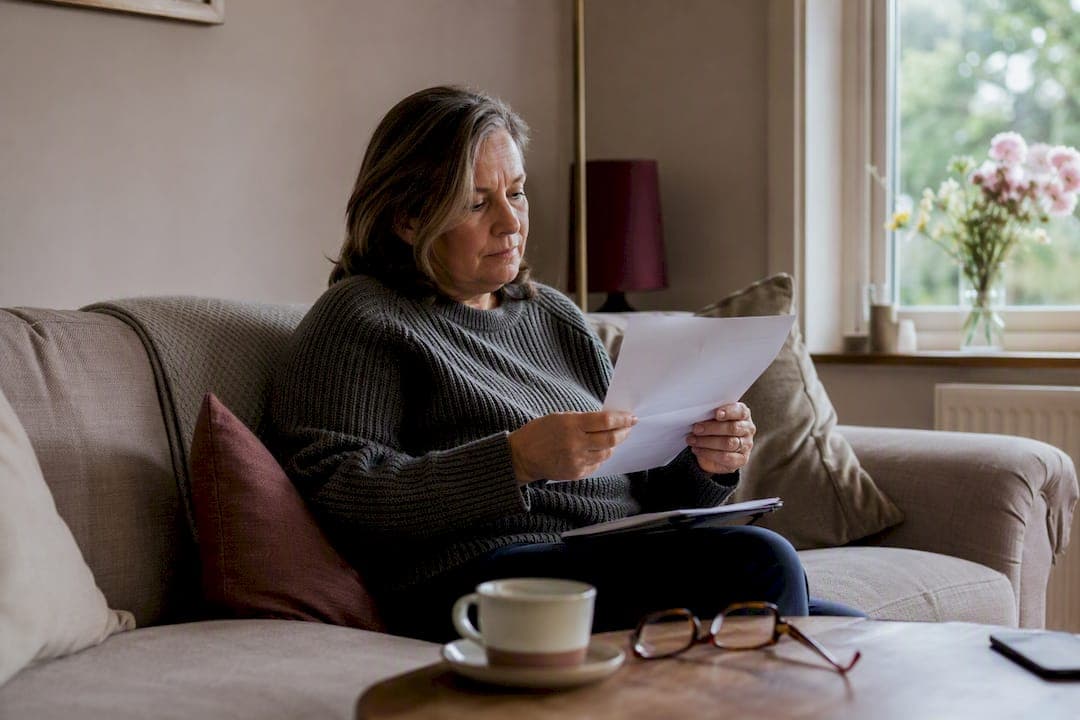
Yes. Families across the UK can pay for a DBS‑checked companion to attend medical appointments alongside an elderly or isolated relative, offering company, reassurance and practical help rather than clinical care. This is companionship support, not a transport or clinical escort service: think conversation on the way there, help checking in at reception, and someone to sit with your relative in the waiting room.
Before you book anyone, there are two things worth sorting first.
- Verify the DBS check. Ask to see an original certificate, or ask the companion to use the DBS Update Service so you can confirm it yourself.
- Decide agency or direct hire. An agency manages vetting and cover for you; hiring directly is often cheaper but puts the verification work on your shoulders.
Key Takeaways
DBS‑checked companionship gives UK families a verified, non‑medical way to support a relative through medical appointments without replacing clinical or transport services.
| Point | Details |
|---|---|
| Companionship is non‑medical | Companions help with company, paperwork and travel confidence, not clinical tasks or medication. |
| Always verify the DBS | Ask for the original certificate or check the DBS Update Service before booking, especially for direct hires. |
| Agency vs direct hire | Agencies handle vetting and cover at a higher rate; direct hire costs less but shifts verification onto you. |
| Prepare consent and paperwork | Sort consent, medication lists and questions the day before to avoid confusion at the appointment. |
| Fromlovewithcare offers a vetted direct option | DBS‑checked, interviewed companions matched to your relative, bookable for one‑off or regular appointment support. |
Table of Contents
- Who benefits from having a companion at medical appointments?
- What does a companion actually do on the day?
- Are DBS checks compulsory, and how do I check one?
- Agency or direct hire, and what it costs
- Preparing for the appointment: a family checklist
- Safety and infection control during appointments
- Privacy, consent and patient rights during accompaniment
- What happens if something goes wrong at the appointment?
- How to keep communication clear between everyone in the room
- What the research actually points to
- How Fromlovewithcare arranges companion support for appointments
- Frequently asked questions
- Sources
Who benefits from having a companion at medical appointments?
Companionship for appointments tends to suit a specific set of situations rather than everyone equally. Older people living alone often lose confidence about travelling somewhere unfamiliar, and a familiar face beside them changes the whole experience of the day.
Companions typically support:
- Older adults living alone with no family nearby to attend appointments with them.
- People with health anxiety who freeze up or forget questions once they're in the room.
- Those with mild mobility or sensory difficulties who need a steady arm and someone to repeat instructions.
- Anyone recovering from bereavement or a recent diagnosis who simply doesn't want to sit in a waiting room alone.
This kind of support fits GP visits, hospital outpatient appointments, dental check‑ups, optician visits and ongoing therapy sessions. It's worth being clear about the boundary here: a companion provides company, conversation and practical help with paperwork. They are not a substitute for NHS patient transport or a clinical escort, and they won't perform medical tasks. If your relative has started cancelling appointments, or you notice letters piling up unopened on the side table, that's usually the clearest sign they need this kind of support before things get worse.
What does a companion actually do on the day?
A good companion's job splits neatly into three stages, and it helps to know exactly what falls inside that remit before the appointment arrives.
- Before travel — a reminder call the night before, help getting out the door on time, and calm reassurance if your relative feels anxious about the journey.
- At the venue — support checking in at reception, sitting with your relative in the waiting room, and taking notes during the consultation if that's useful.
- After the appointment — collecting any prescription, talking through what the clinician said in plain terms, and seeing your relative safely home.
None of this crosses into clinical territory. Companions don't administer medication, change dressings or make treatment decisions. They're there for company and continuity, not care in the medical sense, and that distinction matters when you're briefing one for the first time.
Pro Tip: Write down the three things your relative most wants to ask the doctor before the appointment. Companions are far more useful when they know what "success" looks like for the day, not just the appointment time.
Are DBS checks compulsory, and how do I check one?
Companionship on its own usually falls outside what the Home Office defines as regulated activity with adults, which is why some independent companions operate without any formal check at all. Families should not treat that as licence to skip vetting. Reputable agencies apply enhanced DBS checks as standard practice regardless of what's legally required, because it builds the trust a stranger walking into someone's home depends on.
There are three levels worth knowing:
- Standard — shows convictions and cautions only.
- Enhanced — adds local police information.
- Enhanced with barred lists — includes a check against the adults' barred list, reserved for roles closer to regulated care.
If you book through an agency, they typically handle the DBS process for their staff and should be able to confirm the check level on request. If you're hiring someone directly and self‑employed, the rules work differently: the individual must apply for their own DBS through an Umbrella Body, because families cannot apply for a DBS check on someone else's behalf.
Ask to see the original certificate, not a photograph or a scan someone sends over WhatsApp. Better still, ask whether the companion is registered with the DBS Update Service, which lets you verify their status online with their consent, and re‑check it before every renewal without waiting weeks for a fresh certificate. A companion who resists showing you either is a red flag worth walking away from.
Agency or direct hire, and what it costs
Both routes get your relative to their appointment with company. The difference is who carries the risk and who does the admin.
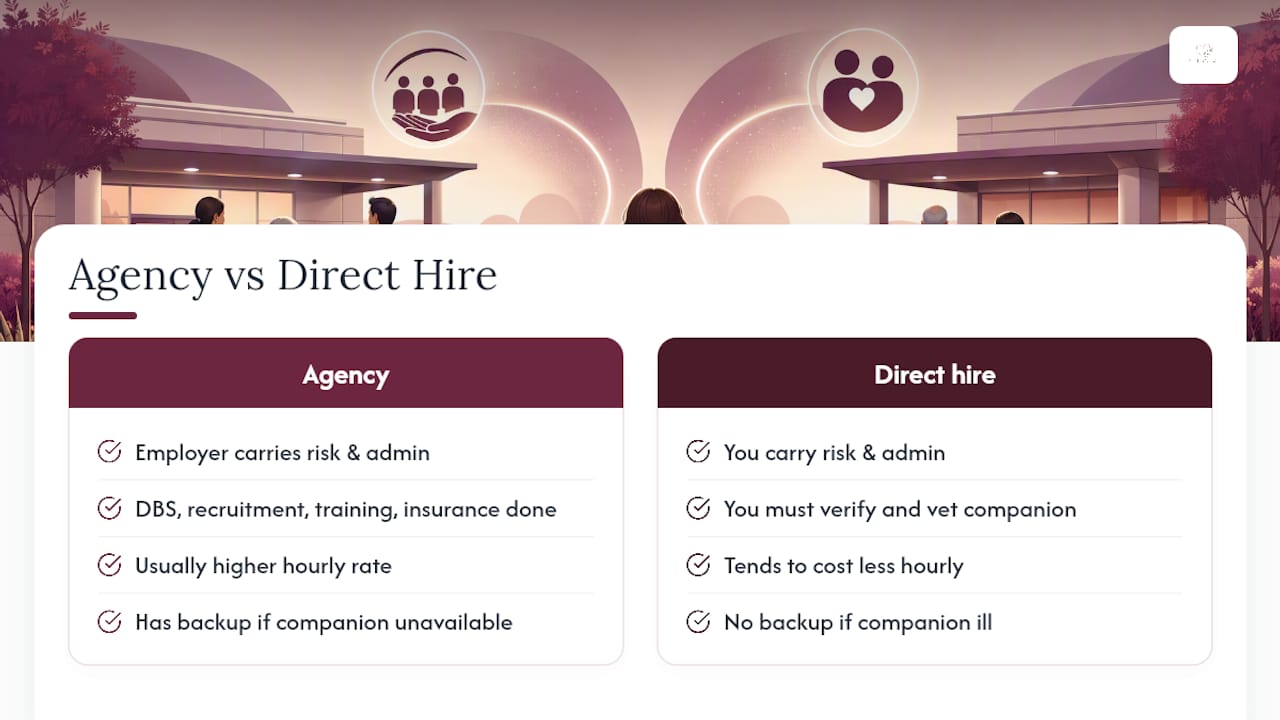
Going through an agency means the DBS checks, recruitment interviews, training and insurance are handled before a companion ever meets your relative, and you'll usually be matched with someone suited to their personality. That convenience usually comes at a higher hourly rate than hiring privately.
Direct hire tends to cost less and gives you a more personal relationship with the companion, but the verification burden sits entirely with you, and there's no backup if that person falls ill on the morning of an appointment.
What actually drives the cost depends on factors such as regional rates, travel time, minimum booking lengths, and frequency of visits. These can vary based on provider and location.
Before you confirm anything, ask about the cancellation policy, what happens if the appointment overruns, and what contingency exists if your usual companion is unavailable on the day. A provider with no answer to that last question is one to avoid.
Preparing for the appointment: a family checklist
Ten minutes of preparation the day before saves confusion on the day itself, and it protects your relative's dignity as much as their schedule.
- Sort consent first. If you want the companion to hear clinical details or speak to reception on your relative's behalf, get this agreed with your relative and, where relevant, the surgery beforehand.
- Gather the paperwork. Appointment letters, a current medication list, and a written list of questions your relative wants answered.
- Think about comfort. Mobility aids, a blue badge if parking is tight, and a spare layer, since hospital waiting rooms run either freezing or stifling with no middle ground.
- Brief the companion directly. Tell them how fast or slow to move, what your relative prefers not to discuss in front of others, and who to call if anything goes wrong.
Pro Tip: Keep a single laminated card in your relative's bag with emergency contacts, current medications and allergies. It saves a frantic phone search if a receptionist or nurse asks and your relative can't quite remember.
Safety and infection control during appointments
Hospitals and GP surgeries still operate infection control measures for good reason, particularly for older or immunocompromised patients, and any companion attending appointments should follow whatever the venue currently asks of visitors. That might mean hand sanitising on entry, wearing a mask in certain clinical areas, or staying in a designated waiting zone during a consultation.
Beyond illness precautions, a companion's day‑to‑day safety habits matter more than people expect. That means knowing the layout of the building well enough to help your relative to the toilet or the exit without wandering, staying alert to trip hazards like trailing cables or wet floors, and keeping a phone charged in case a taxi or lift home needs booking at short notice.

The other safety layer is the one families rarely think about until it's needed: the companion's own vetting. A DBS check confirms someone doesn't have a relevant criminal record, but good agencies pair that with reference checks and a face‑to‑face interview, because paperwork alone doesn't tell you whether someone is calm under pressure in a busy hospital corridor. If your relative has a fall risk, a hearing impairment, or gets confused in unfamiliar environments, mention it before the booking, not on the day. A companion who knows what they're walking into can plan for it.
Privacy, consent and patient rights during accompaniment
Your relative's medical information belongs to them, and that doesn't change because someone else is sitting in the room. Clinicians will normally ask, at the start of a consultation, whether the patient is happy for the companion to stay and hear what's discussed. Where a relative has capacity to consent, that decision is theirs to make each time, not something a family member can decide on their behalf in advance.
This matters practically as well as legally. A companion who understands they're there by invitation, not by right, behaves differently in the room: they know when to step back, when a private conversation between doctor and patient needs to happen without them, and when it's appropriate to wait outside entirely. Any reputable companion will also treat what they hear as confidential, sharing only what your relative has agreed should go back to the family.
Where things get more sensitive is with intimate examinations or difficult diagnoses. A well‑matched companion respects that some moments call for privacy even for someone who wanted company for the rest of the visit, an approach echoed in how clinical partners think about consent‑led care for older patients. If your relative lacks the mental capacity to make these decisions themselves, different rules apply under the Mental Capacity Act, and it's worth discussing with the GP surgery in advance rather than assuming a companion can step into that gap.
What happens if something goes wrong at the appointment?
Most appointments run without incident, but a companion who's thought through the "what if" beforehand is worth far more than one who hasn't. If your relative feels faint, becomes confused, or has a fall in a waiting room, the companion's first move should always be to alert clinical staff immediately, not to attempt to manage the situation themselves. Companions are not medically trained, and their value in an emergency lies in speed and clear communication, not intervention.
A well‑briefed companion carries the practical details that matter in a crisis: your relative's allergies, current medications, next of kin contact, and GP details, either memorised or written down. That short list can save precious minutes if paramedics or hospital staff need it fast.
The other kind of "unexpected" is more mundane and, in practice, more common: appointments running two hours late, a cancelled slot with no warning, or a sudden change of location within a hospital. This is where booking flexibility earns its keep, since a companion tied to a rigid one‑hour slot is little use if the consultant is running behind. Agree beforehand what happens if the visit overruns, and make sure the companion has a way to reach you directly if plans change on the day.
How to keep communication clear between everyone in the room
The appointments that go smoothly tend to share one thing: everyone in the room knows their role before the consultation starts. That's worth setting up deliberately rather than hoping it happens naturally.
Encourage your relative to introduce the companion to the clinician at the start, stating plainly that they're there for support, not as a relative or a medical professional. This avoids confusion later about who's asking questions and why. A companion should let your relative speak first and answer for themselves wherever they're able to, stepping in only to help recall a detail or repeat something that wasn't heard clearly, never to answer on their behalf.
Note‑taking helps enormously here, provided it's agreed in advance. Some clinicians are glad of a second person jotting down instructions, particularly around medication changes or follow‑up steps, since patients often recall only a fraction of what's said once they're back in the car. Others prefer to summarise themselves at the end. Either way, a quick "would it help if I noted anything down?" at the start of the appointment avoids any awkwardness.
Afterwards, the most useful thing a companion can do is talk it through calmly on the way home, in plain language, checking your relative actually understood what was said rather than simply nodding along in the room.
What the research actually points to
Most guidance on this subject treats companionship and clinical escort services as interchangeable, and that's where families go wrong. The two aren't the same job, and conflating them leads to unrealistic expectations, either hiring a companion and expecting medical judgement they're not trained to give, or hiring a clinical escort service when what your relative actually needed was someone to hold their hand in the waiting room and remember to ask about the odd side effect.
The DBS system reinforces this distinction more than most people realise. Pure companionship usually falls outside regulated activity, yet the families who get the best outcomes are the ones who insist on enhanced checks anyway, treating it as a floor rather than a legal tick‑box. That's the detail conventional advice skims past.
If you take one thing from this: verify the DBS certificate yourself, in person, before worrying about anything else. Everything else, from cost to communication style, is negotiable. Trust in the person sitting beside your relative is not.
How Fromlovewithcare arranges companion support for appointments
Fromlovewithcare is the direct alternative to piecing together informal favours or hunting through classified ads for a stranger to sit with your relative at the hospital. Every companion is DBS‑checked and goes through a proper interview and vetting process before they're ever matched with a family, so you're not the one chasing certificates or chasing an Umbrella Body for a Basic check.
Booking starts with a short conversation about your relative's needs, whether that's a one‑off hospital outpatient visit or regular GP check‑ups, followed by matching with a companion suited to their personality and pace. Families consistently describe a noticeable lift in their relative's mood and confidence once regular visits are in place, particularly for those who previously went days without speaking to anyone. You can see the full range of support on the companionship services page, or go straight to the elderly companionship services page to request a quote and arrange a first visit.
Frequently asked questions
Can a paid companion go into the consultation room with my relative? Usually, yes, if the clinician agrees and your relative consents at the time. It's their decision to make on the day, not something arranged in advance without them.
Does a companion need a medical background? No. Companions provide emotional support and practical help such as note‑taking and travel coordination. They are not trained to give medical advice or perform clinical tasks.
What DBS check should I ask for? An enhanced DBS check is standard practice among reputable companionship providers, even though pure companionship often falls outside what's legally defined as regulated activity.
Can I hire a companion directly instead of through an agency? You can, but the self‑employed companion must apply for their own DBS through an Umbrella Body, and you should see the certificate yourself rather than take their word for it.
What happens if my relative's appointment runs over the booked time? Ask about overrun policy before booking. Reliable providers build flexibility into their scheduling so a delayed consultant doesn't leave your relative stranded.