

Yes, Attendance Allowance can pay for companionship, taxis, meal deliveries and other everyday support that helps someone stay independent, because it is non-means-tested and comes with no spending restrictions. There are two weekly rates, and which one applies depends on need, not income or savings. If you think a parent or partner might qualify, the first steps are simple: check they've reached State Pension age, start gathering evidence of their daily difficulties, and speak to Age UK or Citizens Advice if the form feels daunting.
TL;DR:
- Attendance Allowance can be used to pay for companionship, transport, and practical support, regardless of the recipient's income or savings.
- The benefit provides two weekly rates, with the higher for help both day and night, or under terminal illness rules, starting from the claim date.
- Gathering detailed evidence of daily difficulties and describing specific, routine moments greatly improves the chances of a successful claim.
- Using the allowance for companionship helps combat loneliness and is separate from personal care, which is often funded by local authorities.
- Applying often boosts entitlement to other benefits, but families should verify care charges with local authorities to avoid unintended income assessments.
Table of Contents
- What is Attendance Allowance companionship support, and who can claim it?
- What are the current Attendance Allowance rates?
- How do you claim Attendance Allowance, and what strengthens the application?
- Can you use Attendance Allowance for companionship at home?
- How does Attendance Allowance affect other benefits and care charges?
- What does professional companionship actually look like in practice?
- A carer's perspective: what changed after we started using AA this way
- How From Love With Care fits Attendance Allowance-funded visits
- What should you do next?
- Where to go for official guidance and further help
- Sources
What is Attendance Allowance companionship support, and who can claim it?
Attendance Allowance exists for one purpose: to help people at State Pension age who need support with personal care or supervision because of a disability, illness, or frailty. It's tax-free, and unlike Pension Credit or Council Tax Reduction, nobody checks your bank balance before deciding whether you qualify. What matters is need.
That need doesn't have to be dramatic. It might be struggling to wash safely, forgetting medication, needing someone nearby in case of a fall, or feeling anxious and disorientated when left alone for long stretches. Attendance Allowance is strictly for people who have reached State Pension age and have a physical or mental health condition, or a disability, that makes daily life harder or requires supervision for safety.
There's a six-month qualifying rule. Generally, the difficulty needs to have been present for six months before a claim succeeds. There's an important exception, though.
- Standard claims follow the six-month rule, so the need must be ongoing, not a brief illness that will resolve.
- Terminal illness claims bypass the wait entirely. Under special rules, someone not expected to live more than six months can claim the higher rate immediately.
- Reassessment isn't automatic. If someone's needs increase, they may need to reapply or ask for a review rather than assuming the higher rate kicks in on its own.
One detail catches families out repeatedly: entitlement is based on the help someone could reasonably need, not on whether they're currently receiving it. The DWP's own guidance makes this explicit. If a person copes badly, gets no outside help at all, and manages through sheer stubbornness, that's still grounds for a claim.
Attendance Allowance is paid at two weekly rates, and the level awarded depends entirely on the type and pattern of care needed, not on how much someone earns or has saved.
What are the current Attendance Allowance rates?
As of August 2026, the lower rate stands at £76.70 a week, and the higher rate is £114.60. The gap between them reflects the intensity and timing of the support someone needs, not the severity of any diagnosis on paper.
- Lower rate (£76.70/week): for people who need help or supervision either during the day or during the night, but not both.
- Higher rate (£114.60/week): for people who need help both day and night, or who qualify under the special terminal illness rules.
- Neither rate is backdated automatically to when symptoms started. Payment typically begins from the date the claim is made or, in some cases, from the date the form is returned.
- Payments arrive every four weeks, usually straight into a bank account, though an appointee or someone with power of attorney can manage this if the claimant can't handle their own finances.
Because these figures come Gov, they're the numbers to trust over anything you might read on a forum or hear secondhand.
A frequent misconception is that Attendance Allowance is somehow linked to National Insurance contributions, in the way State Pension is. It isn't. There's no contribution record to check, no earnings threshold, and it isn't taxable. It also doesn't reduce most other benefits, and in many cases, it does the opposite.
If you're weighing up whether to apply on behalf of a relative, the rate itself often isn't the deciding factor. Even the lower rate, at £76.70 a week, works out to roughly £307 a month, which is enough to fund several hours of companionship visits or a handful of taxi journeys to appointments and social clubs. That's not abstract money. It's the difference between someone seeing a friendly face twice a week and seeing nobody at all.
How do you claim Attendance Allowance, and what strengthens the application?
Getting the form is the easy part. Filling it in well, so it actually reflects the reality of someone's daily life, is where most claims succeed or stall.
- Order the AA1 claim form by phoning the Attendance Allowance helpline, or download it from GOV.UK. There's no online application route for a fresh claim, which surprises some people.
- Ask for help completing it if the form feels overwhelming. Age UK and Citizens Advice both offer free, practical support with the wording, and their advisers have seen thousands of these forms.
- Gather supporting evidence before you start writing. GP letters, hospital discharge notes, a list of current medications, and even a simple diary of a bad week all help build a picture.
- Describe specific, ordinary moments, not general impressions. "Struggles some mornings" says little. "Needs someone to check she hasn't left the gas on, most evenings" says a great deal.
- Post the completed form back promptly, and keep a copy. Processing can take several weeks, so early submission matters if finances are tight.
Pro Tip: Write down three ordinary days exactly as they happened before you touch the form. Vague summaries lose detail fast, but a real Tuesday, with the exact tasks someone struggled with, translates almost word for word onto the page.
The DWP's own explanatory notes confirm that describing everyday difficulties, how long tasks take, how often help is needed, and what could go wrong without it, gives assessors a far clearer basis for a decision than a general medical summary would. A well-documented claim that ties daily limitations directly to the criteria, such as being unable to bathe unaided or being at risk of wandering, can also reduce the likelihood of a face-to-face assessment. For claim-specific tactics beyond the official guidance, Ask Rose's carer claim guide covers some of the practical wording pitfalls families run into.
Can you use Attendance Allowance for companionship at home?
This is where families often hesitate, worried they're somehow misusing the money. They're not. Age UK is clear on this point: Attendance Allowance can be spent however the recipient likes, and companionship is one of the most common uses.
In practice, that looks like:
- Paying for regular companionship visits so someone has consistent, familiar social contact each week.
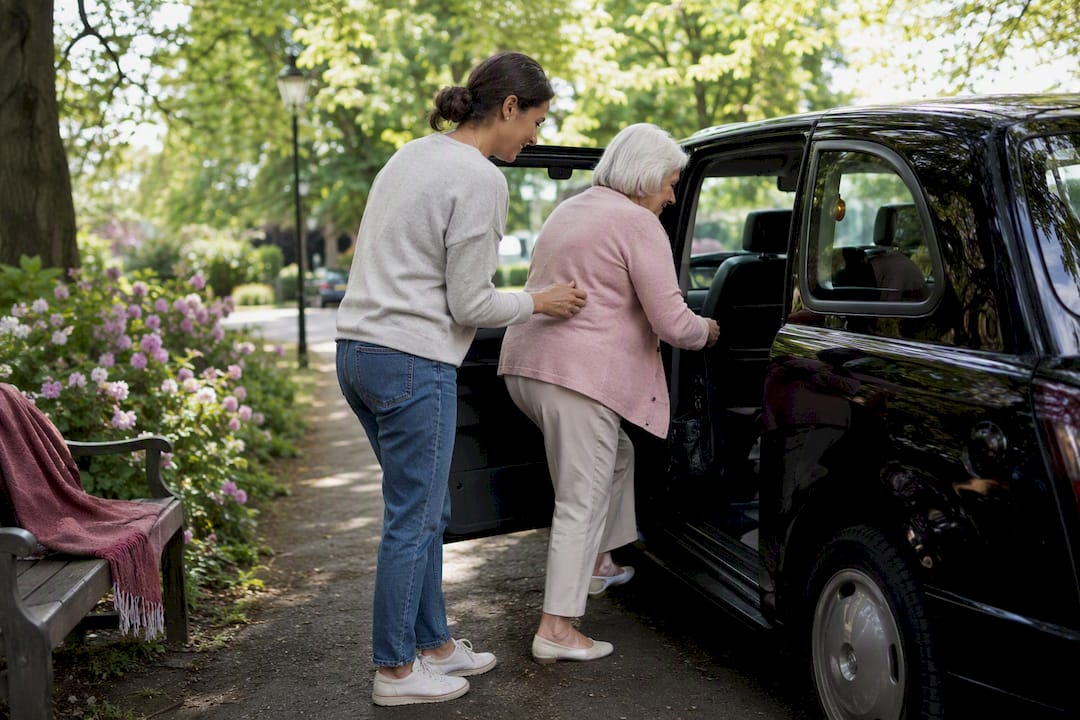
- Funding taxis to a lunch club, church group, or family gathering they'd otherwise skip.
- Covering meal delivery costs when cooking alone has become difficult or unsafe.
- Paying for telephone befriending or check-in calls on days without a visit.
- Contributing towards escorted outings, like a trip to the shops or a walk in the park.
There's a boundary worth understanding, though. Attendance Allowance can fund companionship and practical support, but it isn't a substitute for regulated personal care, the kind involving washing, dressing, or medication management, which local authorities commission separately. Many households run both side by side: council-arranged personal care for the physical tasks, and Attendance Allowance funding companionship visits that address something councils rarely prioritise, which is loneliness.
Claimants often assume the money must go on care in the clinical sense. In practice, plenty of families use it alongside other funding to preserve independence, including paying for companionship and transport that keep someone connected to ordinary life.
Consider a modest, realistic weekly pattern: two companionship visits at a couple of hours each, plus one escorted outing to a local group. For many families, that's funded largely by the lower rate alone, and it turns a week of isolation into a week with structure, conversation, and something to look forward to.
How does Attendance Allowance affect other benefits and care charges?
Getting Attendance Allowance rarely stops there. It often opens doors to other support that families haven't considered.
- Pension Credit, Housing Benefit, and Council Tax Reduction can all increase once Attendance Allowance is awarded, because it's treated as evidence of additional need. Carers UK describes this clearly: claiming AA often acts as a trigger for wider entitlement, so the value of applying goes well beyond the weekly payment itself.
- Local authority care charging is a separate matter, and this catches people out. If a council commissions and charges for care, it may count Attendance Allowance as income during a financial assessment, even though the benefit itself is non-means-tested.
- Before committing AA to a long-term arrangement, it's worth a quick call to a local benefits adviser or Citizens Advice, particularly if council-funded care is already in the picture or being considered.
Getting this sequence right, checking entitlements before locking in spending decisions, tends to save families both money and confusion later.
What does professional companionship actually look like in practice?
Reading about companionship in the abstract is one thing. Seeing what it involves day to day is another.
Fromlovewithcare provides in-home companionship across the UK built around one idea: consistent, warm, human contact for people who might otherwise go days without a proper conversation. Every companion is DBS-checked and trained, though it's worth being clear that this is companionship and welfare support, not medical or personal care. The visits themselves are ordinary in the best sense, sharing a pot of tea, popping to the shops together, sitting through a welfare check that's really just a chance to talk.
Clients consistently describe a shift in their loved one's mood and engagement once regular visits begin, the kind of change that's hard to capture in a form but obvious in daily life.
The activities that tend to fit Attendance Allowance funding most naturally include:
- Weekly or twice-weekly social visits focused purely on conversation and company.
- Grocery shopping trips where the companion assists and chats along the way.
- Scheduled welfare check-ins for families who worry about a relative living alone.
- Support attending appointments, so nobody sits in a waiting room by themselves.
A carer's perspective: what changed after we started using AA this way
We'd assumed Attendance Allowance had to go towards care in the traditional sense, so it took a conversation with an adviser to realise companionship visits counted too. Once we started paying for two visits a week, my mother's mood lifted within a fortnight, she had something to look forward to again. My tip: before committing the full amount to visits, check whether the award changes your Pension Credit or Council Tax Reduction first, because ours did.
— Ayomide
How From Love With Care fits Attendance Allowance-funded visits
Fromlovewithcare is the practical route to spending Attendance Allowance on the thing it's often meant for: genuine human company, not just supervision on paper. Where a council-commissioned care package covers washing and medication, our visits cover the gap that's easy to overlook, someone to talk to, someone who notices if things aren't right, and someone who makes Tuesday afternoon feel worth getting dressed for.
Every companion is DBS-checked and trained specifically in providing meaningful social contact, whether that's a shared cup of tea, a supported trip to the shops, or an escort to a hospital appointment. Visits are booked and paid for by the hour, which maps neatly onto a weekly Attendance Allowance payment, and emergency welfare check-ins are available for families who need reassurance at short notice. Our companionship services are designed around exactly the kind of regular, dependable contact that keeps isolation from creeping in. If you'd like to see how a typical visit works or want to check availability in your area, get in touch through our services page to arrange a first visit.
What should you do next?
- Confirm State Pension age has been reached, then start noting real daily difficulties as they happen.
- Gather GP letters, medication lists, and specific examples before completing the AA1 form.
- Remember the two Attendance Allowance rates correspond to the level of help needed, with immediate higher-rate access under terminal illness rules.
- Once awarded, check whether Pension Credit, Housing Benefit, or Council Tax Reduction entitlement has changed too.
- If council-arranged care is involved, ask about charging rules before committing AA to a fixed weekly spend.
Where to go for official guidance and further help
- Gov for the claim form, current rates, and eligibility rules.
- Age UK and Citizens Advice for free claim support.
- Carers UK for wider benefits advice affecting carers.
- Fromlovewithcare to arrange AA-funded companionship visits.