

Non‑medical home care, in this sense, means paid, DBS‑checked companions visiting an older or isolated relative for conversation, welfare checks and light practical help, not washing, dressing or medical support. Families book it when a parent or relative lives alone and goes days without real conversation. The usual goal is simple: fewer silent afternoons, a familiar face at the door, and peace of mind that someone is checking in.
- Who it's for: older adults living alone, recently bereaved relatives, or anyone isolated by distance or mobility
- What it isn't: personal care (bathing, toileting) or clinical support
- Where to go next: costs sit around £26 to £38 an hour, and the safest route in is a short trial visit before committing to a regular schedule
Key Takeaways
Regular, consistent companionship visits from a DBS‑checked companion measurably improve older adults' wellbeing without replacing medical or personal care.
| Point | Details |
|---|---|
| Define the boundary | Companionship covers conversation, errands and welfare checks, never washing, dressing or medication administration. |
| Start with a trial | A one to two hour weekly visit with the same companion builds trust faster than a longer irregular arrangement. |
| Budget realistically | Expect roughly £26 to £38 per hour. |
| Prioritise consistency | The same companion returning each time matters more than a marginally cheaper rotating rota. |
| Book through Fromlovewithcare | Vetted, matched companions across the UK offer trial visits before any regular schedule is agreed. |
Table of Contents
- What do companionship visits actually include?
- Does companionship actually improve wellbeing?
- How do you introduce a companion without it feeling intrusive?
- What should safety checks and costs look like?
- How do you choose the right provider?
- How do you book a first visit and check funding options?
- Why does Fromlovewithcare focus only on companionship?
- Ready to book a trial companionship visit?
- Frequently asked questions
- Sources
What do companionship visits actually include?
A companion's visit looks less like a care appointment and more like a friend calling round with time to spare. That's the point. The activities are ordinary, but the regularity is what makes them work.
- Conversation and company — chatting over tea, reminiscing, or simply sitting together while the television is on
- Shared activities — puzzles, reading aloud, gardening, or a walk if mobility allows
- Errands and shopping — accompanying or doing the weekly shop, picking up prescriptions
- Appointment support — attending a GP visit or hospital appointment as a familiar face
- Welfare checks — a scheduled call or visit to confirm someone is safe, especially after a fall risk or health scare
Visits typically run one to three hours and can be weekly, twice weekly, or daily depending on need. Companions do not provide washing, dressing, medication administration or any medical or personal care task. That boundary matters. Light practical help such as meal prep or a medication reminder is usually fine; anything intimate gets routed to a domiciliary care provider instead.
Does companionship actually improve wellbeing?
The evidence is not just anecdotal. UK research increasingly links loneliness to worse physical health, and to higher NHS costs tied to isolated older adults. Regular contact is one of the few interventions shown to move the needle.
Sector reporting shows that consistent companionship visits are associated with measurable improvements in sleep quality and mood, alongside better engagement with daily routines.
Families who arrange regular companionship often report:
- Better sleep patterns and steadier mood
- More willingness to leave the house or take part in hobbies
- Sharper conversation and memory recall during visits, particularly useful in early cognitive decline
- A noticeable drop in the "no one called today" phone conversations that worry families most
Companionship complements medical care. It doesn't replace a GP, a nurse, or a diagnosis. Think of it as the layer that keeps someone steady enough that clinical care, when needed, actually works.
How do you introduce a companion without it feeling intrusive?
Framing matters more than most families expect. Calling the first visit a "friendly visitor" appointment rather than "care" lowers the psychological barrier considerably, especially for someone who's proudly independent and resistant to being labelled as needing help.
Start small. A single one or two‑hour visit each week, with the same companion returning each time, works better than a longer but inconsistent arrangement. Introducing support before a crisis also tends to produce a smoother, more natural relationship than scrambling to arrange it after a fall or hospital stay.
A gentle first visit might include:
- A cup of tea and an open conversation, no agenda
- A short walk or errand together, if welcomed
- Letting the relative choose the activity, so they feel in control from day one
Pro Tip: Ask the companion to keep the first visit under an hour. A short, relaxed introduction builds more trust than a long one that feels like an obligation.
What should safety checks and costs look like?
Every companion should carry an enhanced DBS check, references and basic training before ever being matched with a relative. Consistency matters just as much as vetting: the same companion returning each visit is far better for someone managing anxiety or early memory loss than a rotating cast of unfamiliar faces.

On cost, industry guidance puts UK companionship care at roughly £26 to £38 per hour. A weekly two‑hour visit costs a few hundred pounds per month, before any emergency welfare check premium.
Before signing anything, check:
- Cancellation notice period and whether missed visits are refunded
- Whether the provider carries public liability insurance
- The exact fee for emergency or out‑of‑hours welfare checks
- What counts as "light help" versus tasks excluded from the care plan
How do you choose the right provider?
A short phone call should tell you most of what you need to know. Ask directly:
- Can you provide proof of enhanced DBS checks for the companion?
- Will the same person visit each time, or is it rotating staff?
- What training do companions receive beyond DBS clearance?
- Can you describe a typical visit for someone with similar needs to my relative?
- Do you have references or reviews I can check independently?
Red flags to walk away from:
- No willingness to show DBS documentation
- Vague or shifting pricing when you ask for a straight hourly rate
- Only rotating staff with no continuity option offered
- Pressure to sign a long contract before a single trial visit
Relationship continuity and emotional fit should outrank the cheapest quote every time. A companion your relative genuinely looks forward to seeing is worth more than a marginally lower rate with a different face each week.
How do you book a first visit and check funding options?
Getting started doesn't need to be complicated. Three steps cover most families:
- Enquire with a provider by phone or email, describing your relative's situation and what kind of company they'd enjoy
- Book a short trial visit, ideally one hour, with a single named companion
- Review and schedule — if the trial goes well, set a regular weekly or twice‑weekly pattern with the same companion
For where to look, national befriending charities and local agencies both offer options, and Fromlovewithcare operates as a dedicated companionship provider across the UK.
On funding, most families pay privately for companionship visits. It's worth checking Gov to see whether a relative qualifies for support that can offset the cost, alongside any local council advice line for older adults living alone.
Why does Fromlovewithcare focus only on companionship?
Care services that try to do everything often do the human side least well. Fromlovewithcare exists because conversation and consistency deserve their own specialism, not a rushed slot at the end of a personal care visit. Every companion is vetted thoroughly, and families consistently report their relative seems more like themselves after a few weeks of regular visits.
That's the ethos: compassionate, consistent, human contact, nothing more, nothing less.
Ready to book a trial companionship visit?
Fromlovewithcare is the option built for exactly this problem: an isolated relative who needs conversation and a familiar face, not personal care they haven't asked for and may not need. Every companion is DBS checked, matched for consistency, and trained specifically for social visits, welfare checks, shopping trips and appointment support.
A trial visit typically runs one to two hours, with the same companion returning if it goes well, so there's no long‑term commitment before you know it's the right fit. You can see the full range of companionship services offered, or read more about how the matching and vetting process works before booking. If loneliness is the core concern rather than a single visit type, the loneliness support services page frames the wider picture. For continuity between visits, some families also find an always‑available support option useful as a complement, not a replacement, for human company. To arrange a first visit, get in touch through the services page and ask for a short trial slot this week.
Frequently asked questions
Is non‑medical home care the same as personal care? No. Companionship visits cover conversation, errands and welfare checks. Personal care, such as washing or dressing, is a separate service delivered by domiciliary care agencies.
How much does companionship care cost in the UK? Expect roughly £26 to £38 per hour, depending on location and visit length.
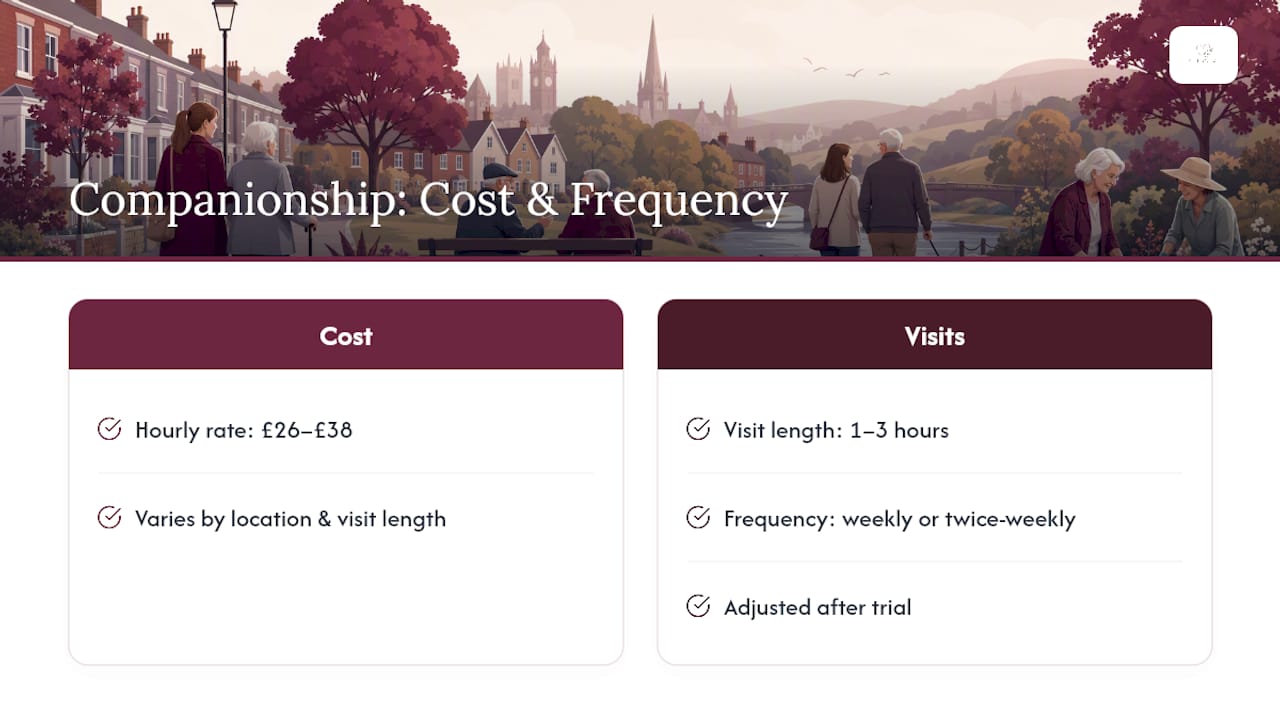
How often should visits happen? Weekly or twice‑weekly visits of one to three hours are common starting points, adjusted once you see how your relative responds.
Will my relative see the same companion each time? With a provider like Fromlovewithcare, yes. Consistent matching is standard practice, and it matters most for people managing anxiety or early memory changes.
Can companionship visits help with loneliness specifically? Yes. Regular social contact is one of the more effective interventions for isolated older adults, alongside any medical care they already receive.
Sources
- Homecare
- Companionship for the elderly | Certified Care
- Loneliness linked to higher NHS healthcare costs and poorer health in the UK | News‑Medical