
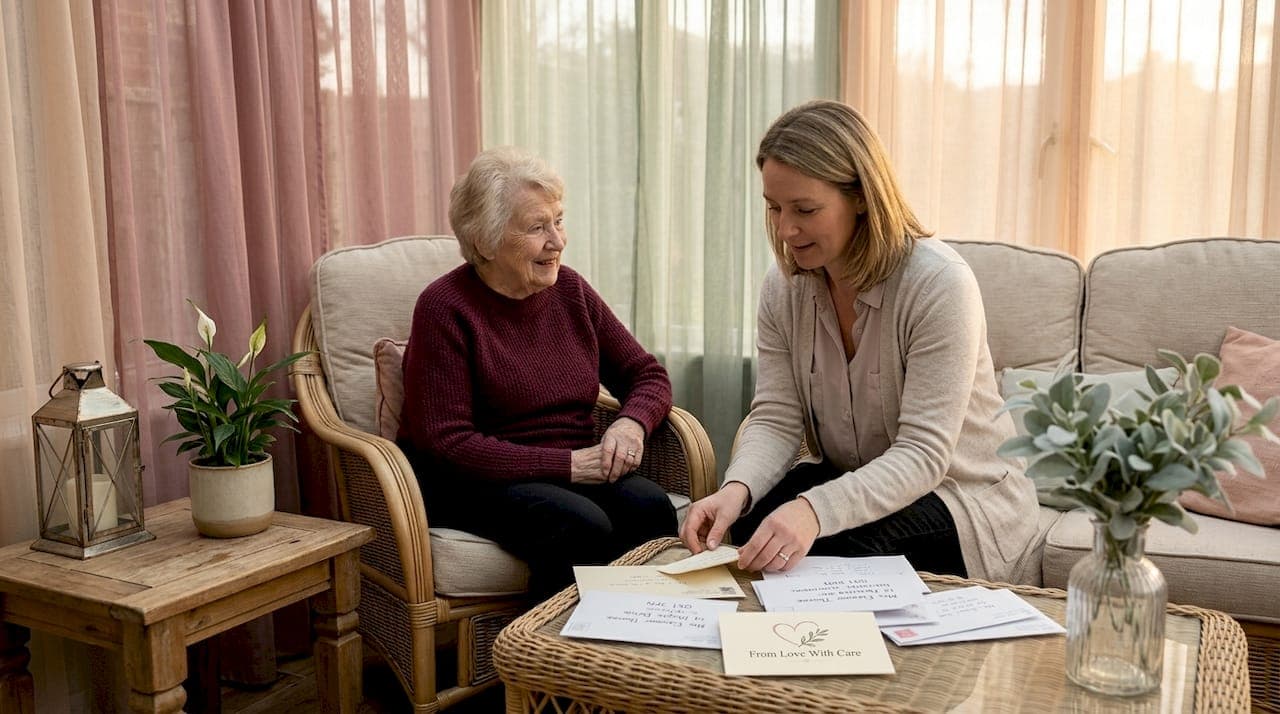
A companionship service is defined as non-medical social and emotional support, while a care agency provides hands-on personal care including bathing, dressing, and medication assistance. Understanding the difference between a companionship service vs care agency is not a minor administrative detail. It determines whether your elderly loved one receives the right level of support, from the right type of provider, within the correct legal and safety framework. Choosing the wrong option can leave real needs unmet or, worse, place a carer in a situation they are neither trained nor licensed to handle.
What does a companionship service actually include?
A companionship service, sometimes called companion care, is built around fellowship, emotional connection, and light practical support. Regulatory frameworks such as the Indiana Department of Health's licensing programme define companion services as providing fellowship, care, and protection, including transportation, letter writing, and escort services. This definition draws a firm line: companionship is about presence and connection, not physical care.
The role of a companion in elder care typically covers a range of social and light practical tasks. These include:
- Conversation and active listening
- Escorting to appointments, shops, or social events
- Reading letters aloud or helping with correspondence
- Sharing meals or preparing light snacks
- Playing games, watching television together, or pursuing hobbies
- Light housekeeping such as tidying or washing up
- Grocery shopping or running errands
What a companion does not do is equally important. Non-medical companion services exclude hands-on personal care tasks such as bathing, dressing, toileting, and wound care. These tasks require licensed personal care aides or trained care workers operating under a regulated agency. Companions are not a cheaper substitute for personal care. They are a distinct service addressing a distinct need.
The social dimension of companionship carries genuine health weight. Scotland's Anne's Law code of practice for care home visits, enacted in 2026, establishes legal duties on care homes to facilitate meaningful contact and names Essential Care Supporters as a formal category. This reflects a growing recognition that social connection is not a luxury. It is a component of wellbeing with the same standing as physical care.
Pro Tip: When speaking to a companionship provider, ask for a written list of included and excluded tasks. If the answer is vague, that is a warning sign worth taking seriously.
How do care agencies differ from companionship services?
Care agencies operate under a fundamentally different regulatory and operational framework. Where a companionship service focuses on social support, a care agency delivers personal care, which is defined as hands-on assistance with activities of daily living (ADLs). These include bathing, toileting, dressing, medication prompting or administration, and mobility support.

The table below sets out the core differences between the two service types:
| Feature | Companionship service | Care agency |
|---|---|---|
| Core purpose | Social and emotional support | Personal and physical care |
| Typical tasks | Conversation, errands, escorting | Bathing, dressing, medication, mobility |
| Regulatory requirement | Lower; varies by region | Higher; typically licensed and inspected |
| Staff training | Vetting and soft skills | Formal care qualifications required |
| Cost | Generally lower | Generally higher |
| Medical involvement | None | May include clinical oversight |
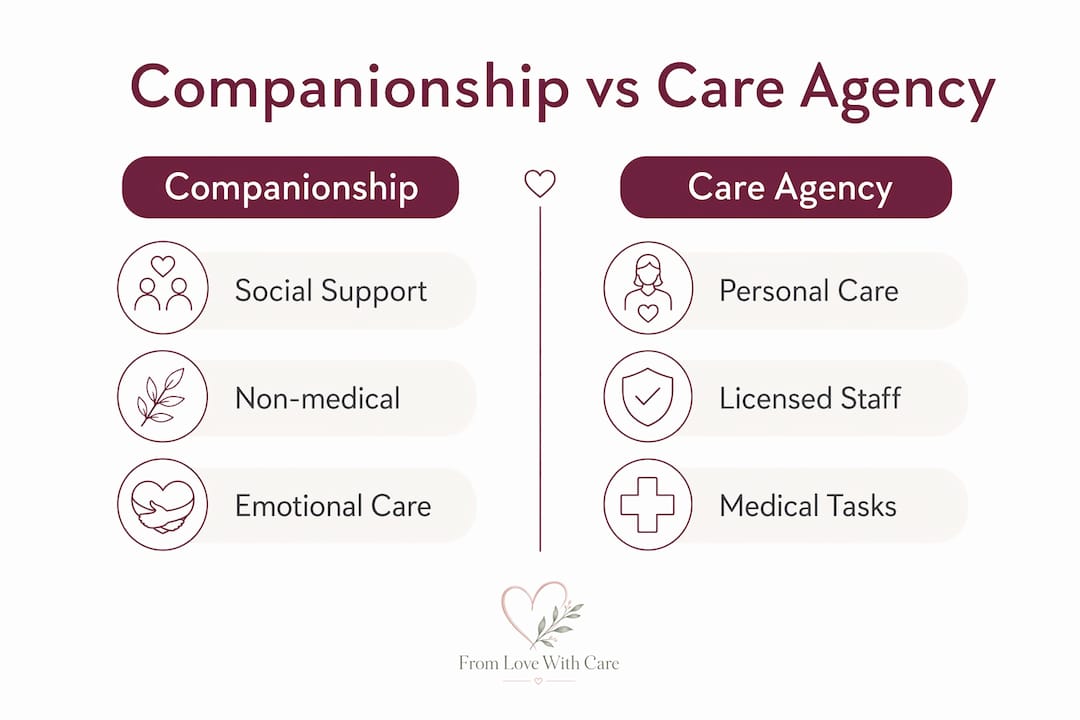
State and national licensing frameworks draw a clear boundary between companion or homemaking services and personal care or home health aide tasks. This affects provider compliance, insurance liability, and the safety of the person being cared for. A care agency operating in the UK, for example, is subject to inspection by the Care Quality Commission (CQC) in England, the Care Inspectorate in Scotland, or equivalent bodies in Wales and Northern Ireland. Companionship providers are not always subject to the same level of statutory oversight, which makes vetting and trust even more important when selecting one.
The Commonwealth Home Support Programme's 2025 to 2027 manual outlines provider responsibilities, compliance requirements, and service quality standards for in-home aged care. While this is an Australian framework, it reflects the structured accountability that formal care agencies carry globally. Families should expect a care agency to have documented policies, trained staff, and clear escalation procedures. If they do not, that is a compliance gap worth questioning.
Pro Tip: Ask any care agency for their most recent inspection report or quality assurance documentation before agreeing to a service. Reputable agencies will share this without hesitation.
How to assess your loved one's needs before choosing
Choosing between a companionship service and a care agency starts with an honest assessment of your loved one's current situation. Many families find it helpful to split needs into two columns: social engagement needs on one side, and ADL safety needs on the other. This simple exercise often clarifies which type of provider is appropriate.
Follow these steps to carry out a practical needs assessment:
- Observe daily routines. Spend time with your loved one and note where they struggle. Is it loneliness and lack of conversation, or is it difficulty getting dressed and managing medication?
- Talk to their GP or healthcare professional. A clinical perspective on physical care needs is invaluable and may reveal requirements you have not noticed.
- Ask your loved one directly. Many older people are clear about what they want. Some want company and conversation. Others need physical help they are reluctant to admit to.
- List social isolation indicators. These include going days without speaking to anyone, withdrawing from hobbies, or expressing persistent sadness. These point towards companionship as a priority.
- List physical care red flags. These include unexplained bruising, weight loss, poor hygiene, missed medications, or falls. These require a care agency, not a companion.
- Consider whether needs may change. A loved one who currently needs only companionship may develop physical care needs over time. Choose a provider who can communicate clearly about when a referral or upgrade in care is appropriate.
The distinction matters because splitting social and ADL needs during intake reduces the risk of role creep and improves service matching. Role creep is the term used when a companion begins performing personal care tasks they are not trained or licensed to carry out. It happens gradually, often with good intentions, and it creates real safety and compliance risks for everyone involved.
Common misconceptions and risks when mixing the two
Many families assume that a companion who is warm and capable can simply do a little more when needed. This is one of the most common and costly misunderstandings in elder care. Role creep occurs when a companion caregiver begins performing personal care tasks without appropriate licensing or training, risking compliance violations and safety concerns. The risk is not theoretical. It has real consequences for the person receiving care.
Key risks to watch for include:
- Unlicensed personal care. A companion helping with bathing or toileting is operating outside their role. If something goes wrong, neither the companion nor the family may be covered by insurance.
- Inconsistent care quality. Without formal training in personal care, a well-meaning companion may cause harm through incorrect manual handling or missed medication signs.
- Provider marketing confusion. Many agencies market companion and personal care similarly, but the regulatory boundaries differ significantly. Read service agreements carefully and do not rely on marketing language alone.
- No escalation plan. If a companion arrives and finds their client has fallen or is unwell, what happens next? Providers who understand escalation risk have formal workflows for transferring care to a personal care aide or agency. Providers who do not are a liability.
Families should explicitly ask providers how they manage unexpected care escalations discovered during companionship visits to ensure safety and compliance.
Clear service agreements, written task lists, and documented escalation procedures are not bureaucratic extras. They are the difference between a safe, well-managed arrangement and one that puts your loved one at risk. If a provider cannot produce these documents, look elsewhere.
Key takeaways
Choosing between a companionship service and a care agency requires matching the type of support to the actual needs of your elderly loved one, not the most convenient or affordable option.
| Point | Details |
|---|---|
| Companionship is non-medical | Companions provide social support and light tasks, not personal care such as bathing or medication. |
| Care agencies carry formal obligations | Regulated agencies must meet licensing, training, and inspection standards that companionship providers do not always share. |
| Needs assessment prevents mismatches | Splitting social needs from ADL safety needs during intake reduces role creep and improves care quality. |
| Role creep is a real compliance risk | When companions perform personal care tasks without training, safety and legal liability are both compromised. |
| Escalation procedures are non-negotiable | Any provider, companionship or care agency, must have a clear plan for when needs change unexpectedly. |
Why getting this choice right matters more than families realise
By Ayomide
Working with families navigating elder care, I have seen the same mistake repeated more times than I can count. A family identifies that their parent is lonely and withdrawn, so they arrange a companion. The companion is kind, reliable, and builds a genuine relationship. Then, quietly, the companion starts helping with a bit more. A bit of assistance getting up from the chair. Reminding about tablets. Helping with a wash. Everyone means well. Nobody notices the boundary has moved until something goes wrong.
The uncomfortable truth is that companionship and personal care are not on a spectrum where you simply dial up the level of support. They are categorically different services with different training, different liability, and different regulatory standing. Treating them as interchangeable is not a small administrative error. It is a safety issue.
What I find most valuable in the families who get this right is that they ask hard questions upfront. They ask providers what happens if their loved one falls during a visit. They ask what tasks are explicitly excluded. They ask for written confirmation. These are not difficult questions, but most families never ask them because they feel awkward or overly formal. They are not. They are the right questions.
Companionship, done well, is genuinely transformative. The peace of mind it brings to families is real, and the impact on an isolated older person can be profound. But it works best when it is clearly defined, properly managed, and matched to the right need. When your loved one needs a friend and a familiar face, a companion is exactly right. When they need physical care, a care agency is the appropriate choice. The two can work alongside each other beautifully, but only when each knows its role.
— Ayomide
How Fromlovewithcare supports your loved one's social wellbeing
Fromlovewithcare was built around a single conviction: that human connection is a care need in its own right. Every companion on the platform is thoroughly vetted, trained in safeguarding, and matched to clients based on shared interests and personality. The service focuses entirely on social and emotional support, which means the boundaries are clear, the relationships are genuine, and families can trust what they are getting.
Whether your loved one needs a weekly visit over a cup of tea, help with errands, or simply someone to talk to, Fromlovewithcare offers trusted companionship services designed around their individual needs. For families who want to understand the full range of support available, the services overview sets out every option clearly. If you are unsure whether companionship or a care agency is the right fit, Fromlovewithcare is happy to talk it through with you before you commit to anything.
FAQ
What is the main difference between a companionship service and a care agency?
A companionship service provides social and emotional support including conversation, errands, and escorting, while a care agency delivers personal care such as bathing, dressing, and medication assistance. The two serve different needs and operate under different regulatory frameworks.
Can a companion help with personal care tasks if needed?
No. Companion services exclude personal care tasks such as bathing, toileting, and medication administration. These require a licensed personal care aide or regulated care agency. Asking a companion to perform these tasks creates safety and compliance risks.
How do I know if my elderly parent needs a companion or a care agency?
Assess their needs in two categories: social isolation indicators such as loneliness and withdrawal, and physical care red flags such as poor hygiene, missed medications, or falls. Social needs point to companionship; physical care needs require a care agency.
What is role creep and why does it matter?
Role creep occurs when a companion begins performing personal care tasks outside their training and licence, often gradually and with good intentions. It matters because it creates liability for the family, the provider, and the carer, and can compromise the safety of the person being supported.
Can a companionship service and a care agency work together?
Yes. Many families use both services alongside each other, with a companion providing social support and a care agency managing physical care needs. Clear service agreements and open communication between providers are necessary to make this arrangement work safely.