
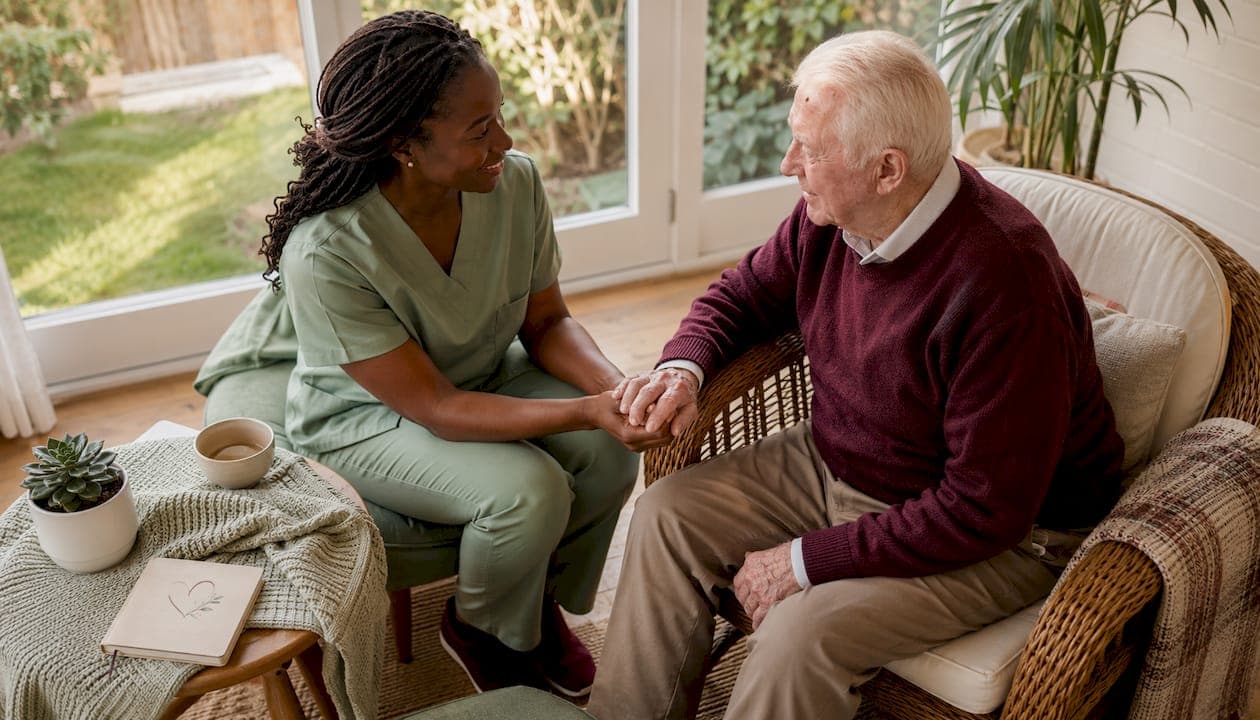
Professional visiting care gives aging parents structured, compassionate support at home, while giving family caregivers something equally precious: the freedom to simply be present. Rather than rushing through medication reminders or personal care tasks, you can sit down for a proper conversation, share a meal, and actually enjoy time together. Visiting carers assist with:
- Personal care: washing, dressing, toileting, and grooming
- Medication reminders and safe administration support
- Meal preparation and nutrition monitoring
- Companionship: conversation, shared activities, and emotional support
- Practical tasks: shopping, collecting prescriptions, and light household help
Most families begin with one or two visits per day, building a routine that fits their parent's needs without disrupting their independence. The difference between managing a parent's care yourself and having a trained professional share that responsibility is not just practical. It changes the entire tone of your relationship.
What signs tell you your aging parent needs visiting support?
Aging parents often understate how much they are struggling. A missed meal here, a skipped bath there — individually small, collectively telling. Common challenges that signal visiting support may be needed include:
- Difficulty with mobility, getting out of bed, or moving safely around the home
- Forgetting to take medication or taking incorrect doses
- Declining personal hygiene or weight loss
- Withdrawal from social contact and increasing low mood
- Unexplained falls or near-misses at home
Elderly loneliness affects a substantial portion of the UK's older population, carrying serious mental and physical health consequences. Social isolation among older adults is linked to higher rates of depression, cognitive decline, and cardiovascular disease. These are not abstract risks; they are the quiet daily reality for many families across the country.
Visiting care addresses these needs while preserving independence. Regular professional visits allow aging parents to remain in their own homes, maintaining familiar routines and a sense of control over their lives.
Regular assessment matters too. A professional carer visiting consistently will notice gradual changes in behaviour, appetite, or mobility that a family member, visiting less frequently, might miss entirely. Early identification of these shifts allows for timely adjustments to the care plan before a situation becomes a crisis.
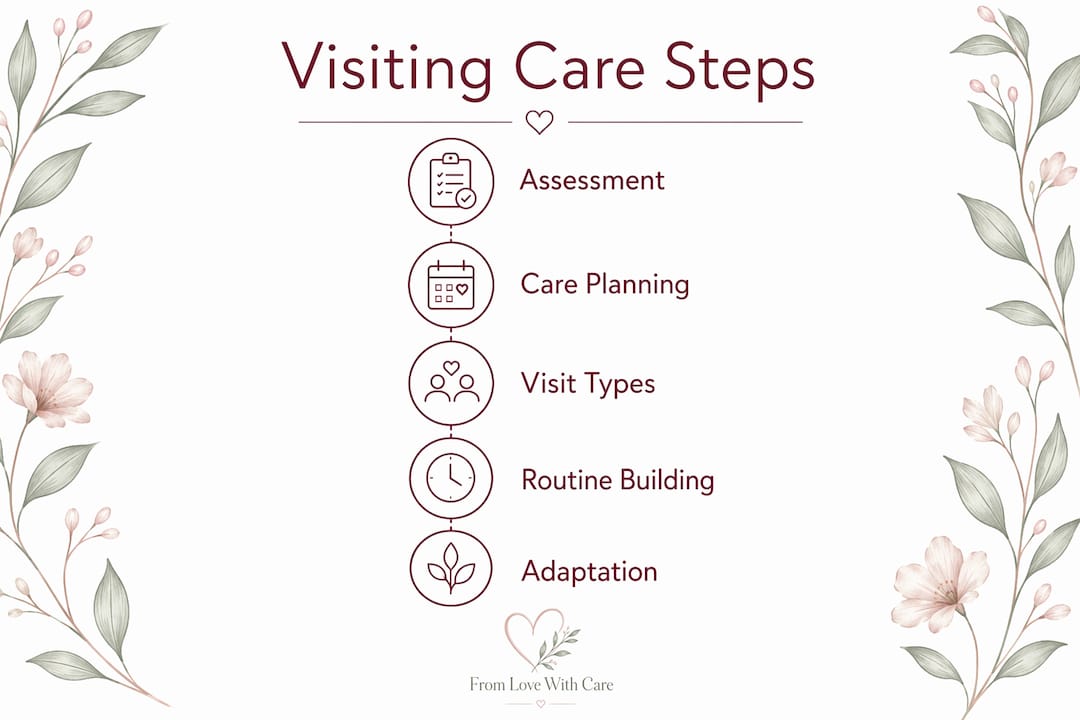
What types of professional visiting care are available in the UK?
The range of visiting care services in the UK is broader than many families realise, and understanding the options helps you match support to your parent's actual needs.
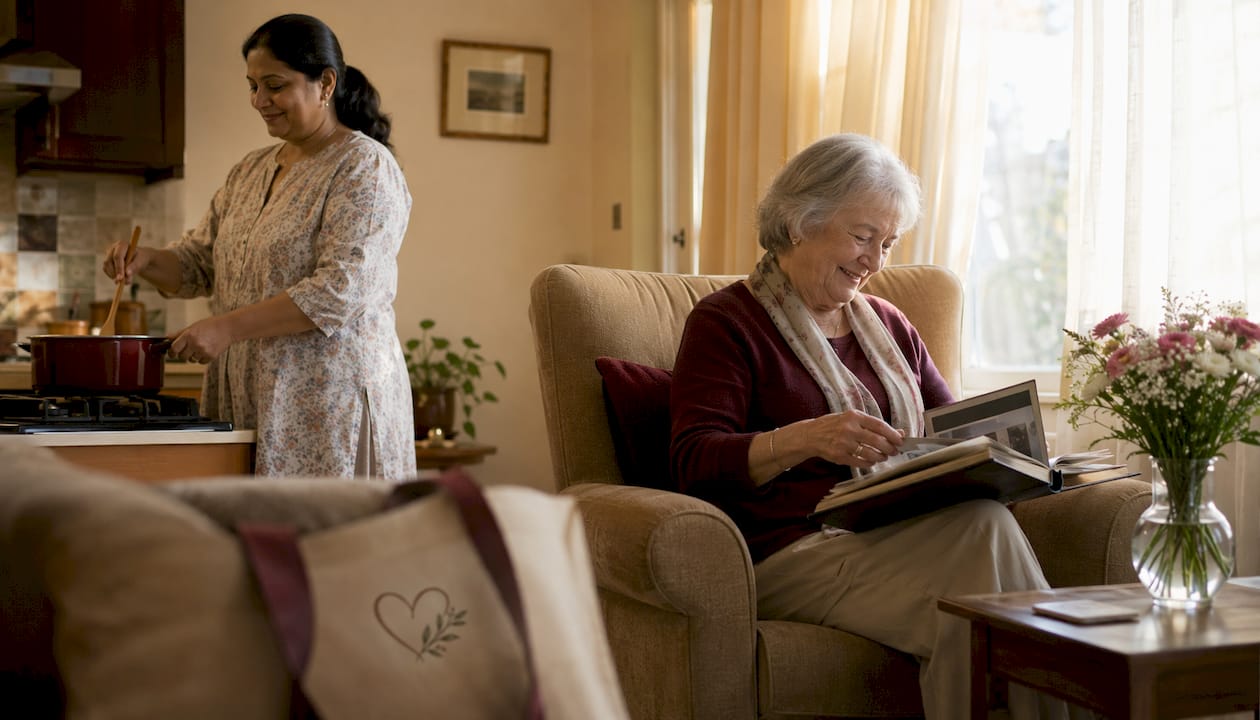
Visiting personal care covers the most intimate daily tasks: washing, dressing, hair brushing, and toileting assistance. Professional carers are trained to deliver this support with dignity, always knocking and identifying themselves on arrival, carrying an identity card, and following agreed protocols for accessing the home. This respectful approach matters enormously to older adults who value their privacy.
Companionship visits focus on social interaction rather than physical tasks. A companion might share a cup of tea, accompany your parent to a local lunch club, help with a crossword, or simply listen. This kind of visit directly addresses isolation and provides the mental stimulation that keeps mood and cognition sharper over time. Fromlovewithcare specialises in exactly this: meaningful human connection rather than task completion.
Medication support visits are shorter, focused calls to remind your parent to take their medication and confirm it has been taken correctly. For families managing complex medication regimens from a distance, this single visit type can prevent hospital admissions.
Meal preparation visits ensure your parent eats a proper, nutritious meal rather than relying on convenience foods or skipping meals altogether. Most UK families start home care with hourly visits covering personal care, meals, and medication, typically one to two visits per day.
Frequency and intensity can be adjusted as needs change. Some parents need a single morning visit; others benefit from four calls a day. Live-in care is available for those who need continuous support, though most families find that well-structured visiting care is sufficient for a long time before that stage is reached.
Pro Tip: When choosing a provider, check their Care Quality Commission (CQC) inspection rating. A "Good" or "Outstanding" rating confirms the agency meets national standards for safety, effectiveness, and compassion.
How do you arrange professional visiting care for your parent?
The process is more straightforward than most families expect, and you do not need a GP referral to begin.
- Request a free care needs assessment from your local council's adult social care team. Anyone can request this without a referral, either by phone or online through the council's website.
- Attend the assessment with your parent. Council assessments focus on what your parent cannot do, and older adults frequently understate their difficulties. Your presence helps ensure the full picture emerges.
- Review the outcome. The council will determine whether your parent qualifies for funded support. If eligible, they may arrange care directly or offer a direct payment so your parent can commission their own preferred provider.
- Explore private care if needed. If your parent does not qualify for council funding, or if you want more flexibility in choosing a provider, private agencies offer visiting care on a self-funded basis.
- Create a detailed care plan. Work with the provider to specify visit times, tasks, communication preferences, and any medical or dietary considerations.
- Evaluate providers carefully. Ask about carer continuity (will your parent see the same person regularly?), backup arrangements for sickness or holidays, and how the agency communicates with families.
Involving your parent in every decision is not just courteous. It protects their dignity and increases the likelihood that they will accept and welcome the support.
What does professional visiting care cost, and how can you fund it?
Cost is often the first concern families raise, and the honest answer is that it varies considerably depending on location, provider, and the level of care required.
Private visiting care in the UK typically costs between £26 and £38 per hour, varying by provider and location. A daily morning visit of one hour therefore costs several hundred pounds per week at private rates. That figure can feel daunting, but several funding routes exist:
- Local authority funding: If your parent qualifies following their needs assessment, the council may fund all or part of their care. Eligibility depends on both care needs and a financial means test.
- Direct payments: Rather than the council arranging care directly, your parent can receive a direct payment to commission their own preferred provider, giving greater choice and control.
- NHS Continuing Healthcare: For parents with complex health needs, NHS Continuing Healthcare funding may cover the full cost of care. A separate assessment determines eligibility.
- Attendance Allowance: This benefit, available to people over State Pension age who need help with personal care, can contribute towards care costs regardless of income or savings.
Practical tools also make visits run more smoothly. A key safe allows carers to access the home safely without your parent needing to answer the door; these devices generally have a modest cost. A communication book, kept in the home, lets carers log observations and flag concerns for the family to review. Personal alarms give your parent a way to call for help between visits.
For families navigating memory-related conditions, understanding how to support cognitive wellbeing alongside physical care adds another layer to the planning process.
How professional visits protect family caregivers from burnout

When family members become the primary carers, something shifts in the relationship. Visits that should be warm and restorative become dominated by medication schedules, personal care tasks, and safety checks. Over time, that weight accumulates.
Professional carers relieve this burden by taking on the task-focused elements of care, freeing family members to be emotionally present rather than functionally occupied. The difference is felt almost immediately. When you are not the one managing your parent's morning routine, you can arrive for a visit and simply be their child again.
Caregiver fatigue is a genuine health risk. Respite through professional visiting care is not a luxury; it is a protective measure for the whole family.
Balancing professional support with family involvement works best when communication is clear and consistent. Detailed care notes kept by visiting carers help families monitor their parent's condition across multiple visits and carers, providing continuity and peace of mind. Knowing that a trained professional has already checked in, prepared a meal, and noted any concerns means your own visit carries a different, lighter quality.
Tips for maintaining that balance:
- Share your observations with the visiting carer at handover, however briefly
- Read the communication book regularly and add your own notes
- Raise concerns with the agency promptly rather than letting them accumulate
- Use the time freed by professional visits for your own rest and recovery, not just additional tasks
The relief that companion visits provide for family caregivers is one of the most consistently reported benefits of professional visiting care.
Why companionship visits matter for elderly wellbeing in the UK
Loneliness among older adults in the UK carries health consequences comparable, by some measures, to smoking fifteen cigarettes a day. Yet it remains one of the least visible aspects of ageing, precisely because older adults rarely name it directly. They describe being "fine" while going days without a meaningful conversation.
Companionship visits fill that gap in a way that task-focused care cannot. A visiting companion who shares a cup of tea, talks through the week's news, or accompanies your parent on a short walk provides something genuinely different from a carer who arrives, completes a set of tasks, and leaves. The social interaction itself is the intervention.
Fromlovewithcare was built around this understanding. Every companion is thoroughly vetted, and the service focuses specifically on human connection rather than personal care tasks. Visits might involve shared activities, gentle conversation, or simply sitting together comfortably. Families consistently report that their parent's mood, confidence, and engagement with daily life improve noticeably after regular companionship visits begin.
The distinction between companionship care and standard personal care visits is worth understanding clearly. Personal care visits address physical needs; companionship visits address emotional and social ones. Both are legitimate, both are valuable, and for many older adults, the companionship visit is the one they look forward to most. Fromlovewithcare's elderly companionship services are designed with exactly that priority in mind, providing trusted, consistent human presence for older adults who need it most.
For families exploring how professional companionship supplements family visits, the evidence is clear: it does not replace family connection. It makes it possible.
Arrange a visit for your parent today
Fromlovewithcare provides compassionate, thoroughly vetted companionship visits for aging parents across the UK. Whether your parent needs regular social interaction, gentle support with daily activities, or simply a trusted presence between family visits, the team is ready to help. Explore our companionship services or find out how it works to take the first step.
Key takeaways
Professional visiting care supports aging parents most effectively when it combines personal care, companionship, and consistent communication with the family.
| Point | Details |
|---|---|
| Start with a needs assessment | Any family can request a free council assessment without a GP referral to begin accessing care. |
| Private care costs £26–£38 per hour | Funding options including local authority support, direct payments, and Attendance Allowance can reduce this cost. |
| Companionship visits address loneliness | Regular social interaction from a vetted companion improves mood, confidence, and cognitive engagement. |
| Professional visits relieve caregiver burnout | Trained carers handle task-focused care, freeing family members to be emotionally present during their own visits. |
| A key safe and communication book cost little | A key safe and a care communication book are practical tools that improve safety and continuity. |