

Companion visits are scheduled periods when a trained visitor provides non-medical support and company to an elderly person, directly freeing caregivers from their duties and protecting their wellbeing. Understanding how companion visits free caregiver time is the first step towards building a sustainable care routine. In 2026, both paid and volunteer companion services are accessible across the UK, offering everything from shared conversation to light household tasks. Caregivers who use these services report lower stress and more time for rest, work, and personal life. This guide explains exactly how companion care works, what it covers, and how to use it well.
How companion visits free caregiver time through practical support
Companion care is the recognised industry term for non-medical, in-home support visits provided by a trained individual. The role sits between informal friendship and professional care. A companion does not administer medication or provide clinical treatment. Instead, they offer presence, practical help, and social connection, covering the everyday tasks that consume most of a family caregiver's day.
The activities a companion typically covers include:
- Conversation and emotional support: Meaningful social interaction, shared meals, and listening
- Meal preparation: Planning and preparing light meals or snacks
- Medication reminders: Prompting the senior to take prescribed medication at the correct time
- Light housekeeping: Tidying, washing up, and maintaining a safe living environment
- Errands and shopping: Accompanying seniors to the shops or collecting groceries
- Transport assistance: Driving or accompanying seniors to appointments and social activities
These tasks overlap directly with the duties that consume a family caregiver's hours each day. When a companion takes over even two or three of them, the caregiver gains real, usable time. Professional companions reduce caregiver stress reported by 60% of unpaid carers, a figure drawn from a pool of 47 million unpaid caregivers in the United States alone. The UK picture is comparable in scale and urgency.
Short-burst visits of 2–4 hours effectively handle high-stress tasks and provide meaningful breaks without requiring a full-time commitment. This makes companion care accessible even for families with limited budgets or irregular schedules.

Pro Tip: Start with a targeted two-hour visit during the part of your day you find most draining, whether that is the morning routine or the evening meal. Focused relief is more restorative than a vague arrangement.
Paid vs volunteer companion visits: which model suits you?
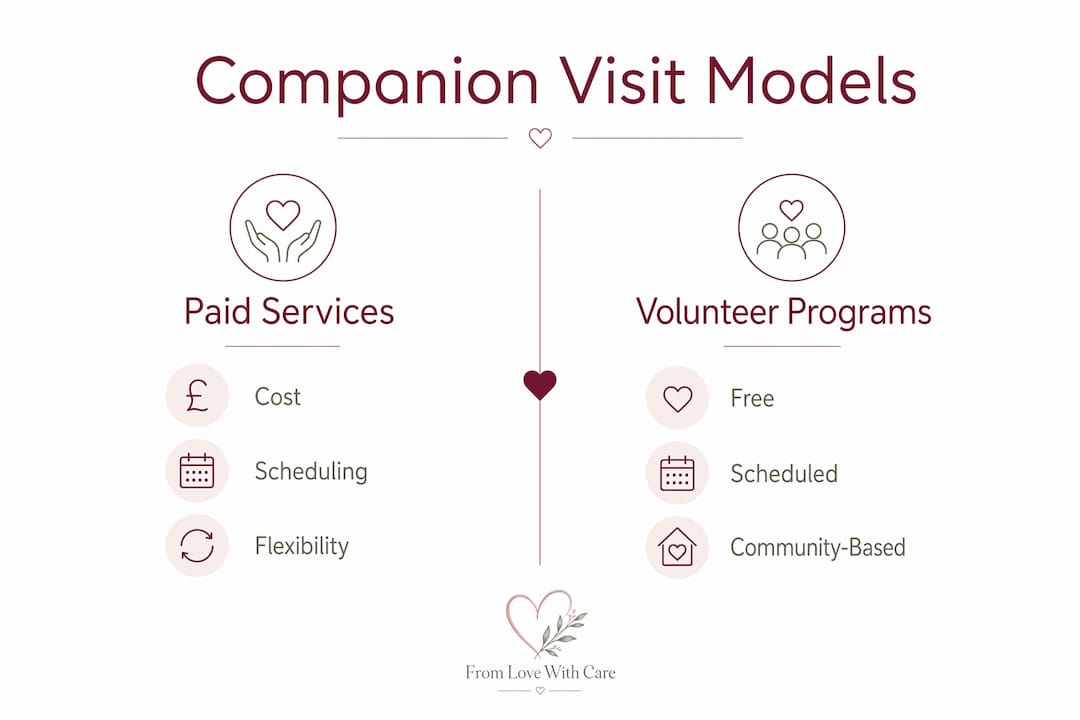
Caregivers have two main routes to companion support: paid services and volunteer-based programmes. Each has distinct advantages depending on your budget, schedule, and the level of consistency you need.
| Factor | Paid Companion Services | Volunteer Companion Programmes |
|---|---|---|
| Cost | Approximately £14–£20 per hour in 2026 | Free of charge |
| Availability | Flexible, bookable on demand | Scheduled, often weekly |
| Visit length | Tailored to need | Typically 2–4 hours per session |
| Consistency | Same companion possible | Varies by programme |
| Eligibility | Open to all | Often means-tested or condition-specific |
| Vetting | Varies by provider | Trained and supervised volunteers |
Companionship care costs $18–$25 per hour in the United States in 2026, with UK rates broadly comparable at the lower end of that range. For many families, even two visits per week represents a manageable outlay for meaningful relief.
Volunteer models offer a genuinely free alternative. Volunteer respite programmes provide regular 4-hour blocks of free companionship, and similar models are active across multiple regions, supporting hundreds of families. These programmes are particularly valuable for caregivers supporting relatives with dementia, where consistent, trained presence matters greatly.
The trade-off with volunteer services is scheduling flexibility. Paid companions can often be booked at short notice and for specific tasks. Volunteer programmes typically operate on fixed weekly slots, which suits caregivers who benefit from a predictable routine but may not suit those with variable schedules.
For a broader overview of current options, the 2026 companionship guide covers the full range of service models available to families in the UK.
Pro Tip: If cost is a barrier, contact your local Age UK branch or carers' centre. Many coordinate free volunteer companion schemes that are not widely advertised online.
Do companion visits actually improve caregiver wellbeing?
Caregiver burnout is not a personal failing. It is a predictable outcome of sustained, unsupported care. The evidence connecting companion visits to genuine caregiver relief is clear and consistent.
Social isolation increases dementia risk by 50% and heart disease risk by 29%. This means companion visits do not only give caregivers a break. They actively protect the health of the person being cared for, which reduces the long-term caregiving burden itself.
For caregivers, the benefits are equally concrete:
- Reduced physical exhaustion: Time away from caregiving duties allows for sleep, exercise, and recovery
- Lower emotional strain: Knowing a trusted companion is present removes the constant mental load of vigilance
- Improved relationships: Caregivers who rest regularly report warmer, more patient interactions with their relatives
- Sustained caregiving capacity: Regular breaks prevent the escalation from stress to full burnout
"Caring for yourself is not self-indulgence. It is self-preservation." Harvard Health and Lyra Health both identify caregiver self-compassion as a clinical priority, not a luxury.
The inner voice telling caregivers that seeking help is selfish is extremely common. Experts recommend reframing companion care as a sustainable strategy, not an admission of inadequacy. Families who understand how companionship improves peace of mind report that the guilt fades quickly once they see the positive effect on their relative's mood and engagement.
The advantages of companion visits extend to seniors directly. Regular social interaction reduces isolation, supports cognitive function, and gives elderly people a consistent, trusted presence outside the immediate family. That outcome benefits everyone in the caregiving relationship.
How to integrate companion visits for maximum respite
The difference between a companion visit that genuinely restores you and one that simply swaps one obligation for another lies in how you plan it. Structure matters more than frequency.
-
Conduct a boundary audit. List your non-negotiable personal needs: sleep, a daily walk, time with friends, or uninterrupted work hours. A boundary audit is a practitioner-recommended method for identifying where companion visits will have the greatest impact. Start there, not with what seems convenient.
-
Set a recurring schedule. Pre-defined, recurring visit schedules are more restorative than spontaneous arrangements. Predictability allows your nervous system to genuinely switch off. An ad-hoc visit keeps you half-alert because you cannot plan around it.
-
Start early, before crisis point. Starting companion visits early builds trust between the senior and the companion, making transitions smoother and reducing caregiver guilt. Waiting until exhaustion sets in means introducing a stranger during a period of heightened stress for everyone.
-
Communicate clearly with the companion. Write a brief summary of your relative's preferences, routines, and any sensitivities. A well-briefed companion requires less oversight, which means you can actually leave the house and rest.
-
Tell your family what you need. Caregiver respite services work best when the wider family understands the schedule and supports it. Resistance from siblings or other relatives is a common barrier. A direct, calm conversation about your needs prevents the companion visit from becoming a source of family conflict.
The goal is not to fill your free time with more tasks. The goal is genuine rest. Part-time companion care works precisely because it creates consistent, protected space in a caregiver's week.
Pro Tip: Treat your companion visit slot as a fixed appointment in your calendar, the same way you would a medical appointment. Do not cancel it unless absolutely necessary. Consistency protects both your wellbeing and your relative's sense of routine.
Key takeaways
Companion visits free caregiver time by covering practical daily tasks and providing trusted social presence, giving caregivers protected space to rest, recover, and sustain their caring role long-term.
| Point | Details |
|---|---|
| Companion care covers daily tasks | Companions handle meals, errands, reminders, and conversation, directly reducing caregiver workload. |
| Both paid and free options exist | Paid visits cost approximately £14–£20 per hour; volunteer programmes offer free 2–4 hour weekly sessions. |
| Caregiver wellbeing depends on breaks | Regular respite reduces burnout risk and improves the quality of care provided to the senior. |
| Schedule structure is critical | Recurring, pre-planned visits restore more energy than ad-hoc arrangements. |
| Start companion care early | Early introduction builds trust and reduces guilt, making the transition easier for everyone. |
Why i think caregivers wait too long to ask for help
Working closely with family caregivers, I have noticed the same pattern repeatedly. The caregiver who reaches out is rarely at the beginning of their journey. They arrive exhausted, often months past the point where support would have been most effective. The guilt that delayed them is real, but it is also the thing that made everything harder.
What strikes me most is how quickly that guilt dissolves once a companion is in place. Within a few weeks, caregivers stop apologising for taking time for themselves. They start sleeping better. They report that their relative seems brighter, more engaged, more like themselves. The companion relationship does something the family relationship cannot always do: it offers fresh conversation, patience without history, and presence without obligation.
The caregivers who benefit most are not those who use companion visits occasionally. They are the ones who build a consistent relationship between their relative and a trusted companion over months. That consistency is what transforms a service into genuine support. A companion who knows your mother's favourite topics, her preferred tea, and the stories she loves to tell is not a stranger filling time. She is a meaningful part of your mother's week.
Seeking support for family caregivers is not a sign that you are struggling. It is a sign that you understand what sustainable care actually requires. The caregivers I most respect are the ones who recognise that protecting their own wellbeing is part of caring well for someone else.
— Ayomide
How Fromlovewithcare supports family caregivers
Fromlovewithcare provides trusted, flexible companionship visits designed specifically for families navigating the demands of caring for an elderly relative. Every companion is thoroughly vetted, trained, and matched to your relative's personality and preferences. Visits can be arranged around your schedule, whether you need a regular weekly slot or more frequent support.

The service adapts to your family's needs, from shared tea and conversation to accompanying your relative on errands or appointments. Fromlovewithcare's elderly companionship services are built on the understanding that human connection is not a luxury. It is a health necessity. To explore the full range of options and arrange a visit, visit the services page or get in touch directly for a personalised care conversation.
FAQ
What do companion visits typically include?
Companion visits cover non-medical support such as conversation, meal preparation, medication reminders, light housekeeping, errands, and transport assistance. They are designed to reduce the practical and emotional load on family caregivers.
How long does a companion visit need to be to make a difference?
Visits as brief as 2–4 hours provide meaningful respite when scheduled consistently. Short, regular visits are often more restorative than infrequent longer ones.
Are there free companion visit options in the UK?
Yes. Volunteer-based respite programmes offer free companionship sessions, typically in 2–4 hour weekly blocks. Local Age UK branches and carers' centres can direct you to schemes in your area.
How do companion visits help prevent caregiver burnout?
Regular companion visits give caregivers protected time for sleep, personal needs, and recovery. Caregiver self-care is identified by Harvard Health as a clinical priority because sustained caregiving without breaks leads directly to burnout.
When is the right time to start companion visits?
The right time is before you feel overwhelmed. Starting early allows your relative to build trust with their companion gradually, which makes the arrangement more comfortable for everyone and reduces the guilt caregivers often feel when accepting help.