
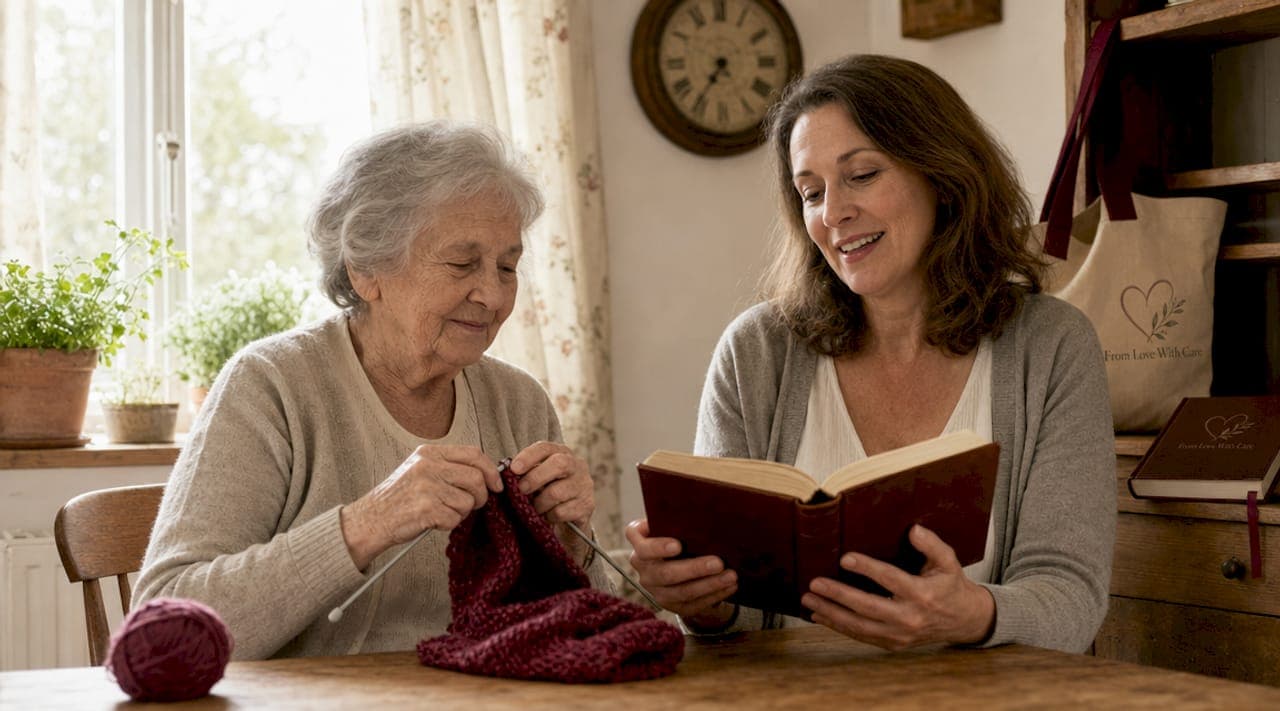
Regular companionship is defined as the consistent, trusted presence of another person that provides emotional connection, social engagement, and practical reassurance to older adults. For families and carers of seniors, understanding how regular companionship supports seniors goes well beyond arranging occasional visits. A 2026 twin study published in the British Journal of Psychiatry, involving over 560 participants, confirmed that consistent social engagement protects against depression in later life over a six-year period. This means loneliness is not simply an emotional inconvenience. It is a measurable health risk, and companion care, the recognised industry term for structured non-medical social support, is one of the most direct responses to it.
How regular companionship reduces loneliness and supports emotional health in seniors
Loneliness in older adults carries genuine clinical consequences. Research confirms that companion care fills a critical mental health gap by providing consistent, meaningful contact that medical appointments simply cannot replicate. Without regular social interaction, seniors are vulnerable to emotional erosion, a gradual withdrawal from life that can mimic dementia symptoms, sometimes leading to pseudo-dementia misdiagnoses. The distinction matters enormously for families who may attribute a loved one's low mood or confusion to cognitive decline when the root cause is isolation.
Companion care works by addressing the human need for everyday conversation, shared activity, and the simple reassurance of being seen. A companion who arrives at the same time each week for a cup of tea, a walk, or a shared television programme creates a rhythm that anchors a senior's emotional world. This is not a luxury. For someone who may go several days without speaking to another person, it is a lifeline.
The benefits of regular companion visits for elderly individuals extend to mood stability and reduced anxiety. Routine and familiarity signal safety to the brain, particularly in older adults whose nervous systems are more sensitive to unpredictability. When your loved one knows who is coming and when, their baseline stress level drops noticeably.
Key emotional benefits of regular companionship include:
- Reduced feelings of isolation through consistent, predictable social contact
- Improved mood as conversation and shared activity stimulate positive emotional responses
- Lower risk of depression, supported by the British Journal of Psychiatry twin study findings
- Prevention of pseudo-dementia, where untreated loneliness mimics cognitive decline
- Greater sense of purpose, as seniors feel valued and looked forward to by their companion
Pro Tip: If your loved one seems withdrawn or confused, consider whether their social contact has reduced before assuming cognitive decline. A trial period of regular companion visits can clarify the picture significantly.
What are the cognitive and physical health benefits of companionship for seniors?
Social interaction through companionship directly supports neuroplasticity and cognitive resilience in older adults by stimulating executive function. Engagement in games, conversation, storytelling, and problem-solving keeps neural pathways active. This is not abstract science. A senior who plays cards with a companion twice a week is exercising memory, attention, and reasoning in a way that passive television watching does not provide.
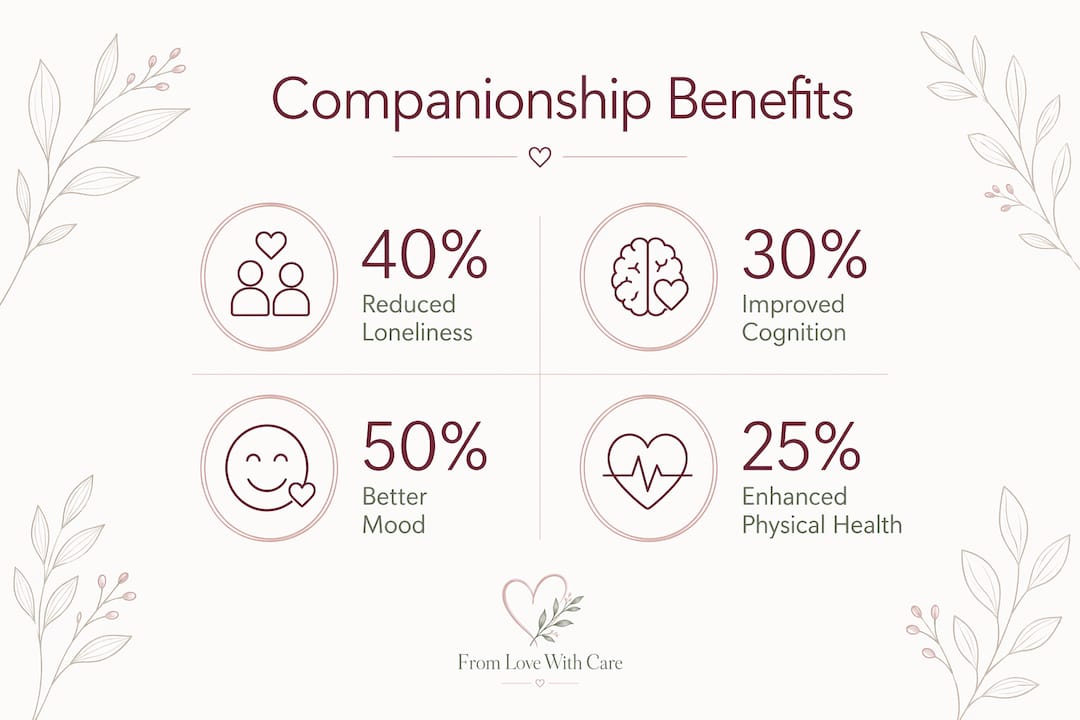
Beyond cognitive stimulation, companions support physical health through practical daily routines. Regular visits support mental stimulation, safety checks, and ease family concerns by maintaining structure around meals, hydration, and light activity. A companion who notices that a senior has not eaten properly, or seems more unsteady than usual, provides an informal monitoring function that no medical appointment can replicate.

| Benefit | Mechanism | Outcome |
|---|---|---|
| Cognitive stimulation | Games, conversation, storytelling | Maintained memory and executive function |
| Stress reduction | Predictable, familiar presence | Lower cortisol levels and reduced agitation |
| Early health detection | Informal daily observation | Timely intervention, fewer hospitalisations |
| Nutritional support | Meal preparation and reminders | Improved physical health and energy |
| Sundowning reduction | Routine-based, timed visits | Reduced agitation in dementia patients |
Companions often act as an early warning system, detecting subtle physical or mental declines before they become critical episodes. A companion who visits regularly will notice changes in gait, appetite, or speech that a family member visiting fortnightly might miss entirely. This informal monitoring has prevented hospitalisations and enabled timely GP referrals in countless cases.
Routine-based companionship reduces anxiety and dementia sundowning behaviours better than sporadic scheduling. Familiarity and predictable presence stabilise cortisol levels and prevent the late-afternoon agitation that many families find distressing and difficult to manage. The timing of visits matters as much as the visits themselves.
Pro Tip: Ask your loved one's companion to keep a brief weekly note of any changes in mood, appetite, or mobility. This creates a simple but powerful record that supports GP conversations and family peace of mind.
Why consistent companionship builds senior trust and confidence
The benefits of professional companion care for elderly individuals are amplified significantly when the same companion visits consistently. Consistent caregivers foster emotional security, deeper communication, and personalised care, improving seniors' quality of life measurably. Consistent caregiving also lowers anxiety, improves sleep, and reduces blood pressure. These are not minor quality-of-life improvements. They are clinically meaningful outcomes.
Contrast this with rotating or sporadic caregivers. When a senior meets a different face each visit, they must repeatedly re-establish trust, explain their preferences, and manage the low-level anxiety of uncertainty. For someone with dementia or mild cognitive impairment, this is genuinely distressing. The brain's threat-detection system remains active, preventing the relaxation that genuine companionship requires.
How companionship supports senior confidence is closely tied to this consistency. When a senior knows their companion well, they are more likely to speak openly about how they are feeling, admit to a fall, or ask for help with something they find embarrassing. That openness is only possible within a relationship built over time.
Practical reasons why consistency matters in companion care:
- Familiar faces reduce confusion in seniors with dementia or memory difficulties
- Personalised routines develop naturally when a companion learns a senior's preferences over time
- Communication deepens as trust builds, making it easier to spot emotional or physical changes
- Anxiety decreases because the senior knows what to expect and from whom
- Family confidence grows when they know a trusted, known individual is with their loved one
You can explore how community events for seniors can complement regular companion visits by extending social connection beyond the home environment.
How to choose and sustain effective companionship for your senior loved one
Companion care is not personal care or medical care. Companion care provides vital light assistance such as meal preparation, outings, and medication reminders, supporting independence without replacing skilled clinical care. Understanding this distinction helps families set realistic expectations and choose the right type of support. If your loved one needs help with bathing or wound care, a companion is not the appropriate sole provider. If they need social engagement, emotional support, and gentle daily structure, companion care is precisely the right fit.
When selecting a companion for an ageing parent or relative, consider the following steps:
- Assess personality compatibility. A companion who shares your loved one's interests, whether that is gardening, music, or local history, will build rapport far more quickly than one assigned purely on availability.
- Prioritise reliability and consistency. The benefits of regular companion visits for elderly individuals depend on predictability. Choose a service or individual who commits to a fixed schedule.
- Verify vetting and professionalism. Any companion entering your loved one's home should be thoroughly background-checked. Fromlovewithcare, for example, vets every companion before placement, which gives families confidence from the first visit.
- Start with a trial period. Two to four weeks of regular visits allows both the senior and the companion to establish comfort before committing to a longer arrangement.
- Track the benefits actively. Note changes in mood, appetite, sleep, and social engagement. Families who monitor companionship outcomes report fewer unexpected health concerns and greater peace of mind over time.
- Integrate visits into daily life. Companion visits are most effective when they align with natural daily rhythms, such as morning tea, a lunchtime walk, or an afternoon activity, rather than feeling like an external imposition.
Pro Tip: Involve your loved one in choosing their companion where possible. Seniors who feel agency in the decision are more likely to welcome visits and engage openly from the start.
You can also explore the range of activities companions do with elderly loved ones to understand what a typical visit might look like and how to match activities to your loved one's interests and abilities.
Key takeaways
Regular companionship supports seniors by reducing loneliness, stabilising mood, stimulating cognitive function, and building the consistent trust that enables genuine emotional wellbeing.
| Point | Details |
|---|---|
| Consistency is the foundation | The same companion, visiting regularly, builds trust and reduces anxiety more effectively than rotating carers. |
| Cognitive benefits are real | Games, conversation, and shared activity maintain neuroplasticity and executive function in older adults. |
| Early detection saves lives | Companions notice subtle health changes that families and GPs may miss, enabling timely intervention. |
| Emotional health is physical health | Reduced loneliness lowers cortisol, improves sleep, and reduces blood pressure in seniors. |
| Families benefit too | Regular companion visits reduce family caregiver stress and provide reliable peace of mind. |
Why I believe companion care is one of the most undervalued tools in elder care
I have seen families exhaust themselves trying to fill the social gap in a loved one's life through weekend visits and phone calls, only to find their parent still withdrawn, confused, or low in mood. The honest truth is that frequency and familiarity cannot be replicated by good intentions alone. A senior who sees a familiar, warm face three times a week receives something qualitatively different from one who sees family members occasionally, however loving those visits are.
What strikes me most is how quickly the benefits become visible. Within a few weeks of consistent companion visits, families often report that their loved one seems brighter, more talkative, and more engaged. This is not coincidence. It reflects what the research consistently shows: that social connection is a biological need, not a preference.
The aspect that conventional elder care discussions often miss is the preventive value. Companion care is not a response to crisis. It is a way of avoiding one. The companion who notices that a senior seems more forgetful than usual, or has stopped eating lunch, is providing a form of surveillance that no clinical system can replicate at that level of intimacy and regularity.
My view is that families should treat companion care with the same seriousness they give to medication management or GP appointments. The evidence supports it. The outcomes speak for themselves. And the cost of not acting, measured in deteriorating mental health, preventable hospitalisations, and family distress, is far higher than most people realise until it is too late.
Exploring social clubs for over-60s alongside regular companion visits can extend the social network further, giving seniors multiple sources of connection rather than relying on a single relationship.
— Ayomide
How Fromlovewithcare supports seniors and their families
Fromlovewithcare was built around a straightforward belief: that human connection is a form of care in its own right. The service provides thoroughly vetted companions who visit seniors in their own homes across the UK, offering meaningful interaction through shared activities such as tea and conversation, grocery shopping, or a gentle walk.

For families worried about an ageing parent who goes days without speaking to another person, Fromlovewithcare offers a trusted, consistent presence that medical services cannot provide. Every companion is background-checked and matched thoughtfully to the senior's personality and interests. The result is not just a safer loved one. It is a happier one. Explore elderly companionship services to find the right level of support for your family, or visit the full services overview to understand all available options.
FAQ
What does regular companionship actually involve for seniors?
Regular companionship, also called companion care, involves consistent visits from a trusted individual who provides conversation, shared activities, and light practical support such as meal preparation or accompanying a senior on outings. It is distinct from personal or medical care and focuses entirely on social and emotional connection.
How often should a senior receive companion visits to see real benefits?
Research on routine-based companionship indicates that predictability and frequency both matter. Two to three visits per week is a common starting point, though even one consistent weekly visit from the same companion builds meaningful trust and emotional stability over time.
Can companionship help seniors with dementia?
Consistent companion visits reduce sundowning behaviours and anxiety in seniors with dementia by providing familiar faces and predictable routines. Familiarity stabilises cortisol levels and reduces the confusion that rotating or unfamiliar carers can trigger.
How does companion care benefit family caregivers?
Families find that regular companion visits reduce their own stress by providing reliable observation and reducing unexpected health concerns. Knowing a trusted person is with their loved one regularly gives carers the mental space to manage their own wellbeing.
Is companion care the same as home care or personal care?
Companion care is not personal or medical care. It provides non-clinical support such as social engagement, light meal preparation, and accompaniment on outings. Personal care covers tasks like bathing and dressing, while medical care involves clinical treatment. Many families use companion care alongside, not instead of, other services.