

Respite companionship is defined as professional, non-medical support that provides scheduled social interaction, light practical assistance, and structured relief for family caregivers. Understanding how respite companionship services work is the first step families take when they notice a loved one going days without meaningful conversation. These services sit between informal family visits and clinical home care. They fill a gap that neither a busy family nor a medical professional is designed to fill. Fromlovewithcare, which specialises exclusively in human connection for adults and elderly people across the UK, is built on this precise model.
What tasks and activities are included in respite companionship?
Companion care involves socialisation, light housekeeping, errands, and safety supervision, and it explicitly excludes hands-on personal care such as bathing or dressing. That boundary is not a limitation. It is a deliberate design that keeps costs lower and companions focused on what matters most: genuine human connection.
A typical visit from a respite companion might include:
- Conversation over a cup of tea or a shared meal
- Board games, reading aloud, or working on a hobby together
- Light tidying, washing up, or simple meal preparation
- Accompanying a senior to a local shop or appointment
- Sitting companionably during a favourite television programme
What companions do not do is equally clear. They do not assist with bathing, toileting, dressing, or administering medication. If those tasks become a regular need, service upgrades are required and a different type of carer must be engaged. Mixing the two roles without a formal upgrade creates both billing problems and compliance risks for families.
Pro Tip: Ask any provider to give you a written list of included and excluded tasks before the first visit. This protects your family and sets clear expectations for the companion.

The social activities are not incidental. They are the core of the service. A companion who engages a senior in a shared interest, whether that is gardening, crosswords, or reminiscing over old photographs, delivers something a clinical carer rarely has time to provide.
How is respite companionship scheduled and arranged?
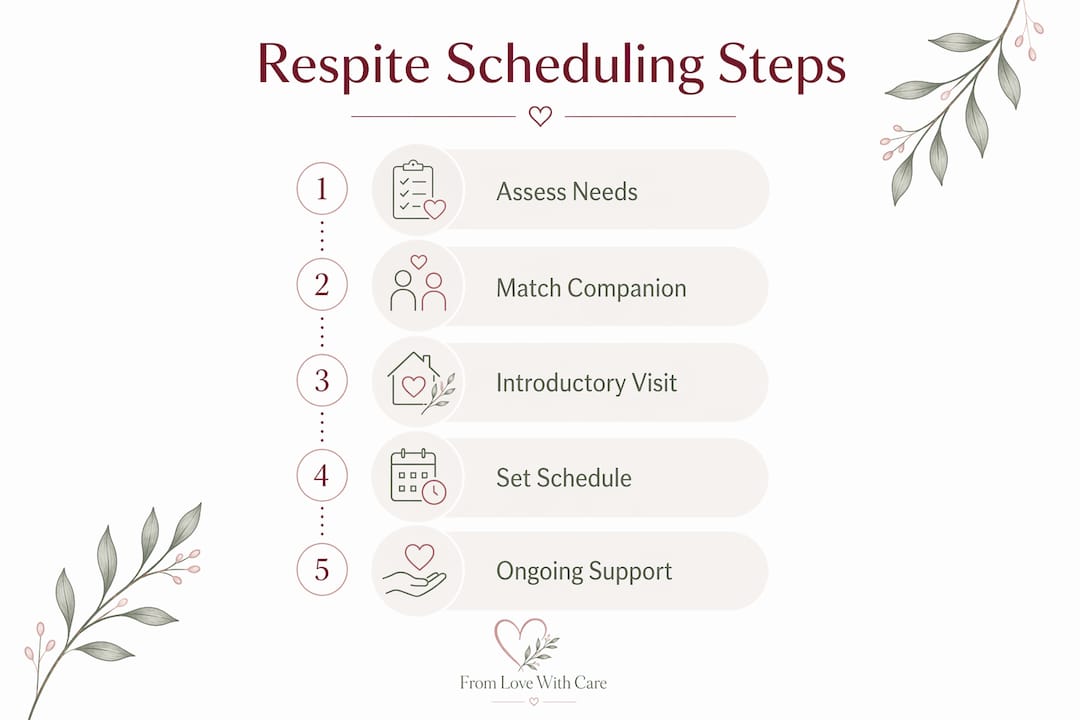
Arranging respite companionship begins with a conversation about the senior's daily routine, personal preferences, and current needs. This initial assessment shapes a tailored care plan that specifies visit frequency, duration, and the types of activities best suited to the individual. No two plans look the same, and that is intentional.
The typical arrangement process follows these steps:
- Initial consultation. A family speaks with the provider to outline the senior's routine, interests, and any concerns about accepting outside support.
- Care plan creation. The provider drafts a written plan that details scheduled visit blocks, agreed activities, and any specific preferences such as dietary habits or communication style.
- Companion matching. The provider selects a companion whose personality and interests align with the senior's. This matching step is not cosmetic. The quality of the introductory visit and the rapport established between companion and senior directly determines long-term success.
- Introductory visit. The first visit is relationship-building, not a formal intake session. Keeping it relaxed and low-pressure significantly reduces anxiety and improves acceptance.
- Ongoing review. The family and provider check in regularly to adjust the plan as needs evolve.
Scheduling flexibility ranges from minimum two-hour visits to full-time live-in arrangements, with no requirement for long-term contracts. Short, regular visits create the consistent routine that seniors and families tend to prefer. A Wednesday afternoon visit every week, for example, quickly becomes an anticipated event rather than an intrusion.
Pro Tip: Start with a shorter visit, perhaps two hours, before committing to a longer schedule. This gives both the senior and the companion time to build comfort naturally.
Many families worry that their loved one will refuse a companion outright. Framing the first visit as a social call rather than a care appointment removes much of that resistance. The companion arrives as a friendly visitor, not as evidence that something is wrong.
How do respite companionship services support emotional wellbeing?
Respite companionship aims for genuine social engagement to prevent cognitive decline, not just supervision for seniors who are already dependent. This distinction matters enormously. Families often wait until a crisis before seeking support, which means the senior has already experienced months of isolation. Proactive use of companion care preserves independence and emotional wellbeing before medical intervention becomes necessary.
"Loneliness among older adults carries health risks comparable to smoking 15 cigarettes a day. Regular social visits from a trusted companion directly counter that risk by providing consistent, meaningful human contact."
The benefits of companionship care for seniors extend well beyond pleasant conversation. Research-supported outcomes of regular social visits include:
- Reduced feelings of anxiety and depression
- Maintained cognitive sharpness through stimulating conversation and activities
- Greater motivation to eat well, move around, and engage with the world
- Improved sleep patterns linked to reduced stress and social fulfilment
- A stronger sense of personal identity and dignity
The emotional relief for family caregivers is equally significant. Knowing that a trusted, vetted companion is spending meaningful time with a loved one allows family members to rest, work, or attend to their own health without guilt. Regular planned respite care prevents caregiver burnout and is not a sign of giving up. It is a sustainable caregiving strategy that protects the whole family.
A common misconception is that companionship services are only for seniors with significant cognitive or physical decline. They are not. Many people who use these services are physically independent but socially isolated, living alone after bereavement or retirement, and simply going too long without someone to talk to.
What are typical costs and how does the pricing structure work?
Companion-only care typically ranges from £27 to £32 per hour, while personal care services cost more due to the additional licensing and clinical requirements involved. Rates vary by region and service scope, so families in urban areas such as London may pay at the higher end of that range.
| Service type | Typical hourly rate | Key cost factor |
|---|---|---|
| Companion care only | £27–£32 per hour | Social visits, light tasks, errands |
| Personal care included | £29–£37 per hour | Bathing, dressing, clinical support |
| Live-in companion | Quoted per package | Full-time presence, negotiated rate |
Formal, itemised care plans clarify service scope and legal boundaries, protecting families and producing predictable costs. Without a written plan, families risk being billed for services they did not request or, conversely, receiving fewer hours than expected. Always request a written agreement before the first visit.
Cost also varies with scheduling. A two-hour weekly visit is the most affordable entry point. Families who need daily visits or longer blocks will naturally spend more, but the cost per hour typically remains consistent within a provider's pricing structure.
Pro Tip: Check whether your local council or a charity such as Age UK offers funding or subsidies for respite companionship. Some families qualify for support they are not aware of.
The distinction between companion care and personal care is critical for billing compliance. If a companion begins regularly assisting with personal care tasks without a formal service upgrade, the provider may be operating outside their licence. Families should raise this immediately if they notice scope creep.
How can families maximise the benefits of respite companionship services?
The families who benefit most from respite companionship are those who treat it as a planned, ongoing part of their caregiving routine rather than an emergency measure. Waiting until a caregiver is exhausted or a senior is in crisis means the service starts under pressure, which reduces its effectiveness for everyone involved.
Practical steps that make a real difference include:
- Schedule sessions before you need them urgently. Regular weekly or fortnightly visits build routine and trust far more effectively than sporadic bookings.
- Share detailed preferences with the provider. The more a companion knows about a senior's interests, history, and communication style, the richer each visit becomes.
- Encourage active engagement, not passive supervision. A companion who plays cards, tends the garden, or walks to the local park with a senior delivers far more value than one who simply sits nearby.
- Review the care plan every few months. Needs change. A plan written in january may not reflect what a senior needs by june. Regular reviews keep the service relevant and effective.
- Build a positive relationship between the senior and the companion. Small gestures matter. Asking the companion to remember a senior's favourite biscuit or television programme signals respect and builds genuine rapport.
Integrating regular respite breaks into caregiving routines maintains caregiver health and prevents the kind of crisis-driven emergencies that lead to rushed decisions about residential care. Families who plan ahead retain more control over their loved one's care and their own wellbeing. For a broader view of how companionship options for older adults have evolved, the range of available services in 2026 is wider and more flexible than many families realise.
Key takeaways
Respite companionship services work best when they are arranged proactively, built around a tailored care plan, and treated as a long-term investment in both the senior's wellbeing and the family caregiver's health.
| Point | Details |
|---|---|
| Clear task boundaries matter | Companion care excludes personal care tasks; always get a written list of included services. |
| Introductory visits set the tone | The first visit should be relaxed and relationship-focused to reduce anxiety and build trust. |
| Costs are predictable with a written plan | Companion-only care ranges from £27 to £32 per hour; formal agreements prevent billing surprises. |
| Proactive scheduling prevents burnout | Regular weekly sessions are more effective than crisis-driven bookings for caregivers and seniors alike. |
| Social engagement is the core outcome | Companions who share activities and interests deliver measurable emotional and cognitive benefits. |
What I have learned from arranging respite companionship
When I first looked into arranging respite companionship for an elderly relative, I assumed it was a last resort. Something families turned to when they had run out of other options. I was wrong, and that assumption cost us several months of unnecessary isolation for someone we loved.
The shift in my thinking came after the first proper introductory visit. Watching a companion arrive with genuine warmth, sit down with a cup of tea, and within twenty minutes be deep in conversation about 1970s television was quietly extraordinary. The change in my relative's mood that afternoon was not subtle.
What I would tell any family hesitating right now is this: the guilt you feel about bringing in outside support is the wrong emotion. The right question is not "am I giving up?" It is "how do I give my loved one more of what they actually need?" A family caregiver stretched thin cannot provide consistent, cheerful, unhurried company. A good companion can.
Understanding the full range of companion service benefits before you commit also helps you ask better questions of any provider. The families who get the most from these services are the ones who go in informed, not hopeful.
— Ayomide
Compassionate respite companionship from Fromlovewithcare
Fromlovewithcare was built specifically to address the loneliness that too many elderly adults in the UK experience every day. Every companion is thoroughly vetted, carefully matched to each individual, and focused entirely on meaningful human connection rather than clinical tasks.

Families who arrange visits through Fromlovewithcare report genuine improvements in their loved ones' mood, confidence, and daily engagement. The service is flexible, transparent on pricing, and designed to fit around your family's existing routine. Whether you need a two-hour weekly visit or a more regular arrangement, the process is straightforward and the support is real. Explore the full range of companionship and respite services available, or read about how the matching process works to find the right companion for your loved one.
FAQ
What does a respite companion actually do during a visit?
A respite companion provides social engagement, light housekeeping, and errand support. They do not carry out personal care tasks such as bathing or dressing.
How long does a typical respite companionship visit last?
Visits range from a minimum of two hours to full-day or live-in arrangements, with no requirement for a long-term contract.
How do I know if a companion is the right match for my loved one?
Providers assess the senior's routine, interests, and personality before matching. The introductory visit is designed to build rapport, and families can request a different companion if the fit is not right.
Is respite companionship only for seniors with serious health conditions?
No. Respite companionship supports emotional wellbeing and prevents isolation for any older adult, including those who are physically independent but socially lonely.
How much does respite companionship cost in the UK?
Companion-only care typically costs between £27 and £32 per hour. Personal care services carry a higher rate due to additional licensing requirements.