

Start with one small, reliable habit today: a short phone call, a scheduled video catch-up, or a five-minute chat with a neighbour. If low mood has lasted for some time, speak to your GP about social prescribing, and if you're struggling to cope, contact NHS 111 or emergency services without delay.
TL;DR:
- Small, consistent actions like short calls or caring for a pet can significantly reduce loneliness without overwhelming effort.
- Engaging in structured activities or hobbies can foster meaningful connections and provide social opportunities naturally.
- A daily routine with fixed social cues and weekly anchor activities helps prevent gradual isolation and maintains a sense of identity.
- Joining moderated online groups or local community services offers safe, interest-based engagement with minimal risk of negative impact.
- Persistent low mood, thoughts of self-harm, or difficulty managing daily needs call for professional support, including social prescribing or emergency services.
Table of Contents
- Practical, small steps to reduce loneliness at home today
- Building connections that actually feel meaningful
- Why a simple daily routine keeps isolation from creeping in
- Using digital tools and online groups without the downsides
- When loneliness needs more than self-help
- What the research says about connection and wellbeing
- Finding community support close to home
- Overcoming mobility, anxiety and other barriers to getting out
- What supporting someone through loneliness has taught us
- How Fromlovewithcare brings consistent, human connection home
- Sources
Practical, small steps to reduce loneliness at home today
You don't need a life overhaul to feel less alone. You need one action, repeated, that's small enough to actually happen. Loneliness often deepens because the first step feels too big. Shrinking that step is the whole trick.
Start with conversation openers you can use without overthinking. "How's your week been?" to a neighbour, a voice note instead of a text to an old friend, or a two-minute call to a family member before your morning tea. None of these need to become a big event. They just need to happen consistently.
Your immediate environment matters more than people assume. A windowsill of plants to tend, a bird feeder outside the kitchen window, or a pet to care for all give you small reasons to interact with something living each day. The NHS notes that structured, achievable activities help stop isolation from deepening, and caring for something is one of the simplest structures available.

Movement helps too, even in small doses. A ten-minute walk to the postbox or some gentle stretching by an open window lifts mood and often creates a natural opening for conversation, whether that's a wave to a neighbour or a chat at the corner shop.
Some coping habits make loneliness worse over time. Excessive alcohol, comfort eating, and endless scrolling all offer short-term relief but tend to deepen isolation. Safer substitutes include herbal tea rituals, short walks, or calling someone instead of reaching for a screen.
- Send one voice note or make one short call each morning
- Care for a plant or pet as a daily point of contact
- Take a ten-minute walk somewhere you might see a familiar face
- Swap one scrolling session for one phone call this week
Pro Tip: Pick a "smallest possible version" of a social habit, something you could do even on a bad day, like texting one emoji to a friend. Consistency beats intensity every time.
Building connections that actually feel meaningful
Being surrounded by people isn't the same as feeling connected to them. You can sit in a busy waiting room all afternoon and still feel entirely alone; you can also have one ten-minute call a week that leaves you feeling genuinely seen. Quality of contact matters far more than quantity.
Meaningful connection usually involves some vulnerability, however small. Telling a friend you've been struggling, rather than just saying "I'm fine," tends to deepen a relationship far faster than another surface-level chat.
- Schedule, don't hope. A planned Sunday call with a sibling happens; a vague "we should catch up sometime" usually doesn't.
- Share a task. Cooking together over video, doing a crossword by phone, or gardening alongside a neighbour builds connection through doing, not just talking.
- Reopen old contacts. A short, warm message to someone you've lost touch with ("Thinking of you, how are things?") works better than you'd expect.
- Join something interest-based. A book group, a walking club, or an online class centred on a shared hobby gives conversation a built-in starting point.
- Manage approach anxiety with a script. Decide your opening line in advance so you're not improvising under pressure.
Reconnecting doesn't require an apology for lost time. Most people are quietly pleased to be remembered.
Why a simple daily routine keeps isolation from creeping in
Loneliness often worsens gradually, one skipped call and one missed outing at a time. A modest routine interrupts that slide because it gives your day predictable anchors. Even a housebound reader benefits from structure that doesn't depend on leaving the house.
Routine also protects your sense of identity. Knowing "Tuesdays are when I call Mum" or "mornings are for the garden" gives shape to days that might otherwise blur together.
- A fixed morning ritual: tea, the news, a short stretch by the window
- One scheduled social contact each day, even a five-minute call
- A weekly "anchor" activity, like an online class or a hobby session
- For low-energy days, swap active tasks for passive but purposeful ones, such as writing letters or sorting photographs
Hobbies often become social bridges without you trying. A knitting habit leads to a knitting group; birdwatching from a window can lead to an online forum full of people doing the same thing.
Using digital tools and online groups without the downsides
Not all screen time is equal. Passive scrolling through social media tends to increase negative comparison rather than connection, while interest-focused online communities tend to genuinely help. A moderated forum for allotment gardeners will usually leave you feeling better than an unstructured feed ever will.
Before joining any group, check it's actively moderated and review its privacy settings. If a group ever moves toward meeting in person, choose a public venue and tell someone where you're going.
- Choose small, topic-based groups over broad social platforms
- Schedule video calls as fixed weekly anchors, not spontaneous events
- Try an online class, book club, or hobby group with regular sessions
- Combine online chats with a phone call or in-person visit when you can
Pro Tip: If a platform leaves you feeling worse after use, that's data. Swap it for one with a clearer purpose, a quiz group, a language exchange, a craft forum.
When loneliness needs more than self-help
Some signs mean it's time to bring in extra support rather than push through alone. Persistent low mood lasting more than two weeks, thoughts of self-harm, or struggling to manage daily basics like eating or washing all warrant a conversation with a professional, not just another self-help tactic.
Loneliness carries real health weight. It's linked to a higher risk of early death, heart disease, stroke, and dementia, which is why the NHS treats it as a public health concern rather than something to simply tolerate.
- Persistent low mood lasting for some time: speak to your GP
- Thoughts of suicide or self-harm: contact NHS 111 or emergency services immediately
- Struggling with daily tasks: ask your GP about social prescribing
- Unable to leave home: ask about telephone befriending or volunteer visiting schemes
Your GP can refer you to a link worker through social prescribing, connecting you to local groups, activities, and community support tailored to your situation. Talking therapies including CBT are often available via self-referral in many parts of the UK, so you don't always need a GP appointment first. For those unable to leave home, telephone befriending services offer regular, reliable human contact without any need to travel.
What the research says about connection and wellbeing
UK government research treats loneliness as a shared human experience rather than a personal failing, which matters because stigma keeps people from asking for help.
The most consistent finding across NHS and government research is that small, structured changes, a scheduled call, a local group, a conversation with a GP, produce more reliable improvement than waiting for loneliness to simply pass on its own.
Government guidance stresses reducing stigma as a genuine first step. In our own experience arranging companionship visits, the families who see the biggest shifts in wellbeing are usually the ones who started with one small, regular point of contact rather than waiting for a bigger solution.
Finding community support close to home
Most towns have far more going on than shows up in a casual search. Libraries run free events most weeks, from reading groups to craft sessions. Local councils fund community centres offering everything from lunch clubs to gentle exercise classes, often at little or no cost.
Charities are usually the fastest route to concrete options. Age UK and Mind both list practical, local ways to combat loneliness, including telephone befriending schemes and volunteer visiting services for people who find it hard to get out.
Faith communities, where relevant, often run regular social events open to everyone, not just worshippers. Volunteering is worth particular attention: charity shops, food banks, and community gardens are consistently short of helpers and tend to welcome newcomers warmly, no experience required.
GP surgeries increasingly display noticeboards with local group listings, and social prescribing link workers exist specifically to match you with nearby options. Our guide to community resources for lonely adults breaks down how to find and contact these services in more detail.
The starting point doesn't need to be ambitious. One phone call to a local community centre asking "what's on this month?" often opens more doors than an hour of searching online.
Overcoming mobility, anxiety and other barriers to getting out
Mobility limits and social anxiety are two of the biggest reasons people stay isolated even when they want connection. Neither has to be a full stop.
For mobility issues, look for activities that come to you. Many libraries and charities run home library services, delivering books and a friendly chat together. Video call groups let you join a class or conversation circle without leaving your chair. Community transport schemes, often run by local councils or charities, can also help with getting to appointments or social activities you'd otherwise skip.
Social anxiety responds well to graded exposure, taking on slightly bigger challenges in small, manageable steps. Start with a low-pressure setting: a quiet library session rather than a busy party, or an online group before an in-person one. Give yourself a fixed exit time in advance, "I'll stay twenty minutes," which removes the pressure to commit to a whole event.

Scripting your first few sentences in advance also helps enormously. Having "How do you know [organiser's name]?" ready to go means you're not improvising while anxious. Bringing a small task, like helping set out chairs at a group, gives you something to focus on besides the anxiety itself.
None of these barriers vanish overnight, but each small success tends to make the next attempt slightly easier.
What supporting someone through loneliness has taught us
Loneliness is rarely about a lack of willpower. It's usually about the first step feeling too big, and about not always noticing there's a smaller one available. We've seen a single weekly visit turn into someone rediscovering an old hobby, then a local group, then a friendship that had nothing to do with us at all.
— Ayomide
How Fromlovewithcare brings consistent, human connection home
Self-help steps go a long way, but some days call for a real person, sitting with you, not a checklist. That's the gap Fromlovewithcare exists to fill: regular, booked companionship visits with someone who shows up reliably, so connection doesn't depend on you having the energy to organise it yourself.
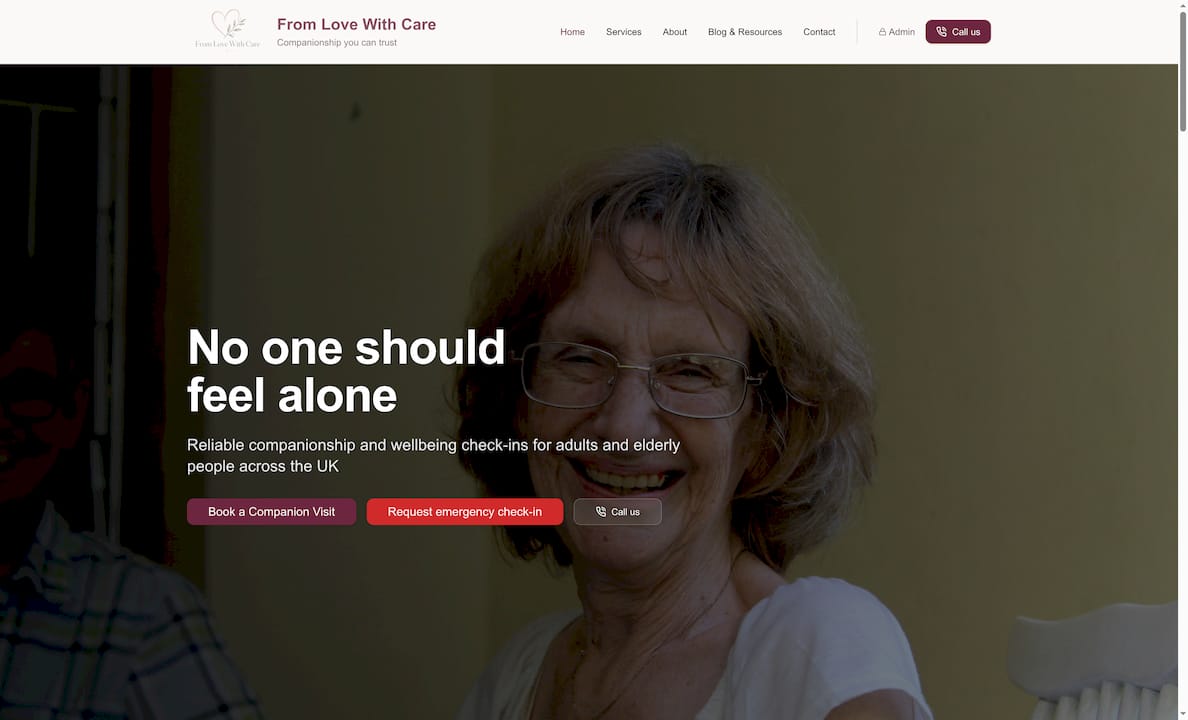
Every companion is DBS-checked and trained specifically in emotional support and conversation, not personal or medical care. Visits might mean a shared cup of tea, help with the weekly shop, company during an appointment, or simply someone to talk to who actually has the time to listen. For families noticing a parent or relative going days without speaking to anyone, that regular visit often becomes the anchor their whole week is missing.
If you'd like to see how visits are arranged and how frequently companions can call, our companionship services page explains the options, or you can look at our dedicated loneliness support services for more detail. Get in touch to arrange a first visit and give someone you care about a reliable, familiar face to look forward to each week.
This article is general information, not a substitute for advice from a qualified doctor. Consult a qualified healthcare professional about your own circumstances before acting on anything here.
Sources
- Health Survey for England 2024: loneliness and wellbeing
- Feeling lonely - NHS
- Mental health and loneliness: the relationship across life stages