

If your elderly relative has become quieter, stopped accepting invitations, or seems less interested in their appearance, these are among the most reliable loneliness signs in elderly people. The immediate step is simple: ask gently, without judgement, and plan one low-effort contact this week, whether a short visit, a phone call, or a shared cup of tea.
The scale of the problem makes this urgent. Age UK data show 2.1 million older people in the UK take less care of themselves when lonely, and 4.8 million regularly say they are "fine" when they are not. The Health Survey for England 2024 found 22% of adults felt lonely at least some of the time, with 18% of those aged 75 and over reporting this.
Quick signs to watch for:
- Withdrawing from family, friends, or activities they previously enjoyed
- Noticeable changes in mood, such as persistent sadness or irritability
- Declining personal hygiene or neglecting household tasks
- Reduced appetite, disrupted sleep, or unexplained physical complaints
- Long gaps between phone calls or visits, with little explanation
Key takeaways
Chronic loneliness in older people carries serious health risks and is far more common than most families realise, but steady, compassionate contact, whether from family, community services, or a trusted companion, can make a measurable difference.
| Point | Details |
|---|---|
| Spot the signs early | Watch for withdrawal, self-neglect, mood changes, and long gaps in contact as the clearest indicators. |
| Health risks are serious | Age UK links chronic loneliness to increased risks for coronary heart disease, stroke, and dementia. |
| Most older people hide it | 4.8 million older people regularly say they are "fine" when they are not; you usually need to initiate the conversation. |
| Use UK support options | Age UK befriending, NHS social prescribing, and local council services are all available; a GP referral can open doors quickly. |
| Fromlovewithcare | DBS-checked companions provide regular one-to-one visits focused on connection, not medical care, for isolated older adults across the UK. |
Table of Contents
- What are the signs of loneliness in elderly people?
- Why does loneliness matter so much for older people's health?
- Why do older people become lonely?
- How do you start a conversation about loneliness without causing distress?
- What UK support is available for lonely older people?
- When should you contact a GP or emergency services?
- How companionship can help and what families should expect
- What families often get wrong about loneliness in older people
- Fromlovewithcare offers trusted companionship for isolated older people
- Sources
What are the signs of loneliness in elderly people?
Loneliness rarely announces itself. It tends to appear gradually, through small changes that are easy to dismiss as "just getting older." Knowing which changes to look for, and in which areas of daily life, helps you tell the difference between a temporary low mood and something that needs attention.
Emotional and mood changes
Older adults experiencing loneliness often describe feeling sad, empty, or anxious without being able to explain why. You might notice they seem flat during conversations that once animated them, or that they cry more easily. Persistent low mood that lasts weeks rather than days is a meaningful signal, particularly when it coincides with reduced contact with others. These emotional signs in elderly people are closely linked to depression, though, as Ruth Lowe, Age UK's head of loneliness services, notes, loneliness is not a mental health condition in itself, even though it is strongly associated with depression and anxiety.
Behavioural and social withdrawal
Watch for a pattern of declining invitations, cancelling plans, or stopping activities they once looked forward to. Unopened post, missed meals, or a television left on all day as background noise can all point to social withdrawal in older adults. They may stop calling family members as often, or calls become shorter and less engaged.
Physical and self-care changes
Age UK data link loneliness directly to self-neglect: unwashed clothes, poor grooming, an untidy home, or a fridge with little food. Sleep disruption and a reduced appetite are also common physical signs. These changes are observable and concrete, which makes them useful early indicators.

Cognitive cues
Difficulty concentrating, forgetting recent conversations, or seeming confused during calls can reflect the cognitive effects of chronic social isolation. These signs overlap with other conditions, so they warrant attention rather than immediate alarm.
Pro Tip: Compare your relative's current routine with how they were six months ago, not just last week. Ask a neighbour, a regular delivery driver, or another family member whether they have noticed changes. Gradual decline is easy to miss when you see someone frequently.
For more on signs your elderly parent needs companionship, including real-life examples of how these patterns develop, the Fromlovewithcare blog covers this in practical detail.
Why does loneliness matter so much for older people's health?
The health consequences of chronic loneliness are serious enough to have drawn attention from the World Health Organisation as a public health priority. The evidence base is substantial.
Age UK's parliamentary briefing summarises the associated risks clearly:
These are associations drawn from multiple studies, not simple cause-and-effect. Public health bodies treat them seriously because the signal is consistent across large populations and different research designs. A UK longitudinal study published in PLOS ONE found an approximate £900 difference in healthcare use between lonely and non-lonely respondents, with costs rising with age.
The Health Survey for England 2024 also found that wellbeing scores fell consistently as the frequency of loneliness increased, reinforcing that this is not a minor quality-of-life issue. The benefits of regular social interaction for seniors are well documented, and the risks of its absence are equally clear.
Why do older people become lonely?
Understanding the root causes helps you assess whether your relative is at higher risk and whether several factors are compounding each other.
Common triggers and risk factors include:
- Bereavement, particularly losing a spouse or close friend
- Retirement, which removes daily routine, purpose, and workplace relationships
- Reduced mobility due to illness, injury, or fear of falling
- Sensory loss, especially hearing impairment, which makes conversation difficult
- Living alone, the single strongest predictor of loneliness in older adults
- Poor health or chronic pain, which limits activity and social participation
- Low income or transport barriers, restricting access to community activities
- Stigma, with many older people reluctant to admit they are lonely
Factors rarely act alone. Bereavement combined with poor mobility, for example, can quickly create a situation where someone stops leaving the house entirely. Within weeks, what began as grief can become entrenched isolation.
One distinction worth making: loneliness is subjective, the distressing feeling that social contact is insufficient. Social isolation is objective, meaning someone has few or no social contacts. A person can be isolated without feeling lonely, and lonely despite being surrounded by people. Both matter, but they call for slightly different responses.
How do you start a conversation about loneliness without causing distress?
Many older people will not volunteer that they are lonely. Age UK data show 2.7 million avoid confiding in loved ones, often to avoid feeling like a burden. This means the conversation usually needs to come from you.
What to do:
- Use open, non-judgemental questions: "I've been thinking about you. How have you been spending your days lately?"
- Name what you have observed without labelling it: "I noticed you haven't been going to the garden centre recently. Is everything alright?"
- Listen more than you speak. Resist the urge to offer solutions immediately.
- Follow up. One conversation is rarely enough.
What to avoid:
- Saying "You seem lonely" directly, which can feel like an accusation
- Comparing them to others ("You should be more like…")
- Dismissing their feelings with "You've got plenty of people around you"
Once the conversation is open, small practical steps make a real difference. A regular short phone call at a consistent time each week, a shared activity like a walk or a meal, or help setting up a video call with distant family members all build a rhythm of contact. For guidance on why elderly people need regular human contact, including how to structure visits and calls, the Fromlovewithcare resource hub offers practical family guidance.
Pro Tip: Involve other family members or neighbours in a loose rota of contact. Spreading the effort means no single person burns out, and your relative benefits from variety in their social connections.
What UK support is available for lonely older people?
Support ranges from free community options to NHS-linked services and paid companionship.
- Age UK offers a telephone befriending service, information guides, and local services through its network of local Age UKs. Their information guide on feeling lonely is a practical starting point.
- NHS social prescribing allows GPs to refer patients to non-clinical community support, including befriending schemes, local groups, and activity programmes. RCNi guidance identifies social prescribing as one of the most effective interventions available through primary care.
- Local council adult social care teams can assess needs and connect older people with day centres, transport support, and community groups.
- Community groups and faith organisations often run lunch clubs, walking groups, and drop-in sessions that provide regular, low-pressure social contact.
- Paid companionship services offer one-to-one visits from vetted companions who provide conversation, shared activities, and practical support such as accompanying someone to appointments or helping with shopping. Companions are DBS-checked and trained, but do not provide medical or personal care.
One barrier worth addressing directly: digital exclusion. Many older people lack confidence with smartphones or tablets, which limits access to online groups and video calls. Local libraries, Age UK digital inclusion programmes, and family-led sessions can help bridge this gap without pressure.
Stigma is the other barrier. Framing support as "company" rather than "help for loneliness" often makes it easier for an older person to accept.
When should you contact a GP or emergency services?
Most loneliness responds to steady social contact and community support. Some situations require professional intervention.
Contact a GP if you notice:
- Persistent low mood lasting more than two weeks, suggesting clinical depression
- Significant unexplained weight loss
- Confusion or sudden changes in behaviour that could indicate infection or delirium
- The person expressing hopelessness or a wish not to be here
Call 999 or 111 if:
- The person expresses suicidal thoughts or intent
- There are signs of self-harm or serious self-neglect that poses an immediate risk
- Sudden severe confusion suggests a medical emergency
For non-urgent safeguarding concerns, contact your local council's adult social care team. They can arrange a needs assessment and, where appropriate, a welfare check.
When preparing for a GP appointment, bring a brief written record: dates when you noticed changes, specific behaviours, and how long they have persisted. Clinicians find this far more useful than a general "they seem down."
Pro Tip: Keep a simple notes app entry or a small notebook where you log observations with dates. A week's worth of specific examples carries far more weight in a GP consultation than a general impression.
How companionship can help and what families should expect
Companionship works by breaking the withdrawal cycle. When confidence is low, lonely people rarely reach out; a companion initiates and sustains contact until the person begins to re-engage with life on their own terms.
A typical companionship visit might include:
- Conversation over tea or a shared meal
- A short walk or accompanying the person to a local activity
- Help with grocery shopping or attending an appointment
- Support with a hobby, such as reading, gardening, or crafts
Companions are DBS-checked and trained in supporting older adults, but they do not provide medical care, personal care, or nursing support. Their role is human connection, and that distinction matters: companionship complements medical and social care; it does not replace it.
Families typically notice improvements in mood, a return to small routines, and greater willingness to engage with other support after a period of regular visits. For more on how a companion improves elderly wellbeing, including what families have observed, the Fromlovewithcare blog covers outcomes in detail.
Companionship is not a luxury. For an older person who has gone days without a meaningful conversation, a regular visit from a trusted companion can be the thing that restores their sense of worth and belonging.
What families often get wrong about loneliness in older people
The most common mistake is waiting for the older person to ask for help. They almost never will. Age UK's data make this plain: millions of older people say they are "fine" as a default, not because they are, but because they do not want to worry anyone or feel like a burden.
The second mistake is treating loneliness as a problem to solve once. Ruth Lowe of Age UK is clear that what works is consistent, ongoing contact, not a single intervention. A visit that happens once is kind. A visit that happens every Tuesday builds something.
Families sometimes also underestimate how much a small, reliable gesture matters compared to an occasional grand one. A ten-minute phone call at the same time each week does more for an older person's sense of connection than a long visit every few months. The rhythm is the point.
Fromlovewithcare offers trusted companionship for isolated older people
For families who cannot always be there in person, Fromlovewithcare's elderly companionship services offer a practical, trusted alternative to leaving an older relative without regular company.
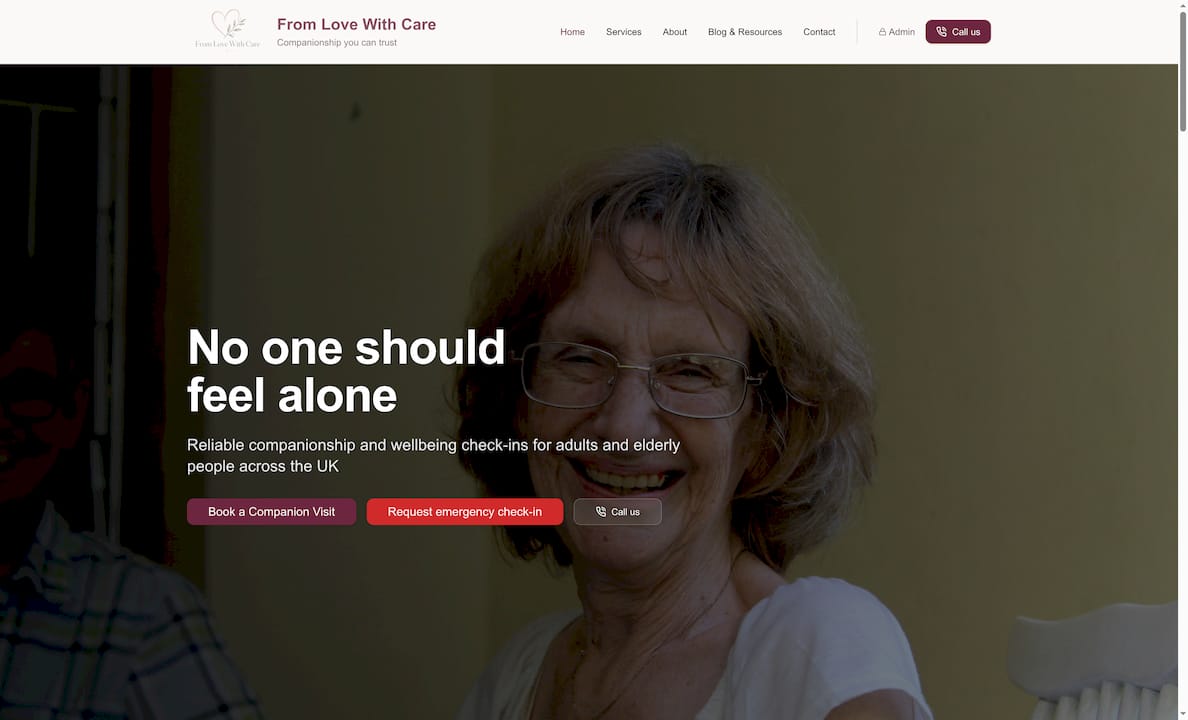
Every companion is DBS-checked and trained to support older adults through genuine, one-to-one connection: shared activities, conversation, help with errands, and accompanying your relative to appointments. There are no long-term contracts, and visits are scheduled flexibly around your relative's routine. Most families start with a short introductory visit to let their relative meet their companion before committing to a regular schedule.
Fromlovewithcare does not provide medical or personal care. The service is focused entirely on human connection, which is precisely what loneliness requires. To find out more or arrange a first visit, see the full range of services or contact the team directly.
Sources
- The warning signs someone is lonely and how to help them | The Independent
- Loneliness and wellbeing — Health Survey for England 2024 | NHS Digital
- Recognising and addressing loneliness and social isolation in older people | RCNi
For local support, contact your GP surgery or your local council's adult social care team, who can arrange a needs assessment and connect your relative with services in their area.
This article is general information, not a substitute for advice from a qualified doctor. Consult a qualified healthcare professional about your own circumstances before acting on anything here.