

The single best action you can take is this: book a vetted, DBS-checked companion for a short trial visit and set a review point at four to six weeks. That gives you real evidence of fit, rather than a guess based on a phone call.
Before you book, work through a short checklist:
- Define what your relative actually needs: conversation, welfare checks, errands, or all three
- Confirm the companion or agency has the right DBS check level and can show references
- Arrange an introductory or trial visit before committing to a regular schedule
- Agree a schedule, a fee structure, and what happens in an emergency
- Set a review date, ideally four to six weeks out, to decide whether to continue
If you want a recommended next step, contact From Love With Care to talk through your relative's situation, or start with a short trial visit to see how it feels before committing further.
Table of Contents
- What does a senior social groups joining guide actually cover?
- How do you work out your relative's specific needs?
- How do you vet a companion safely?
- Why does personality fit matter more than a CV?
- What questions should you ask before booking?
- What happens in the first six weeks of visits?
- What are the warning signs something's wrong?
- How From Love With Care supports families through this process
- A closing thought on relationship fit
- Where to check official guidance on safety and care
- Frequently asked questions
- Sources
What does a senior social groups joining guide actually cover?
In-home companionship, as covered here, means regular human contact delivered in your relative's own home: conversation, welfare checks, shared activities, light errands, and support getting to appointments. It does not mean medical treatment, personal care such as washing or dressing, or administering medication.
Companions typically can:
- Sit and talk, share tea, play games, or accompany a walk
- Carry out welfare checks by phone, video, or in person
- Help with light shopping or accompany a relative to an appointment
- Provide an emergency welfare check when a family member cannot reach someone quickly
Companions typically cannot provide clinical care, handle medication, or perform tasks that fall under regulated personal care. Visit formats vary from a brief ten-minute welfare call to an hour-long home visit, and some services offer emergency check-ins on short notice.
How do you work out your relative's specific needs?
Start by naming the actual problem you're trying to solve. Is it loneliness, a risk of falls going unnoticed, or simply peace of mind that someone checks in daily? Vague goals lead to vague bookings.
- List the tasks that matter most: conversation, shopping trips, appointment support, or a daily welfare call
- Decide frequency: daily check-ins suit higher-risk situations; weekly visits suit companionship-focused needs
- Set acceptable visit times, factoring in your relative's routine and any existing carers
- Write down what success looks like, such as reduced loneliness or a confirmed daily contact
- Choose a trial length, typically four to six weeks, before reviewing
Budget shapes all of this. Home-visit care in the UK commonly runs in the mid-to-late double figures per hour, according to NHS guidance on paid carers, though rates vary by region and provider. If eligible, you can also ask your local council for a needs assessment, which sometimes contributes towards costs. A tighter budget often means fewer, longer visits rather than daily short ones, so decide your priority before you start calling providers.
How do you vet a companion safely?
Safety checks matter more than most families realise, and the rules are more nuanced than "just ask for a DBS certificate." The Disclosure and Barring Service issues three relevant levels: Basic, Standard, and Enhanced, with Enhanced sometimes including a check against the adults' barred list.
Whether an Enhanced check is required depends on the specific activities involved and how often they happen. Gov sets out the legal threshold, and companionship roles limited to conversation and reducing loneliness can sometimes be eligible for only a Basic DBS check. If the role expands to include personal support or more intensive contact, a higher level check becomes appropriate. Government workforce guidance uses a three-step test: identify the adults involved, identify the specific activity, and assess frequency to decide whether an Enhanced DBS application is justified.
Ask for, at minimum:
- Proof of DBS check and its level
- Two contactable references
- Photo ID and proof of right to work
- Evidence of liability insurance
- Provider registration details, where relevant
If you hire privately rather than through an agency, you take on employer responsibilities, including arranging cover for holidays or sickness. Agencies or Responsible Organisations typically process DBS applications on the applicant's behalf and absorb much of that administrative load, which is usually reflected in a higher hourly rate.
Pro Tip: When in doubt, ask for an Enhanced DBS certificate and a named local contact person. Insist on seeing a written safeguarding and emergency procedure before the first visit, not after.
Why does personality fit matter more than a CV?
Care professionals repeatedly point to one overlooked factor: shared humour, patience, and empathy often predict success far better than formal qualifications. A companion can pass every check and still be the wrong fit if your relative dreads their visits.
Run a structured trial rather than committing long-term straight away:
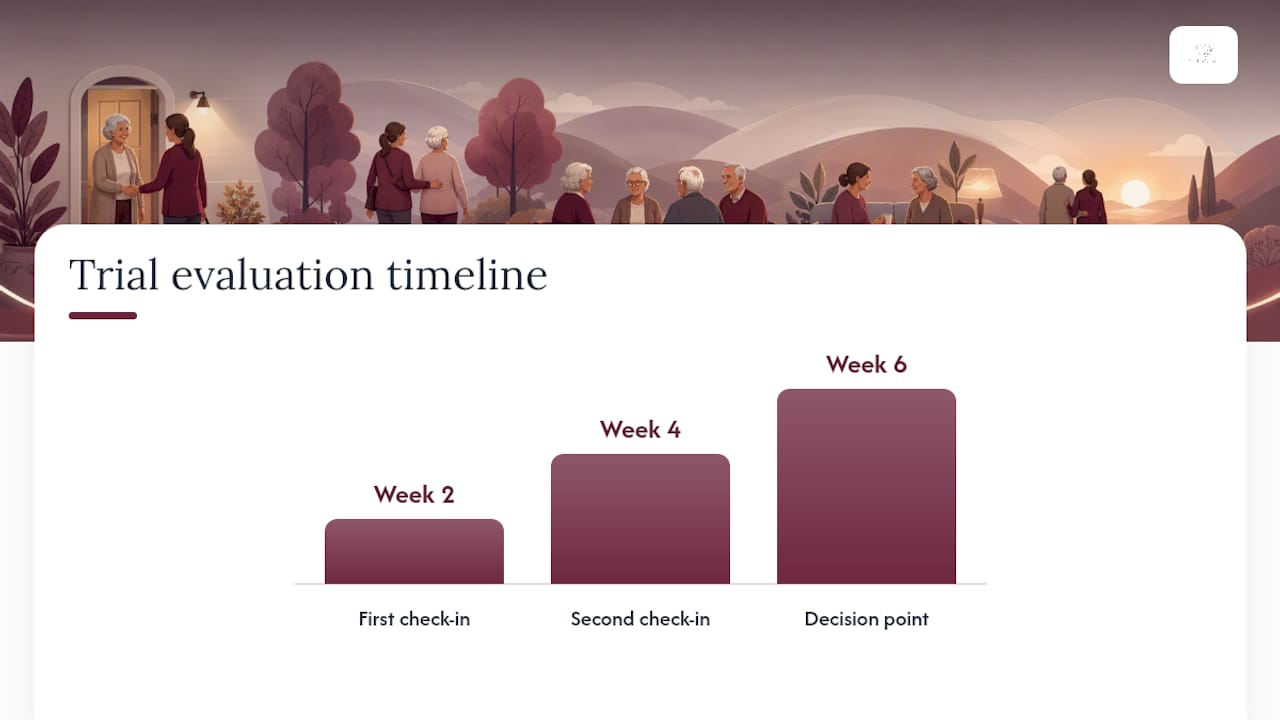
- Book two to three visits in the first two weeks, with a family member present for the first
- Check in at week two: ask your relative how the visits felt, not just whether they happened
- Check in again at week four: look for signs of comfort, routine, and honest conversation
- Decide at week six whether to continue, adjust frequency, or try a different companion
Evaluate against chemistry, punctuality, communication, reliability, and how well the companion follows your relative's existing routine. Independent Age's guidance on arranging home care recommends treating early weeks explicitly as a testing period, with proactive communication to head off friction before it builds.
Pro Tip: Match on shared interests or pace of conversation rather than only age or background. Ask if an introductory meeting can happen free of charge before you commit to a paid trial.
What questions should you ask before booking?
Have these ready, whether you're speaking to an agency or an independent companion, and write down the answers so you can compare providers fairly:
- What DBS level do you hold, and can I see proof?
- Can you provide two references I can contact directly?
- What happens if my usual companion is unavailable? Is there substitute cover?
- What is your cancellation policy, and how much notice do you need?
- What's your emergency protocol if something happens during a visit?
- Can you guarantee continuity, or will my relative see different people?
- What training have you had, and are you insured?
Score each answer on a simple scale, or just note "clear" versus "vague" beside each question. Evasive answers, no named local contact, or unclear pricing are red flags worth taking seriously before you book anything.
What happens in the first six weeks of visits?
The first six weeks set the tone for everything that follows, so treat them as a structured trial rather than a settled arrangement.
- Week one: introductions, and confirm routines, likes, and dislikes
- Weeks two to three: establish a consistent schedule and note any medication reminder needs
- Week four: hold a review call between family and companion or agency
- Weeks five to six: adjust frequency based on what's working, and schedule a formal review meeting
A simple weekly check-in template helps: ask what went well, what felt off, and whether the schedule still fits. Keep a short written or messaged record rather than relying on memory.
Continuity matters. If visits are going well, consider extending frequency gradually rather than jumping straight to daily calls. If your relative seems disengaged, it's worth trying a different companion before assuming the whole approach isn't working, since personality mismatch is a common and fixable cause.

What are the warning signs something's wrong?
Trust your instincts here. Watch for:
- Missed or shortened visits without explanation
- Sudden changes in your relative's mood, hygiene, or behaviour
- Vague or defensive answers about money, gifts, or boundaries
- Reluctance to confirm DBS or reference details when asked again
If you notice any of these, follow a clear escalation path:
- Raise the concern directly with the companion first, if it seems minor
- Contact the agency or local manager if the issue continues
- Suspend visits and request a replacement if trust has broken down
- Contact your local authority's adult safeguarding team if you believe your relative is at risk
Keep messages, timesheets, and any photos. That record becomes essential if you need to escalate further.
How From Love With Care supports families through this process
Fromlovewithcare exists for exactly the situation this guide describes: a family member who needs a trusted, vetted person checking in on someone who might otherwise go days without real conversation. Every companion is DBS-checked, trained, and matched with an emphasis on personality fit, not just availability.
Rather than locking you into a long-term contract from day one, Fromlovewithcare builds in a trial period so you can see whether the relationship works before committing to a regular schedule. The service also offers emergency welfare checks for moments when you can't get to your relative yourself and need someone reliable there quickly. Written safeguarding procedures and details of the vetting process, including Enhanced DBS guidance where applicable, are available on request.
Before you get in touch, have a few things ready: your relative's typical routine, the tasks you'd like covered, preferred visit times, and any specific concerns about their wellbeing. From there, you can explore how the matching and vetting process works or go straight to booking a visit to start a trial.
A closing thought on relationship fit
I've come to think checklists matter less than most families expect, and chemistry matters more. A companion can tick every box on paper and still not be right, and a trial period reveals that faster than any reference call ever could. Use the checklist in this guide, but don't let it replace actually trying someone out.
The most reliable path to good in-home companionship combines proper safety checks with a genuine four to six week trial before committing long-term.
| Point | Details |
|---|---|
| Start with a trial | Book a short trial period and review at four to six weeks before committing further. |
| Match DBS level to duties | Confirm whether Basic or Enhanced DBS applies based on the specific tasks involved. |
| Prioritise personality fit | Chemistry, patience, and shared pace often matter more than formal credentials alone. |
| Keep records | Save messages, timesheets, and notes in case you need to escalate a concern later. |
| Consider a vetted provider | From Love With Care offers DBS-checked companions, trial visits, and emergency welfare checks for families arranging this kind of support. |
Where to check official guidance on safety and care
For anything beyond this guide, go to primary sources rather than general advice pages:
- Gov
- NHS guidance on arranging and paying for home care
- Independent Age's factsheet on arranging home care
If your relative's needs seem to be changing quickly, or you're unsure whether they need medical rather than companionship support, speak to their GP or contact your local authority's adult social services for a needs assessment.
Frequently asked questions
Does a companion need an Enhanced DBS check for simple visits? Not always. Roles limited to conversation and reducing loneliness can qualify for a Basic DBS check, but Enhanced checks become appropriate as duties or frequency increase. Ask the provider which level applies to your specific arrangement.
How long should a trial period last before deciding? Four to six weeks gives enough time to see past first impressions and judge real compatibility, punctuality, and reliability.
What if my relative doesn't get on with the first companion? Treat it as useful information, not failure. A different match, with a similar trial structure, often solves the problem.
Who handles employer responsibilities if I hire privately? You do, including cover for holidays and sickness. Agencies typically absorb these administrative responsibilities in exchange for a higher hourly rate.
What should I do if a visit is missed without explanation? Raise it with the companion first, then the agency if it happens again. Persistent issues warrant suspending visits and requesting a replacement.
Sources
- Gov
- Help at home from a paid carer - Social care and support guide - NHS
- Independent Age — Factsheet: arranging home care
- Adult workforce guide v11.0 (government workforce guidance)