

For families arranging in-home visits for an elderly relative, a DBS-checked, trained professional companion is usually worth the cost. The three strongest reasons are safety and formal vetting, reliable continuity of visits, and measurable improvements in wellbeing. The Reconnections impact evaluation found that loneliness improvement was associated with 32% lower A&E costs, which points to real downstream value when companionship is delivered consistently and well. The NHS guidance on paid homecarers confirms that DBS checks and formal vetting are standard expectations for paid domiciliary support. If you want to act now, the vetting checklist in Section 5 gives you the exact questions to ask before booking.
- Safety and DBS: Professional companions hold current DBS certificates and carry public liability insurance; informal helpers typically do not.
- Continuity: Named, scheduled visits reduce the anxiety that comes with unpredictable informal arrangements.
- Measurable outcomes: Peer-reviewed research identifies five mechanisms through which companionship improves health: emotional support, health behaviour support, cognitive stimulation, improved mood, and socialising opportunities.
Table of Contents
- Why professional companions usually outperform unpaid helpers
- What informal helpers do well, and where their limits matter
- How to vet a professional companion before you book
- Questions to ask when arranging a companion visit
- How a professional companion helped one family
- Key takeaways
- The detail families often overlook
- Fromlovewithcare: vetted companions you can rely on
- Where to read more and who to contact
Why professional companions usually outperform unpaid helpers
The effectiveness of paid companions comes down to five concrete mechanisms, each of which maps to a practical family benefit.
| Mechanism | What it means for your relative |
|---|---|
| Continuity of named visits | Familiar face reduces anxiety; family can track patterns over time |
| Clinical awareness and escalation | Trained companion notices early warning signs and knows how to report them |
| Targeted activity support | Structured activities support appetite, mobility, and cognitive engagement |
| Safeguarding and DBS vetting | Formal checks reduce risk of financial or physical harm |
| Structured monitoring and records | Written welfare check records give families a clear audit trail |
Research published in Ageing and Society confirms that companionship reduces loneliness and broadens social engagement when delivered with genuine empathy and conversational skill. A dyadic qualitative study on befriending mechanisms identified emotional support, health behaviour support, and cognitive stimulation as the pathways most likely to produce measurable health improvements. Professional companions, operating under supervision and with documented goals, are better placed to activate all five pathways consistently.
Evidence from the Reconnections evaluation also suggests that when loneliness remits, health service use falls. That is a meaningful return on a regular companion visit. Research on volunteer befriending in health contexts shows that training and supervision are the variables that most reliably determine whether befriending produces positive outcomes, which is precisely where paid professional companions have a structural advantage.
Pro Tip: A non-obvious sign that a companion is adding professional value is documented goal reviews. Ask whether the service records small targets, such as appetite or a short daily walk, and whether those records are shared with the family. Companions who track and review goals are far more accountable than those who simply visit.
For more on the ways a companion improves elderly wellbeing, Fromlovewithcare's blog covers the mechanisms in practical detail.
What informal helpers do well, and where their limits matter
Informal companions, whether a neighbour, a friend, or a family member's acquaintance, can provide genuine warmth and flexible social contact. Their local knowledge, low cost, and natural relationship with the person can make visits feel relaxed and unforced. For a relatively independent older adult who simply enjoys a weekly chat over tea, an informal arrangement may be entirely sufficient.
The limitations become significant when needs are more complex. Sitting and befriending services run by charities and community groups are often volunteer-led and typically offer companionship and basic practical help, but they rarely carry DBS certificates, public liability insurance, or formal safeguarding training. Research on volunteer and paid care role boundaries highlights that volunteers often provide emotional labour and genuine friendship, but that formalising or monetising those roles changes the relational dynamic, which is why the two models serve different purposes rather than being interchangeable.
Consider upgrading to a paid, DBS-checked companion when any of the following apply:
- Your relative has had a fall, a health scare, or a recent hospital discharge.
- Medication management or appointment attendance needs reliable oversight.
- Visits have been missed or cancelled repeatedly by an informal helper.
- You have concerns about financial vulnerability or unfamiliar visitors.
- Loneliness is frequent and affecting appetite, sleep, or mood.
Understanding why professional companionship supplements family visits rather than replacing them helps families make a clearer decision about when to formalise arrangements.
How to vet a professional companion before you book
Proper vetting is the single biggest safety difference between a professional companion and an informal helper. Before committing to any paid arrangement, work through this checklist.
- Request the DBS certificate number. Ask when it was issued and whether it is enhanced. A reputable service will provide this without hesitation. For more on why companion services require background checks, the reasoning is straightforward: it is the baseline safeguard.
Research on matching companions to clients shows that pairing on shared interests and accounting for cognitive or mobility status significantly improves relationship quality and sustainability. Ask how the service matches companions to clients.
Red flags: No DBS evidence, no written safeguarding policy, unclear backup arrangements, or reluctance to provide references. Stop and look elsewhere if any of these arise.
Questions to ask when arranging a companion visit
Four questions to ask on the first call:
- Is the companion DBS-checked, and can I see the certificate number?
- What is your cancellation and backup policy if the companion cannot attend?
- Can I speak to a reference from a previous family client?
- What will the companion do during visits, and what falls outside their scope?
For each question, push for written confirmation after the call. Ask specifically whether companions can accompany your relative to appointments, and whether visit notes are shared with the family by default or on request.
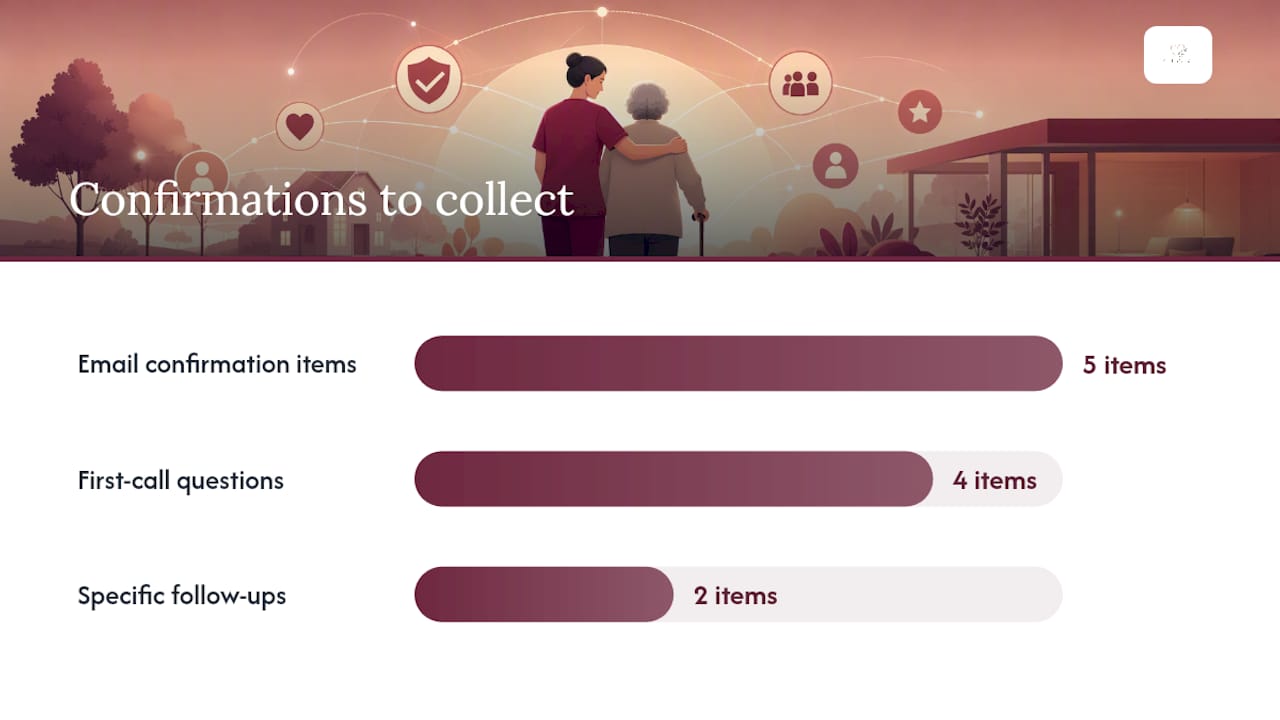
Pro Tip: After the call, send a brief confirmation email covering: the companion's name, visit days and times, the agreed hourly rate, what the companion will do, and the backup arrangement. A service that responds promptly and accurately to that email is demonstrating the kind of accountability you want throughout the relationship. The professional companion during respite guide includes a fuller template for families arranging their first visits.
How a professional companion helped one family
A family in the East Midlands arranged regular companion visits for their 81-year-old mother following a hospital discharge. She was mobile but increasingly withdrawn, missing meals and declining social invitations. Her adult daughter, living two hours away, needed reliable eyes on the ground and a consistent presence between her own fortnightly visits.
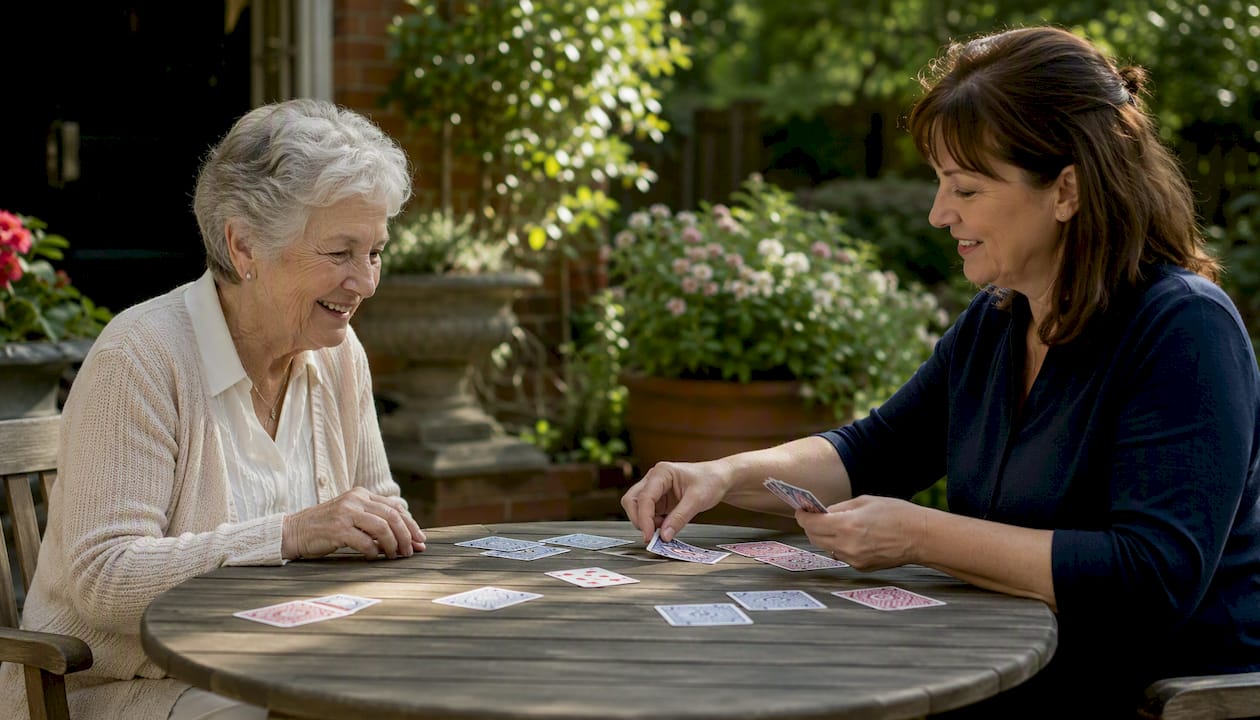
A DBS-checked companion from Fromlovewithcare began twice-weekly visits. The companion maintained a simple activity plan, including a short walk, shared lunch preparation, and a weekly card game. Welfare check notes were shared with the family after each visit. Within six weeks, the family reported that their mother was eating more regularly and had re-engaged with a local community group.
The companion service benefits for peace of mind that families describe most often are exactly these: continuity, written records, and a named person they can trust.
Key takeaways
Paid, DBS-checked professional companions outperform informal helpers on safety, reliability, and measurable wellbeing outcomes, making them the right choice when an elderly relative's needs go beyond occasional social contact.
| Point | Details |
|---|---|
| Choose paid when safety matters | DBS checks, training, and insurance are standard for professional companions, not informal helpers. |
| Informal help suits low-risk social visits | A trusted neighbour or friend is appropriate for purely social, low-stakes contact with no safeguarding concerns. |
| Always verify DBS and written policies | Request the certificate number, proof of training, and a written backup policy before the first visit. |
| Start with a trial block | Book four to six hours across two or three visits before committing to a regular schedule. |
| Fromlovewithcare | Provides DBS-checked, trained companions for non-medical in-home visits, welfare checks, and activity support across the UK. |
The detail families often overlook
There is a tendency to frame the paid-versus-volunteer question as a cost decision. It rarely is. The families who contact Fromlovewithcare after a difficult experience with informal arrangements almost always describe the same gap: not a lack of goodwill from the informal helper, but a lack of structure. No written record of the visit. No named backup. No one to call when something felt off.
What professional companionship actually provides, beyond the DBS certificate and the training log, is a system. Someone is accountable. Someone keeps notes. Someone has a supervisor to escalate to. That system is what gives families at a distance the confidence to stop worrying and start trusting. The warmth and genuine connection that good companions bring are real and important, but they work best when they sit inside a framework that families can rely on. That is the part that informal arrangements, however well-intentioned, structurally cannot replicate.
Fromlovewithcare: vetted companions you can rely on
Families who need more than goodwill from a neighbour, and less than full nursing care, often find that Fromlovewithcare fills exactly the right gap. Every companion is DBS-checked, trained in dementia awareness and relevant safeguarding, and covered by public liability insurance. Visits are documented, welfare check notes are shared with the family, and a named backup arrangement is in place before the first visit begins.
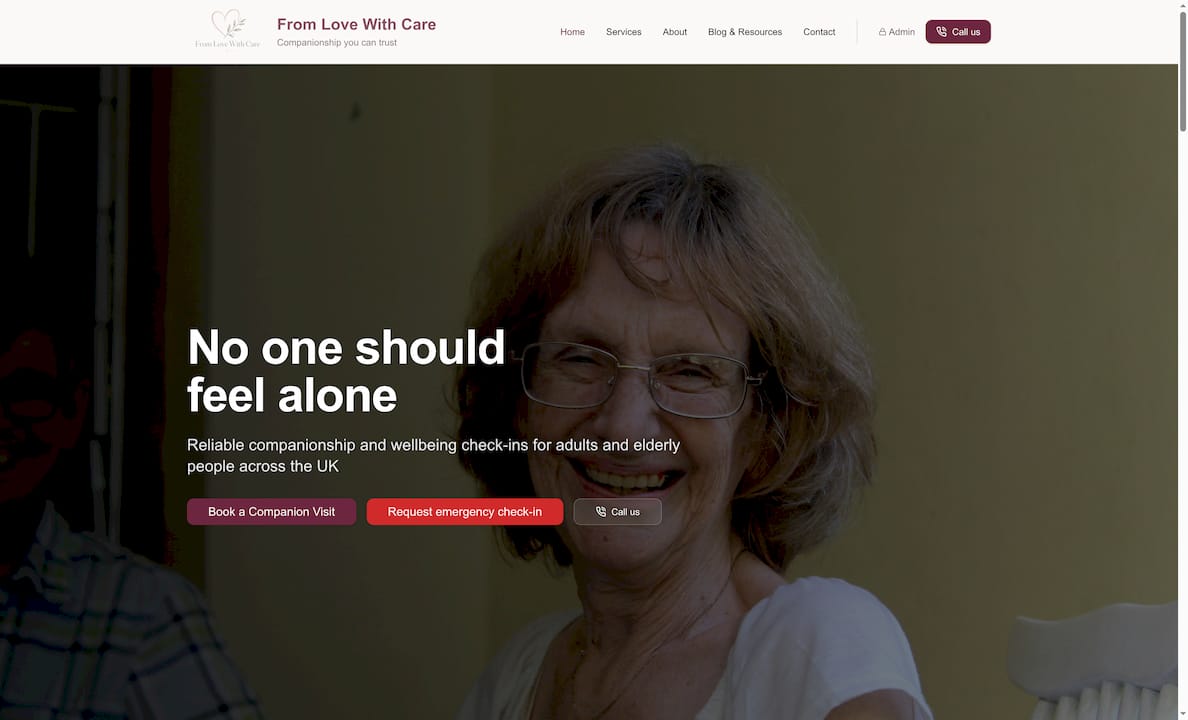
The service covers regular social visits, welfare check-ins, shared activities, grocery shopping assistance, and support attending appointments. Emergency welfare checks are also available at a premium for families who need urgent reassurance. There are no long-term contracts; families can start with a trial block and review.
To arrange a visit or ask about availability, visit the Fromlovewithcare services page or read about how the companionship process works before your first call. Have your relative's address, preferred visit days, and any relevant health or mobility notes ready, and the team will match a companion to your relative's interests and needs.
Where to read more and who to contact
These are the primary sources to check when verifying claims or exploring funding options.
- NHS: Help at home from a paid carer — covers DBS expectations, cost ranges (£15–£30 per hour), and employer responsibilities when hiring privately.
- Age UK — advice line for older people and families; can signpost to local befriending services, funded support, and direct payment guidance.
- Carers UK: Sitting and befriending services — explains the difference between volunteer and paid sitting schemes and how to find local options.
- Fromlovewithcare loneliness support services — for families specifically concerned about isolation and social withdrawal.
For families supporting a relative with limited mobility, the lightweight wheelchair guide from Seventh Chakra offers practical advice on mobility aids that can make companion outings and appointment visits easier to manage.
This article provides general information about companionship services in the UK. It is not a substitute for professional care advice, legal guidance, or a formal needs assessment. Confirm current eligibility rules and funding options with your local authority or a qualified adviser.