
If your loved one rarely leaves the house, six categories of activity make the biggest difference: creative, physical, cognitive, social, sensory, and purposeful tasks. Start today with something small: a ten-minute cup of tea together while flicking through an old photograph album. It costs nothing, needs no preparation, and opens the door to conversation that matters.
Before anything else, check comfort and safety: is the chair stable, is the lighting good, and does your loved one feel up to it right now? The rest of this guide breaks each category down with practical, low-cost ideas you can use this week.
- Creative: painting, collage, knitting, card-making
- Physical: chair exercises, light strength work, balance practice
- Cognitive: puzzles, reminiscence, audiobooks, simple new skills
- Social: video calls, window visits, shared reading or cooking
- Sensory: music, scent, memory boxes, tactile kits
- Purposeful: cooking a snack, potting a plant, writing a letter
TL;DR:
- Regular engagement in creative, physical, cognitive, social, sensory, and purposeful activities is essential for maintaining overall well-being in housebound seniors.
- Activities should be adapted to limited mobility or cognitive decline, with simple instructions, safe materials, and predictable routines to ensure accessibility.
- Consistent routines, scheduled at the same time each week, build stability and trust, making activities more likely to be sustained over time.
- Low-cost, practical resources like guided kits, large-print puzzles, and staff-supported visits enhance participation and emotional connection.
- Social contact, whether through calls, letters, or companionship visits, significantly reduces loneliness and its associated health risks for seniors at home.
Table of Contents
- Activities for housebound seniors: creative and craft ideas that adapt to limited mobility
- How can housebound seniors stay physically active at home?
- Cognitive activities and mental stimulation for housebound seniors
- Social activities that ease loneliness for seniors at home
- Sensory and reminiscence activities for seniors, especially with dementia
- Purposeful tasks that restore routine and meaning at home
- Adapting activities for limited mobility or dementia
- Safety checklist before starting activities with a housebound senior
- Why staying active and connected genuinely matters
- What actually keeps a housebound senior engaged, week after week
- Book a companionship visit that includes the activities above
- Key Takeaways
- Useful resources for planning activities at home
- Sources
Activities for housebound seniors: creative and craft ideas that adapt to limited mobility
Creative work gives structure to a day that might otherwise drift, and it doesn't need a steady hand or perfect eyesight to work. Arts-based activity guides for older people, including the Greater Manchester Creative Care Kit, consistently point to low-cost materials and flexible prompts as the most reliable way to keep people engaged at home.
A handful of options cover most tastes and abilities:
- Watercolour painting with a large, soft brush
- Collage using magazine cut-outs or fabric scraps
- Simple knitting or crochet with chunky needles
- Card-making for birthdays and thank-yous
- Photography using a phone or an old point-and-shoot camera
- Scrapbooking family photos with captions
Kitting an activity properly matters more than the activity itself. Pre-cut shapes remove the need for scissors work with arthritic hands. Large-grip pens and brushes suit anyone with reduced dexterity, and a simple magnifier helps with fine detail. Tactile materials, felt, wool, textured card, give sensory feedback that keeps attention anchored.
The real value comes when the finished piece goes somewhere. Post a handmade card to a grandchild. Pin finished paintings on a "family gallery" wall. Build a shared scrapbook that visiting relatives add to over time, so the activity becomes a thread running through several people's lives, not a one-off task.

Pro Tip: Keep a small "craft caddy" by the favourite chair, pre-loaded with that week's materials, so getting started never depends on someone else fetching things first.
How can housebound seniors stay physically active at home?
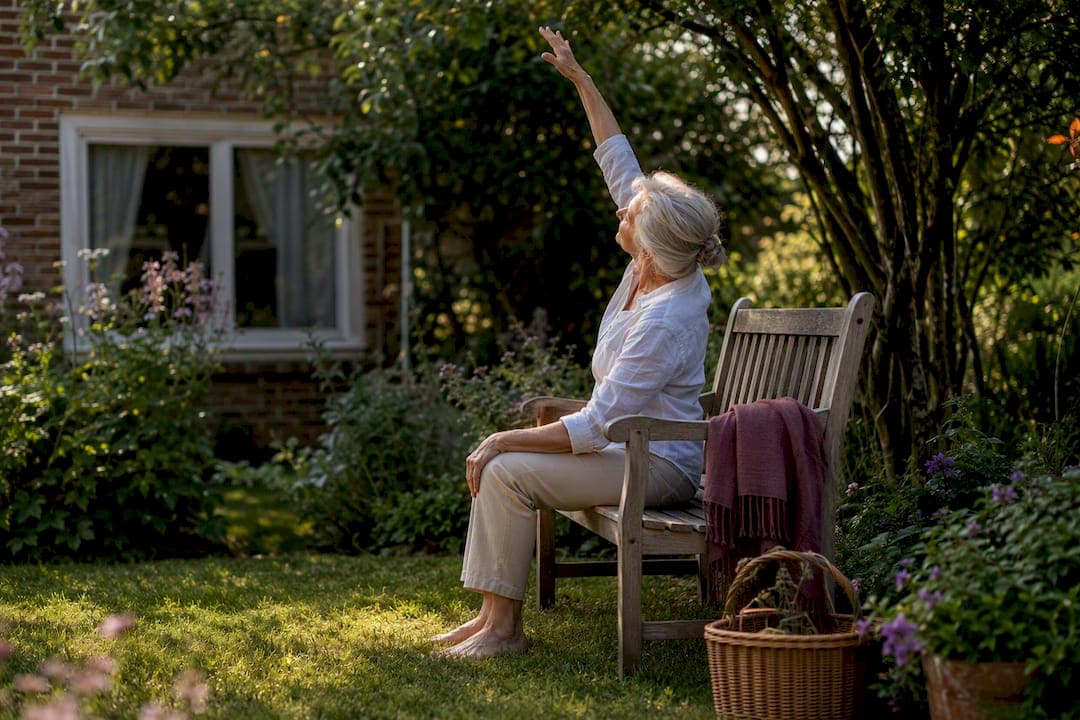
Chair-based exercise, done consistently, improves balance, strength and flexibility even for someone who cannot stand unaided. The NHS recommends adults aged 65 and over aim for at least 150 minutes of moderate activity a week, or 75 minutes of vigorous activity, plus strength and balance work on at least two days.
That figure sounds substantial until you break it into short bursts. Ten minutes of seated marching, arm circles and gentle stretching, done twice a day, adds up quickly without ever feeling like "exercise" in the gym sense.
A simple weekly routine looks like this:
- Warm-up (2 minutes): seated shoulder rolls and ankle circles
- Strength (5 minutes): lift a tin of beans or a full water bottle for bicep curls, 8 to 12 reps per side
- Balance (3 minutes): stand behind a sturdy chair and practise small side steps, holding on if needed
- Cool-down (2 minutes): slow seated stretches for arms and legs
Community exercise booklets, including one from the Nottinghamshire NHS Trust home exercise programme, suggest starting with household items as light resistance rather than buying equipment. It works, and it means the routine can start the same day you read this.
Before beginning, check for pain, dizziness, or breathlessness, and stop if any appear. If your loved one has a heart condition, recent fall, or joint replacement, a quick word with their GP or physiotherapist first is sensible. Age UK's Seated Vitality at home booklet offers a full set of illustrated seated exercises if you want a ready-made structure to follow rather than building your own.
Cognitive activities and mental stimulation for housebound seniors
Puzzles, crosswords and audiobooks do more than fill time. They keep the brain working the way regular reading or conversation once did, before the world outside stopped coming to the door. The value lies less in difficulty and more in consistency: a short daily puzzle beats an occasional long one.
Worth trying:
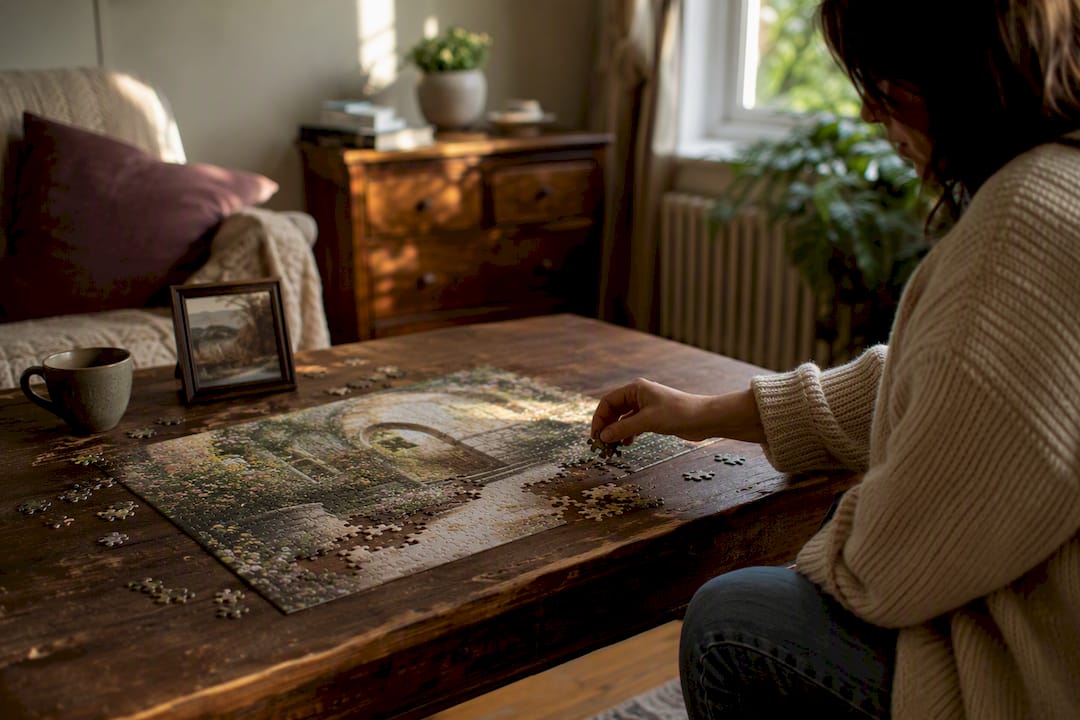
- Jigsaw puzzles with large pieces (start at 100 to 300 pieces)
- Crosswords or word searches in large print
- Audiobooks, particularly ones your loved one already knows and loves
- A simple new skill, such as a short phone photography lesson, learning to identify garden birds, or trying a new recipe together
- Handwriting a diary entry or letter, which engages memory and fine motor skill at once
Handwriting and photography share something useful: both require your loved one to notice detail, a garden bird's markings, the light through a window, and that act of noticing supports memory in a way passive television watching doesn't.
Stage difficulty carefully. Someone newly struggling with memory does better with a 50-piece puzzle than a 500-piece one; the goal is a sense of achievement, not a test. Celebrate finished puzzles, completed crosswords, or a well-framed photograph out loud. That small recognition often matters more to motivation than the activity itself.
Social activities that ease loneliness for seniors at home
A phone call is not a lesser version of a video call. For many housebound seniors, particularly those with sight loss or unfamiliarity with technology, a plain telephone conversation feels more natural and less pressured than staring at a screen. Where video works, keep the setup simple: a tablet propped on a stand, one app used consistently, and a trusted person on speed dial to help if the call drops.
Low-tech options deserve equal billing:
- Handwritten letters or postcards, ideally a two-way exchange with a pen pal or grandchild
- Window visits, where a neighbour or friend chats from the garden through an open window
- Shared reading aloud, taking turns with a chapter each
- Joint cooking, even if one person only stirs and the other chops
- Music sessions, singing along to familiar songs from a shared playlist
A guide such as Golden Games from Active Together packages several of these into ready-made group activities, useful if more than one person is involved in care.
Companionship brings something distinct from clinical care: reciprocity through companionship-style services. Research into befriending services for older adults in England found that the value lies in genuine social exchange, not a checklist of tasks performed. A companion who shares a hobby, rather than simply attending to needs, often becomes the highlight of someone's week. Our own guide to shared hobbies with an elderly companion covers this pairing in more depth.
Pro Tip: Set a fixed weekly time for a call or visit, same day, same hour. Predictability reduces anxiety and gives your loved one something concrete to look forward to.
Sensory and reminiscence activities for seniors, especially with dementia
Music, scent and touch reach people that conversation sometimes can't, particularly where memory has faded but emotional response hasn't.
- Build a memory box. Fill a shoebox with familiar objects, a wartime ration book, a wedding photo, a seaside pebble, and use simple prompts like "tell me about this" rather than testing recall directly.
- Curate music by decade. A playlist from someone's twenties or thirties often triggers stronger recognition than modern music, even in advanced dementia.
- Use scent carefully. Lavender, citrus or a favourite perfume can be calming, but always patch-test and avoid strong scents near anyone with respiratory issues.
- Assemble a tactile kit. Soft fabric, smooth stones, a knitted blanket square, all offer grounding sensory input for restless hands.
Keep any tactile items washable and check regularly for wear, especially if small pieces could be a choking risk for anyone who explores objects by mouth.
Purposeful tasks that restore routine and meaning at home
Small, useful jobs matter more than novelty. A senior who feels they're contributing, not just being entertained, tends to engage more willingly and for longer.
- Prepare a simple snack together: buttering toast or slicing fruit, broken into single steps
- Pot an indoor plant: filling the pot, adding soil, placing the seedling, each a separate task
- Write a short letter: even three sentences to a friend gives the day a purpose
- Sort post or photographs: a light administrative task that feels genuinely helpful
Let your loved one choose which task and when. Offering two options, "snack or plant today?", preserves a sense of control that open-ended questions rarely achieve. Scale tasks up when energy is good and down on harder days, rather than abandoning the activity altogether.
Adapting activities for limited mobility or dementia
Single-step instructions work better than multi-part ones for anyone with memory or attention difficulties. "Hold the brush" is easier to follow than "pick up the brush and start painting the flower". Visual cues, pointing at the paint pot rather than describing it, often land faster than words alone.
Practical adjustments to build in:
- Adapt seating so hands are free and joints supported, not straining to reach materials
- Keep sessions to 15 to 20 minutes with a planned rest, rather than pushing through fatigue
- Stick to a predictable running order each week; unfamiliar routines can unsettle someone with dementia
- Choose materials that are safe if mouthed or dropped, particularly for anyone with advanced cognitive decline
Watch for distress, pain, or breathlessness during any activity, and stop immediately if you see them. These are not signs to push through, they're signs to pause, offer comfort, and try again another day.
Pro Tip: If an activity that used to bring joy suddenly causes frustration, don't assume it's gone for good. Cognitive ability fluctuates day to day, so it's often worth trying again in a few days rather than removing it from the rotation entirely.
Safety checklist before starting activities with a housebound senior
A few minutes of preparation prevents most avoidable accidents.
- Check the space: good lighting, clear floors, no trailing wires
- Check the seating: a stable chair with arms, positioned away from sharp corners
- Check footwear: non-slip slippers or shoes, especially for any standing activity
- Check the props: no small, sharp, or easily swallowed items left unattended
- Decide if someone else should be present, particularly for any activity involving standing or unfamiliar equipment
- Pause the activity if pain, confusion, or breathlessness appears, and speak to a GP if it persists
Why staying active and connected genuinely matters
Loneliness among older people is not a minor discomfort, it's a measurable health risk. Around 940,000 people over 65 in the UK experience frequent loneliness, and 270,000 go a full week without speaking to a family member or friend, a state of isolation linked to a stroke risk up to 32% higher than average.
Regular social contact isn't a nice extra on top of care, it's a protective factor in its own right, standing alongside diet and exercise as something that shapes long-term health.
The same evidence base that supports 150 minutes of weekly moderate activity for older adults also underlines why the social side of an activity matters as much as the physical side. A chair exercise done alone is useful. Done with someone who checks in weekly, asks how the week has gone, and remembers what happened last time, it becomes something closer to companionship.
That's the space Fromlovewithcare works in. Every companion is DBS-checked and trained to focus on conversation, shared activity, and consistent presence, described in full on the senior home visits page, rather than clinical tasks.
What actually keeps a housebound senior engaged, week after week
Most advice on this topic focuses on finding the "right" activity, as though the puzzle is choosing well. It rarely is. The activities that stick are the ones repeated on a fixed day, with a familiar person, not the cleverest craft idea tried once and abandoned. A simple plan that works well in practice: Tuesday afternoon tea and a photo album, Thursday a short chair exercise session, Saturday a video call with a grandchild. Nothing elaborate, but repeated weekly it builds a rhythm the senior can rely on. If you want a fuller structure to plan around, our companionship plan for housebound seniors sets one out.
— Ayomide
Book a companionship visit that includes the activities above
A companionship visit from Fromlovewithcare gives you a consistent, unhurried alternative to piecing activities together alone, without the ongoing planning burden falling entirely on one family member. Unlike a one-off craft session or a solo exercise routine, a booked visit brings a familiar, DBS-checked companion who can run through creative activities, chat over tea, help with light grocery shopping, or simply sit and listen, on a schedule that suits your family.
Companions are trained for social and emotional support, not medical or personal care, so the focus stays firmly on connection: shared hobbies, conversation, a walk to the local shop, or company during a quiet afternoon. Every visit is built around what your loved one enjoys, not a fixed script.
If loneliness or isolation is the bigger concern, our loneliness support services page explains how regular visits can help. To see the full range of what's available, visit our services page and book a first visit for the week ahead.
Key Takeaways
Consistent, low-cost activities across six categories, creative, physical, cognitive, social, sensory and purposeful, protect both the mental and physical health of housebound seniors far more reliably than any single "best" activity.
| Point | Details |
|---|---|
| Start with six categories | Rotate creative, physical, cognitive, social, sensory, and purposeful activities through the week. |
| Follow NHS activity targets | Aim for 150 minutes of moderate movement weekly, plus strength and balance work twice a week. |
| Loneliness carries real health risk | Isolated seniors face a notably higher stroke risk, making regular contact a genuine health measure. |
| Adapt, don't abandon | Single-step instructions, shorter sessions, and predictable routines keep activities accessible through mobility or memory changes. |
| Book consistent companionship | Fromlovewithcare provides DBS-checked companions who deliver these activities through regular, scheduled visits. |
Useful resources for planning activities at home
- NHS physical activity guidelines for older adults for weekly movement targets
- Age UK's Seated Vitality at home booklet for illustrated chair exercises
- Golden Games from Active Together for group-friendly activity packs
- Sport England's Join the Movement resources for wider exercise and activity ideas
Sources
- Understanding Society — Age UK loneliness impact
- NHS — physical activity guidelines for older adults