

Companionship is defined as the consistent, trusted presence of another person that provides emotional safety, belonging, and physiological calm during recovery from trauma or distress. The role of companionship in emotional recovery extends far beyond simply having someone nearby. Research confirms that co-regulation through social cues actively reduces the nervous system's threat response, enabling genuine healing. This is not informal comfort. It is a clinically recognised mechanism that shapes recovery outcomes across trauma, hospitalisation, and prolonged distress.
What does the science say about companionship in emotional recovery?
The evidence base for companionship and healing is substantial and growing. Three distinct research areas converge on the same conclusion: social support does not merely comfort people. It changes their physiology, their symptoms, and their long-term prognosis.
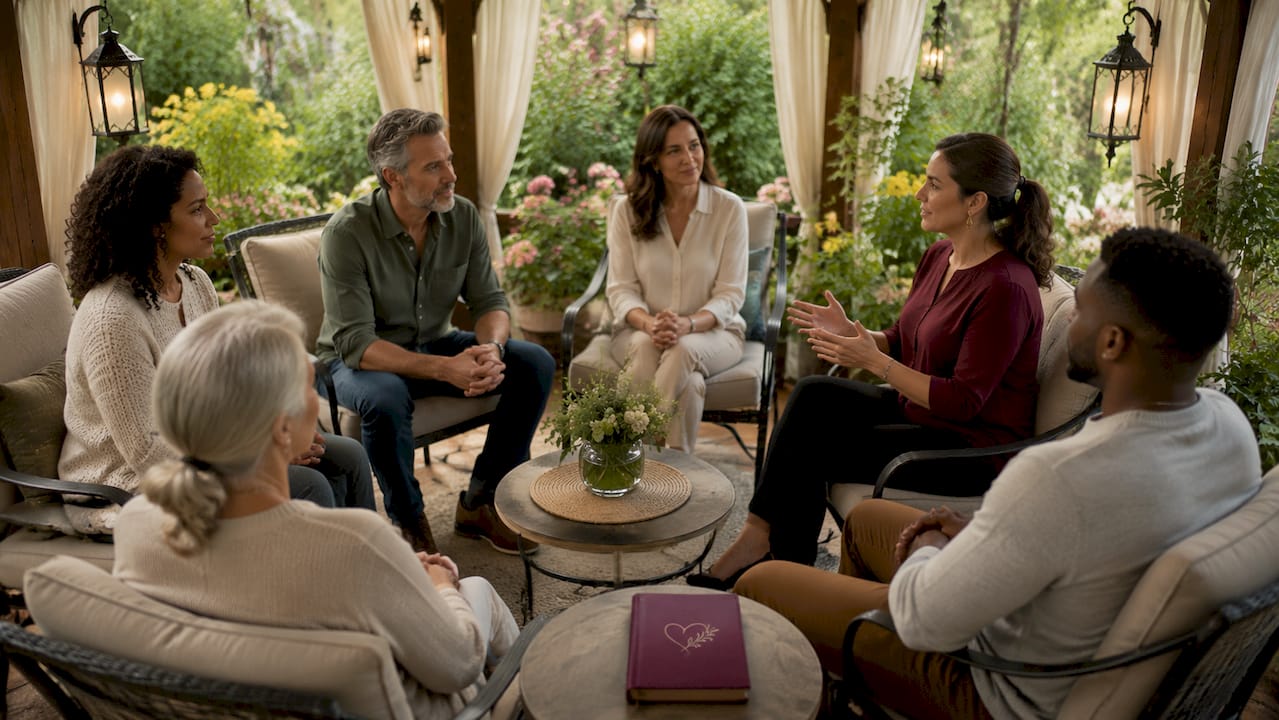
A landmark study of Utøya terror attack survivors found that structured peer-group gatherings held every other week over several years produced meaningful improvements in community belonging and the ability to process traumatic memories. The sessions, facilitated by psychiatric nurses, were two hours long and consistently praised by participants for the sense of connection they created. This matters because it shows that companionship works best when it is repeated, structured, and professionally supported, not left to chance.
Research conducted during the 2023 Israel–Gaza conflict with 589 participants found that perceived social support reduced distress significantly, even among those using less adaptive emotion-focused coping styles. The effect was statistically significant at p<0.001. That result tells us that the protective power of social connection holds even when a person's own coping strategies are not working well.
The TRADE observational study on older adults found that only one third reported optimal companionship after hospital discharge, and roughly one fifth developed delirium. Companionship was identified as a modifiable protective factor. That means it is something caregivers and services can actively improve, with direct clinical consequences.
A study of 156 children and young people in trauma therapy showed that PTSD symptoms and social support developed in parallel over 18 months. As perceived support increased, symptoms decreased. The two processes reinforced each other. Recovery and connection are not separate tracks. They move together.
Key research findings at a glance:
| Study | Population | Key Finding |
|---|---|---|
| Utøya survivor study | 20 adult survivors | Structured peer sessions improved belonging and trauma processing |
| Israel–Gaza war study | 589 adults | Social support buffered anxiety, depression, and PTSD symptoms |
| TRADE discharge study | Older adults | Low companionship linked to higher delirium rates post-discharge |
| NKVTS therapy study | 156 children and youth | Social support and PTSD symptoms improved together over 18 months |
Does the quality of companionship matter more than the quantity?
The quality of supportive relationships for recovery matters far more than the size of a person's social network. This is one of the most counter-intuitive findings in the field, and one of the most practically important.
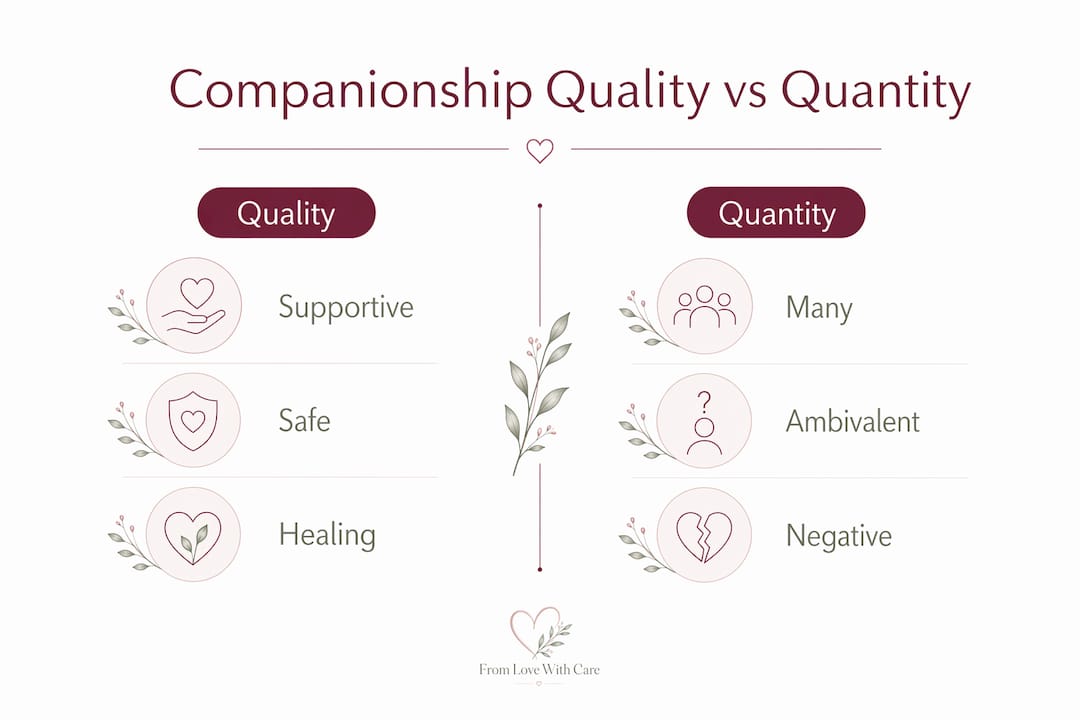
A qualitative study of 10 children aged 8–12 with PTSD found that 40% of their relationships were ambivalent or negative. These children had social networks, but those networks were not safe. Many avoided discussing their traumatic experiences with peers precisely because they feared judgement or pressure. The presence of people is not the same as the presence of support.
| Type of Companionship | Characteristics | Recovery Impact |
|---|---|---|
| Supportive and safe | Non-judgemental, consistent, calm | Reduces symptoms, builds trust, enables processing |
| Ambivalent or negative | Unpredictable, pressuring, critical | Can worsen avoidance and increase distress |
| Structured peer support | Facilitated, repeated, group-based | Builds belonging, sustains recovery over time |
| Informal presence only | Available but not attuned | Limited benefit without emotional safety |
Physiological co-regulation is the mechanism that explains why quality matters so much. When a trusted companion is calm, their steady tone, relaxed posture, and attentive presence send safety signals to the other person's nervous system. This is not metaphorical. Polyvagal theory describes how the social engagement system responds to these nonverbal cues by downshifting the threat response. Words and advice are secondary. The body responds to presence first.
Structured peer support, such as the Utøya model, combines emotional safety with professional facilitation. That combination is more effective than informal companionship alone because it creates predictability and removes the pressure to perform or disclose. Participants know what to expect, and that consistency is itself therapeutic.
Pro Tip: When supporting someone in recovery, resist the urge to offer solutions or ask probing questions. Sitting quietly, maintaining a calm tone, and simply being present often does more than any advice.
How can you strengthen companionship during different recovery phases?
The role of companionship in post-hospital recovery is particularly well documented, and the practical lessons apply across many recovery contexts. Timing, consistency, and the nature of contact all shape outcomes.
-
Plan for discharge before it happens. The TRADE study found that social contact before discharge predicted better companionship outcomes afterwards. Caregivers who arrange visits, phone calls, or companion services in advance reduce the risk of isolation at the most vulnerable moment.
-
Prioritise repeated contact over single visits. One visit provides comfort. Regular, predictable contact builds the safety that enables emotional processing. The Utøya survivor programme ran for years, not weeks. Recovery is not a short-term project.
-
Match the companion to the person's needs. Someone recovering from trauma may not be ready for group settings. A one-to-one companion who is calm, consistent, and non-pressuring is often the right starting point. Companionship options for older adults vary considerably, and matching matters.
-
Use nonverbal cues deliberately. Companions should be aware that their tone of voice, facial expression, and body language communicate safety or threat before any words are spoken. A calm, unhurried manner is not just pleasant. It is clinically meaningful.
-
Avoid pressuring disclosure. Research on children with PTSD shows that pushing someone to talk about their experience can increase avoidance. Normalise feelings, offer general emotional check-ins, and let the person lead.
-
Leverage community structures where appropriate. Peer groups, faith communities, and structured social programmes provide belonging at scale. Organisations such as Divergent Church run life communities that offer peer connection in a consistent, supportive setting.
Pro Tip: If you are arranging support for a loved one after a hospital stay, contact a companionship service before the discharge date. Waiting until they are home alone makes the transition harder and the risk of isolation higher.
How does loneliness undermine emotional and physical recovery?
Loneliness is not simply an emotional state. It is a physiological condition with measurable health consequences. Understanding this is central to grasping the importance of companionship.
A 2026 peer-reviewed study found that loneliness increases the risk of degenerative valvular heart disease by 19%, independent of genetics and traditional cardiovascular risk factors. That figure places loneliness alongside smoking and physical inactivity as a genuine health threat, not a social inconvenience.
The links between loneliness and emotional recovery are equally clear:
- Reduced perceived support leads to slower symptom reduction in trauma therapy, as shown in the NKVTS study of children and young people over 18 months.
- Social isolation after hospitalisation predicts delirium onset in older adults, according to the TRADE observational study.
- Absence of safe relationships forces people recovering from trauma to manage distress alone, without the co-regulatory benefit that a trusted companion provides.
- Chronic loneliness amplifies anxiety and depression, creating a cycle where distress makes social engagement harder, and reduced social engagement deepens distress.
The impact of friendship on mental health is not limited to emotional comfort. Friends and trusted companions provide the nervous system cues that allow a person to feel safe enough to process difficult experiences. Without that safety, recovery stalls. Loneliness support services that provide consistent, vetted companionship address this gap directly, particularly for older adults who may go days without meaningful human contact.
Key takeaways
Companionship supports emotional recovery through physiological co-regulation, perceived safety, and consistent social presence, not through advice or problem-solving alone.
| Point | Details |
|---|---|
| Quality over quantity | Ambivalent or negative relationships reduce recovery benefits; emotional safety is the priority. |
| Structure accelerates healing | Repeated, facilitated peer sessions produce stronger outcomes than informal or one-off contact. |
| Discharge is a critical window | Planning companionship before hospital discharge reduces delirium risk and eases recovery transitions. |
| Loneliness carries physical risk | Loneliness raises the risk of degenerative heart valve disease by 19%, making companionship a health intervention. |
| Presence precedes words | Calm nonverbal cues regulate the nervous system before any conversation begins. |
What i have learnt about companionship that most articles miss
Working closely with people who support vulnerable adults has taught me something that the research confirms but rarely states plainly: most people who try to help get the role wrong. They arrive with advice, with questions, with the urge to fix. They treat companionship as a delivery mechanism for solutions.
The evidence points in a different direction. The Utøya survivor study did not work because the psychiatric nurses said the right things. It worked because survivors met the same people, in the same space, at the same time, week after week. Predictability was the therapy. Safety was the structure.
The hardest thing to accept is that being present without an agenda is a skill. Most of us are not trained in it. We fill silence because silence feels like failure. We ask about the trauma because we want to understand. But research on children with PTSD shows that this pressure to disclose can push people further into avoidance. The companion's job is not to extract the story. It is to make the environment safe enough that the person can choose to share it, or not.
I also think the physical health data deserves more attention than it typically receives. A 19% increased risk of heart valve disease from loneliness is not a footnote. It is a clinical finding that should change how we think about social isolation in older adults. Companionship is not a luxury service. It is a health intervention with measurable outcomes.
The practical implication is this: if you are supporting someone in recovery, commit to consistency. Show up at the same time. Keep your manner calm. Do not make the visit about their progress. Make it about their comfort. That is what the evidence supports, and it is what the people who benefit most from companionship will tell you themselves.
— Ayomide
How Fromlovewithcare supports emotional recovery through companionship
Fromlovewithcare was built around a straightforward truth: human connection is not a supplement to recovery. It is central to it.
The service provides thoroughly vetted companions who visit older adults and vulnerable individuals across the UK, offering consistent, warm presence through shared activities such as tea, conversation, and gentle outings. Every companion is selected for their ability to provide the kind of calm, non-pressuring support that research identifies as most effective. For families concerned about a loved one's isolation, Fromlovewithcare's elderly companionship services offer a trusted, professional option that prioritises emotional wellbeing. If loneliness is affecting someone you care about, explore how a regular companion visit could make a genuine difference.
FAQ
What is the role of companionship in emotional recovery?
Companionship provides physiological co-regulation, perceived safety, and a sense of belonging that enable people to process trauma and reduce distress. Research shows that consistent social support reduces PTSD symptoms, anxiety, and depression across multiple populations.
Does the type of companionship affect recovery outcomes?
Yes. Supportive, emotionally safe relationships improve recovery, while ambivalent or negative relationships can worsen avoidance and distress. Quality and consistency matter more than the size of a person's social network.
How does companionship help after a hospital stay?
The TRADE observational study found that older adults with optimal companionship after discharge were significantly less likely to develop delirium. Planning social contact before discharge, not after, produces the best outcomes.
Can loneliness cause physical health problems?
A 2026 study found that loneliness increases the risk of degenerative valvular heart disease by 19%, independent of other risk factors. This makes addressing isolation a physical health priority, not only an emotional one.
How can i support someone in recovery without causing harm?
Avoid pressuring them to discuss their experience. Offer calm, consistent presence, use a steady tone, and normalise their feelings without pushing for disclosure. Repeated, predictable contact is more beneficial than occasional intensive support.