

Companionship in elderly care is defined as consistent, meaningful social presence that supports emotional and physical health alongside clinical treatment. The role of companionship in care sustainability is not peripheral. It is a measurable, evidence-backed factor that reduces hospitalisation rates, eases caregiver burnout, and slows cognitive decline. Frameworks such as the Convoy Model and routine-based companion visits now inform how gerontology professionals and families structure long-term care. Recent 2026 research confirms that emotional connection is as critical to care outcomes as medication management, and that social isolation accelerates decline even when physical care is present.
What evidence shows companionship improves health outcomes?
The health case for companionship is grounded in data, not sentiment. 60% of severely lonely seniors experienced measurable medical improvements after receiving companionship care as a preventive health intervention. That figure means companionship is not a comfort add-on. It is a clinical tool.
The physiological mechanism is well understood. Routine companion visits regulate cortisol, the body's primary stress hormone, reducing chronic anxiety and the sundowning symptoms common in dementia. Sundowning refers to the late-afternoon confusion and agitation that many dementia patients experience. Predictable social contact interrupts that cycle in a way that medication alone cannot.
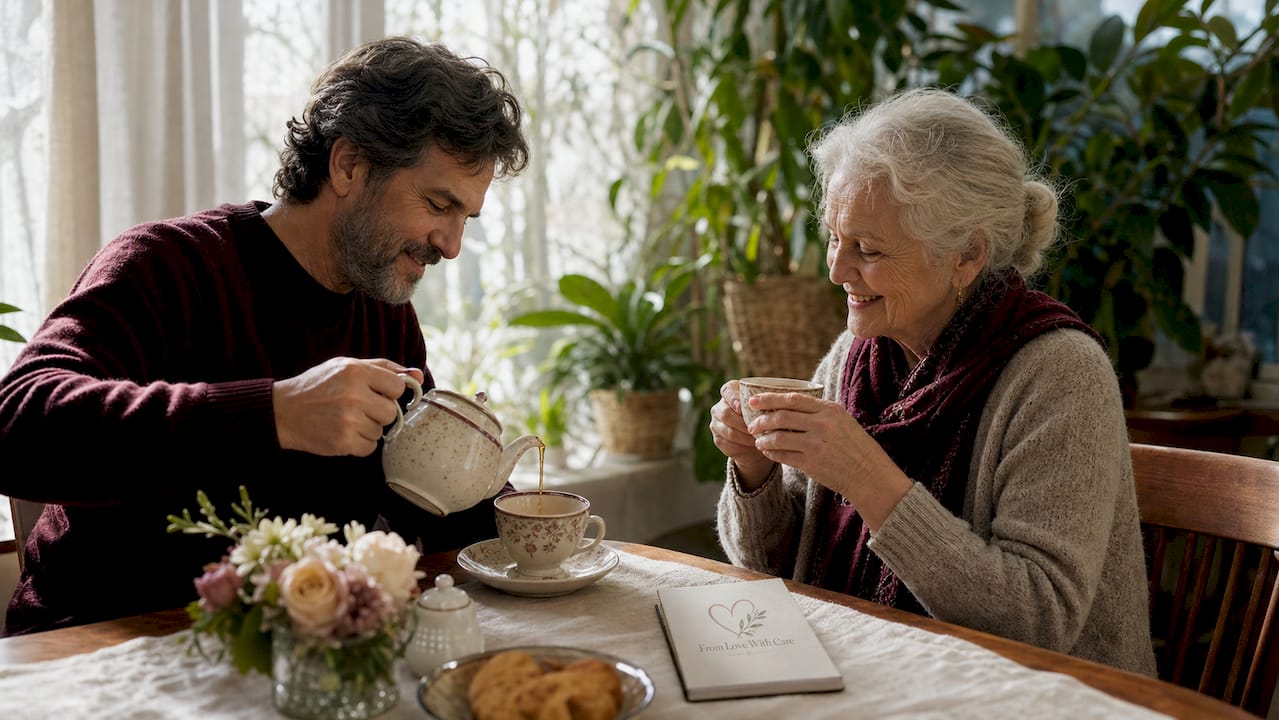
The benefits extend beyond the senior receiving care. Perceived social support buffers caregiver burden and is critical to sustaining informal care systems. When a primary caregiver knows their relative has regular, trusted company, their own stress levels drop. That reduction in caregiver stress directly reduces the risk of care breakdown.
Key health outcomes linked to regular companionship include:
- Reduced frequency of GP visits and unplanned hospital admissions
- Lower cortisol levels and improved sleep quality in seniors
- Decreased sundowning episodes in dementia patients
- Measurable reductions in caregiver stress and reported burnout
- Slower cognitive decline in socially engaged older adults
Pro Tip: When arranging companion visits, schedule them at consistent times each day. Predictability matters more than frequency for cortisol regulation and dementia symptom management.
How does companionship interact with family and professional care?
The relationship between professional companionship and family support is more complex than it first appears. Community-based companionship partially crowds out emotional family support while simultaneously increasing intergenerational financial contributions. This means families may visit less often when a professional companion is present, but they tend to contribute more financially to care arrangements. Neither outcome is inherently negative, but both require conscious management.
The Convoy Model, developed in gerontological research, frames older adults as moving through life surrounded by a convoy of supporters at different levels of closeness. The model argues that sustainable care requires strengthening networks through community and formal programmes rather than relying on any single source. A professional companion fills a specific role in that convoy. They do not replace a daughter's weekly visit or a neighbour's phone call. They occupy a distinct, reliable position that other relationships cannot consistently hold.
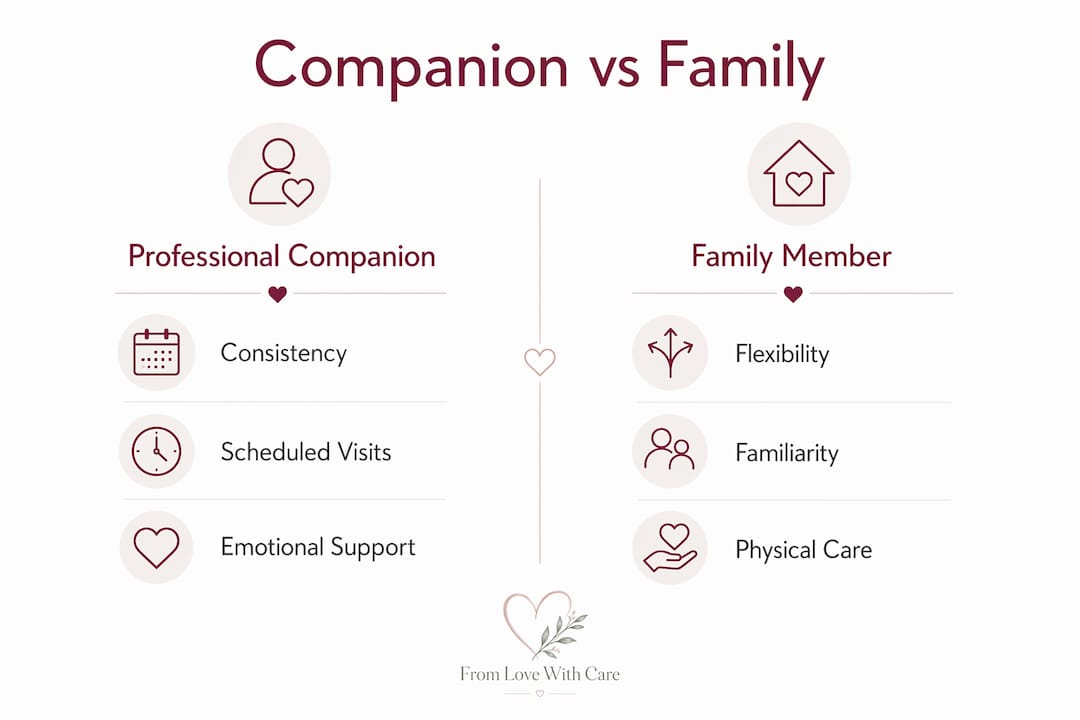
The table below shows how professional and family companionship differ in practice:
| Factor | Professional Companion | Family Member |
|---|---|---|
| Consistency | Scheduled, reliable visits | Variable, dependent on commitments |
| Emotional distance | Trained, boundaried support | Deep emotional investment |
| Burnout risk | Managed through rotation | High with sole reliance |
| Skill in dementia care | Trained in non-imposition techniques | Often self-taught |
| Financial cost | Paid service | Unpaid, but carries hidden costs |
Sole reliance on one family member as primary caregiver is one of the most common causes of care system collapse. When that person becomes ill, exhausted, or simply overwhelmed, the entire arrangement fails. Distributing companionship roles across a network prevents that single point of failure.
Pro Tip: If you are coordinating care for an elderly relative, treat the companion network like a rota. Assign specific roles to specific people so no single individual carries the full emotional weight.
What are the best practices for effective companionship?
Effective companionship is not simply spending time with someone. It requires skill, consistency, and a clear understanding of the senior's emotional state on any given day. The following practices reflect current best evidence from palliative and dementia care settings.
-
Establish a reliable routine. Predictable visit times create a sense of safety, particularly for seniors with dementia. The brain responds to routine by reducing anticipatory anxiety. A companion who arrives at the same time each Tuesday and Thursday becomes an anchor in an otherwise uncertain week.
-
Practise non-imposition. Forcing interaction often triggers resistance in seniors, particularly those with dementia or depression. Skilled companions read the room. They sit comfortably in silence when needed, follow the senior's lead, and never push conversation. This approach builds long-term trust far more effectively than relentless cheerfulness.
-
Use technology as a supplement, not a substitute. Video calls help maintain connection between visits but lack the sensory engagement of physical presence. Touch, shared physical space, and the simple act of making tea together cannot be replicated on a screen. Digital tools work best when they bridge gaps between in-person visits, not replace them.
-
Match the companion to the individual. Shared interests, compatible temperaments, and cultural sensitivity all affect whether a companionship relationship takes root. A companion who loves gardening paired with a senior who spent decades tending an allotment will achieve more in one visit than a mismatched pair will in ten.
-
Review and adapt regularly. A senior's needs change over time. What worked six months ago may no longer fit. Build in regular reviews with the family, the companion, and where possible, the senior themselves.
Pro Tip: Ask the senior directly what they enjoy, even if their communication is limited. Small preferences, such as a favourite biscuit or a preferred chair, signal that their choices are respected and build the trust that makes companionship genuinely effective.
How can families build sustainable companionship networks?
Families and caregivers who treat companionship as a network rather than a single relationship build far more resilient care arrangements. A well-structured network of multiple companions sharing visits prevents burnout and ensures sustained social engagement even when one companion is unavailable.
The most effective networks combine three types of contact:
- Professional companions who provide trained, consistent, boundaried support on a scheduled basis
- Volunteer visitors from community groups, faith organisations, or befriending schemes who offer informal social contact
- Family members who contribute emotionally and financially without carrying the full weight of daily care
This structure also protects family relationships. When a son or daughter is not the only source of social contact for an ageing parent, visits become less fraught. They shift from obligation to genuine connection. The importance of companionship in caregiving is perhaps most visible here. A part-time professional companion gives a full-time family carer the breathing room to remain emotionally present rather than simply exhausted.
Families should also consider the companionship options available for older adults in 2026, which now include flexible scheduling, specialist dementia companions, and culturally matched visitors. The range of options means there is rarely a reason to leave a senior without consistent social contact.
Key takeaways
Companionship is a measurable health intervention that sustains elderly care by reducing isolation, regulating stress, and preventing caregiver burnout across the entire support network.
| Point | Details |
|---|---|
| Companionship improves health outcomes | 60% of severely lonely seniors showed measurable medical improvement after receiving companionship care. |
| Cortisol regulation matters | Routine visits reduce chronic stress and dementia-related sundowning, producing physiological as well as emotional benefits. |
| Balance professional and family support | Professional companions complement rather than replace family, reducing burnout without displacing emotional bonds. |
| Non-imposition builds trust | Respecting a senior's mood and willingness to engage produces better long-term outcomes than forced interaction. |
| Networks outperform individuals | Distributing companionship across multiple people prevents single points of failure and sustains care over time. |
Why emotional care deserves equal standing with physical care
I have spent years watching families pour enormous energy into arranging medication schedules, mobility aids, and GP appointments, then overlook the fact that their relative has not had a proper conversation with anyone in four days. The gap between physical care and emotional care is where decline accelerates. Emotional isolation significantly harms seniors even when every clinical need is met. That finding should change how we plan care, but in most households it does not.
The uncomfortable truth is that emotional support is still treated as a luxury in many care arrangements. Families feel guilty about it, professionals rarely measure it, and commissioners do not fund it consistently. Yet the evidence is clear. Social connection must be treated with clinical urgency comparable to medication management. A senior who is physically safe but emotionally invisible is not receiving adequate care.
What I find most encouraging is that this does not require expensive solutions. Reliable, warm, skilled companionship, whether from a trained professional or a well-supported family member, produces outcomes that clinical interventions alone cannot match. The challenge is consistency. Companionship that appears and disappears is almost worse than none at all, because it raises and then dashes expectation. The families and care teams that get this right are the ones who treat social engagement as a scheduled, non-negotiable part of the care plan, not something that happens when there is time.
— Ayomide
How Fromlovewithcare supports sustainable companionship
Fromlovewithcare was built specifically to address the gap between physical care and emotional connection for elderly adults across the UK. Every companion is thoroughly vetted and matched to the individual, whether that means sharing a pot of tea, accompanying someone on a walk, or simply sitting together in comfortable company.

Families who use Fromlovewithcare report significant improvements in their relative's wellbeing and in their own peace of mind. The service offers flexible scheduling so companionship fits around existing care arrangements rather than disrupting them. For families carrying the weight of full-time care, companion visits for elderly parents provide the consistent social presence that sustains both the senior and the people who love them. To explore how Fromlovewithcare can support your family's care plan, visit the full services page.
FAQ
What is the role of companionship in care sustainability?
Companionship sustains elderly care by reducing isolation, regulating stress hormones, and preventing caregiver burnout. It functions as a preventive health intervention that reduces demand on clinical services over time.
How does companionship benefit seniors with dementia?
Routine companion visits reduce cortisol levels and decrease sundowning episodes in dementia patients. Predictable social contact provides an emotional anchor that medication alone cannot replicate.
Can professional companions replace family support?
Professional companions complement family support rather than replace it. Research shows they reduce the emotional burden on family members while increasing the overall quality and consistency of care.
How many companions should be involved in a senior's care network?
A network of multiple companions sharing visits is more resilient than relying on one person. Distributing visits across professional companions, volunteers, and family members prevents burnout and maintains consistent social engagement.
Is digital companionship effective for elderly adults?
Video calls and digital contact help maintain connection between visits but cannot replace physical presence. They are most effective as a supplement to in-person companionship, particularly for seniors with dementia who rely on sensory engagement.