

Familiarity is defined as the accumulated comfort and trust that develops between two people through repeated, consistent contact over time. In companion relationships, this quality is not a pleasant bonus. It is the foundation that determines whether a relationship genuinely reduces loneliness or simply fills silence. Research shows that 60% of severely lonely individuals showed measurable improvements in medical wellbeing after consistent companionship care. That figure tells us something important: it is not just the presence of another person that helps, but the presence of a known person. The role of familiarity in companion relationships shapes every aspect of emotional bonding, from the first awkward visit to the quiet confidence of a shared routine.
How does familiarity build trust in companion relationships?
Trust in companion relationships does not arrive fully formed. It builds through repeated, predictable interactions that signal safety and reliability. Each consistent visit teaches the brain that this person is not a threat, not a stranger, and not temporary. Over time, that pattern becomes the bedrock of emotional security.
Familiarity acts as a social lubricant, reducing vulnerability and giving people the confidence to engage in daily activities they might otherwise avoid. An older adult who once refused to leave the house may, after weeks of visits from the same companion, agree to a short walk to the shops. The companion has not changed. The familiarity has.
Scheduled, predictable visits are particularly powerful. When a person knows their companion arrives every Tuesday morning, that rhythm becomes an anchor. It reduces anxiety about the unknown and creates a sense of structure that supports independence.
- Consistent scheduling signals reliability and reduces anticipatory anxiety before each visit.
- Shared routines, such as making tea or reading the post together, create low-pressure moments that deepen comfort naturally.
- Personalised matching based on personality and interests accelerates trust, because shared ground gives both people something genuine to connect over.
- Gradual introduction allows the relationship to develop at the individual's pace, which is especially important for those who are cautious about new companions.
Pro Tip: If you are arranging companionship for a loved one, ask the service to keep the same companion for every visit from the start. Rotating companions resets the familiarity clock each time and significantly slows trust development.
Regular visits improve safety and independence by providing emotional reassurance alongside practical support. The companion who knows that a person takes their medication after breakfast, or that they prefer the radio off during conversation, is not just a visitor. They are a trusted presence.
What impact does familiarity have on loneliness and social interaction?
Familiarity does not simply reduce loneliness. It changes the quality of social interaction entirely. Talking to a known person feels categorically different from talking to a stranger, even a friendly one.
A study of 1,738 adults in England found that "Happy to Chat" badges increased perceptions of friendliness but were insufficient on their own to overcome the psychological barriers to starting a conversation. That finding is significant. It confirms that goodwill and openness are not enough. People need a prior relationship, a sense of who this person is, before they feel safe enough to engage meaningfully.
The benefits of familiarity extend across the lifespan. Research from the Understanding Society study confirms that familiarity is essential for psychological resilience, particularly in young adults, who moderate loneliness by talking to familiar peers and family about their worries. The mechanism is the same at every age: a known person lowers the emotional cost of being vulnerable.
- Familiar companions reduce the effort of conversation. There is no need to explain your history, your preferences, or your sense of humour from scratch.
- Repeated contact builds shared references. A companion who remembers last week's conversation can pick up where things left off, which creates continuity that strangers cannot offer.
- Emotional resilience grows with familiarity. Knowing that someone will return makes it easier to cope with difficult days in between visits.
- Social confidence transfers outward. People who feel secure in one familiar relationship often become more willing to engage with others in their community.
Companionship mitigates loneliness independently of the companion's specific skills or characteristics. Presence matters more than expertise. That is a counterintuitive but well-supported finding: you do not need a trained therapist or a highly skilled carer to reduce loneliness. You need someone who shows up, consistently, and who is known.
Does familiarity work differently with animals than with people?
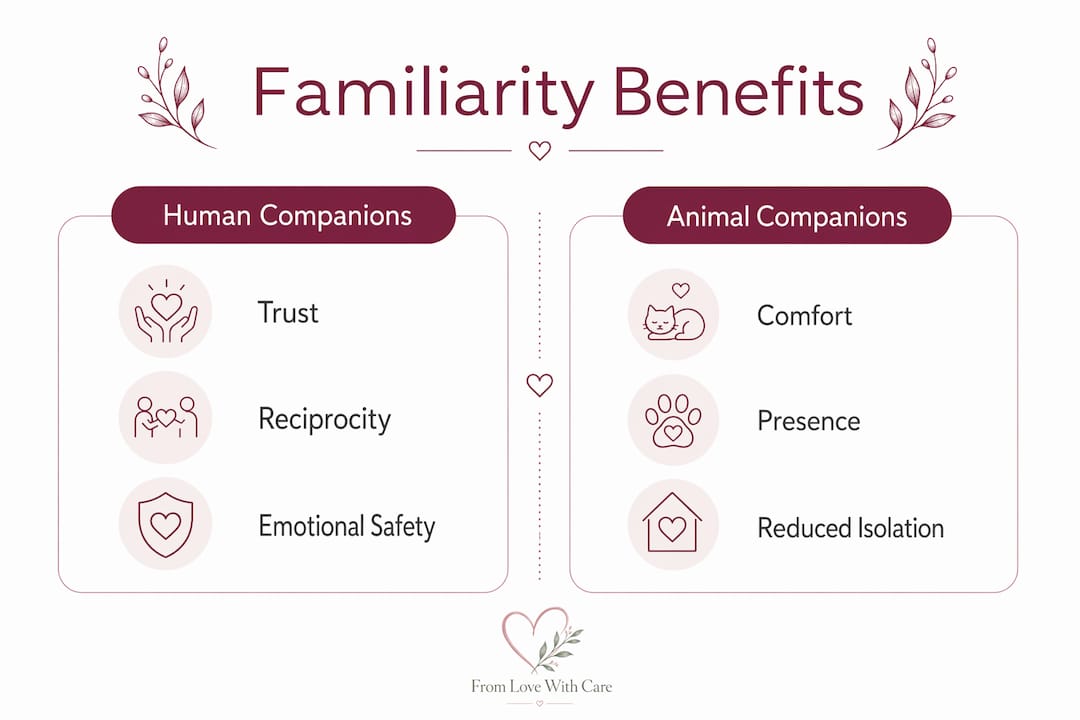
The short answer is yes, but the underlying mechanism is remarkably similar. Both human and animal companionship rely on repeated, consistent contact to build comfort and reduce anxiety.

Familiarity supports social homeostasis in companion relationships, balancing emotional closeness and distance to reduce anxiety. This principle applies whether the companion is a person or a pet. A cat that sits on the same chair every evening, or a dog that greets its owner at the door, provides a predictable emotional signal that the nervous system learns to rely on.
| Type of companionship | Primary emotional benefit | Key familiarity mechanism |
|---|---|---|
| Human companion | Shared dialogue, emotional validation | Repeated conversation and routine visits |
| Companion animal | Unconditional presence, tactile comfort | Consistent physical proximity and routine |
52.4% of pet owners in specific cohorts report a positive impact on feelings of isolation due to their companion animal's presence. That is a substantial proportion, and it reflects the genuine emotional weight that animal familiarity carries. For people who find human interaction effortful or anxiety-inducing, an animal companion can serve as a first step toward greater social engagement.
Human companionship, however, offers something animals cannot: reciprocal understanding. A trusted companion carer can notice changes in mood, ask the right questions, and respond to emotional complexity in ways that a pet, however beloved, cannot replicate.
Pro Tip: For individuals who are highly anxious about new people, introducing a companion animal alongside a human companion can ease the transition. The animal provides a shared focus that reduces the pressure of direct social interaction.
Practical ways to build and maintain familiarity in companion relationships
Building familiarity is not accidental. It requires deliberate choices about consistency, matching, and pace. The good news is that the steps are straightforward once you understand what familiarity actually needs to grow.
Personalised matching based on personality and interests is the single most effective starting point. Two people who share a love of gardening, a similar sense of humour, or a common background have natural material for conversation. That shared ground accelerates the familiarity process considerably.
- Keep the same companion for every visit. Consistency of person is more important than frequency of visits. Seeing the same face weekly builds more trust than seeing different faces daily.
- Establish shared rituals early. A cup of tea at the start of every visit, a walk on the same route, or a regular card game gives both people a comfortable structure to return to.
- Allow the relationship to develop at the individual's pace. Pushing for closeness too quickly can feel intrusive. Familiarity grows best when neither person feels pressured.
- Encourage open communication about preferences. A companion who knows that someone dislikes being touched, or prefers silence during television, can adapt in ways that deepen comfort rather than erode it.
- Review and adjust the match if needed. Not every pairing works, and that is not a failure. A thoughtful companionship service will reassess and rematch when the chemistry is not right.
Consistent familiar companionship encourages older adults to remain engaged with their community and maintain their sense of identity. That is a profound outcome. Familiarity does not just reduce loneliness in the moment. It keeps people connected to who they are over time.
Trusted companion carers develop meaningful, lasting relationships that build confidence, provide emotional support, and improve quality of life. The word "lasting" is doing real work in that sentence. Short-term contact helps. Lasting familiarity changes lives.
Key takeaways
Familiarity is the defining factor in whether companion relationships genuinely reduce loneliness and build lasting emotional resilience.
| Point | Details |
|---|---|
| Familiarity builds trust | Repeated, consistent visits create the emotional safety that enables meaningful connection. |
| Loneliness reduces with known companions | 60% of severely lonely individuals improved in wellbeing through consistent companionship care. |
| Presence matters more than expertise | Companionship reduces loneliness regardless of a companion's specific skills or background. |
| Matching accelerates familiarity | Pairing companions by shared interests and personality speeds up trust development significantly. |
| Animal companionship also helps | 52.4% of pet owners report reduced isolation, showing familiarity works across companion types. |
Why I believe familiarity is the most underestimated factor in care
By Ayomide
Most conversations about loneliness focus on frequency: how often does someone see another person? That is the wrong question. I have spoken with families who arrange daily check-in calls for an elderly parent, only to find that the parent still feels profoundly alone. The calls happen, but the connection does not. The reason, almost always, is that the person on the other end of the phone is not truly known.
What I have come to believe, through years of working alongside people who experience deep isolation, is that familiarity is not a soft, optional quality. It is the mechanism through which companionship actually works. Without it, you have contact. With it, you have relationship. Those are not the same thing.
The research supports this view clearly. The Understanding Society findings on familiarity and mental health resilience confirm what I have observed directly: people do not just need someone present. They need someone they recognise, someone who recognises them in return. That mutual recognition is what makes the difference between enduring loneliness and genuinely overcoming it.
My honest advice to anyone arranging companionship for a loved one is this: prioritise consistency above everything else. A good match who visits every week for a year will do more good than a perfect match who visits once. Familiarity takes time, and that time is worth protecting.
— Ayomide
How Fromlovewithcare supports familiar, trusted companionship
Loneliness is not solved by a single visit. It is addressed through relationships that grow over time, built on the kind of familiarity that only consistent, thoughtful companionship can create.

Fromlovewithcare matches adults and older people across the UK with thoroughly vetted companions who are selected for compatibility, not just availability. Every match considers personality, interests, and lifestyle, because the right fit is what allows familiarity to take root. Companions visit regularly, building the shared routines and mutual understanding that make a genuine difference to daily life. If you are concerned about a loved one who goes days without meaningful conversation, Fromlovewithcare's loneliness support services offer a practical, compassionate starting point. You can also explore the full range of companionship options to find the right level of support.
FAQ
What is the role of familiarity in companion relationships?
Familiarity is the foundation of trust and emotional security in companion relationships. It develops through repeated, consistent contact and determines whether companionship genuinely reduces loneliness or simply provides temporary company.
How does familiarity affect companionship for older adults?
Familiar companions give older adults the confidence to engage in daily activities and maintain their sense of identity. Research shows that consistent companionship care led to measurable wellbeing improvements in 60% of severely lonely individuals.
Does familiarity with animals reduce loneliness?
Yes. Research shows that 52.4% of pet owners report a positive impact on feelings of isolation due to their companion animal's presence. Animal familiarity works through consistent physical proximity and routine, similar to human companionship.
How long does it take to build familiarity with a new companion?
There is no fixed timeline, as it depends on the individual's personality and social history. Gradual, personalised introduction with the same companion at every visit is the most reliable approach to building trust at a comfortable pace.
Why does familiarity matter more than the companion's skills?
Research confirms that companionship reduces loneliness independently of the companion's specific characteristics or expertise. Consistent, known presence is the active ingredient, not professional qualification or particular ability.