

A trusted companion is a vetted, supportive individual who stays with your loved one so you can step away, rest, and return as a better carer. This is the core principle behind respite care, the recognised industry term for planned breaks that protect caregiver wellbeing. Understanding why trusted companion enables caregiver breaks matters because caregiving without rest leads to burnout, reduced care quality, and serious health consequences for both carer and recipient. Research from 2026 confirms that structured companionship respite produces measurable stress relief. Fromlovewithcare builds its entire service model around this principle, offering thoroughly vetted companions who provide genuine human connection while you take the time you need.
Why a trusted companion enables caregiver breaks: the stress relief evidence
Caregiver burnout is not a personal failing. It is a predictable physiological and emotional response to sustained, high-demand caring without adequate recovery time. The warning signs include persistent fatigue, irritability, withdrawal from social contact, and a growing sense of resentment that carers often feel ashamed to admit.
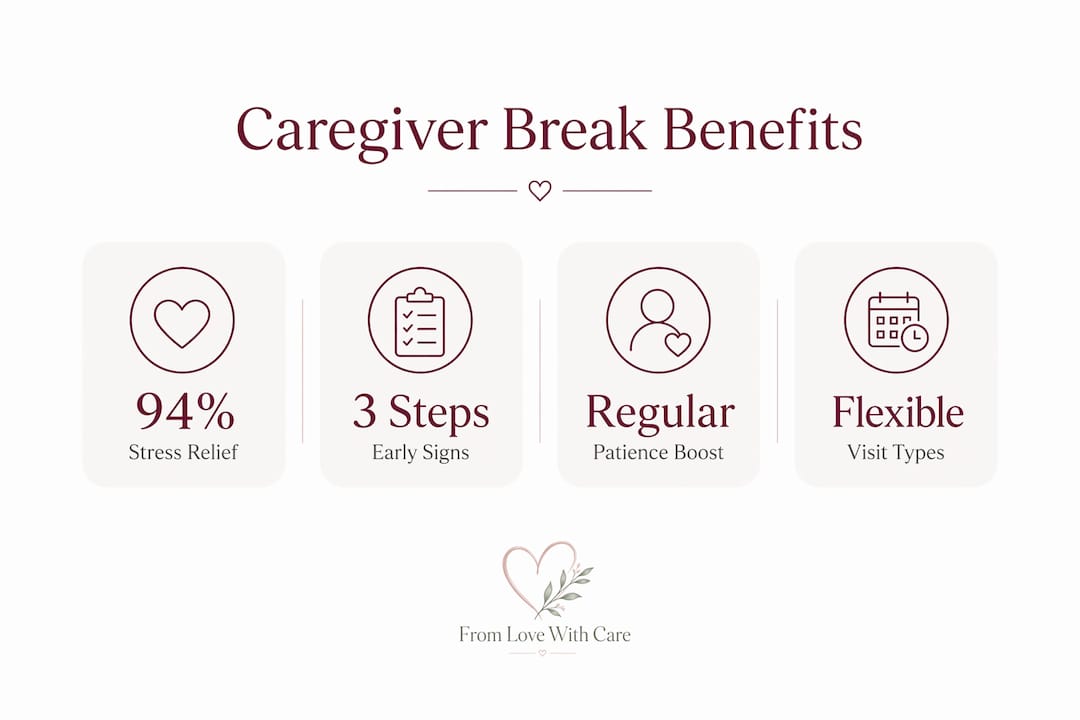
"A 2026 group respite study found that 94% of family caregivers showed significant stress reduction after a structured companionship intervention, measured by the Kin Caregiver Stress Scale with p-values below 0.05."
That figure is striking. It means stress relief from companionship respite is not anecdotal. It is statistically robust and reproducible across a diverse group of carers. The mechanism is straightforward: when a trusted companion is present, your nervous system registers that your loved one is safe. That permission to relax is what makes genuine recovery possible.
Respite care also improves mental health by reducing the isolation and depression that accumulate quietly in caregiving roles. Many carers go weeks without a meaningful adult conversation outside the caring relationship. A companion visit breaks that cycle for both the carer and the person being cared for.
Pro Tip: Watch for three early burnout signals: dreading the start of each caring day, feeling emotionally numb during interactions with your loved one, and neglecting your own medical appointments. Recognising these signs early gives you time to arrange support before the situation becomes a crisis.
Regular companion breaks produce measurable improvements in patience, energy, and emotional resilience. Carers who take structured breaks consistently report greater focus and empathy when they return. The break does not diminish the quality of care. It restores it.
How does trusted companionship provide flexible, accessible caregiver breaks?
Companionship respite is not a single, fixed arrangement. It adapts to your situation, your loved one's needs, and the time you have available. Understanding the range of options removes the assumption that respite requires a major logistical effort.

Respite arrangements vary widely, from a few hours of in-home companionship each week to multi-day adult day programmes or short-term stays in specialist settings. Each format serves a different caregiving context.
| Companionship type | Typical use case |
|---|---|
| In-home companion visits | A few hours weekly; carer attends appointments, exercises, or rests |
| Adult day programmes | Full-day structured activity for the cared-for person; carer works or recovers |
| Overnight or multi-day respite | Carer takes a longer break, holiday, or manages a personal health need |
| Regular social companionship | Weekly visits focused on conversation, shared activities, and reducing isolation |
The flexibility of in-home companion visits is particularly valuable for carers of housebound individuals. A companion arrives at your home, engages your loved one in conversation, shared tea, or light activity, and you leave knowing someone trustworthy is present. That arrangement can cover a GP appointment, a walk, a coffee with a friend, or simply an uninterrupted sleep.
For carers managing more complex needs, companion visits that free caregiver time can be scheduled consistently each week, building a reliable rhythm rather than a one-off emergency measure. Consistency matters because your body and mind need predictable recovery windows, not occasional relief.
Pro Tip: Start with a two-hour weekly companion visit rather than waiting until you need a full day. Shorter, regular breaks build your confidence in the arrangement and your loved one's comfort with the companion far more effectively than infrequent longer sessions.
What emotional barriers stop caregivers from taking breaks?
The most common reason carers do not take breaks is guilt. Not lack of access, not cost, and not logistics. Guilt. The internal voice that says stepping away means you do not care enough, or that something will go wrong the moment you leave.
Caregiver guilt is the primary obstacle to using respite care. The most effective way to address it is to reframe what a companion actually does. A companion does not replace you. A companion renews your capacity to care.
Common emotional barriers carers report include:
- Fear that the loved one will feel abandoned or upset by a new face
- Concern that no one else can provide care to the same standard
- Worry about what other family members will think
- A belief that needing help signals personal weakness
- Anxiety about what might happen in their absence
Each of these barriers is understandable. None of them are accurate. Trust built by meeting companions beforehand is the single most effective way to dissolve these concerns. When your loved one has met the companion, shared a cup of tea, and responded positively, the abstract fear becomes a concrete reassurance.
Fromlovewithcare vets every companion thoroughly before any visit takes place. Families can arrange an introductory meeting so both the carer and the person being cared for feel comfortable before the first official session. That process converts uncertainty into confidence.
Pro Tip: When speaking to family members who question your decision to use a companion, frame it as a care quality decision rather than a personal need. Say: "Having a companion visit means I can give my best when I am here." That framing is accurate and tends to reduce family resistance quickly.
How can caregivers build companionship into a sustainable care plan?
The carers who sustain their role over years rather than months share one habit: they plan for breaks before they desperately need them. Reactive respite, arranged only at crisis point, is far less effective than proactive respite built into a regular routine.
Integrating respite care early in a care plan improves long-term carer sustainability and wellbeing. The evidence is consistent: carers who schedule breaks regularly maintain higher care quality and lower burnout rates over time. Treating companion breaks as a fixed part of the care plan, rather than an optional extra, changes everything.
A practical approach to building companionship into your routine:
- Assess your current schedule. Identify the hours each week where you have no support and feel most depleted. These are your priority windows for companion visits.
- Start the conversation early. Introduce the idea of a companion to your loved one before the first visit. Frame it as a new friend rather than a carer substitute.
- Arrange an introductory visit. A short, low-pressure meeting between your loved one and the companion builds familiarity. Read the guide to introducing companions to prepare for this step.
- Schedule companion visits as fixed appointments. Treat them with the same commitment as medical appointments. Cancelling them when things feel manageable undermines the routine.
- Use your break time intentionally. Sleep, exercise, socialise, or attend to your own health. Spending your break worrying defeats its purpose.
- Review and adjust quarterly. As your loved one's needs change, the companionship arrangement should adapt. A plan that worked six months ago may need updating.
Respite care remains underutilised despite its proven benefits, often because carers wait too long to seek it. Building it into the care plan from the outset removes the psychological barrier of asking for help at a moment of crisis.
The relationship between carer and cared-for person also improves when breaks are regular. Carers return with renewed patience and presence. The person being cared for benefits from fresh social interaction with the companion. Both relationships strengthen.
Key takeaways
A trusted companion enables caregiver breaks by providing safe, reliable presence that allows carers to rest, recover, and return with greater patience and emotional capacity.
| Point | Details |
|---|---|
| Stress relief is measurable | 94% of carers in a 2026 study showed significant stress reduction after companionship respite. |
| Flexible formats exist | Options range from a few hours of in-home visits to full-day programmes and multi-day arrangements. |
| Guilt is the main barrier | Reframing companions as care partners, not replacements, is the most effective way to overcome reluctance. |
| Trust requires preparation | Meeting the companion beforehand is the single most important step for a positive first experience. |
| Proactive planning works best | Scheduling regular companion breaks before burnout sets in sustains caregiving quality over the long term. |
What I have learned from watching carers finally take a break
I have spoken with enough carers to know that the moment they first leave their loved one with a companion is almost always harder than they expected. Not because anything goes wrong. Because nothing does. The companion is calm, the loved one is engaged, and the carer is standing outside wondering what to do with themselves.
That disorientation is real. Carers often lose the habit of thinking about their own needs. Years of prioritising someone else's comfort, safety, and happiness leaves very little mental space for personal recovery. The first break can feel strange, even guilty, precisely because it goes well.
What I find consistently true is that the carers who commit to regular breaks become noticeably better at their role. Not because they care more. Because they have the energy to show it. The carer who sleeps properly, sees friends occasionally, and attends their own health appointments is a more present, more patient, and more effective carer than one running on empty.
The trust piece matters enormously. Carers who meet the companion first, who see their loved one respond positively, and who understand exactly what the companion will do during the visit, those carers leave with far less anxiety. That preparation is not a luxury. It is what makes the break actually restorative rather than a source of additional stress.
My honest view is this: taking a break is not a sign that you are stepping back from your caring role. It is evidence that you are taking it seriously enough to protect your capacity to continue.
— Ayomide
Companionship that gives caregivers real breathing room
Fromlovewithcare exists because caregiving is one of the most demanding roles a person can take on, and no one should do it without support. Every companion on the platform is thoroughly vetted, trained to provide genuine human connection, and matched carefully to each individual they visit.

Whether your loved one needs a friendly face for a few hours each week or regular visits that give you consistent time to recover, Fromlovewithcare offers trusted companionship services built around your family's needs. The service focuses entirely on human connection, from shared conversation to a walk in the garden, so your loved one is genuinely cared for while you rest. Visit the services page to find the right arrangement for your situation.
FAQ
What does a trusted companion do during a caregiver break?
A trusted companion stays with your loved one, providing conversation, shared activities, and attentive presence. This allows the carer to leave confidently, knowing their loved one is safe and socially engaged.
How long should a caregiver break be to make a difference?
Even a few hours of regular respite produces measurable stress relief. A 2026 study found significant improvements in carer wellbeing from structured companionship sessions, regardless of duration.
How do I help my loved one feel comfortable with a new companion?
Arrange an introductory visit before the first official session. Familiarity built through a short, low-pressure meeting significantly improves the experience for both the cared-for person and the carer.
Is it normal to feel guilty about using a companion service?
Yes, and it is extremely common. Caregiver guilt is the primary barrier to respite care. Reframing the companion as a care partner rather than a replacement helps most carers move past this feeling.
When is the right time to start using a companion service?
The right time is before you feel burnt out, not after. Proactive integration of respite into a care plan produces better outcomes than waiting for a crisis to prompt the decision.