

If you care for someone you love, your own health is not a luxury. It is the foundation everything else rests on. Oxford Health NHS frames it plainly: secure your own wellbeing first, just as you would an oxygen mask on a plane, because burnout reduces the quality of care you can give.
Your immediate next action: contact your GP surgery today and ask to be recorded as a carer. That single step unlocks annual health checks, referrals and support you may not know you are entitled to. If you are not registered with a GP, request a carer's assessment from your local council instead. It is free, and it is your legal right.
If you need help right now:
- Samaritans: 116 123 (free, 24/7)
- NHS 111: 111 (urgent health concerns)
- Carers UK helpline: 0808 808 7777 (Monday to Friday, 9am–6pm)
Your one-page caregiver self-care checklist:
Physical
- Sleep 7–9 hours; keep a consistent bedtime where possible
- Eat a balanced diet each day and keep hydrated
- Move for at least 10 minutes, even if broken into short bursts
- Attend your own GP appointments; do not cancel them for caring duties
- Keep alcohol consumption low according to UK health guidance
Emotional
- Name one feeling you have had today, without judging it
- Spend five minutes on something that is yours alone (music, a short walk, a book)
- Contact one person outside the caring role each week
Social
- Ask one family member or friend for a specific, practical task this week
- Join a local or online carers' group (Carers UK has online meetups)
Practical
- Keep an up-to-date medication list for the person you care for
- Have an emergency contact plan written down and accessible
- Check your eligibility for Carer's Allowance
Key takeaways
Protecting your own health as a carer is not optional: it is what makes safe, sustainable caring possible, and the most effective first step is telling your GP you are a carer and requesting a free carer's assessment from your local council.
| Point | Details |
|---|---|
| Tell your GP today | Ask to be recorded as a carer to unlock annual health checks and referrals. |
| Request a carer's assessment | All unpaid carers aged 18+ have a legal right to a free assessment under the Care Act 2014. |
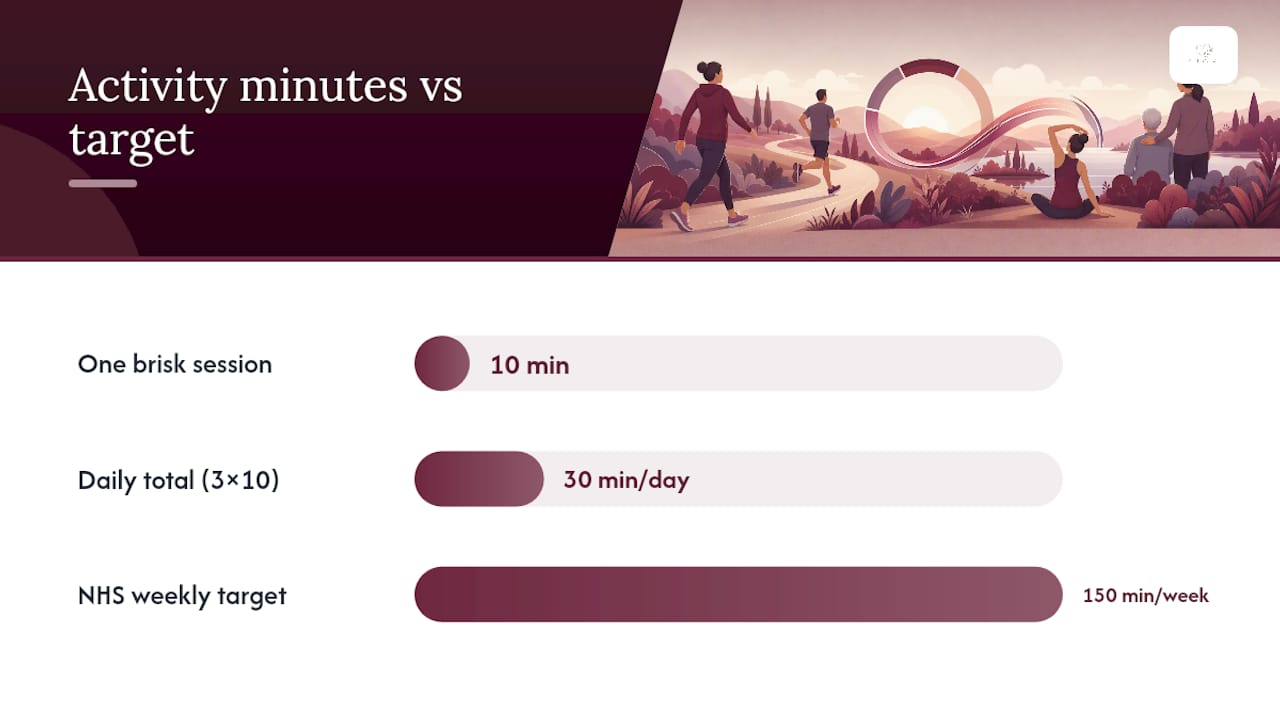
| Aim for 150 minutes of activity | Break it into 10-minute bursts across the week if a longer session is not possible. |
| Use the weekly review template | Three questions every Sunday takes two to five minutes and keeps burnout visible early. |
| Fromlovewithcare companion visits | DBS-checked, non-medical visits create reliable, bookable breaks for carers across the UK. |
Table of Contents
- What does a full caregiver self-care checklist cover?
- How to keep your body well when you have little time
- How do you recognise caregiver stress before it becomes burnout?
- How to get respite and social support as a carer in the UK
- Practical planning: emergency plans, medication and finances
- What does caregiver burnout look like, and when should you get help?
- Your printable weekly review template
- Can paid companionship visits protect your self-care routine?
- What one small habit actually prevents burnout
- Reliable companionship visits that give you time back
- Sources
What does a full caregiver self-care checklist cover?
A caregiver wellness guide works best when it is organised into four clear areas: physical, emotional, social and practical. Each area contains daily habits, weekly checks and monthly actions. Treating them as separate lists prevents the common mistake of focusing only on the person you care for while neglecting yourself entirely.
Daily (every day):
- Drink the recommended amount of fluid daily to stay hydrated
- Eat at least one balanced meal
- Take a five-minute break away from caring tasks
- Name one emotion you are feeling
Weekly (once or twice a week):
- Aim for at least 150 minutes of moderate activity across the week, as NHS England guidance recommends
- Contact a friend or family member for non-caring conversation
- Review your emergency plan and medication list
- Check in with your own mood: are you coping, or sliding?
Monthly:
- Book or attend your own medical appointment
- Review whether you need a carer's assessment or a benefits check
- Assess whether the current caring arrangement is sustainable
| Health area | Evidence-based target | Frequency |
|---|---|---|
| Physical activity | 150 minutes moderate activity + 2 strength sessions | Weekly |
| Hydration | 6 glasses of fluid daily | Daily |
| Alcohol | Below UK health guideline limits | Weekly |
| Sleep | 7–9 hours per night | Nightly |
| Medical checks | GP appointment; ask to be flagged as a carer | At least annually |
Pro Tip: Print this checklist and stick it somewhere you will see it every morning. A weekly five-minute review, asking yourself "what went well, what needs a break, what is my next action?", is enough to keep it useful without adding to your load.

How to keep your body well when you have little time
The first physical self-care step for any carer is also the most underused: tell your GP you are a carer and ask to be recorded as one. Many GP practices can add a carer flag to your records, which often triggers invitations for health checks and tailored screening. Carers UK's 2026–27 guide lists this as one of the most practical early actions you can take.
Beyond that, the physical self-care tips for caregivers that make the most difference are small and consistent rather than ambitious and occasional.
- Move in micro-bursts. Ten minutes of brisk walking three times a day meets the NHS England recommendation of 150 minutes of moderate activity per week when accumulated across seven days. You do not need a gym.
- Eat before you serve. Prepare your own meal at the same time as the person you care for. Skipping meals is one of the first signs that self-care has slipped.
- Hydrate deliberately. Keep a glass of water on the kitchen counter as a visual prompt. Six to eight glasses daily supports concentration and mood.
- Protect sleep. A consistent bedtime, even 30 minutes earlier than usual, reduces fatigue faster than any supplement. If night-time caring disrupts your sleep, flag this at your next GP appointment.
- Keep your own appointments. Do not cancel a smear test, dental check or blood pressure review because of a caring commitment. These appointments protect your long-term ability to care.
Pro Tip: If a 30-minute walk feels impossible, try a 10-minute walk after breakfast. Research on short, measurable routines shows they are more achievable for full-time carers than longer goals and improve long-term adherence.
How do you recognise caregiver stress before it becomes burnout?
Early warning signs are easy to dismiss as tiredness. They rarely are. If you notice three or more of the following persisting for more than two weeks, treat it as a signal to act, not to push through.
Common early signs of caregiver stress include:
- Persistent exhaustion that sleep does not relieve
- Irritability or resentment towards the person you care for
- Withdrawing from friends, family or activities you once enjoyed
- Difficulty concentrating or making decisions
- Feeling that nothing you do is ever enough
- Physical symptoms: headaches, digestive problems, frequent illness
The guilt-resentment cycle is one of the most painful parts of caring. Feeling resentful does not make you a bad person. It makes you a human being carrying a heavy load without enough support. Naming that honestly is the first step towards changing it.
Evidence-based coping strategies include asking for help, prioritising self-care, building a support network and using stress-reduction techniques such as deep breathing and mindfulness. In practice, that means:
- Mindfulness: five minutes of slow breathing (four counts in, four counts out) twice a day lowers cortisol measurably over weeks
- Journalling: writing three sentences about what happened and how you felt creates distance from the emotion without suppressing it
- CBT referral: ask your GP for a referral to NHS Talking Therapies (formerly IAPT). Waiting times vary, but the referral costs nothing and can be self-referred in most areas
For mental health support, Mind offers a dedicated infoline (0300 123 3393) and local Mind services across England and Wales. If you are in crisis, Samaritans (116 123) is available around the clock.
How to get respite and social support as a carer in the UK
The single most effective step you can take for your social wellbeing is requesting a carer's assessment. Under the Care Act 2014, all unpaid carers aged 18 and over have a legal right to a free assessment from their local council's adult social services department. It looks at how caring affects your health, work, relationships and free time, and it can lead to a support plan that includes respite care.
How to request a carer's assessment:
- Contact your local council's adult social services team. Search "[your council name] carer's assessment" or use the NHS postcode finder at nhs.uk.
- Tell them you are an unpaid carer and would like an assessment of your needs.
- The assessment can be done by phone, video call or in person. You do not need a referral from a GP.
- Bring notes on how caring affects your daily life: sleep, work, relationships, health.
- Ask for a written copy of the outcome and any support plan.
The assessment may recommend breaks, training, travel help, housework support or a care plan for the person you care for. Even if you are not eligible for funded support, the process itself often surfaces options you did not know existed.
For informal support, Carers UK runs online meetups, a peer forum and a helpline. Condition-specific charities such as the Stroke Association also offer carer support groups and practical resources if the person you care for has had a stroke.
Pro Tip: When asking family for help, be specific rather than general. "Could you sit with Mum for two hours on Saturday so I can sleep?" is far easier to say yes to than "I need more help." Write the request down before you make it.
Practical planning: emergency plans, medication and finances
Practical safeguards reduce the mental load of caring and protect both you and the person you care for if something unexpected happens.
Immediate actions to take this week:
- Write an emergency contact list: GP, local council adult social services, a trusted neighbour, a family member who can step in
- Prepare a current medication list for the person you care for: drug name, dose, frequency, prescribing GP
- Note any consent arrangements (lasting power of attorney, advance care plan) and where the documents are kept
- Check your eligibility for Carer's Allowance via GOV.UK; our guide to caregiver support services in the UK covers eligibility and how to apply
| Document or contact | Why you need it | Where to get it |
|---|---|---|
| Medication list | Ensures continuity if you cannot be present | GP surgery or pharmacy |
| Emergency contact plan | Covers unexpected absences | Write it yourself; share with two people |
| Carer's assessment outcome | Records your needs and agreed support | Local council adult social services |
| Carer's Allowance claim | Financial support for eligible carers | GOV.UK/carers-allowance |
| Lasting power of attorney | Legal authority to act for the person you care for | Office of the Public Guardian |
A local carers' health and wellbeing check, available through some councils, acts as a light-touch assessment and produces a Carer's Action Plan recording your needs, the support available and agreed next steps. Ask your council whether they offer one.
What does caregiver burnout look like, and when should you get help?
Burnout is not simply tiredness. It is a state of physical, emotional and mental exhaustion that builds over months and does not lift with a single good night's sleep. Recognising where you are on that spectrum matters because the response is different at each stage.
Red-flag signs that need urgent attention:
- Thoughts of harming yourself or the person you care for
- Inability to get out of bed or carry out basic tasks for several days
- Severe sleep loss (fewer than four hours per night for more than a week)
- Complete emotional withdrawal or numbness
If any of these apply, contact your GP the same day or call NHS 111. Do not wait for a scheduled appointment.
For moderate burnout, where you are functioning but struggling, the typical recovery pattern runs across weeks to months rather than days. Early intervention, whether through a GP conversation, a carer's assessment, or a short period of respite, shortens that timeline considerably. Signs that you need additional support are worth reviewing if you are unsure whether what you are experiencing is within the normal range of caring stress.
When you speak to your GP about burnout, be direct. Say: "I am a carer and I am struggling. I would like to discuss my mental health and whether I need a referral." Ask specifically about NHS Talking Therapies, a sick note if you are also employed, and whether a carer's assessment has been completed.
Your printable weekly review template
This structure takes two to five minutes to complete and is designed to sit alongside the one-page checklist at the top of this article.
Daily checklist (tick each morning):
- Drank water before 9am
- Ate at least one proper meal
- Took one five-minute break from caring
- Named one feeling
Weekly checklist (Sunday evening or Monday morning):
- Achieved 150 minutes of movement across the week
- Spoke to at least one person outside the caring role
- Reviewed medication list and emergency contacts
- Completed the three-question review below
Three-question weekly review:
- What went well this week in my caring role and for myself?
- What do I need a break from most right now?
- What is one action I will take for myself before next Sunday?
| Review item | Frequency | Escalate if... |
|---|---|---|
| Physical symptoms (sleep, appetite, pain) | Weekly | Persisting more than two weeks |
| Emotional state (mood, resentment, withdrawal) | Weekly | Three or more signs present |
| Practical safeguards (medication list, emergency plan) | Monthly | Any change in the person's condition |
| Carer's assessment review | Annually or after a significant change | Needs have increased substantially |
The Carers UK action plan template offers a more detailed version of this structure and is worth downloading alongside this checklist.
Can paid companionship visits protect your self-care routine?
Yes, reliably. A vetted companion visiting your loved one for two to three hours creates a predictable window for you to sleep, exercise, attend your own appointments or simply sit quietly. That is not a small thing. It is the kind of structured break that research consistently links to reduced caregiver stress.
Non-medical companionship visits typically cover: social conversation and shared activities, welfare check-ins, grocery shopping assistance, support during appointments and emergency welfare checks. They do not provide medical or personal care, so they complement rather than replace NHS or social care services.
When booking a companion, ask these questions before confirming:
- Is the companion DBS-checked and can you see the certificate?
- What training have they received?
- Can you speak to the companion before the first visit?
- What happens if the companion is unwell and cannot attend?
- Is there a minimum booking period or cancellation fee?
- How are visits recorded, and who receives the notes?
- What is outside the companion's scope (medication, personal care)?
- How do you raise a concern or complaint?
Pro Tip: Ask for a short introductory visit before committing to a regular booking. It gives the person you care for a chance to meet the companion in a low-pressure setting, and it gives you a chance to assess the fit.
For families exploring this option, our article on how companion visits free caregiver time explains the practical mechanics in more detail.
What one small habit actually prevents burnout
The conventional wisdom on caregiver self-care tends to focus on big interventions: therapy, respite weeks, support groups. Those matter. But in practice, the carers who avoid the worst of burnout often share one quieter habit: they protect a single, non-negotiable daily moment that belongs only to them.
It does not need to be long. Ten minutes with a cup of tea before the day starts, a short walk after the evening meal, five minutes of slow breathing before bed. The content is almost irrelevant. What matters is the consistency and the boundary: this time is mine, and I do not give it away.
If you take one thing from this article, make it that. Choose one five-minute daily habit this week, write it into your checklist, and treat it with the same seriousness you give the person you care for.
Reliable companionship visits that give you time back
Caring for someone you love is one of the most generous things a person can do. It is also one of the most depleting, particularly when breaks are rare and unpredictable. Fromlovewithcare offers something straightforward: regular, DBS-checked companion visits that give the person you care for genuine human connection while you step away with confidence.
Companions from Fromlovewithcare are trained, vetted and matched carefully to the person they visit. They provide social conversation, shared activities, welfare check-ins, grocery shopping assistance and support during appointments. They do not provide medical or personal care, which means they work alongside your existing care arrangements rather than replacing them.
Visits are bookable by the hour, with no long-term contract required. To find out how it works and arrange an introductory visit, see how our companionship works or browse our elderly companionship services. Your next break could be this week.
Sources
- Care Act 2014 and unpaid carers: handy summary
- Carer’s assessment - NHS
- Looking after someone 2026–27 (Carers UK)
- Looking after yourself as a caregiver | Oxford Health CAMHS
- Carers health and wellbeing check (Torbay Council)
This article is general information, not a substitute for advice from a qualified doctor. Consult a qualified healthcare professional about your own circumstances before acting on anything here.