
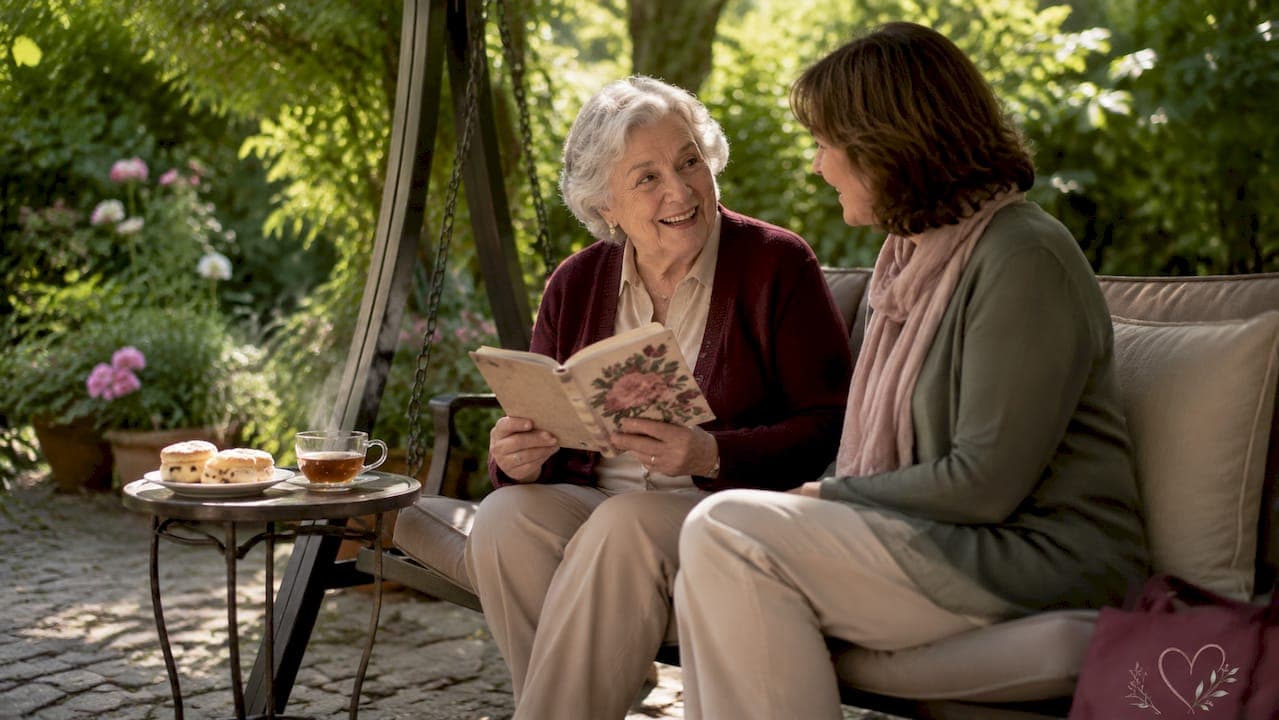
Elderly companionship conversation topics are purposeful prompts designed to deepen connection, stimulate memory, and improve mental and emotional health through meaningful dialogue. Caregivers, family members, and volunteers often struggle to know what to say, yet the right question can transform a quiet afternoon into a rich exchange of stories and laughter. Consistent social engagement can reduce cognitive decline risk in older adults by up to 70%. That figure alone makes a well-chosen conversation topic one of the most powerful tools you have.
What types of conversation topics work best for elderly companionship?
The most effective elderly companionship conversation topics list draws from six broad categories: childhood memories, family history, hobbies and interests, life lessons, current joys, and emotional wellbeing. Each category activates a different part of the brain or heart. Childhood memories tap long-term recall. Discussions about current hobbies anchor a person in the present. Life lessons invite reflection and a sense of purpose.
Open-ended questions starting with "what," "how," or "why" encourage storytelling that improves seniors' quality of life. A closed question like "Did you enjoy school?" gets a yes or no. An open question like "What was your favourite subject at school and why?" opens a door.
Mixing conversation categories throughout the week maintains engagement by activating different mental functions. Vary your approach: reminiscence on monday, hobbies on wednesday, hopes and plans on friday.
- Childhood memories: Familiar ground that feels safe and warm
- Family history: Connects identity and legacy
- Hobbies and interests: Grounds the conversation in present-day pleasure
- Life lessons: Invites wisdom and a sense of contribution
- Current joys: Keeps focus on what still brings happiness
- Emotional wellbeing: Opens space for honest, caring dialogue
Pro Tip: Adapt your chosen topic to the person's energy level that day. If they seem tired, a light question about a favourite food works better than a deep question about regrets.
1. Childhood and early life memories
Childhood is the richest territory for meaningful chats with elderly individuals. Long-term memory often stays sharp even when short-term recall fades, so questions about early life tend to produce vivid, detailed stories.
Try these conversation starters for seniors:
- "Where did you grow up, and what was your street like?"
- "What games did you play as a child?"
- "What was your home like when you were small?"
- "Who was your best friend growing up, and what did you get up to together?"
- "What did your family do to celebrate birthdays or holidays?"
- "What was your first day at school like?"
- "Did your family have any traditions that you still think about?"
- "What was the most exciting thing that happened in your town when you were young?"
Allowing seniors to speak uninterrupted and embracing story repetition deepens connection and uncovers valued memories. Resist the urge to finish sentences or redirect. The pause after a question is not awkward silence. It is the moment a memory surfaces.
Pro Tip: Bring a photograph, a familiar object, or a piece of music from their era. Tangible objects as anchors trigger long-term memory retrieval more effectively than abstract questioning alone.

2. Family history and personal legacy
Questions about family history give older adults a sense that their story matters and will be remembered. This category is particularly powerful for building trust over several visits.
Try asking:
- "How did your parents meet?"
- "What do you remember most about your grandparents?"
- "What values did your family hold most dear?"
- "Is there a family story that gets told at every gathering?"
- "What is the most important thing you have passed on to your children or grandchildren?"
- "Which relative do you think you take after most, and why?"
These questions work well as senior conversation prompts because they invite reflection without pressure. There are no wrong answers. Every response is a piece of living history.
3. Hobbies, skills, and personal achievements
Discussing what a person has made, built, or mastered is one of the best fun conversation ideas for seniors because it connects directly to identity and self-worth. A former baker, gardener, or seamstress has a lifetime of knowledge to share.
Ask questions such as:
- "What hobby have you enjoyed the most throughout your life?"
- "Is there a skill you are proud of that most people do not know about?"
- "What is the best thing you ever made or grew?"
- "Did you ever teach someone else a skill you loved?"
- "What would you do more of if you had the time?"
You can find further inspiration in this guide to shared hobbies with an elderly companion, which pairs conversation with activity for deeper engagement.
4. Life lessons and personal wisdom
Older adults carry decades of hard-won experience. Inviting them to share that wisdom is one of the most respectful and engaging questions for seniors you can ask. It positions them as the expert, which is both accurate and deeply affirming.
Good prompts include:
- "What is the best piece of advice you were ever given?"
- "What would you tell your younger self?"
- "What has life taught you that surprised you most?"
- "What decision are you most proud of?"
- "What does a good life look like to you?"
These topics for elderly discussions work across all energy levels. Even a brief answer to "What would you tell your younger self?" can spark a rich exchange that lasts the rest of the visit.
5. Present-day joys and current interests
Conversation does not have to live in the past. Engaging topics for seniors that focus on the present connect them to their current life and reduce feelings of isolation. Questions about today signal that their present experience matters just as much as their history.
Useful prompts:
- "What has made you smile this week?"
- "Is there a television programme or radio show you are enjoying at the moment?"
- "What are you looking forward to?"
- "Who have you spoken to recently that you enjoyed catching up with?"
- "What is your favourite part of the day?"
- "Is there something you would like to try or learn?"
- "What meal or food are you enjoying most lately?"
Warm, comforting questions about current joys are effective gateways before deeper explorations. Start here if you are new to a person or if they seem withdrawn. Comfort builds trust, and trust opens deeper conversation.
6. Emotional wellbeing and gentle check-ins
Emotional wellbeing topics require care, but avoiding them entirely leaves a gap in genuine companionship. The goal is not to probe, but to let the person know they are seen and heard.
Gentle prompts include:
- "How are you feeling in yourself lately?"
- "Is there anything on your mind that you would like to talk about?"
- "What has felt hard recently, and what has helped?"
- "Do you feel like you have enough company?"
- "What brings you the most comfort on a difficult day?"
Starting with present-day, warm topics before moving to deeper feelings gives the person time to feel safe. Never push. If they change the subject, follow their lead.
7. How to navigate sensitive subjects with care
Sensitive subjects such as loss, regret, spirituality, and mortality arise naturally in conversations with older adults. The right approach is not to avoid them, but to handle them with patience and respect.
"The goal of conversation is to build trust, not just gather information. This requires patience and attentive listening."
When a difficult topic surfaces, resist the impulse to reassure too quickly or redirect. Acknowledge what was said first. A simple "That sounds like it was really hard" is more connecting than "But think of all the good times." Read the person's body language and tone. If they seem distressed, gently shift to a lighter theme.
Social connections built through empathy-rich conversation improve mental and emotional health among older adults. Trust is built visit by visit, not in a single session. You can read more about this in Fromlovewithcare's guide to building trust with your elderly companion.
Repetition in a senior's stories is normal and beneficial. It is an opportunity to deepen connection by exploring new feelings or details each time the story is told. Ask a slightly different question: "You mentioned that before. What do you think made that moment so important to you?"
Pro Tip: Focus on one theme per visit and allow the conversation to flow naturally. Avoid preparing a long list of heavy questions for a single session. Silence is productive. Use it.
8. Choosing the right conversational approach
Different situations call for different styles of conversation. The table below outlines three common approaches and when each works best.
| Style | Key features | Best used when |
|---|---|---|
| Reminiscence | Open-ended questions, memory prompts, tangible objects | The person is alert and in a reflective mood |
| Active listening | Minimal questions, affirming responses, patient silence | The person is sharing something emotional or difficult |
| Light chat | Short questions, humour, current topics | Energy is low, or the person needs gentle stimulation |
Experts recommend keeping daily check-ins to around 10 minutes to sustain engagement without fatigue. That is enough time for one good question and a full, unhurried answer. Quality matters far more than duration.
For those supporting someone with memory challenges, adapt by using simpler, more concrete questions. "What did you have for breakfast?" is less effective than "What is your favourite breakfast?" The second question draws on long-term preference rather than short-term recall.
Pro Tip: Rotate through different categories across the week. Reminiscence on one day, current joys on another, life lessons on a third. Variety keeps engagement alive and prevents conversation fatigue.
Key takeaways
Purposeful conversation topics are the single most accessible tool for reducing loneliness and supporting cognitive health in older adults.
| Point | Details |
|---|---|
| Open-ended questions work best | Questions starting with "what," "how," or "why" produce richer, more connected responses. |
| Vary topics across the week | Mixing categories activates different mental functions and prevents fatigue. |
| Keep sessions to around 10 minutes | Short, focused visits sustain engagement better than long, exhausting ones. |
| Use tangible objects to anchor memory | Photographs or familiar items trigger long-term recall more effectively than abstract questions. |
| Trust builds over time | Sensitive topics become accessible only after a foundation of warmth and consistency is established. |
What I have learned from sitting and listening
By Ayomide
Most people arrive at a conversation with an elderly person armed with questions. What I have found, after many visits, is that the questions matter far less than the willingness to truly listen to the answer.
The moment that stays with me most is a visit where I asked a woman in her eighties what she missed most about her working life. She paused for a long time. Then she said, "Being needed." That single answer told me more about her emotional state than any checklist could have. It also changed the entire direction of the visit.
The conventional advice is to prepare topics in advance. That is useful, but it can create a subtle pressure that the person senses. The better approach is to prepare one or two gentle openers and then follow the thread wherever it leads. Silence is not failure. It is often the moment just before something real is said.
What I have also noticed is that caregivers and family members sometimes feel guilty when a conversation is light and full of laughter rather than deep and meaningful. Let go of that guilt. A shared joke about a favourite biscuit is companionship. It counts. The companionship options available to older adults have expanded significantly, but none of them replace the simple act of showing up and paying attention.
— Ayomide
Companionship that puts conversation first
Knowing what to say is one part of the picture. Having someone reliable, warm, and well-prepared to show up and say it is another.
Fromlovewithcare provides vetted, compassionate companions who are trained in the conversational techniques described throughout this article. Every companion understands how to use reminiscence, active listening, and present-day topics to build genuine connection with older adults. The service is designed specifically for those who go days without meaningful conversation, and it focuses entirely on human connection rather than clinical care. Whether your loved one needs a weekly chat over tea or regular companionship visits, Fromlovewithcare offers a trusted, professional approach. Find out more about the full range of companionship services available across the UK.
FAQ
What are the best conversation topics for elderly people?
The best topics draw from childhood memories, family history, hobbies, life lessons, and current joys. Open-ended questions within these categories produce the richest, most connected responses.
How long should a conversation with an elderly person last?
Experts recommend around 10 minutes for daily check-ins to balance engagement with energy levels. Quality and focus matter more than length.
How do you start a conversation with a senior who seems withdrawn?
Start with a warm, low-pressure question about a current pleasure, such as a favourite food or television programme. Light, comfortable topics build the trust needed for deeper exchanges.
Is it all right if an elderly person repeats the same story?
Repetition is normal and beneficial. Each retelling is an opportunity to explore new details or feelings, and accepting it without frustration deepens the relationship.
How can tangible objects help with elderly conversation?
Familiar objects such as photographs, letters, or items from a person's past trigger long-term memory retrieval more effectively than abstract questions, making them particularly useful for those with early memory challenges.