

Companion visits are a clinically recognised method for improving appetite and nutritional wellbeing in older adults. When a familiar, trusted person shares a meal, prepares food alongside a senior, or simply sits at the table, the social context itself triggers hunger. Research into intergenerational mealtime programmes confirms that shared dining improves appetite, food variety, and emotional wellbeing in older adults. Understanding how companion visits improve appetite in seniors is not a minor caregiving detail. It is one of the most practical tools available to families who want to protect their loved one's health without adding medication or clinical intervention.
How do companion visits improve appetite in seniors?
Companionship, defined as the routine sharing of activities, is a distinct social resource. Research shows it is more effective than traditional emotional or instrumental support at reducing loneliness and improving life satisfaction in older adults. That matters for appetite because loneliness suppresses hunger. When a senior eats alone day after day, mealtimes lose their meaning. A companion restores that meaning.
The mechanism is not complicated. Social interaction activates the brain's reward pathways. Conversation, laughter, and shared activity all signal that something worth doing is happening. Mealtimes attached to those signals become something to look forward to rather than something to endure. Predictable routines help seniors anticipate mealtimes positively, which is a precondition for appetite.

Sensory stimulation plays an equally important role. The smell of food being cooked in the same room is one of the most direct appetite triggers available. When a companion prepares a meal with a senior rather than simply delivering it, the aromas, sounds, and textures of cooking all engage the senses before a single bite is taken. Cooking aromas and ambience created during companion visits stimulate appetite in ways that a reheated meal left on a tray cannot replicate.
Physical movement before eating also matters. Short walks before meals naturally stimulate hunger cues, according to Harvard Health guidance on increasing appetite in older adults. A companion who arrives and suggests a brief walk around the garden before lunch is doing something clinically useful, not just being sociable.
- Shared meal preparation engages multiple senses and builds anticipation for eating.
- Conversation during meals slows eating pace, which supports digestion and increases enjoyment.
- Predictable visit schedules create mealtime routines that seniors' bodies begin to expect.
- Gentle pre-meal activity stimulates hunger cues naturally without medication.
- Familiar faces reduce anxiety around eating, particularly for seniors with early cognitive decline.
Pro Tip: Ask the companion to involve your loved one in simple food preparation tasks, such as stirring, setting the table, or choosing between two options. Participation builds ownership and anticipation, both of which increase appetite.
What are the health benefits of better appetite through companionship?
Improved appetite through social visits and eating habits produces measurable physical and emotional outcomes. Participants in intergenerational mealtime programmes reported increased food variety, better weight management, and stronger emotional wellbeing. Some participants noted losing 6 kilograms while feeling healthier and more motivated. That combination of weight change and improved mood reflects a body returning to a more balanced nutritional state.
The emotional dimension is inseparable from the physical one. Loneliness suppresses appetite, and consistent companionship addresses loneliness directly. Lack of social integration is associated with faster physiological ageing. Building structural social connections through regular visits may slow that process and support healthier ageing overall.
Cognitive health also benefits. Seniors who eat better are better nourished, and better nourishment supports brain function, mood regulation, and energy levels. The cycle is self-reinforcing. A senior who eats more consistently feels better, engages more readily with companions, and therefore continues to eat better. Companionship starts that cycle.
| Benefit area | What improves | Why companionship helps |
|---|---|---|
| Nutritional intake | Greater food variety and quantity | Social context makes eating enjoyable |
| Weight management | Healthier weight maintenance | Regular meals replace skipped ones |
| Emotional wellbeing | Reduced low mood and anxiety | Familiar presence reduces isolation |
| Cognitive function | Better concentration and memory | Improved nutrition supports brain health |
| Physiological ageing | Slower age-related decline | Social integration reduces biological stress |
Regular companionship supports all of these outcomes simultaneously, which is why it functions as a health intervention rather than simply a social nicety.
What practical steps help families use companion visits to improve appetite?
Families and caregivers can take specific, evidence-informed steps to make companion visits as effective as possible for improving senior appetite. The goal is to create natural craving and enjoyment of food, not to coerce eating. That distinction matters. Pressure at mealtimes increases anxiety and reduces appetite. Structure and warmth increase it.
- Establish a consistent visit schedule. Companions who arrive at the same time each week build a routine the senior's body begins to anticipate. Consistent, familiar companionship is more effective than variable carers at building comfort and pleasure around mealtimes.
- Involve the senior in food preparation. Chopping vegetables, stirring a pot, or simply choosing what to eat gives the senior agency. Agency increases engagement, and engagement increases appetite.
- Prioritise favourite and nutrient-dense foods. Familiar flavours are more likely to stimulate appetite than unfamiliar ones. Start with foods the senior already loves, then gradually introduce variety.
- Serve smaller, more frequent meals. Large portions can feel overwhelming and reduce the desire to eat. Smaller plates presented more often are less daunting and more likely to be finished.
- Incorporate gentle movement before meals. A short walk, light stretching, or even pottering in the garden before lunch stimulates hunger naturally.
- Create a pleasant dining environment. Good lighting, a tidy table, and background music the senior enjoys all contribute to a positive mealtime experience.
Pro Tip: If your loved one consistently refuses meals, note the time of day, the food offered, and who was present. Patterns often reveal whether the issue is appetite, preference, or anxiety, and that information is invaluable when speaking with a GP or dietitian.
Families who cannot visit daily benefit from professional companionship that fills the gaps. A vetted, consistent companion can maintain the mealtime routines that families establish, ensuring continuity even when family members are unavailable.
How do companion visits help detect appetite-related health risks early?
Companions are uniquely positioned to notice changes in eating behaviour that family members and healthcare providers may miss between appointments. Because they visit regularly and share mealtimes, they observe a senior's relationship with food in real time. Early detection of appetite loss prevents the kind of nutritional decline that leads to emergency clinical situations.
Over 16% of seniors in Illinois are at high risk of malnutrition. That figure reflects a pattern seen across many developed countries, including the UK, where appetite decline in older adults often goes unnoticed until it becomes a medical crisis. Structured companion visits create a regular observation point that clinical appointments cannot replicate.
Companions should watch for the following warning signs during visits:
- Sudden appetite drops that appear without an obvious cause such as illness or medication change.
- Avoidance of the kitchen or reluctance to engage in meal preparation when the senior previously enjoyed it.
- Changes in food preferences, particularly rejection of foods the senior previously liked.
- Texture avoidance, which can indicate dental pain, swallowing difficulties, or sensory changes.
- Significant weight loss visible in clothing fit or physical appearance between visits.
- Low energy or withdrawal during mealtimes, which may signal depression or cognitive change.
When a companion notices any of these signs, communicating them promptly to the family and the senior's GP is the right course of action. The companion's role is not to diagnose but to observe and report. That observation, passed on quickly, can trigger an assessment that prevents a hospital admission. The ways a companion improves elderly wellbeing extend well beyond emotional support into this kind of practical health vigilance.
Key takeaways
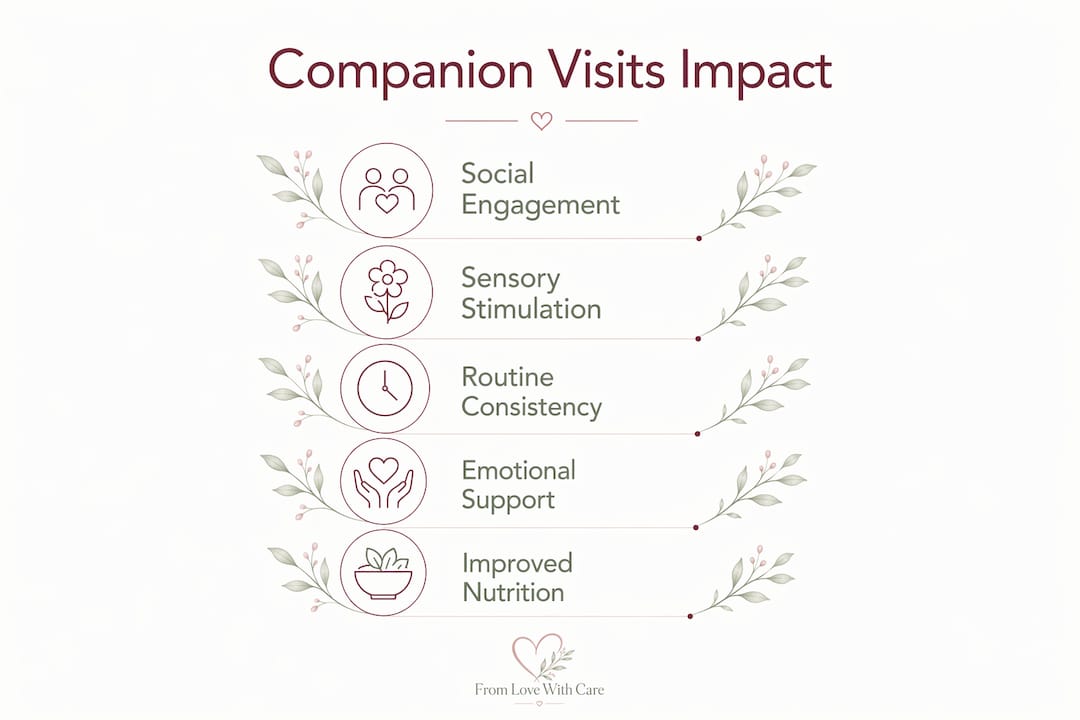
Companion visits improve seniors' appetite by combining social engagement, sensory stimulation, and consistent routine into a single, powerful intervention that no supplement or medication can replicate.
| Point | Details |
|---|---|
| Social context triggers hunger | Shared mealtimes restore the meaning of eating and stimulate appetite naturally. |
| Sensory engagement matters | Cooking aromas and shared preparation activate appetite before the first bite. |
| Consistency builds trust | Familiar companions create the emotional safety seniors need to relax and eat well. |
| Early detection saves health | Regular companions spot appetite changes before they become medical emergencies. |
| Gentle movement helps | Short pre-meal walks stimulate hunger cues without medication or clinical intervention. |
What I have seen that most caregiving guides miss
By Ayomide
Most caregiving guides focus on what to feed a senior. Very few focus on who is in the room when the food is served. That distinction is where the real difference lies.
I have spoken with families who tried every nutritional supplement, every fortified drink, every high-calorie snack, and still watched their loved one lose weight. Then a companion started visiting twice a week, and within a month, the senior was finishing meals. Nothing about the food changed. The company did.
What strikes me most is how quickly the body responds to social warmth. A senior who has been eating half a bowl of soup alone will often finish a full bowl when someone sits across the table and asks about their week. The food is the same. The experience is entirely different.
The challenge families face is guilt. They cannot always be there, and they know it. What I want them to understand is that consistent, professional companionship is not a replacement for family love. It is a way of extending care into the hours when family cannot be present. The senior does not experience it as second best. They experience it as connection, and connection is what their appetite has been waiting for.
Prioritise the visit. Prioritise the relationship. The eating follows.
— Ayomide
Fromlovewithcare: companionship that supports mealtimes
Families across the UK trust Fromlovewithcare to provide consistent, vetted companions who make a genuine difference to seniors' daily lives, including their appetite and nutrition.

Fromlovewithcare companions do not simply drop off meals. They sit down, share the experience, and build the kind of familiar routine that makes eating enjoyable again. Every companion is thoroughly vetted and matched to the senior's personality and preferences, so visits feel natural rather than clinical. If your loved one is eating less, withdrawing from mealtimes, or simply going too many days without meaningful company, a regular companion visit could be the most practical step you take this month. Visit the Fromlovewithcare services page to find out how a companionship plan can be arranged around your family's needs.
FAQ
How quickly do companion visits improve a senior's appetite?
Many families report noticeable improvement within two to four weeks of establishing a consistent visit routine. The key factor is regularity. A familiar companion who visits at the same time each week builds the anticipation and trust that stimulate appetite.
Can companion visits replace nutritional supplements for seniors?
Companion visits address the social and emotional causes of poor appetite, which supplements cannot. For seniors whose appetite loss has a nutritional or medical cause, both approaches may be needed. A GP or dietitian should assess the underlying cause.
What should a companion do if a senior refuses to eat?
A companion should not pressure the senior to eat. Instead, they should offer a small amount of a favourite food, engage in conversation, and note the refusal to report to the family. Consistent refusal warrants a GP review.
How do companion visits help seniors with dementia eat better?
Familiar faces and predictable routines reduce anxiety in seniors with dementia, which directly supports appetite. Sensory cues such as cooking aromas and a set table help trigger mealtime recognition even when verbal communication is limited.
How often should a companion visit to improve appetite in seniors?
At least two visits per week is a practical starting point for building a mealtime routine. Daily visits produce stronger results, particularly for seniors who are at risk of malnutrition or who live alone without regular family contact.