
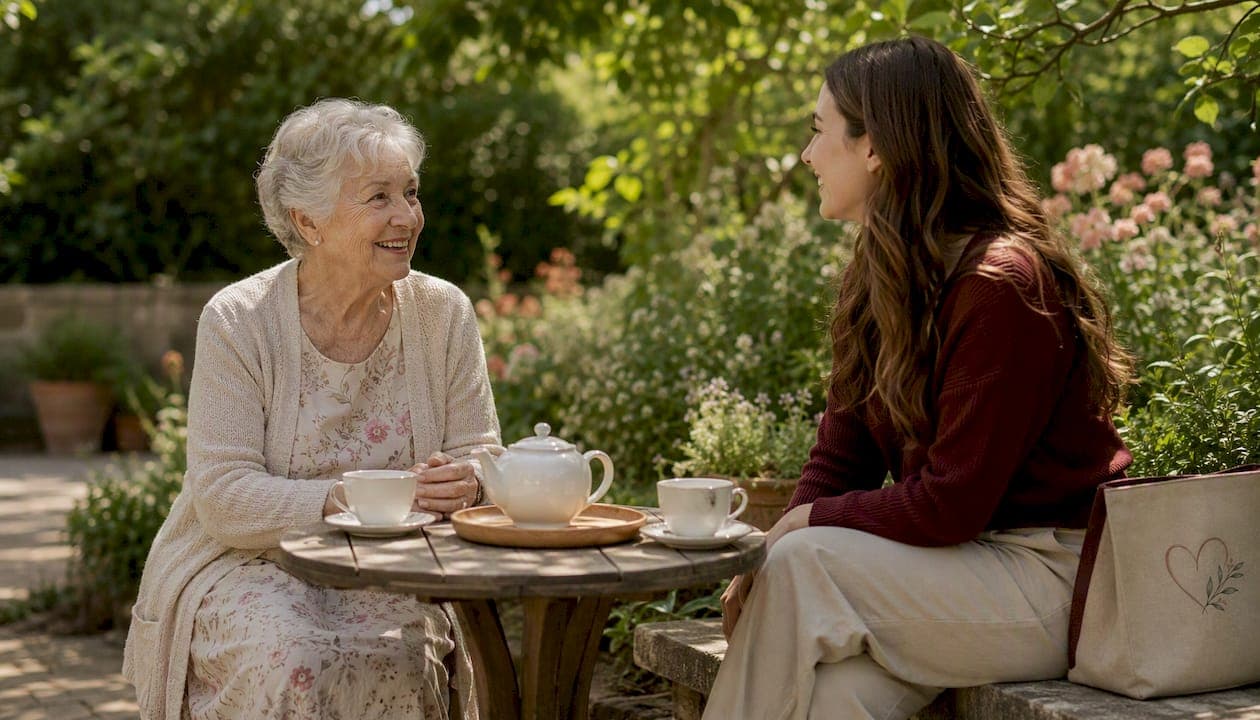
Older people need regular human contact, and the evidence is unambiguous. Social isolation and loneliness are linked to poorer physical health, accelerated cognitive decline, and higher rates of depression — while consistent, meaningful contact reduces these risks across every measure researchers have studied. The NHS recognises loneliness among older people as a significant health concern, and a comprehensive systematic review of many studies confirms that social engagement correlates with better psychological outcomes and buffers against wellbeing decline in later life.
The most immediate benefits of regular human connection for older people include:
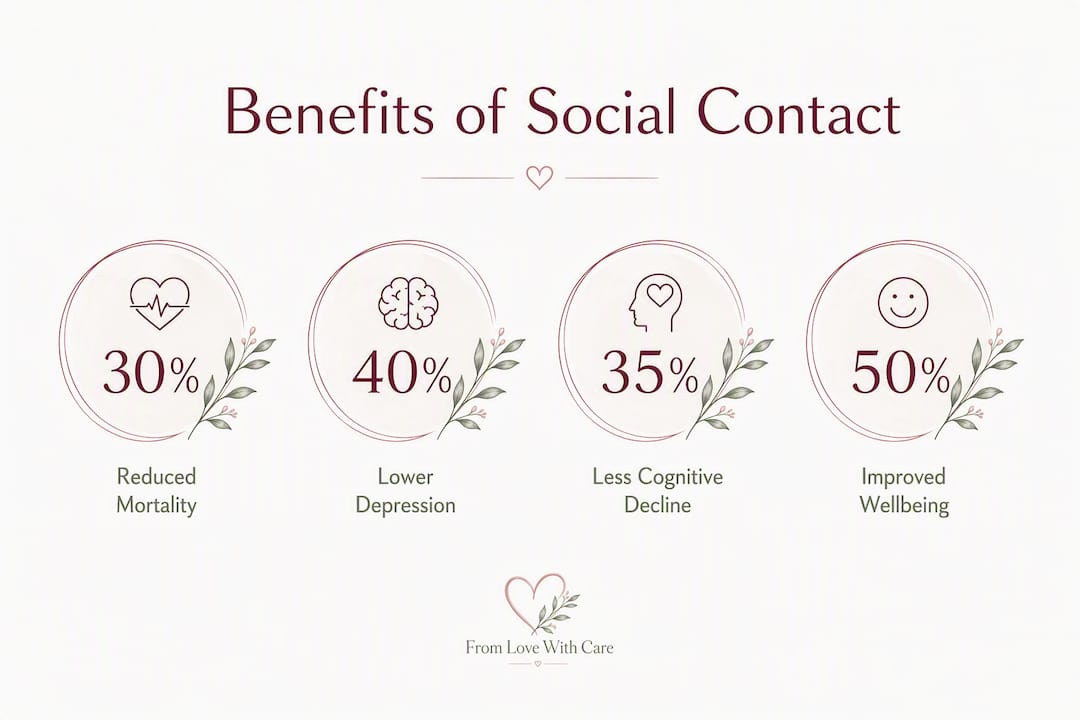
- Physical health: lower cardiovascular risk, better sleep, stronger immune response, and reduced mortality risk
- Mental and emotional wellbeing: reduced depression and anxiety, greater sense of purpose, and improved emotional regulation
- Cognitive function: slower cognitive decline, better memory performance, and reduced dementia risk
- Practical safety: regular contact means someone notices early warning signs before a crisis develops
Table of Contents
- What is the difference between loneliness and social isolation?
- How does regular human contact affect physical health?
- What are the mental and emotional benefits of companionship for older people?
- Can regular social interaction reduce the risk of cognitive decline?
- How often should an older person have social contact?
- Practical ways to give an older person regular human contact
- What can a paid companion do, and what should families look for?
- What does the evidence say? UK figures and outcomes
- Key takeaways
- The part that gets overlooked
- Practical companionship support from Fromlovewithcare
- Useful sources and further reading
What is the difference between loneliness and social isolation?
These two terms are often used interchangeably, but they describe different experiences — and that distinction shapes how you help.
Social isolation is objective: it means having few or no social contacts. Loneliness is subjective: it is the painful gap between the relationships a person has and the relationships they want. Someone can live alone and see few people yet feel content; another person can be surrounded by family and still feel profoundly lonely if those relationships feel hollow or distant.
Statistic: Age UK figures cited by the NHS show that more than 2 million people in England aged 75 and over live alone, and more than 1 million older people say they go over a month without speaking to a friend, neighbour, or family member.
Understanding which problem is present matters for choosing the right response. A socially isolated person may benefit most from practical access — transport to a community group, a befriending service, or a regular companion visit. A lonely person who has social contact but lacks depth in those relationships may need something different: longer conversations, shared activities, or a trusted confidant. Both experiences carry real health consequences, and both deserve a thoughtful response.
How does regular human contact affect physical health?
The physical effects of social connection go well beyond mood. Chronic loneliness triggers a sustained stress response in the body, raising cortisol levels, increasing inflammation, and placing ongoing strain on the cardiovascular system. The health impacts documented in older adults include elevated blood pressure, disrupted sleep, reduced physical activity, and a weakened immune response — all of which compound over time.
Key physical health links supported by research:
- Cardiovascular risk: persistent social isolation is associated with higher rates of heart disease and stroke
- Sleep quality: lonely older adults report more fragmented sleep and earlier waking, which in turn affects mood, memory, and physical recovery
- Physical activity: people with regular social contact tend to be more active — a companion who walks to the shops or attends a class with an older person provides both connection and movement
- Immune function: social support is associated with better immune regulation, meaning socially connected older people may recover from illness more effectively
- Appetite and nutrition: companion visits have been shown to improve appetite in older adults who might otherwise skip meals when eating alone
Statistic: A UK analysis found an approximate £900 difference in healthcare costs between lonely and non-lonely respondents — a figure that reflects the cumulative toll of isolation on GP visits, hospital admissions, and other NHS resources.
The physiological ageing dimension is particularly striking. A a comprehensive Nature Communications study of several thousand adults aged 50 and over found that living alone and low social integration were linked to accelerated physiological ageing, independent of how old a person felt subjectively. In other words, an older person who reports feeling fine may still be ageing faster at a biological level because of weak social connections.
What are the mental and emotional benefits of companionship for older people?
Regular contact does not just reduce distress — it actively builds the psychological resources that sustain wellbeing. Social engagement provides attachment, belonging, and identity, all of which underpin both hedonic wellbeing (feeling good day to day) and eudaimonic wellbeing (having a sense of meaning and purpose). For older adults who have lost a partner, retired from work, or seen their social circle shrink, these resources can erode quickly without deliberate effort to maintain them.
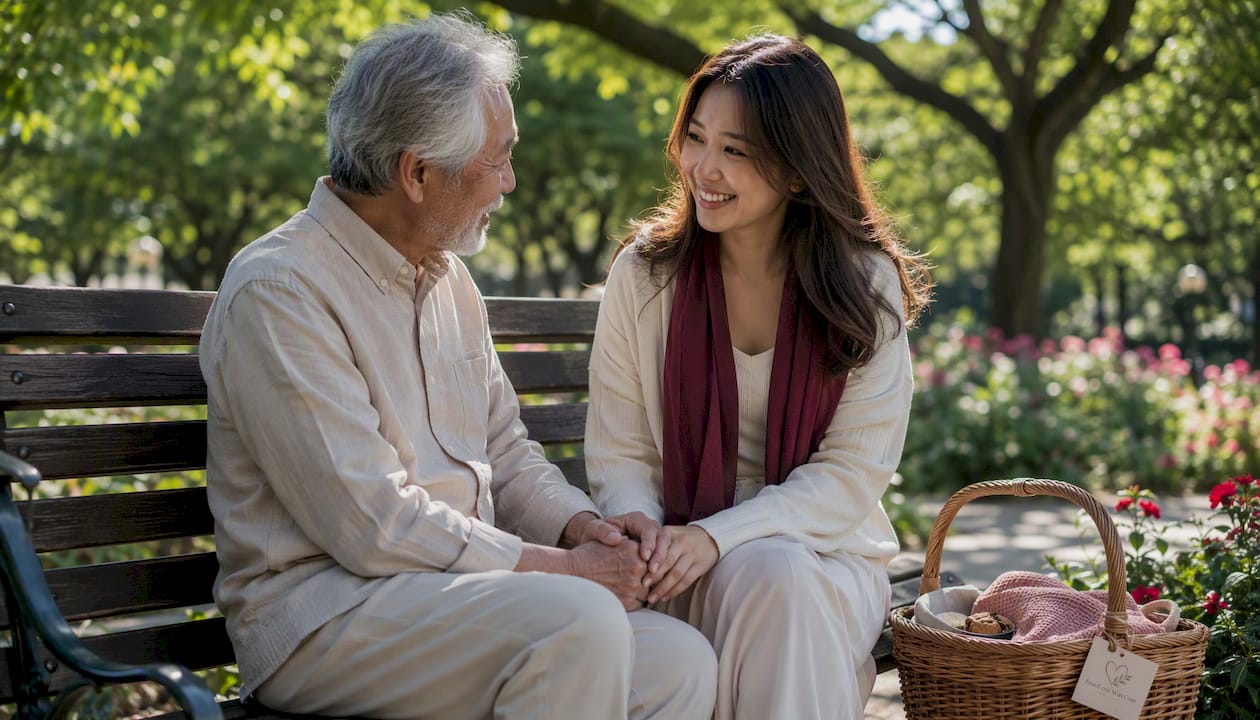
The evidence for reductions in depression and anxiety is consistent. Older people with regular meaningful contact report lower rates of depressive symptoms, and the mechanism is not simply distraction — it is that relationships give people a role to play, someone to care about, and a reason to engage with the world. Befriending and companionship also benefit the volunteer or companion: NHS guidance notes that volunteers frequently report improved self-esteem and a stronger sense of purpose, which helps sustain community schemes over time.
Pro Tip: A 20-minute visit that includes a genuine conversation about something the older person cares about — a memory, a hobby, a current event — is more emotionally nourishing than an hour of task-focused help. Ask open questions, listen without rushing, and let the older person lead the topic.
Can regular social interaction reduce the risk of cognitive decline?
Yes, and the evidence is substantial. A 2015 meta-analysis found that high levels of loneliness, infrequent social contact, and low group participation were each associated with increased dementia risk. Conversation requires the brain to retrieve language, follow a narrative, manage social cues, and respond in real time — it is, in effect, a form of cognitive exercise that passive activities like watching television do not replicate.
The types of contact that appear most beneficial for cognition:
- Reciprocal conversation: discussing opinions, memories, or plans — anything that requires active thinking and response
- Shared activities with a mental component: card games, puzzles, reading aloud together, or discussing a radio programme
- Novel social experiences: meeting new people, visiting new places, or learning something alongside a companion
- Routine check-ins: even brief, predictable contact keeps the brain engaged and reduces the anxiety that can itself impair cognitive performance
The key word is meaningful. Passive presence — sitting in the same room without interaction — offers far less cognitive benefit than engaged, reciprocal exchange.
How often should an older person have social contact?
There is no single universal prescription, but the research points clearly toward frequent and predictable contact rather than occasional large gatherings. For most older adults, a minimum of weekly face-to-face or phone contact is a reasonable baseline, with daily brief check-ins for those at higher risk — people living alone, recently bereaved, or with limited mobility.
Statistic: The comprehensive systematic review of many studies found that benefits are cumulative — greater and sustained engagement tends to produce larger wellbeing gains — though very demanding activities may have optimal participation thresholds beyond which returns diminish.
Warning signs that isolation has reached a harmful level and needs action:
- Withdrawal from activities or conversations the person previously enjoyed
- Noticeable changes in appetite, weight, or personal care
- Missed GP appointments or prescription collections
- Disrupted sleep patterns or complaints of persistent fatigue
- Low mood, irritability, or expressions of hopelessness
When these signs appear, the appropriate response escalates: start with increased family contact, then introduce a community befriending service or volunteer visitor, and seek a GP referral or social care assessment if withdrawal persists or worsens. Do not wait for a crisis — the Nature Communications data shows that physiological harm accumulates even when the person reports coping.
Practical ways to give an older person regular human contact
The most effective approaches are often the simplest, and consistency matters far more than grand gestures.
- Scheduled phone or video calls: same day, same time each week — predictability builds trust and gives the older person something to look forward to
- Weekly visits: even 30–45 minutes of genuine company makes a measurable difference; combine with a shared activity (tea, a short walk, a card game)
- Shared errands: accompanying someone to the supermarket or a pharmacy turns a functional task into social time
- Community groups: local lunch clubs, faith groups, library events, and Age UK activity centres provide peer contact and a sense of belonging
- Transport support: many older people are socially isolated simply because they cannot drive; arranging lifts or accompanying them on public transport opens up existing social networks
- Remote contact for distant relatives: voice messages, letters, and video calls all count — the key is regularity, not the medium
For older people with hearing impairments, face-to-face contact in a quiet environment is usually preferable to phone calls. For those with limited mobility, a companionship plan designed for housebound seniors can structure visits around what the person can comfortably do at home.
Pro Tip: Introduce new social contact gradually. An older person who has been isolated for some time may find sustained interaction tiring at first. Start with shorter, lower-pressure visits and build up — the goal is a routine they welcome, not one they endure.
What can a paid companion do, and what should families look for?
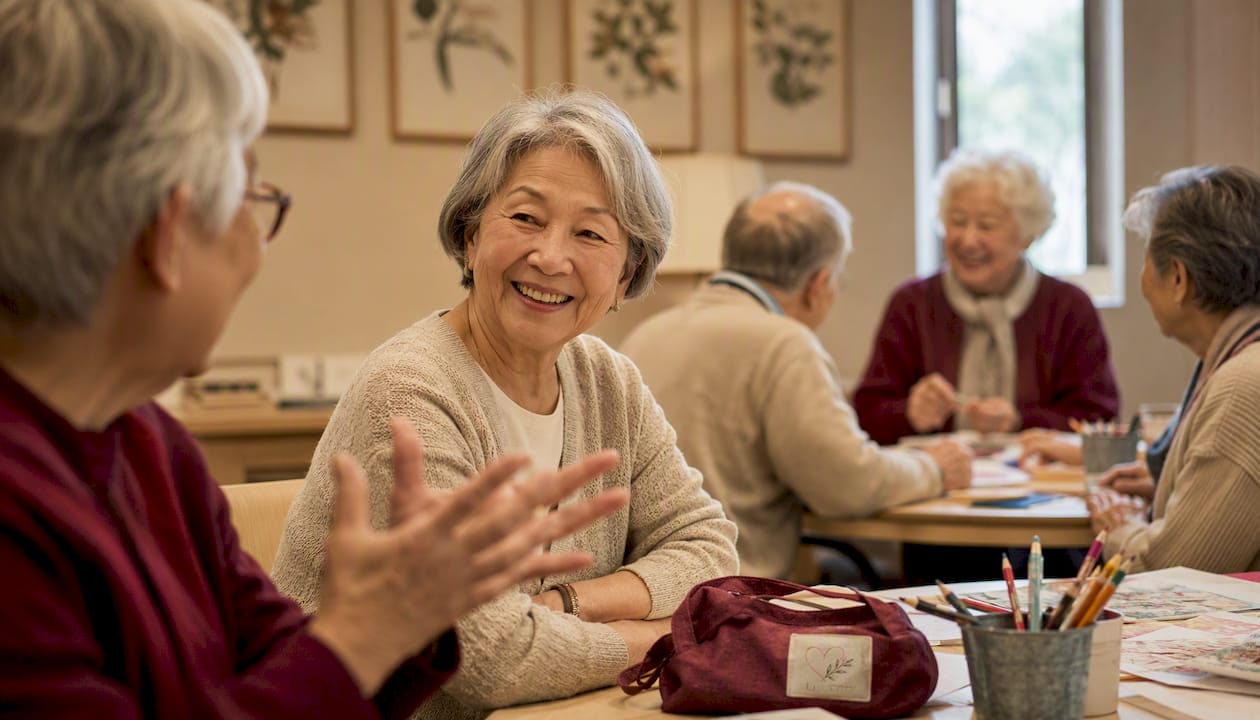
A professional companion fills a specific and valuable gap: consistent, reliable, non-medical social support for an older person who needs more contact than family and friends can realistically provide. The activities a companion can offer include shared meals and tea, accompanying the person to appointments or social events, gentle walks, hobby activities, reading together, and prompting connections with the wider community.
What companions do not provide is equally important to understand. They are not carers in the clinical sense — they do not administer medication, provide personal care, or replace medical or social care services. Their role is human connection, and that clarity protects both the older person and the companion.
Families should look for:
- DBS (Disclosure and Barring Service) checks: a non-negotiable baseline for anyone working with vulnerable adults
- Training in safeguarding and boundaries: companions should know how to recognise signs of abuse, neglect, or deteriorating health and how to escalate appropriately
- Clear scope of service: written confirmation of what the companion will and will not do
- Supervision and accountability: a service that monitors companion visits and responds to concerns
Pro Tip: Brief the companion before the first visit. Share the older person's interests, preferred topics of conversation, any sensitivities, and what a good visit looks like for them. A companion who arrives knowing that someone loves gardening or used to be a nurse can build rapport far more quickly.
What does the evidence say? UK figures and outcomes
The case for regular human contact rests on a substantial and growing body of research. The table below draws together key UK-relevant figures.
| Measure | Finding | Source |
|---|---|---|
| Older people living alone (England, 75+) | More than 2 million | Age UK / NHS |
| Without social contact for a month+ | More than 1 million older people | Age UK / NHS |
| Systematic review scope | many studies on social engagement and wellbeing | Cambridge / systematic review |
| Physiological ageing study | 7,047 adults aged 50+ | Nature Communications |
The systematic review finding is particularly relevant for families weighing whether to act: benefits accumulate with sustained engagement, meaning earlier and more consistent contact produces better outcomes than sporadic intensive effort.
Key takeaways
Regular human contact is one of the most evidence-backed, cost-effective ways to protect an older person's physical health, mental wellbeing, and cognitive function — and Fromlovewithcare offers a structured, DBS-checked way to make that contact consistent.
| Point | Details |
|---|---|
| Contact is a health intervention | Regular social connection reduces cardiovascular risk, slows cognitive decline, and cuts healthcare costs by approximately £900 per person. |
| Frequency matters more than occasion | Weekly face-to-face or phone contact is the minimum; daily brief check-ins are advisable for higher-risk older people. |
| Watch for warning signs | Withdrawal, appetite changes, missed appointments, and low mood all signal that isolation has reached a harmful level. |
| Quality over quantity | Short, genuine conversations about things the older person cares about deliver more benefit than long, task-focused visits. |
| Fromlovewithcare | Provides DBS-checked, trained companions for regular visits, welfare check-ins, and shared activities across the UK. |
The part that gets overlooked
There is a tendency, when discussing elderly loneliness, to frame it as a social problem with a social solution — more visits, more phone calls, more community groups. That framing is not wrong, but it undersells the urgency. The Nature Communications research makes something uncomfortable very clear: an older person can report feeling fine, can seem to be coping, and still be ageing faster at a physiological level because of weak social connections. Subjective experience is not a reliable indicator of biological risk.
This matters enormously for how families and carers make decisions. Waiting until someone says they are lonely, or until a crisis makes isolation visible, is waiting too long. The evidence supports proactive, structured contact — not as a kindness, but as a health measure with the same standing as medication adherence or fall prevention. The £900 healthcare cost difference is not an abstraction; it represents GP appointments, hospital admissions, and interventions that could have been avoided.
The other thing that tends to get lost is the reciprocal benefit. Companions and volunteers consistently report improved wellbeing and purpose from their role. A befriending relationship is not a one-way act of charity — it is a genuine human exchange, and treating it as such changes how both parties show up.
Practical companionship support from Fromlovewithcare
For families who want to give an older relative consistent, reliable human contact without placing the entire responsibility on themselves, Fromlovewithcare offers a concrete alternative to hoping the calendar works out.
Every companion is DBS-checked and trained, and visits are built around what the older person actually enjoys — shared tea, a walk, accompanying them to an appointment, or simply a good conversation. The service is non-medical, which means it sits alongside any existing care rather than replacing it. Bookings are made on an hourly basis, and emergency welfare checks are available for situations that cannot wait. If you are ready to arrange regular support, explore the full range of services or find out how companionship visits are organised — including how companions are vetted and what a first visit looks like.
Useful sources and further reading
For further guidance, these are the most authoritative UK resources on elderly loneliness and social isolation:
- NHS: Loneliness in older people — prevalence figures, health impacts, and where to get help
- Campaign to End Loneliness — research, resources, and community action tools for the UK
- Fromlovewithcare: loneliness support services — UK companionship visits for older adults experiencing isolation
- Fromlovewithcare: how it works — companion vetting, DBS checks, and booking process explained