
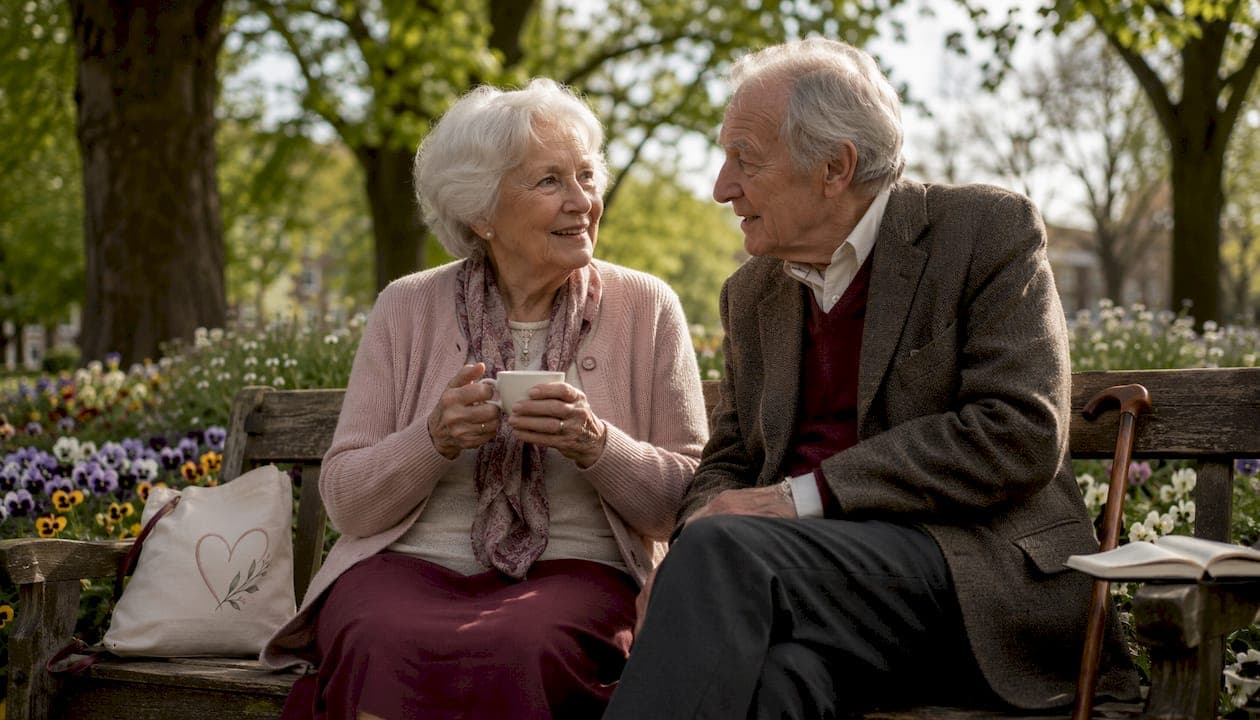
Close friendships substantially reduce loneliness, lower the risk of depression, and support cognitive wellbeing for most older adults. Research from Northumbria University found that the mental health benefits of friendship follow a curvilinear pattern: gains are strongest up to around four close friends for loneliness, two for depression, two for stress, and three for anxiety, after which additional friendships add little. Quality, not quantity, is what matters. Organisations including Age UK, The Silver Line, the NHS, and Fromlovewithcare all recognise this, which is why the most effective support focuses on building a small number of genuinely close, trusting relationships rather than simply increasing social contact.
Table of Contents
- Why does friendship matter so much for older adults?
- Are friendships more beneficial than family contact for seniors?
- When friendships alone are not enough
- What types of companionship are available to UK seniors?
- How do you find a vetted companion in the UK?
- Practical ways to build and maintain friendships in later life
- What should you expect from a professional companion?
- Key evidence and UK resources
- When should you involve a GP or mental health professional?
- Key takeaways
- A perspective worth considering
- Fromlovewithcare: vetted companionship when it matters most
- Useful UK sources and further reading
Why does friendship matter so much for older adults?
The role of friendship in senior mental health rests on five clear mechanisms. A qualitative study published in PMC identified that befriending relationships improve health by:
- Supporting positive health behaviours (regular activity, better diet)
- Providing emotional support during difficult periods
- Improving mood through shared enjoyment
- Offering cognitive stimulation through conversation and new perspectives
- Creating socialising opportunities that reconnect people to community
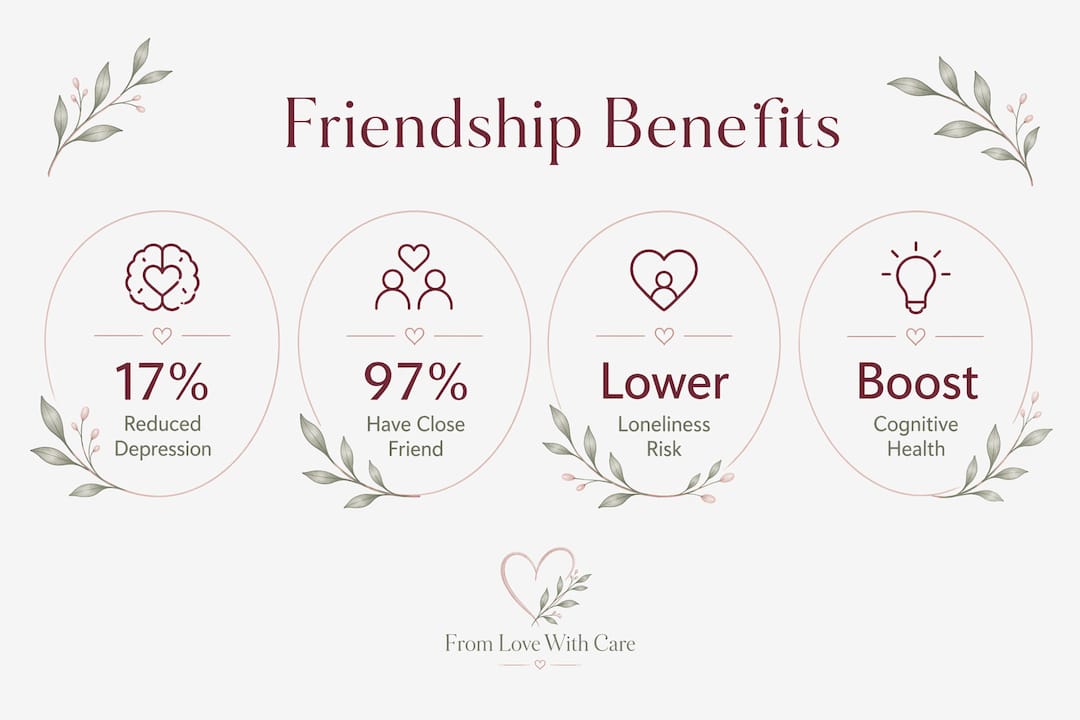
An outcome-wide analysis of the Health and Retirement Study cohort linked stronger friendships to a roughly 17% reduced risk of depression and improved positive affect in older adults. The friendship impact on senior well-being extends beyond mood: Age UK's parliamentary briefing links loneliness to a 29% higher risk of coronary heart disease, 32% higher risk of stroke, and 25% higher risk of dementia. These are not marginal effects.
Are friendships more beneficial than family contact for seniors?
Often, yes. Research published in Ageing and Society found that friendship networks in later life tend to provide greater psychological benefits than kin-based networks, precisely because friendships are elective. You choose your friends; you do not choose your family.
That distinction has real consequences:
- Friendships are built on shared interests and mutual enjoyment, not obligation
- They reinforce a sense of identity and autonomy that family roles can sometimes erode
- Elective relationships tend to involve more reciprocal exchange, which is itself protective
Where family contact feels strained or insufficient, investing in friendships, whether through community groups, telephone befriending, or a professional companion, tends to deliver more consistent emotional benefit. For practical ideas on finding companionship in later life, the effort is almost always worthwhile.
When friendships alone are not enough
The Northumbria research is clear: beyond certain thresholds, more friends do not mean better mental health. The breakpoints from a study of 335 older adults were: loneliness at around four close friends, depression at two, stress at two, and anxiety at three. Past those points, the gains level off.
Signs that someone may need clinical support despite having social contact:
- Persistent low mood lasting more than two weeks
- Significant changes in sleep, appetite, or energy
- Withdrawal from previously enjoyed activities
- Expressions of hopelessness or thoughts of self-harm
If you notice these in yourself or someone you care for, signs your elderly parent needs companionship can help you assess the situation, but a GP referral is the appropriate next step.
Pro Tip: The NHS notes that loneliness carries a social stigma among older adults. Frame any offer of support as a shared interest or social activity, not as help with loneliness. Saying "would you like to join me for a walk?" works far better than "I'm worried you're lonely."
What types of companionship are available to UK seniors?
There are three main routes, each suited to different needs and circumstances.
| What it provides | Route to access | Typical cost/eligibility | Vetting and training | Typical frequency |
|---|---|---|---|---|
| Informal (friends, neighbours): social contact, shared activities | Self-initiated through community, faith groups, clubs | Free | None formal | Varies |
| Volunteer befriending (charities, helplines): emotional support, regular contact | Age UK, The Silver Line (0800 4 70 80 90), local schemes | Free or subsidised | Varies by scheme; some DBS checks | Weekly calls or visits |
| Paid professional companion (vetted services): emotional support, accompaniment, shared activities | Regulated directories, Fromlovewithcare | Private-paid; some local authority funding available | DBS check, references, training, insurance | Agreed at booking; typically weekly or fortnightly |
Volunteer befriending tends to take several weeks to match and establish rapport. A paid professional companion can often begin within days. Companionship options for older adults covers these routes in more detail.
How do you find a vetted companion in the UK?
Start with trusted organisations, then verify carefully.
Where to look:
- Age UK local branches (search at ageuk.org.uk)
- The Silver Line: free, confidential helpline and befriending service for older people
- NHS social prescribing: ask your GP to refer you to a link worker
- Fromlovewithcare: professional, DBS-checked companions matched to your interests
What to ask any provider:
- Is every companion DBS-checked (enhanced disclosure)?
- Can you provide two references?
- Is the companion covered by public liability insurance?
- What safeguarding and first-aid training have they completed?
- What is the complaints procedure?
Pro Tip: Ask specifically whether companions receive ongoing supervision or support from a coordinator. One-off training is a minimum; regular supervision means standards are maintained over time.
Cost varies. Volunteer befriending through charities is free. Professional companionship services charge privately, and fees are not publicly listed by all providers. Some local authorities offer direct payments or personal budgets that can fund companion visits. Always confirm pricing before booking.
Practical ways to build and maintain friendships in later life
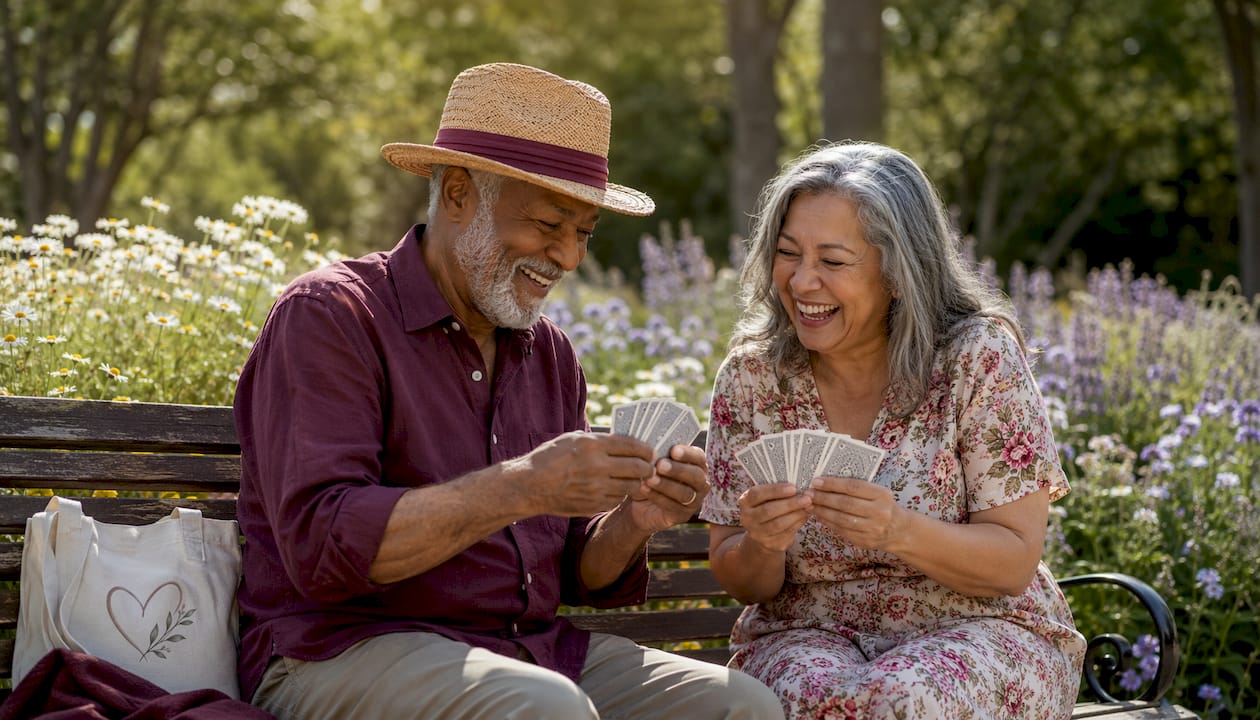
The most effective friendships in later life grow from small, repeated shared rituals rather than grand gestures. Tea, a weekly walk, a card game, a shared class: these create the normalcy and trust that deepen into genuine connection.
- Identify one local group aligned with an existing interest (gardening, reading, faith, craft) and attend twice before deciding whether it suits you.
- Schedule contact rather than leaving it to chance. A standing weekly phone call is more sustaining than occasional visits.
- Use telephone befriending if mobility or geography is a barrier. The Silver Line offers free calls at any hour.
- Try a shared activity class such as seated exercise, art, or music. Shared hobbies with an elderly companion can accelerate rapport significantly.
- For carers facilitating introductions: make the introduction, then step back. Friendships need space to develop on their own terms.
The Community Life Survey 2023/24 found that 97% of adults aged 75 or over reported having at least one person they could count on to listen. That is encouraging, but having one listener is not the same as having a close, reciprocal friendship.
What should you expect from a professional companion?
A professional companion provides emotional support, accompaniment to appointments or outings, and shared activities. They are not a clinical care worker unless that is separately contracted. The relationship is warm and human, not medical.
Essential safety checks before any first visit:
- Enhanced DBS certificate (ask to see it)
- Two verifiable references
- Public liability insurance (ask for the policy name and provider)
- Basic safeguarding awareness training
- A clear complaints and escalation procedure
On practical arrangements: confirm the session length, cancellation policy (typically 24–48 hours' notice), and how personal data is stored before the first visit. A reputable service will have written answers to all of these. Fromlovewithcare's how it works page sets out its matching, vetting, and visit process clearly.
Key evidence and UK resources
Loneliness is not merely an emotional discomfort. The evidence links it directly to serious physical and mental health outcomes.
| Statistic or finding | Source |
|---|---|
| Loneliness linked to 29% higher coronary heart disease risk | Age UK parliamentary briefing |
| Loneliness linked to 32% higher stroke risk | Age UK parliamentary briefing |
| Loneliness linked to 25% higher dementia risk | Age UK parliamentary briefing |
| Stronger friendships associated with ~17% reduced depression risk | HRS cohort outcome-wide analysis |
| Loneliness threshold for benefit: ~4 close friends (loneliness), ~2 (depression), ~2 (stress), ~3 (anxiety) | Northumbria University study, n=335 |
| 97% of adults aged 75+ have someone to listen | Community Life Survey 2023/24 |
Useful links for follow-up:
- Age UK parliamentary briefing on loneliness (ageuk.org.uk)
- Community Life Survey 2023/24 (gov.uk)
- NHS loneliness guidance (nhs.uk)
- Northumbria University friendship and ageing research (researchportal.northumbria.ac.uk)
- PMC study on befriending mechanisms (pmc.ncbi.nlm.nih.gov)
When should you involve a GP or mental health professional?
See a GP if low mood persists for more than two weeks, if suicidal thoughts occur at any point, or if daily functioning declines despite regular social contact. These are not signs of weakness; they are clinical signals that deserve clinical attention.
Practical steps:
- Tell your GP specifically: "I have been feeling persistently low and I would like to discuss whether I need a referral."
- Ask about IAPT (Improving Access to Psychological Therapies) services, available through the NHS, for talking therapies.
- Ask whether the practice has a social prescribing link worker who can connect you with community support.
- If memory or confusion is a concern, ask for a referral to a memory clinic.
NHS mental health services are free at the point of use. You do not need to be in crisis to ask for support.
Key takeaways
Close friendships are one of the most protective factors for mental health in later life, and the evidence is consistent: quality matters more than quantity.
| Point | Details |
|---|---|
| Friendship protects mental health | Stronger friendships are linked to reduced depression risk and lower loneliness in older adults. |
| Quality over quantity | Benefits plateau at around four close friends for loneliness, two for depression and stress, and three for anxiety. |
| Vetted companions are available | Age UK, The Silver Line, and Fromlovewithcare all offer routes to safe, supported social connection. |
| Safety checks matter | Always confirm DBS certification, references, insurance, and a complaints procedure before any visit. |
| Fromlovewithcare as next step | For discreet, professionally matched companionship, Fromlovewithcare offers DBS-checked companions with transparent fees. |
A perspective worth considering
There is a tendency, in conversations about senior wellbeing, to treat loneliness as a social problem with a social solution: more events, more groups, more contact. The research tells a more nuanced story. What older adults most need is not more people in the room. It is one or two relationships where they feel genuinely known.
That is why the curvilinear finding from the Northumbria research deserves more attention than it typically receives. The mental health gains from friendship are not linear. They taper. And yet most community interventions are still designed around volume, not depth. A busy day centre may tick a box without creating a single close, confiding relationship.
The befriending model, at its best, does something different. It creates a consistent, reciprocal relationship built on shared interest and genuine warmth. Ways a companion improves elderly wellbeing reflects this: the impact is not in the activity itself but in the trust that accumulates around it. Tea is just tea. Tea with someone who remembers how you take it, who asks about your week, who shows up reliably: that is something else entirely.
The practical implication is this: if you are supporting an older person, resist the urge to multiply their social options. Help them deepen one or two relationships instead. That is where the evidence points, and it is where the real difference is made.
Fromlovewithcare: vetted companionship when it matters most
For seniors who want a safe, consistent companion without the uncertainty of finding one independently, Fromlovewithcare offers something specific: professionally matched, DBS-checked companions focused entirely on human connection, not clinical tasks.
Every companion is vetted with an enhanced DBS check, verifiable references, public liability insurance, and safeguarding training. Matching is based on shared interests, so visits feel natural rather than transactional. Fees are transparent, sessions are flexible, and there is no long-term commitment required. For families, the companion service benefits for peace of mind are considerable: knowing a trusted, trained person is visiting regularly removes a significant weight of worry.
To arrange a visit or ask about availability, visit Fromlovewithcare's services page or read about how the matching process works.
Useful UK sources and further reading
- Age UK parliamentary briefing on loneliness (ageuk.org.uk): charity evidence; best used for health-risk statistics and policy context
- The Silver Line (thesilverline.org.uk, 0800 4 70 80 90): charity helpline; best for immediate telephone befriending and signposting
- NHS loneliness guidance (nhs.uk): government health guidance; best for clinical context and stigma-reduction advice
- Community Life Survey 2023/24 (gov.uk): government statistics; best for UK prevalence data on social support networks
- Northumbria University friendship and ageing paper (researchportal.northumbria.ac.uk): academic research; best for the curvilinear friendship threshold findings
- PMC befriending mechanisms study (pmc.ncbi.nlm.nih.gov): peer-reviewed research; best for understanding how befriending produces health benefits
- HRS cohort outcome-wide analysis (Cambridge Core): academic research; best for depression risk reduction linked to friendship strength