

Trust is the foundation upon which every meaningful companion relationship is built. Without it, connection remains shallow, and the emotional safety that combats loneliness never fully takes hold. The role of trust in companion relationships goes far deeper than simply liking someone or sharing interests. Research confirms that connection and trust form the very "glue" of adult social care, protecting people from isolation and neglect. For anyone seeking genuine companionship, whether for themselves or a loved one, understanding how trust forms and why it matters is the first step towards lasting well-being.
What role does trust play in forming and sustaining companion relationships?
Trust is not simply a belief you hold about another person. It is a state your nervous system either accepts or rejects based on accumulated evidence. Trust operates at the level of two nervous systems, not just shared values or compatible personalities. You can agree on everything and still not feel safe with someone. That felt sense of safety is what makes companionship genuinely nourishing rather than merely pleasant.
When trust is present, emotional regulation becomes easier. A companion's predictable, reliable presence signals to your nervous system that the environment is safe. This co-regulation, where one person's calm steadiness helps settle another's distress, is one of the most powerful benefits of a trusted companion bond. The importance of trust in relationships becomes especially clear during periods of vulnerability, illness, or grief, when the need for emotional safety is at its most acute.
The practical markers of a trustworthy companion relationship include:
- Predictability: The companion shows up when expected and behaves consistently across different situations.
- Reliability: Promises made are promises kept, without the need for reminders or follow-up.
- Responsiveness: The companion notices when something is wrong and responds with care rather than indifference.
- Transparency: There are no hidden agendas. What you see is what you get, every time.
- Repair: When something goes wrong, the companion acknowledges it and works to restore the bond.
Pro Tip: If you are assessing whether a companion relationship feels trustworthy, pay attention to how you feel after spending time with that person. A genuine sense of calm and ease is one of the clearest signals your nervous system trusts them.
How does trust develop and deepen in human companion relationships?
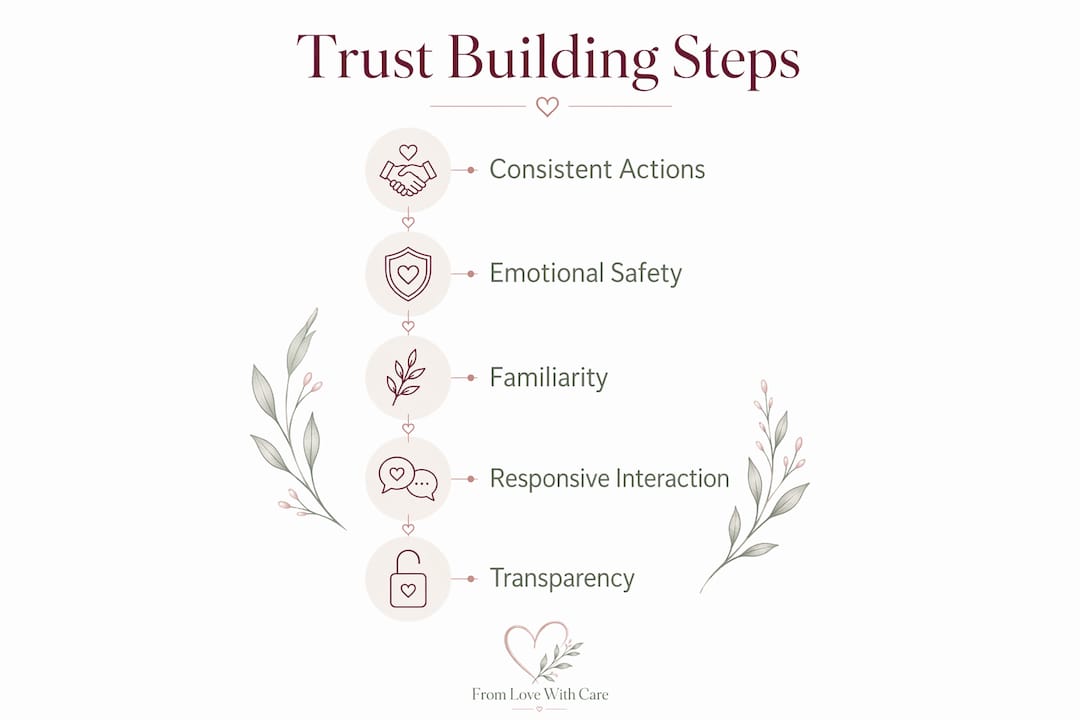
Trust is built incrementally, through what researchers describe as consistent "deposits" of behaviour. Every kept promise adds to trust, while broken promises withdraw from it, often with interest. This means trust cannot be rushed or declared into existence. It accumulates over months of repeated, verifiable actions.
The process tends to follow a recognisable sequence:
- Initial caution: Both people are polite but guarded. This is healthy, not a sign of distrust.
- Small tests: One person takes a minor risk, sharing something personal or asking for a small favour. The other responds with care.
- Positive reinforcement: The response to that small risk feels safe. The nervous system registers it as evidence.
- Repeated proof: The pattern repeats across different contexts and moods. Consistency across circumstances is what deepens trust.
- Repair moments: A misunderstanding or disappointment occurs. How it is handled either strengthens or weakens the bond significantly.
One of the most overlooked aspects of building trust in companionship is responding to what psychologists call "bids for connection." These are small, everyday moments: a comment about the weather, a sigh, a question about your day. Responding to bids for connection sends a powerful signal that the other person matters. Missed bids, even small ones, erode trust quietly over time.
Aspirational language does not build trust. Saying "I will always be here for you" means nothing without the behavioural evidence to back it up. Trust is earned through specific, verifiable actions that the other person's nervous system can register as reliable. A companion who notices you seem tired and adjusts the visit accordingly builds far more trust than one who offers grand reassurances.

Pro Tip: Focus on small, consistent actions rather than large gestures. Showing up on time, remembering a detail from a previous conversation, and following through on minor commitments build trust faster than any single dramatic act of kindness.
Familiarity also plays a significant role. As time passes and shared experiences accumulate, the role of familiarity in companion bonds deepens the sense of safety and belonging. Trust and familiarity reinforce each other in a steady, positive cycle.
What challenges affect trust in companionship and how can they be addressed?
Loneliness itself is one of the most significant threats to trust. Persistent loneliness predicts reductions in generalised trust over a two-year period. This means that the longer someone goes without meaningful connection, the harder it becomes to trust new people. The very thing they need most becomes harder to accept.
This creates a difficult cycle. A person who has been isolated for a long time may feel nervous or guarded when a new companion arrives. That nervousness is not the same as distrust. It is the nervous system being appropriately cautious after a period of relational scarcity. Recognising this distinction matters enormously.
Common challenges to trust in companionship include:
- Inconsistent behaviour: A companion who is warm one visit and distant the next creates confusion rather than safety.
- Unmet expectations: Promises made casually but not kept erode confidence quickly.
- Communication gaps: Silence around a change in schedule or a missed visit can feel like abandonment to someone who is already vulnerable.
- Anxiety misread as rejection: A person who seems withdrawn may simply be anxious, not uninterested.
- Previous relational hurt: Past experiences of betrayal or neglect make new trust feel risky.
The most effective response to these challenges is patience combined with transparency. A companion who acknowledges a missed visit, explains what happened, and commits to a different approach demonstrates exactly the kind of repair behaviour that rebuilds confidence. Consistency over time is the only reliable antidote to trust issues in relationships shaped by loneliness or past hurt.
How do companion animals contribute to trust and well-being?
Companion animals occupy a unique position in the trust landscape. Trust and safety in animal companionship are often treated as assumed properties rather than something gradually earned. A dog greets you with the same enthusiasm whether you are having a good day or a terrible one. A cat settles beside you without requiring explanation. This unconditional, non-judgmental presence provides immediate emotional containment in a way that human relationships, with all their complexity, sometimes cannot.
The table below summarises how companion animals support trust and well-being across key areas:
| Area of support | How companion animals help |
|---|---|
| Emotional regulation | Consistent, calm presence helps reduce anxiety and distress |
| Routine and predictability | Daily care rituals create structure and a sense of purpose |
| Non-judgmental safety | Animals respond to emotional state without criticism or expectation |
| Social isolation | Pets reduce the felt impact of loneliness during periods of withdrawal |
| Mental health recovery | Emotional responsiveness in animals supports recovery from distress |
Companion animals are particularly valuable during psychological distress, when relational threat sensitivity is at its highest. Their predictability and responsiveness make them a reliable source of emotional safety precisely when human relationships feel too risky or demanding. For many people, a pet is the first relationship in which they fully experience what trust feels like in practice. That experience then becomes a template for building trust with people.
The impact of companionship on elderly well-being mirrors many of these same principles. Whether the companion is human or animal, the core mechanism is the same: consistent, caring presence that the nervous system learns to rely upon.
Key takeaways
Trust in companion relationships is built through consistent, verifiable behaviour over time, not through words or intentions, and it is the primary mechanism through which companionship reduces loneliness and supports well-being.
| Point | Details |
|---|---|
| Trust is a nervous system state | Emotional safety depends on repeated behavioural evidence, not shared values alone. |
| Loneliness erodes generalised trust | Persistent isolation reduces a person's capacity to trust new companions over time. |
| Small actions build the deepest bonds | Responding to everyday bids for connection builds trust faster than grand gestures. |
| Repair strengthens rather than breaks trust | Acknowledging and addressing a breach of trust deepens the bond when handled well. |
| Companion animals offer immediate safety | Animals provide non-judgmental, consistent presence that supports emotional regulation. |
Trust as a relational ledger: a personal reflection
I have spent a long time thinking about why some companion relationships feel genuinely safe and others, despite good intentions on both sides, never quite settle. The answer I keep returning to is this: trust is not a decision. It is a record. Your nervous system keeps a ledger of every kept promise, every responded bid, every moment someone showed up when they said they would. That ledger builds slowly, and it cannot be shortcut.
What I find most liberating about this understanding is that it removes the pressure to be perfect. You do not need to say the right thing every time. You need to be consistent. A companion who turns up reliably, who notices the small things, and who repairs the moments that go wrong is building something genuinely durable. That is far more valuable than a relationship that starts with warmth but lacks the behavioural follow-through.
The hardest part, in my experience, is accepting the ambiguity of the early stages. Trust takes time. Feeling uncertain about whether a new companion relationship is working does not mean it is failing. It means it is still forming. Emotional maturity in companionship means staying present through that uncertainty rather than pulling away from it. The people who do that, who stay consistent even when it is not yet comfortable, are the ones who build the deepest and most sustaining bonds.
If you are supporting a loved one who has been isolated for a long time, be patient with their guardedness. It is not a rejection. It is a nervous system that has learned, through experience, to be careful. The right companion, given enough time and consistency, can change that.
— Ayomide
Trusted companionship that puts connection first
Loneliness is not a small problem. For many adults and elderly people across the UK, days can pass without a single meaningful conversation. The loneliness support services offered by Fromlovewithcare are built around exactly the principles this article describes: consistency, reliability, and genuine human presence.

Every Fromlovewithcare companion is thoroughly vetted and trained to build trust through the kind of steady, attentive behaviour that actually makes a difference. Whether it is a shared cup of tea, a walk to the shops, or simply sitting together for an hour, these visits are designed to create the emotional safety that reduces isolation and improves quality of life. You can explore how the service works and find the right option for your loved one today.
FAQ
What is the role of trust in companion relationships?
Trust is the mechanism through which companion relationships create emotional safety and reduce loneliness. It forms through consistent, reliable behaviour over time and signals to the nervous system that the relationship is safe.
How long does it take to build trust in a new companion relationship?
Trust takes months of consistent behavioural evidence to develop fully. Early caution is normal and healthy, particularly for people who have experienced prolonged isolation.
Can loneliness make it harder to trust people?
Yes. Persistent loneliness reduces generalised trust beliefs over a two-year period, making it harder for isolated individuals to accept new connections even when they are genuinely needed.
How does trust affect emotional well-being in companionship?
Trust enables emotional co-regulation, where a companion's calm, consistent presence helps reduce anxiety and distress. This is one of the primary ways that trusted companionship improves well-being in older adults.
What is the most effective way to build trust with a vulnerable person?
The most effective approach is behavioural consistency: showing up when expected, responding to small bids for connection, and repairing any breach promptly and honestly. Grand gestures matter far less than reliable, everyday presence.